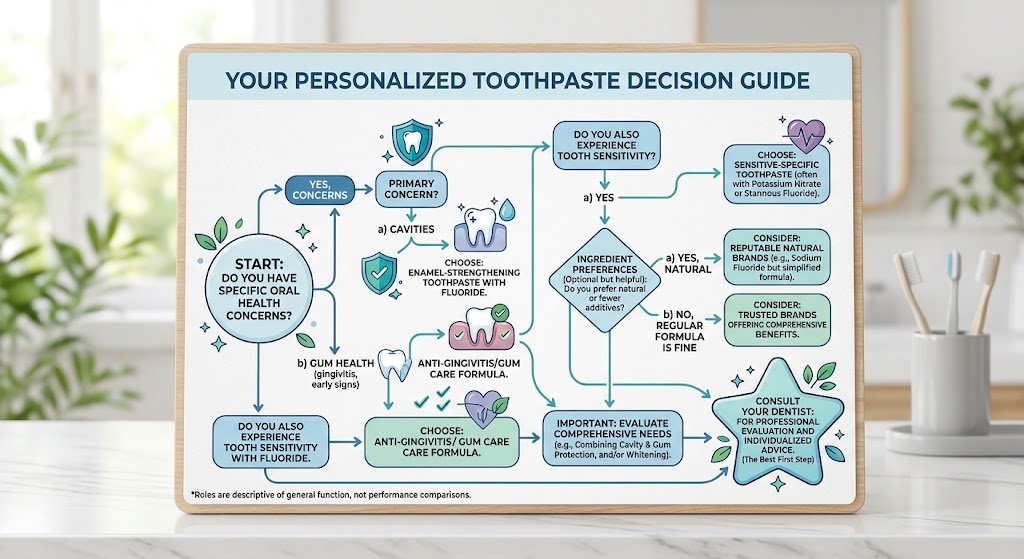
Bleeding, swollen, or irritated gums can make choosing toothpaste more confusing than it should be. The right toothpaste can support daily plaque control and help address specific oral-care needs, but there is no single toothpaste that is automatically best for everyone.
For gum health, pay attention to the active ingredients, fluoride protection, plaque-control benefits, your sensitivity or ingredient preferences, and whether the product has credible evidence behind its claims. Toothpaste containing stannous fluoride is particularly relevant when gum care is a priority because the American Dental Association notes evidence linking stannous fluoride toothpaste with reduced risk of gingivitis and periodontal disease. (American Dental Association)
This guide explains what to look for in toothpaste for gum health, how to compare different formulas, which features matter for specific needs, and when toothpaste is not enough.
What Is the Best Toothpaste for Gum Health?
There is no universal “best toothpaste for gum health.” The better choice depends on why you are looking for gum-care toothpaste in the first place.
Someone with generally healthy gums may mainly need reliable daily plaque control and cavity protection. Someone experiencing sensitivity may want a formula that addresses both sensitivity and routine oral care. Someone concerned about gingivitis may give more attention to toothpaste with an active ingredient supported for gum-care benefits.
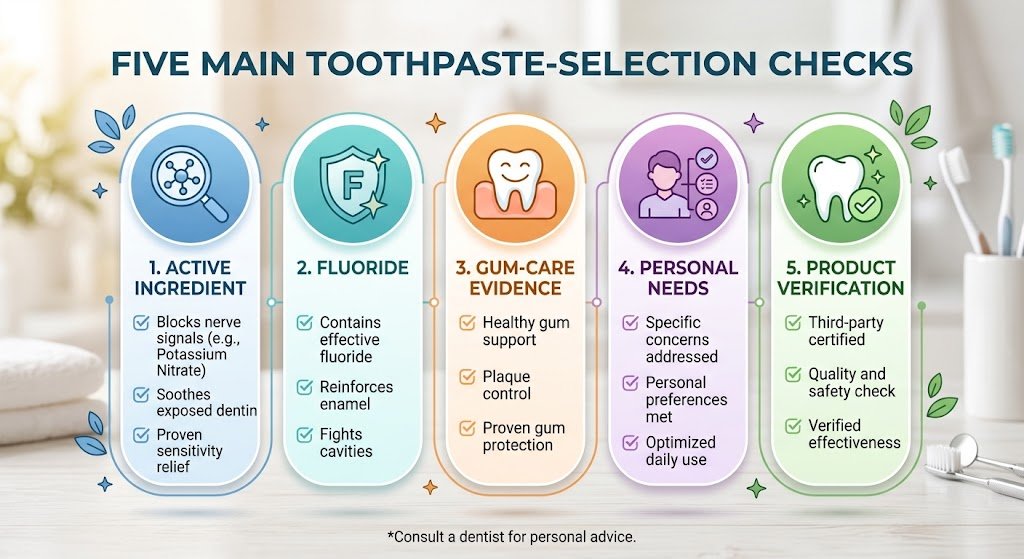
The most useful factors to compare include:
- Active ingredient: Look beyond the front of the package and check what the toothpaste is designed to do.
- Fluoride: Fluoride helps prevent cavities and strengthens enamel, making it an important part of routine oral care for most people. (American Dental Association)
- Gum-care evidence: Some active ingredients have evidence related to plaque and gingivitis control.
- Sensitivity needs: If your teeth or gums are sensitive, comfort can affect whether you can maintain a consistent brushing routine.
- Ingredient preferences: You may prefer an SLS-free, flavor-specific, or otherwise particular formula, but those preferences should be considered alongside the product’s active ingredients.
- Product verification: An established third-party evaluation, such as the ADA Seal of Acceptance where applicable, can provide additional information about whether a product meets specific requirements.
The key point is simple: choose toothpaste according to your oral-health need, not simply because the package says “gum health.”
What Does Healthy Gum Care Actually Mean?
“Gum health” is broader than simply looking for toothpaste that says “gum care” on the label.
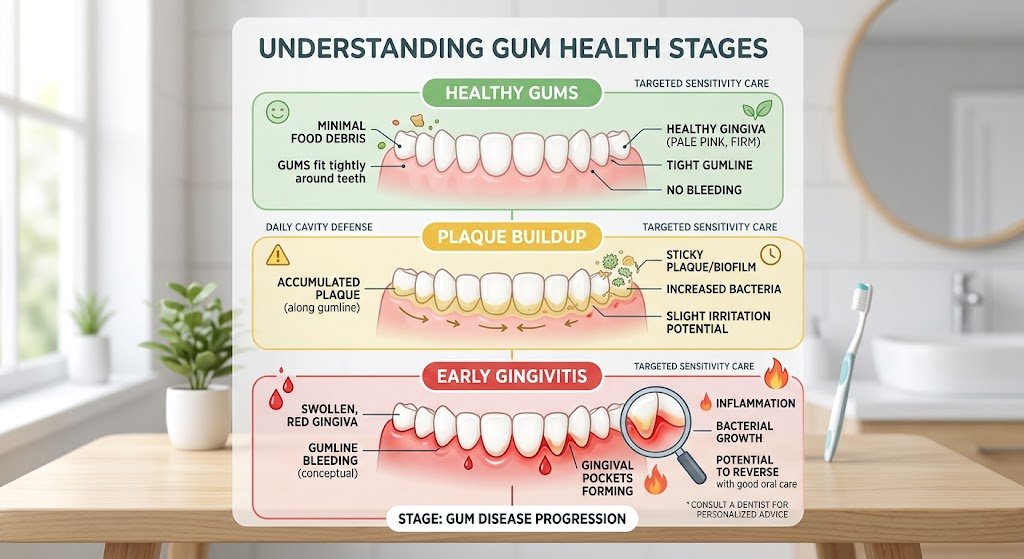
Healthy gums are supported by controlling dental plaque, brushing effectively, cleaning between the teeth, and maintaining regular dental care. Plaque is a sticky film containing bacteria that builds up on teeth. If it is not removed regularly, it can contribute to inflammation of the gums. (NIDCR)
Plaque and gingivitis
One of the first conditions associated with plaque buildup is gingivitis.
Gingivitis can cause gums to become:
- Red
- Swollen
- Tender
- More likely to bleed during brushing or cleaning between teeth
NIDCR describes plaque-related gingivitis as a mild form of gum disease that can usually be reversed with daily brushing and cleaning between the teeth. (NIDCR)
That makes plaque control an important part of choosing and using toothpaste.
However, toothpaste is only one part of the routine. Even a well-formulated toothpaste cannot clean plaque from areas that brushing misses.
Gingivitis is not the same as periodontitis
This distinction matters when choosing a product.
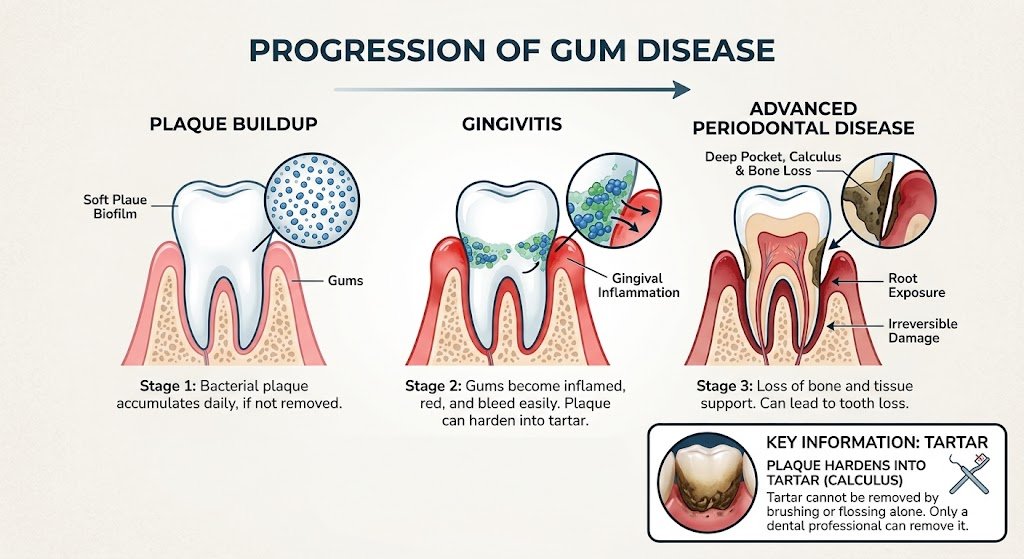
Gingivitis involves inflammation of the gums and can often be reversed when plaque is effectively controlled.
Periodontitis is a more advanced form of gum disease that can affect the tissues and bone supporting the teeth. NIDCR notes that untreated gum disease can progress beyond the gums and may eventually contribute to painful chewing, loose teeth, or tooth loss. (NIDCR)
So, if you have persistent bleeding, significant swelling, gum recession, loose teeth, or other concerning symptoms, simply switching toothpaste should not be treated as a substitute for professional dental evaluation.
Why plaque control matters
Plaque can eventually harden into tartar, also called calculus. Unlike soft plaque, hardened tartar cannot be removed simply by brushing or flossing. Professional dental cleaning is required to remove it. (NIDCR)
This creates an important relationship:
Daily plaque control → healthier gums → lower opportunity for plaque-related inflammation.
Toothpaste can support the daily routine, but the toothpaste itself is not the entire solution.
What Should You Look for in Toothpaste for Gum Health?
Once you understand the difference between general gum care and treating gum disease, product selection becomes easier.
1. Stannous fluoride
Stannous fluoride deserves particular attention when gum health is one of your priorities.
Fluoride is widely used for cavity prevention, and stannous fluoride is one of the fluoride compounds used in toothpaste. The ADA identifies stannous fluoride as an anticaries active ingredient and notes evidence that toothpastes containing stannous fluoride can decrease the risk of gingivitis and periodontal disease in people at increased risk. (American Dental Association)
That gives stannous fluoride a useful dual role:
Cavity protection + potential gum-care benefits.
This does not mean every stannous fluoride toothpaste is appropriate for every person or that it treats established periodontal disease. Product formulas differ, and individual dental needs can vary.
2. Fluoride for cavity protection
Gum health and cavity prevention are connected parts of everyday oral care, so it is usually a mistake to evaluate toothpaste only by its gum-care claims.
Fluoride helps strengthen enamel and prevent tooth decay. The ADA and NIDCR both recommend fluoride toothpaste as part of routine oral hygiene for most people. (American Dental Association)
The ADA’s general home-care guidance recommends brushing twice daily with fluoride toothpaste for two minutes. (American Dental Association)
If you are comparing two gum-care formulas, therefore, ask:
Does this toothpaste also provide the cavity protection I need?
That question can be more useful than simply choosing the product with the strongest-looking gum-care language on its packaging.
3. Ingredients for sensitive teeth
Gum concerns sometimes appear alongside tooth sensitivity.
Sensitivity can make brushing uncomfortable, which can affect how consistently someone cleans their teeth. Certain toothpaste ingredients are specifically used for dentin sensitivity. The ADA notes evidence for ingredients including stannous and potassium-based compounds and arginine in reducing dentin hypersensitivity pain. (American Dental Association)
If sensitivity is part of your situation, compare the formula based on both needs rather than automatically selecting a product marketed only for gums.
For example, your selection criteria might look like:
Gum-care concern + sensitivity + cavity protection
rather than:
Gum-care claim alone
4. SLS and ingredient preferences
Some shoppers specifically look for SLS-free toothpaste because they prefer to avoid sodium lauryl sulfate.
SLS is commonly used as a foaming ingredient, but whether you personally want to avoid it is different from asking whether an SLS-free formula is automatically better for gum health.
A useful comparison should look at the complete formula, including:
- Active ingredients
- Fluoride status
- Intended oral-health benefit
- Flavor and texture
- Your personal tolerance
- Any specific advice from your dentist
In other words, SLS-free is a product preference, not by itself proof of superior gum-care performance.
5. The ADA Seal of Acceptance
The ADA Seal of Acceptance can be another useful product-selection signal.
The ADA explains that products receiving its Seal have submitted data for evaluation against predetermined requirements. For fluoride toothpastes, the relevant ADA category concerns products shown to be safe and effective in helping prevent cavities. (American Dental Association)
It is important to understand what the Seal does—and does not—tell you.
For example, an ADA-accepted fluoride toothpaste provides evidence related to the specific claim/category for which it was evaluated. It does not mean that every person will experience the same result or that toothpaste can replace professional treatment for gum disease.
Best Toothpaste for Gum Health by Need
The most useful way to compare products is by use case, rather than creating one universal winner.
Different shoppers can reasonably have different priorities.
Best for everyday gum care
For someone with generally healthy gums, the priority is usually a toothpaste that fits a consistent oral-care routine.
Look for:
- Fluoride for cavity protection
- A well-supported active ingredient
- A formula you are comfortable using twice a day
- Good plaque-control habits
- A flavor and texture you can tolerate consistently
The toothpaste should support—not replace—the rest of your routine.
Best for gingivitis-focused care
If your concern is plaque-related gingivitis, pay particular attention to toothpaste with an active ingredient supported by evidence for gingivitis-related benefits.
Stannous fluoride is one ingredient worth investigating because the ADA’s evidence summary identifies stannous fluoride toothpaste among products associated with decreased risk of gingivitis and periodontal disease. (American Dental Association)
However, persistent bleeding or other symptoms should not automatically be treated as a toothpaste-selection problem.
Best for gum health plus cavities
If you want one toothpaste to fit both concerns, look for a fluoride toothpaste while also considering whether its active ingredients have evidence relevant to your gum-care goal.
This is where product labels and ingredient lists become more useful than broad marketing terms such as “natural,” “clean,” or “gum detox.”
Best for sensitive gums or teeth
When sensitivity is part of the problem, consider formulas containing recognized desensitizing ingredients and choose a product that allows you to brush comfortably and consistently. (American Dental Association)
Also pay attention to brushing technique. NIDCR recommends angling the bristles toward the gumline and brushing gently rather than scrubbing aggressively back and forth. (NIDCR)
Best for SLS-free preferences
If you specifically want SLS-free toothpaste, compare SLS-free products based on their active ingredients and intended benefits, not just the absence of SLS.
A formula can be SLS-free while still differing substantially from another SLS-free formula in fluoride type, sensitivity ingredients, flavor, texture, and other characteristics.
Best for ingredient-conscious shoppers
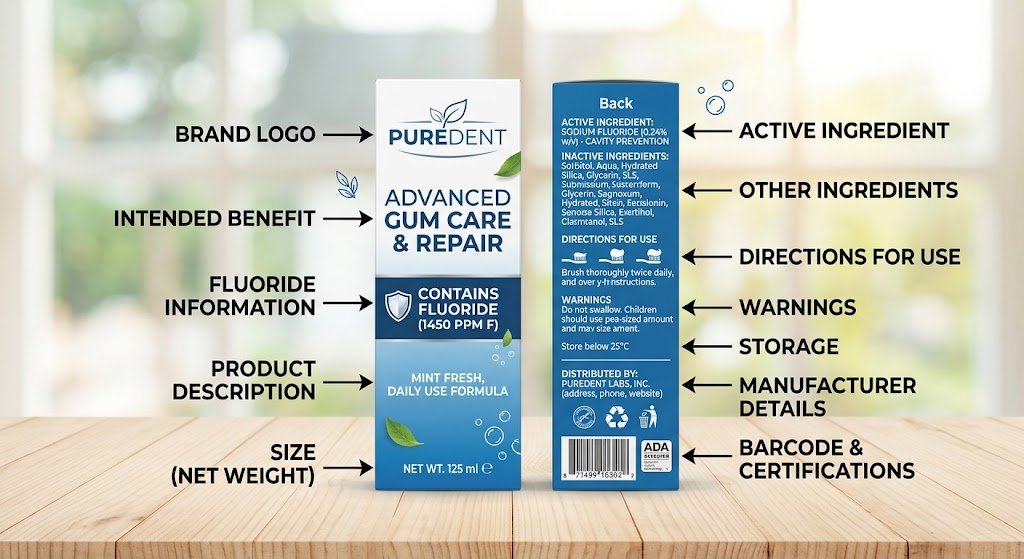
If you prefer to examine ingredients closely, start with the active ingredients before moving to the rest of the ingredient list.
A practical order is:
- Identify the active ingredient.
- Check whether the toothpaste contains fluoride.
- Identify the product’s intended benefit.
- Review ingredients you personally prefer to avoid.
- Check whether the product has relevant third-party evaluation or certification.
- Compare size and price only after the formula meets your needs.
This approach helps prevent packaging language from becoming the main factor in your decision.
How to Compare Gum-Care Toothpaste
Once you know what your gums need, comparing toothpaste becomes much easier. Instead of choosing based only on packaging or a phrase such as “gum health,” compare the features that can actually affect whether the product fits your routine.
| Factor | What to Check | Why It Matters |
| Active ingredient | Fluoride type and other active ingredients | Tells you what the toothpaste is designed to do |
| Cavity protection | Whether it contains fluoride | Fluoride helps prevent tooth decay |
| Gum-care benefit | Evidence related to plaque or gingivitis | More useful than a general “gum care” claim |
| ADA Seal | Whether the product has applicable ADA acceptance | Provides additional evidence about evaluated claims |
| Sensitivity | Desensitizing ingredients if needed | Can make brushing more comfortable |
| Ingredient preferences | SLS, flavoring, sweeteners, etc. | Helps match the formula to your preferences |
| Flavor | Mint intensity or other flavor | Affects whether you can comfortably use it twice daily |
| Texture | Paste, gel, foaming level | Personal comfort can affect consistency |
| Size and value | Tube size and price per amount | Helps compare cost fairly |
| Intended use | Everyday care, sensitivity, gingivitis-related concerns, etc. | Prevents choosing a product for the wrong purpose |
Start with the active ingredient
The active ingredient should usually be one of the first things you check.
For fluoride toothpaste, common anticaries fluoride compounds include sodium fluoride, sodium monofluorophosphate, and stannous fluoride. The ADA notes that these ingredients are used to help prevent cavities. (ada.org)
If gum health is an important consideration, stannous fluoride may deserve additional attention because of the evidence associated with gingivitis and periodontal disease risk. (ada.org)
This does not mean you should automatically choose one fluoride compound over every other option. Your overall dental needs and your dentist’s recommendations still matter.
Then check the product’s actual purpose
A toothpaste can have several marketing claims on the front of the package.
You might see claims related to:
- Whitening
- Fresh breath
- Sensitivity
- Enamel
- Cavities
- Gum health
- Plaque
- Tartar
- Natural ingredients
The important question is:
Which benefit is actually supported by the product’s active ingredients and evidence?
For example, if your primary concern is gum health but you choose a toothpaste mainly because it has a whitening claim, you may not be giving enough attention to the feature that matters most to you.
Consider comfort and consistency
Even a well-formulated toothpaste is not useful if you dislike using it.
Flavor, texture, foaming, and sensitivity can influence whether someone brushes consistently. Since the ADA recommends brushing twice a day with fluoride toothpaste for two minutes, a toothpaste that you can comfortably use as part of that routine may be more practical than one you dislike. (ada.org)
Can Toothpaste Stop Bleeding Gums?
Bleeding while brushing or cleaning between your teeth can be a sign of gum inflammation, but toothpaste should not be viewed as a guaranteed way to stop bleeding.
Plaque buildup can contribute to gingivitis, which may cause gums to become red, swollen, and prone to bleeding. Improving daily plaque removal can help manage plaque-related gingivitis. (nidcr.nih.gov)
A toothpaste with an appropriate active ingredient can be part of that routine.
But there is an important distinction:
Toothpaste can support oral hygiene; it does not diagnose the reason your gums are bleeding.
Bleeding can have different causes, and persistent symptoms should be evaluated by a dental professional rather than repeatedly changing toothpaste.
If bleeding continues despite consistent oral hygiene, or if you also have swelling, gum recession, pain, loose teeth, or other concerning symptoms, arrange a dental evaluation.
What about occasional bleeding?
If you have recently started cleaning between your teeth or changed your oral-care routine, you may notice some bleeding. That does not automatically tell you what condition is present.
Rather than judging toothpaste by whether bleeding disappears immediately, focus on the broader routine:
- Brush twice daily.
- Use a soft-bristled toothbrush and gentle pressure.
- Clean between your teeth regularly.
- Pay attention to the gumline.
- Keep routine dental appointments.
- Seek professional advice when symptoms persist or worsen.
NIDCR recommends brushing twice daily and cleaning between teeth as part of maintaining oral health. (nidcr.nih.gov)
How to Use Toothpaste for Better Gum Health
Choosing the right toothpaste is only half the equation. How you use it matters too.
Brush twice a day
The ADA recommends brushing your teeth twice daily for two minutes with fluoride toothpaste. (ada.org)
Try to make the routine consistent rather than brushing aggressively for a short period.
Clean along the gumline gently
Plaque often accumulates around the gumline, so that area deserves attention.
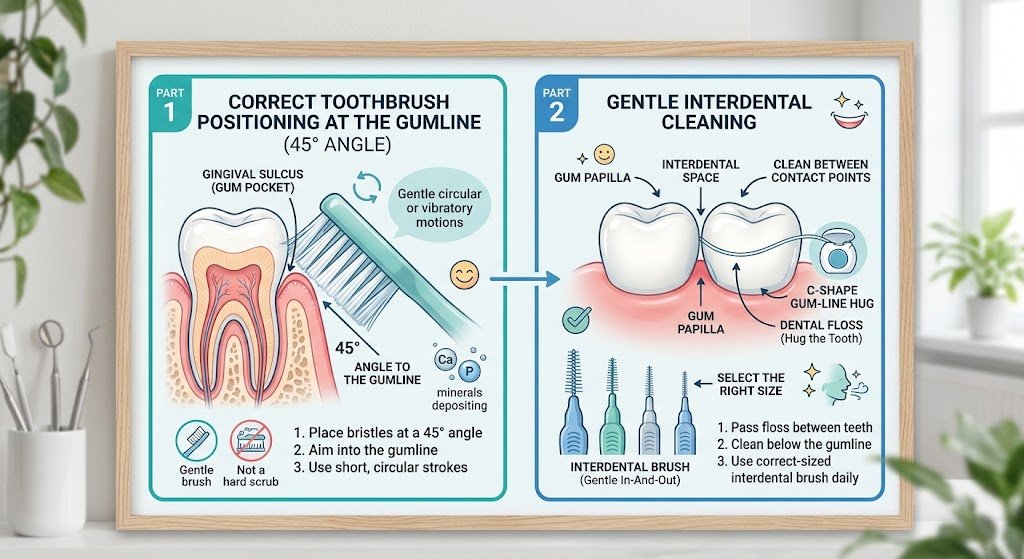
NIDCR recommends positioning the toothbrush bristles toward the gumline and brushing gently. Aggressive scrubbing is not necessary to remove plaque and may make brushing uncomfortable. (nidcr.nih.gov)
A simple technique is:
- Place the bristles near the gumline.
- Use gentle, controlled movements.
- Clean the outside, inside, and chewing surfaces of the teeth.
- Avoid pressing so hard that the bristles become flattened.
- Spend enough time to clean all areas.
Clean between your teeth
A toothbrush cannot effectively clean every space between teeth.
Floss or another appropriate interdental-cleaning method helps remove plaque from these areas. NIDCR notes that cleaning between teeth is an important part of oral hygiene. (nidcr.nih.gov)
This matters for gum health because the spaces between teeth can otherwise become areas where plaque remains.
Do not expect toothpaste to remove tartar
This is one of the most common misunderstandings when shopping for gum-care products.
Plaque and tartar are not the same thing.
Plaque is a soft bacterial film that can be removed through regular oral hygiene. When plaque hardens into calculus or tartar, it cannot simply be brushed away at home. Professional dental cleaning is needed to remove it. (nidcr.nih.gov)
Therefore, a toothpaste marketed around “tartar control” should not be interpreted as a product that can remove existing hardened tartar.
When Toothpaste Isn’t Enough
Toothpaste is designed to be part of daily oral care. It is not a replacement for professional diagnosis or treatment when gum disease is present.
You should consider professional dental evaluation if you experience symptoms such as:
- Persistent or frequent gum bleeding
- Significant gum swelling
- Gum recession
- Persistent gum tenderness or pain
- Loose teeth
- Pain when chewing
- Changes in how your teeth fit together
- Other symptoms that concern you
NIDCR explains that untreated gum disease can progress and affect the tissues and bone that support the teeth. (nidcr.nih.gov)
Why this matters when choosing toothpaste
It can be tempting to keep changing toothpaste whenever a gum problem continues.
But if the underlying issue requires professional care, switching between products may delay the appropriate evaluation.
A more useful approach is:
Choose toothpaste for daily support → maintain good plaque control → monitor symptoms → seek professional care when needed.
Toothpaste belongs inside the oral-care routine, not at the center of the entire treatment plan.
Common Mistakes When Buying Gum-Care Toothpaste
Choosing only because it says “natural”
“Natural” does not automatically tell you whether a toothpaste is effective for your specific oral-health goal.
Look at the active ingredients and evidence behind the intended benefit instead of assuming a natural label means the product is better for gums.
Assuming expensive means better
A higher price does not automatically mean a toothpaste is more appropriate for your needs.
Compare the formulation, active ingredients, intended benefit, product size, and other relevant features before comparing price.
Ignoring active ingredients
This is one of the biggest mistakes.
The front of a toothpaste package may contain several marketing claims, but the active ingredient information gives you a better starting point for understanding what the toothpaste is designed to do.
Focusing only on whitening
Whitening can be useful if it is your priority, but it should not automatically override gum-care or cavity-protection needs.
If gum health is the reason you are shopping, evaluate the product through that lens first.
Assuming toothpaste removes tartar
As noted earlier, hardened tartar requires professional removal. Toothpaste can support daily plaque control, but it cannot replace professional cleaning. (nidcr.nih.gov)
Treating Amazon reviews as medical evidence
Customer reviews can tell you about things such as:
- Flavor
- Texture
- Packaging
- Personal preferences
- Whether someone liked the product
They cannot establish that a toothpaste treats gum disease or will produce the same result for every person.
For health-related product decisions, prioritize evidence, active ingredients, official product information, and professional guidance over star ratings alone.
Ignoring persistent symptoms
If your gums continue to bleed or become increasingly swollen or painful, buying another toothpaste should not be your only response.
Persistent symptoms deserve appropriate professional evaluation.
Frequently Asked Questions
What is the best toothpaste for gum health?
There is no single toothpaste that is best for everyone. A useful choice depends on your specific needs, such as routine gum care, gingivitis-related concerns, sensitivity, cavity prevention, or ingredient preferences.
For gum health, look at the toothpaste’s active ingredients and the evidence supporting its intended benefits. Stannous fluoride is particularly relevant because the ADA identifies evidence associated with stannous fluoride toothpaste and reduced risk of gingivitis and periodontal disease. (ada.org)
For most people, also consider whether the toothpaste provides fluoride for cavity protection and whether you can comfortably use it consistently.
What is the best toothpaste for gingivitis?
If gingivitis is your concern, choose a toothpaste that supports effective plaque control and has an active ingredient with evidence relevant to gingivitis.
Stannous fluoride is one option worth considering. However, toothpaste should be part of a broader routine that includes brushing and cleaning between the teeth. (nidcr.nih.gov)
If symptoms persist, worsen, or include significant swelling, pain, recession, or loose teeth, speak with a dental professional.
Is stannous fluoride good for gums?
Stannous fluoride is a fluoride compound used in toothpaste for cavity prevention. The ADA also notes evidence that toothpaste containing stannous fluoride can reduce the risk of gingivitis and periodontal disease in people at increased risk. (ada.org)
That makes it an ingredient worth considering when both cavity protection and gum health are priorities.
It should not, however, be described as a cure for established periodontal disease.
Can toothpaste stop bleeding gums?
Toothpaste may support plaque control, which is important because plaque buildup can contribute to gingivitis and bleeding gums. (nidcr.nih.gov)
But toothpaste cannot determine why your gums are bleeding.
If bleeding is persistent, frequent, or accompanied by swelling, pain, recession, loose teeth, or other concerning symptoms, professional dental evaluation is appropriate.
Is fluoride toothpaste good for gum health?
Fluoride toothpaste is primarily important for cavity prevention and enamel protection. The ADA identifies fluoride as an anticaries active ingredient, and NIDCR explains that fluoride helps prevent cavities and strengthens teeth. (ada.org)
For overall oral care, cavity protection and gum health are not competing goals. A toothpaste can support cavity prevention while your brushing and interdental-cleaning routine helps control plaque around the gums.
Does toothpaste remove tartar?
No. Toothpaste can help with daily plaque control, but hardened tartar or calculus cannot simply be brushed away at home.
NIDCR explains that tartar requires professional removal. (nidcr.nih.gov)
If you notice significant tartar buildup, consider a professional dental cleaning rather than relying on a toothpaste marketed around tartar control.
Is SLS-free toothpaste better for gum health?
Not automatically.
SLS-free toothpaste may be a useful preference for people who want to avoid sodium lauryl sulfate, but the absence of SLS alone does not establish that a toothpaste is better for gum health.
Compare the complete formula, including active ingredients, fluoride status, intended benefits, flavor, texture, and your individual tolerance.
When should I see a dentist for bleeding gums?
Consider seeing a dental professional when gum bleeding is persistent or accompanied by other symptoms such as swelling, pain, recession, loose teeth, or discomfort when chewing.
Gum disease can progress beyond the gums and affect the tissues and bone supporting the teeth, so persistent symptoms should not simply be managed by repeatedly changing toothpaste. (nidcr.nih.gov)
Conclusion: Choosing Toothpaste for Healthier Gums
The best toothpaste for gum health is not necessarily the one with the strongest marketing claim. A better approach is to match the toothpaste to your actual oral-care needs.
Start by checking the active ingredients. If cavity protection is important, fluoride should be part of your evaluation. If gum health is a major concern, stannous fluoride is an ingredient worth investigating because of its documented evidence for gingivitis-related benefits. (ada.org)
Then consider practical factors such as:
- Sensitivity
- SLS preferences
- Flavor and texture
- Product size and value
- Intended use
- Evidence supporting the product’s claims
- Applicable third-party evaluation such as the ADA Seal
Most importantly, remember that toothpaste is only one part of gum care. Brushing twice a day, cleaning between your teeth, using a gentle technique, and maintaining regular dental care all contribute to a healthier oral-care routine. (nidcr.nih.gov)
If you are ready to compare toothpaste based on your specific needs, continue with a detailed toothpaste buying guide.