Choosing the best natural toothpaste means balancing ingredient preferences with what your teeth actually need. Some natural toothpastes contain fluoride to help prevent cavities, while others are fluoride-free and focus on ingredients such as calcium carbonate, xylitol, or plant-derived flavorings.
There is no single formula that is best for everyone. The right option depends on whether your priority is cavity prevention, avoiding certain ingredients, managing sensitivity, or choosing a simpler ingredient list.
This guide compares natural toothpaste options, explains what to look for on the label, and helps you decide whether a fluoride or fluoride-free formula makes more sense for your oral-care routine.
Best Natural Toothpaste: Top Picks
The phrase “natural toothpaste” does not have one universally accepted definition. A product marketed as natural may contain different ingredients from another product with the same label. For that reason, compare the actual formula and its intended benefits instead of relying on the word natural alone.
The products below represent two different approaches: a fluoride toothpaste with a more conventional cavity-prevention focus and a fluoride-free option for people who specifically prefer to avoid fluoride in toothpaste. Confirm current US packaging, ingredients, and availability before purchasing.
| Product | Best suited for | Key consideration |
| Tom’s of Maine fluoride toothpaste | Shoppers who want a naturally positioned product with fluoride | Check the exact product’s active ingredient and fluoride concentration |
| Tom’s of Maine Fluoride-Free Antiplaque & Whitening Peppermint Toothpaste | Shoppers specifically looking for a fluoride-free formula | Fluoride-free toothpaste should not be assumed to provide the same cavity protection as fluoride toothpaste |
These are examples to help you compare product types, not a definitive ranking of every natural toothpaste available. This guide does not claim that the products were personally tested.
1. Tom’s of Maine Fluoride Toothpaste
Best for: People who prefer a naturally positioned toothpaste but still want fluoride for cavity prevention.
A natural-leaning toothpaste does not have to be fluoride-free. Some products combine brand-positioned natural ingredients or flavors with fluoride, which is important for shoppers who want to consider ingredient preferences without giving up an established cavity-prevention ingredient.
Tom’s of Maine sells multiple toothpaste formulas, so do not assume every product from the brand has the same active ingredients or benefits. Before choosing one, check the package for its active ingredient, fluoride concentration, intended use, and any claims about whitening or sensitivity.
What to consider
- Fluoride: Confirm that the specific formula contains fluoride if cavity prevention is your priority.
- Intended benefit: A whitening formula, a sensitivity formula, and a basic anticavity formula are not interchangeable.
- Ingredient preferences: Read the full ingredient list rather than assuming the entire range follows one definition of “natural.”
- Acceptance and claims: If the product displays the American Dental Association (ADA) Seal of Acceptance, check what claim the Seal applies to and whether the exact product is included in the ADA’s current information.
Potential drawback: The brand name alone does not tell you which formula is right for you. Product names and formulations can vary, so confirm the specific US product rather than relying on a general brand description.
Buying tip: Compare the current product label and manufacturer information before purchasing. For a starting point, review the manufacturer’s ingredient information. [ add a link ]
2. Tom’s of Maine Fluoride-Free Antiplaque & Whitening Peppermint Toothpaste
Best for: Adults who specifically want a fluoride-free toothpaste and understand the cavity-prevention trade-off.
This product is an example of a fluoride-free approach to natural toothpaste. Its manufacturer has listed ingredients including calcium carbonate, glycerin, and xylitol for this formula, but the current US package should be treated as the final reference because ingredient lists can change.
Calcium carbonate can serve as an abrasive to help clean tooth surfaces, while glycerin helps maintain the paste’s consistency. Xylitol is used in some oral-care products, but its presence should not be treated as proof that a toothpaste prevents cavities as effectively as a fluoride toothpaste.
What to consider
- Fluoride-free formulation: This may match a personal ingredient preference, but it does not provide fluoride’s established cavity-prevention benefit.
- Whitening claims: Toothpaste generally works on surface stains through cleaning and polishing. Do not assume that a whitening label means it will change the natural color of teeth.
- Flavor: Peppermint flavor may be appealing to people who prefer a minty finish, although flavor preference is personal.
- Antiplaque claims: Check the exact label and supporting product information to understand what the manufacturer claims and what evidence is available.
Potential drawback: If you are at increased risk of cavities, choosing fluoride-free toothpaste may not be the best option without discussing your situation with a dental professional.
Buying tip: Choose this type of formula because it meets a clearly considered preference—not simply because “fluoride-free” or “natural” sounds safer. Compare the full ingredient list and intended benefits before deciding.
How to Choose the Best Natural Toothpaste for Your Needs
The most useful way to choose a natural toothpaste is to begin with your oral-health needs, then evaluate ingredients and product claims. A shorter or more plant-focused ingredient list is not automatically more effective, and a product marketed as natural is not automatically safer or better for every person.
Decide Whether You Want Fluoride
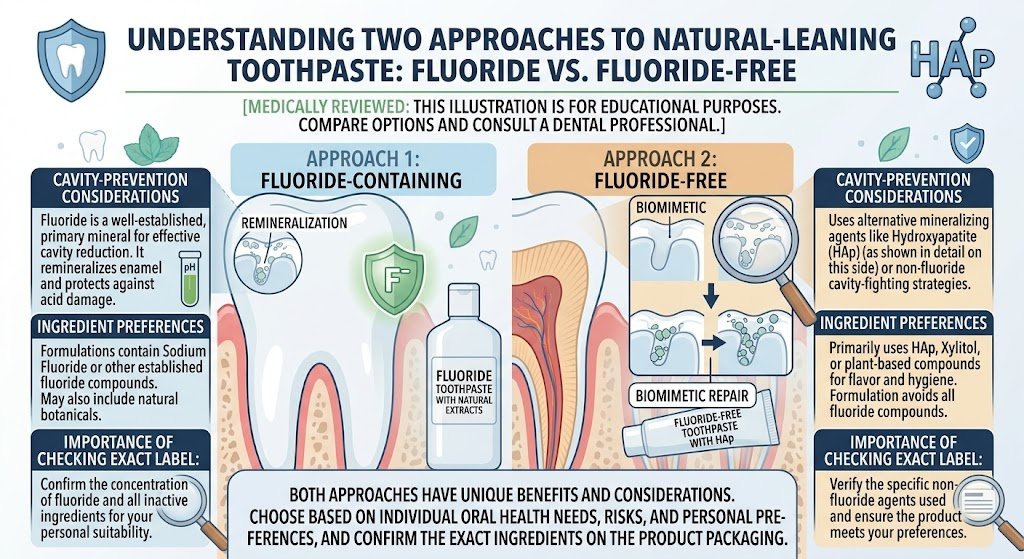
Fluoride is one of the most important distinctions between toothpaste formulas. It helps strengthen enamel and makes teeth more resistant to acid attacks that contribute to cavities. The ADA recommends brushing with fluoride toothpaste, and its accepted anticavity toothpastes contain fluoride. [ add a link ]
For many people, a fluoride-containing toothpaste is the more evidence-aligned starting point for everyday cavity prevention. A product can still fit a preference for certain flavors or ingredient sources while containing fluoride.
A fluoride-free toothpaste may appeal to people who have a firm preference to avoid fluoride in toothpaste. However, do not assume that a fluoride-free formula offers equivalent cavity protection. If you have a history of frequent cavities, dry mouth, exposed roots, or other cavity-risk factors, ask your dentist which formula is appropriate for you.
For a more detailed comparison, see the planned guide to fluoride versus fluoride-free toothpaste. [ add a link ]
Identify the Ingredients You Actually Want to Avoid
Before shopping, identify the specific ingredient or property you are concerned about. For example, you may want to avoid sodium lauryl sulfate (SLS), a foaming agent, because certain toothpaste formulas irritate your mouth. Or you may prefer to avoid a particular flavoring or sweetener.
This is more practical than trying to find a toothpaste that is vaguely “chemical-free.” All toothpastes contain chemicals in the scientific sense, including water and minerals. The useful question is whether the ingredients in a specific formula are appropriate for your needs and whether its claims are supported.
Read the complete ingredient list and check the manufacturer’s explanation of the ingredients. If a product makes a broad claim such as “non-toxic,” “clean,” or “all natural,” look for a clear definition rather than treating the wording as a scientific certification.
If avoiding SLS is your main priority, compare formulas using the actual ingredient list and consult the related SLS-free toothpaste guide. [ add a link ]
Match the Formula to Your Main Oral-Care Goal
| Your priority | What to look for | Important limitation |
| Cavity prevention | A fluoride toothpaste with clear anticavity labeling | Confirm the active ingredient and follow the package directions |
| Avoiding fluoride | A clearly labeled fluoride-free formula | Do not assume equivalent cavity protection |
| Surface-stain removal | A toothpaste intended for whitening or stain removal | Surface stain removal is different from changing the natural color of teeth |
| Avoiding SLS | A formula whose current ingredient list does not include SLS | Ingredient lists may change; verify the package |
| Sensitive teeth | A toothpaste specifically formulated for sensitivity | A general natural toothpaste may not contain an established desensitizing ingredient |
| Simpler ingredient preferences | A clearly disclosed ingredient list that meets your preferences | “Shorter” does not automatically mean safer or more effective |
Check for Independent Evidence and Clear Labeling
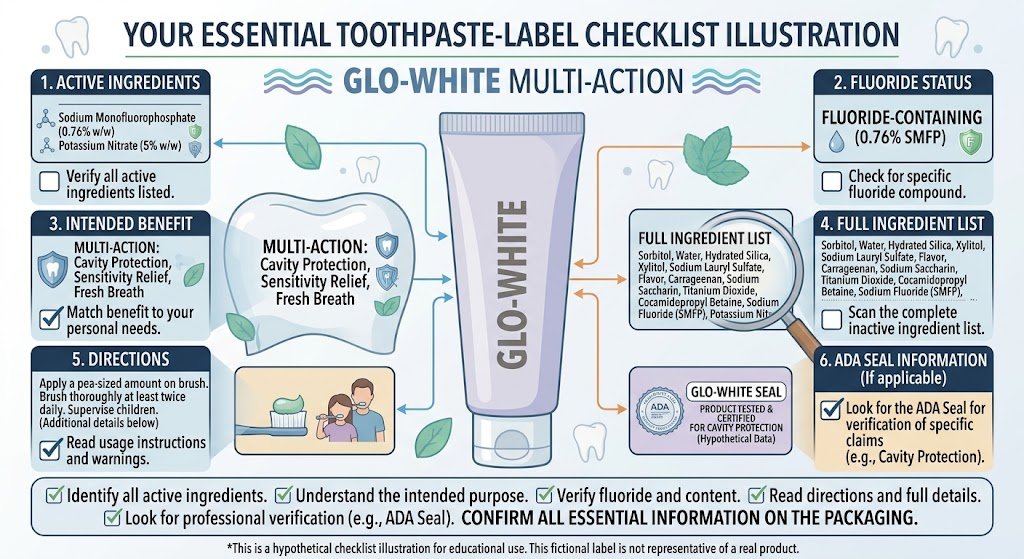
Prefer products that clearly identify their intended use and active ingredients. The ADA Seal of Acceptance can be useful because it indicates that a product has been evaluated against requirements relevant to the claims for which it was accepted. It does not mean that a product is the best choice for every person or superior to every competing product. [ add a link ]
If a toothpaste has no ADA Seal, that fact alone does not establish that it is unsafe or ineffective. Instead, look at the evidence for its specific claims, the clarity of its labeling, and whether it meets your oral-health needs.
Part 2 of 3 — Ingredients, Safety, and Buying Considerations
Natural Toothpaste Ingredients: What to Look For
Understanding the ingredients is more useful than judging a toothpaste by its marketing language. Different ingredients perform different jobs: some help remove debris and surface stains, some keep the paste stable, and some provide an active oral-health benefit.
Fluoride: An Important Ingredient for Cavity Prevention
Fluoride helps protect teeth against decay by supporting remineralization and making enamel more resistant to acid. It is widely used in toothpaste formulated for cavity prevention.
If your priority is reducing cavities, look for a toothpaste with a clearly identified fluoride active ingredient and follow the product directions. In the United States, toothpaste labels may list ingredients such as sodium fluoride or stannous fluoride. These are not interchangeable with a claim that a product is “natural” or “clean”; they are specific active ingredients with defined purposes.
The right choice can depend on your cavity risk, age, and dental history. Children need age-appropriate toothpaste amounts and supervision to limit swallowing. If you are unsure which toothpaste is appropriate for a child or for someone with a high risk of decay, ask a dentist.
What to check on the label: the active ingredient, concentration where stated, intended use, age directions, and warnings. Do not infer the fluoride content from the brand name alone.
For more information, consult the ADA’s fluoride guidance. [ add a link ]
Calcium Carbonate and Silica: Cleaning and Polishing Ingredients
Calcium carbonate and hydrated silica are used in some toothpastes as abrasives. They help the brush and paste clean tooth surfaces and remove some surface deposits or stains.
An abrasive is not automatically harmful, and a product is not automatically better because it uses a particular abrasive. The overall formula matters, including the abrasive’s properties, how the product is used, and the condition of the teeth being brushed.
If you have exposed roots, significant tooth wear, or concerns about enamel, ask a dental professional which product is appropriate rather than choosing solely by a “natural” label.
Xylitol: A Sweetener Used in Some Oral-Care Products
Xylitol is a sugar alcohol used as a sweetener in some toothpastes and other oral-care products. It can help provide a pleasant taste without using ordinary sugar.
Its presence alone does not establish that a toothpaste prevents cavities or is superior to a fluoride toothpaste. Evaluate the complete formula and the evidence for the product’s specific claims.
Glycerin: Helping Maintain Texture
Glycerin is a humectant used in many toothpaste formulas. It helps retain moisture and contributes to the paste’s texture.
The presence of glycerin does not determine whether a toothpaste is natural, safe, or effective by itself. Its source and role can vary by formulation, so check the manufacturer’s ingredient information if its origin matters to you.
Essential Oils and Plant-Derived Flavorings
Some products use peppermint, spearmint, or other flavorings to create a fresh taste. Plant-derived ingredients can be compatible with an individual’s preferences, but “plant-based” does not automatically mean non-irritating or suitable for everyone.
If a toothpaste repeatedly causes burning, soreness, peeling tissue, or other irritation, stop using it and consider discussing the reaction with a dental professional. A formula marketed as natural can still contain ingredients that some people do not tolerate well.
Ingredients You May Want to Check Carefully
There is no universal list of ingredients that everyone must avoid. Focus on ingredients relevant to your own needs and the evidence behind any safety claim.
- Sodium lauryl sulfate (SLS): A foaming agent used in some toothpastes. Some people prefer SLS-free products, particularly if they experience irritation with certain formulas.
- Flavorings: Mint and other flavors can affect comfort and taste preference. A stronger flavor is not proof of better cleaning.
- Whitening abrasives: These can help remove surface stains, but the formula should be appropriate for your teeth and used as directed.
- Sweeteners: Some toothpastes use sweeteners to improve taste. Check the full formula if you have a specific sensitivity or ingredient preference.
- Broad safety claims: Words such as “chemical-free,” “toxin-free,” and “clean” do not replace a specific explanation of ingredients and evidence.
For a deeper ingredient-by-ingredient review, use the planned guides to toothpaste ingredient safety and ingredients to avoid. [ add a link ]
Is Natural Toothpaste as Effective as Regular Toothpaste?
The answer depends on the formula and the benefit being considered. “Natural toothpaste” describes a broad marketing category rather than one standardized formulation, so it is not possible to make a single effectiveness claim about every product sold under that label.
For Cavity Prevention
The key question is whether the toothpaste contains fluoride and is intended for cavity prevention. Fluoride toothpaste has strong support for helping prevent tooth decay. The ADA’s guidance states that accepted anticavity toothpastes contain fluoride. [ add a link ]
A fluoride-free toothpaste may clean the teeth and freshen breath, but those benefits should not be confused with equivalent cavity protection. If you are prone to cavities, discuss your options with a dental professional before switching away from fluoride.
For Plaque Removal and Fresh Breath
Brushing technique, brushing frequency, and cleaning all tooth surfaces matter. Toothpaste can support cleaning, but no formula compensates for consistently poor brushing.
To help control plaque, brush twice daily with a soft-bristled toothbrush and follow advice from your dentist. Clean between your teeth as recommended; toothpaste alone does not replace interdental cleaning.
A toothpaste that leaves a strong minty taste may feel refreshing, but the sensation of freshness is not a reliable measure of plaque removal.
For Whitening
Most whitening toothpastes primarily help remove surface stains. They generally should not be assumed to change the underlying color of teeth in the same way as professional whitening treatments.
If you have restorations, sensitive teeth, significant discoloration, or concerns about enamel wear, ask a dental professional about appropriate whitening options. Do not choose an abrasive product simply because its label promises a brighter smile.
For Sensitive Teeth
A toothpaste described as natural may not contain an ingredient specifically intended to reduce tooth sensitivity. If cold drinks, hot foods, sweet foods, or brushing cause sharp or recurring discomfort, look for a product formulated for sensitivity and check its active ingredients.
Persistent or worsening sensitivity can have causes that toothpaste alone will not address, including decay, gum recession, cracks, or other dental problems. Arrange a dental assessment if symptoms continue.
Natural vs. Fluoride-Free vs. Non-Toxic Toothpaste
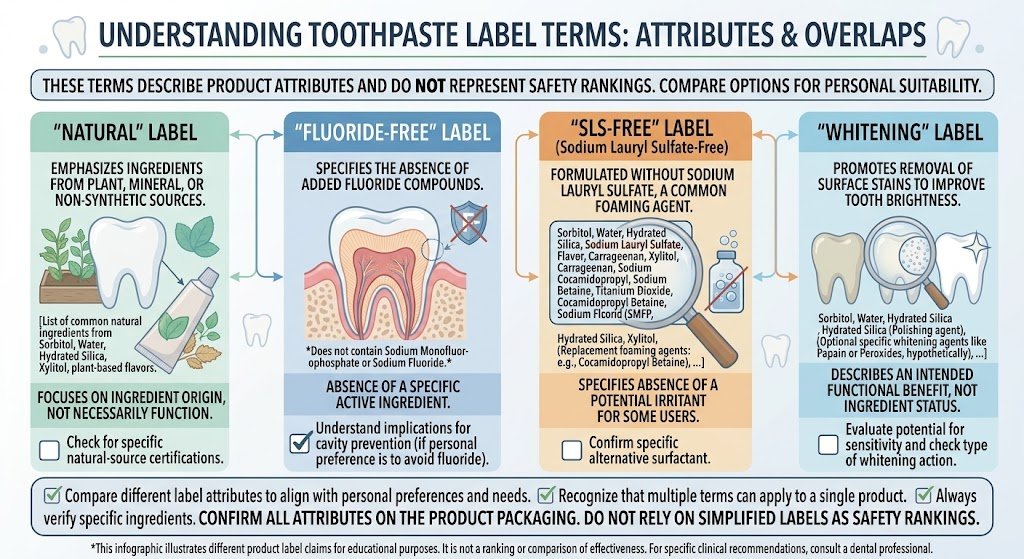
These terms are often used together in marketing, but they do not mean the same thing.
| Term | What it generally means | What it does not automatically mean |
| Natural toothpaste | A product marketed around natural, naturally derived, or selected ingredients | That every ingredient is natural, or that the product is more effective |
| Fluoride-free toothpaste | A formula made without fluoride | That it provides the same cavity protection as fluoride toothpaste |
| Non-toxic toothpaste | A marketing description suggesting the product is considered safe | A universal scientific certification or guarantee of suitability for every person |
| SLS-free toothpaste | A formula that does not list SLS as an ingredient | That it is automatically safer or better for every user |
| Whitening toothpaste | A product intended to help remove stains or otherwise support a whitening claim | That it will change intrinsic tooth color or whiten every type of stain |
The practical takeaway: decide which property matters to you, then verify that property on the label. Avoid using “natural,” “clean,” or “non-toxic” as a substitute for checking ingredients, intended use, and supporting evidence.
How Much Should You Pay for Natural Toothpaste?
The price of natural toothpaste varies by brand, package size, formula, retailer, and whether you are buying a single tube or a multipack. Prices and availability change, so compare current listings rather than relying on an old price or a general claim that one brand is always cheaper.
To compare value fairly, check:
- Price per ounce: A larger tube or multipack may offer a lower unit cost, but only if you will use it before it expires and it suits your needs.
- Formula: Do not pay more just because a product uses the word “natural.” Consider whether it offers the active ingredients and features you want.
- Your main goal: A toothpaste for sensitivity or cavity prevention may be a more appropriate purchase than a general natural formula that does not address your needs.
- Shipping and bundle size: These can change the total cost, particularly for online purchases.
- Current label and availability: Verify the exact formula and size before ordering.
For Amazon purchases, compare the listed package size and current price on the product page. Check the seller and product details carefully, and do not assume that every listing uses the same formulation or packaging.
Who Should Be Careful When Choosing Natural Toothpaste?
Most people can choose among a range of toothpaste formulas, but some situations deserve extra care.
People Who Frequently Get Cavities
If you have a history of repeated cavities or have been told you are at elevated risk, speak with your dentist before switching to fluoride-free toothpaste. Your dental professional can help assess your risk and recommend an appropriate fluoride product or other preventive measures.
Children
Choose toothpaste appropriate for the child’s age and follow the label and dental guidance for the amount to use. Supervise brushing so young children do not swallow toothpaste. Do not assume a fluoride-free formula is the best choice simply because it is marketed as natural.
People With Sensitive Teeth or Gum Irritation
A product’s flavor, foaming agent, or other ingredients may not suit everyone. If a toothpaste causes recurring irritation, stop using it and consider trying a different formula with advice from a dental professional. Persistent sensitivity, bleeding gums, sores, or pain should not be treated as a simple toothpaste-selection problem.
People Looking for “Chemical-Free” Products
No toothpaste is literally chemical-free. Water, minerals, and plant-derived substances are all made of chemicals. A more useful approach is to identify the ingredients you want to avoid, understand their purpose, and choose a product with clear labeling and evidence appropriate to your needs.
If you have a known allergy or have experienced a reaction to a particular ingredient, review the complete ingredient list and contact the manufacturer or your dental professional when information is unclear.
Frequently Asked Questions
What is the best natural toothpaste?
The best option depends on your priorities. If cavity prevention is important, a fluoride-containing toothpaste with clear anticavity labeling is a strong starting point, even if you prefer a naturally positioned brand. If you specifically want a fluoride-free formula, compare the ingredients and understand that it may not offer equivalent cavity protection.
Is natural toothpaste better than regular toothpaste?
Not automatically. “Natural” is not a standardized measure of effectiveness. Compare the active ingredients, intended benefits, labeling, and evidence instead of assuming a natural product is better than a conventional one.
Does natural toothpaste contain fluoride?
Some natural-leaning toothpastes contain fluoride, while others do not. Read the exact product label and look for the active ingredient. Do not rely on the brand name or front-of-package marketing alone.
Is fluoride-free toothpaste safe to use?
A fluoride-free toothpaste can clean teeth, but the key question is whether it meets your oral-health needs. It does not provide fluoride’s established cavity-prevention benefit. If you are at elevated risk of tooth decay, discuss the decision with your dentist.
Does natural toothpaste whiten teeth?
Some formulas marketed as natural contain abrasives or other ingredients intended to help remove surface stains. Results depend on the formula and the type of discoloration. Do not assume that a natural or whitening label means the toothpaste will change the natural color of your teeth.
Is SLS-free toothpaste better?
Not for everyone. SLS is a foaming agent, and some people prefer to avoid it because they experience irritation with particular formulas. If you are comfortable with your current toothpaste, there is no universal rule that you must switch to an SLS-free option. If irritation is recurring, consider discussing it with a dental professional.
Can natural toothpaste prevent cavities?
A natural-leaning toothpaste that contains fluoride can help prevent cavities when used as directed. Do not assume a fluoride-free formula provides equivalent protection just because it contains other ingredients associated with oral care.
How can I tell whether a natural toothpaste is trustworthy?
Check the full ingredient list, active ingredients, intended use, directions, warnings, and manufacturer information. Look for independent evidence supporting the product’s specific claims. If the product has the ADA Seal of Acceptance, verify the exact product and the claim covered by that acceptance. Broad terms such as “clean” and “non-toxic” are not substitutes for evidence.
Should I choose toothpaste with fewer ingredients?
Not necessarily. The number of ingredients does not, by itself, show whether a toothpaste is safer or more effective. Each ingredient has a role, and the complete formulation matters. Focus on the ingredients relevant to your preferences and oral-health needs.
Final Verdict: Choosing the Right Natural Toothpaste
The best natural toothpaste is not necessarily the one with the shortest ingredient list, the strongest mint flavor, or the boldest “clean” claim. It is the formula that fits your preferences while meeting your oral-health needs.
For everyday cavity prevention, consider a fluoride-containing toothpaste with clear anticavity labeling. If you prefer a fluoride-free product, compare its ingredients and benefits carefully and understand the trade-off. If your priority is avoiding SLS, reducing sensitivity, or removing surface stains, choose a formula designed for that specific goal rather than relying on the natural label alone.
Before buying, check the current US package, verify the active ingredients, and compare the product’s claims with reliable guidance. If you have frequent cavities, persistent sensitivity, or another specific dental concern, ask your dentist for an individualized recommendation.
Affiliate disclosure: This article may contain affiliate links. If a reader purchases through qualifying links, the publisher may earn a commission at no additional cost to the reader. Product inclusion should be based on relevance to the reader’s needs, not solely on commission potential.
