Choosing a fluoride toothpaste is usually less complicated than toothpaste marketing makes it seem. For most people, the key question is not which package has the longest ingredient list, but whether the toothpaste contains an appropriate fluoride active ingredient and matches your particular oral-care needs.
For everyday cavity prevention, fluoride remains the central ingredient to look for. In the U.S., commonly used fluoride actives include sodium fluoride, stannous fluoride, and sodium monofluorophosphate. The American Dental Association (ADA) notes that over-the-counter fluoride toothpastes in the U.S. generally contain 1,000–1,500 ppm fluoride.
But cavity protection is not the only consideration. You may also want help with tooth sensitivity, enamel concerns, plaque or gingivitis, or cosmetic whitening.
This guide compares fluoride toothpaste options by use case, explains what the active ingredients actually do, and shows you how to evaluate a toothpaste label without relying on vague “natural,” “advanced,” or “professional” marketing claims.
Affiliate disclosure: If this article contains links to products sold through Amazon, we may earn a commission from qualifying purchases. This does not change how products are evaluated or described.
Our Fluoride Toothpaste Picks
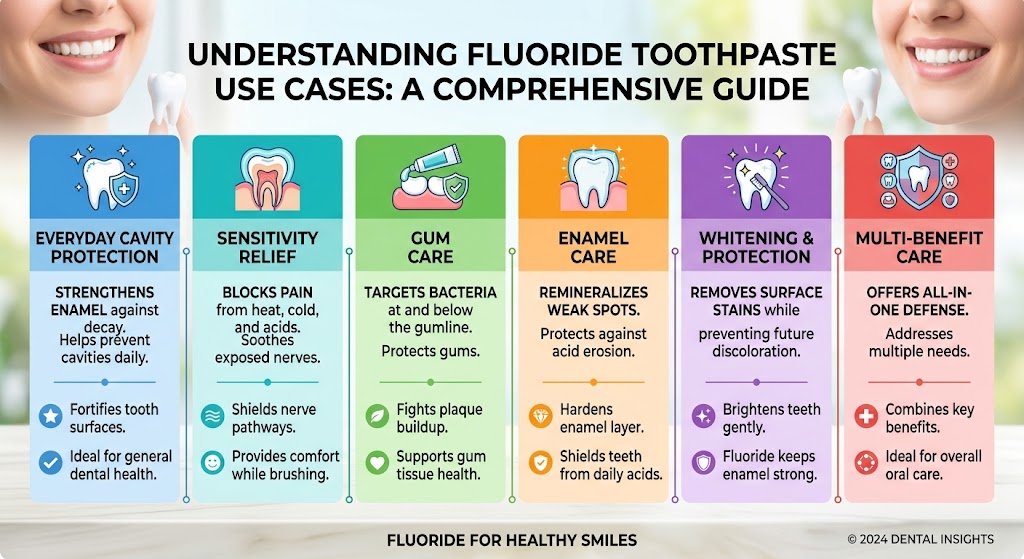
Rather than treating one toothpaste as universally “best,” it makes more sense to match the product to the problem you are trying to solve. A toothpaste designed primarily for cavity protection does not necessarily have the same feature set as one designed for sensitivity or gum concerns.
| Use case | Product example | Why it may fit |
| Everyday cavity protection | Colgate Cavity Protection Gel & Toothpaste | Fluoride toothpaste specifically accepted by the ADA for helping prevent cavities |
| Broad oral-care needs | Colgate Total SF | Multi-benefit toothpaste category worth considering when cavity, plaque, gum, or other concerns overlap |
| Gum and enamel concerns | Crest Gum & Enamel Repair | Designed around multiple oral-care concerns rather than cavity protection alone |
| Sensitive teeth | Sensodyne fluoride toothpaste | A category to consider when reducing dentin sensitivity is a primary goal |
| Sensitivity plus additional benefits | Hello Sensitivity Relief Fluoride Toothpaste | Combines fluoride cavity protection with a sensitivity-focused formulation |
| Multi-benefit care | Crest Pro-Health Toothpaste | A fluoride option to consider when several oral-care goals matter |
Important: These are product examples and use-case categories, not a universal ranking. Exact formulations, packaging, availability, ADA status, and product names can change. Verify the exact product and variant before publishing or purchasing.
For example, the ADA currently lists Colgate Cavity Protection Gel & Toothpaste as accepted for helping prevent tooth decay when used as directed, with sodium monofluorophosphate as its active ingredient.
A quick way to narrow the list
If your main concern is:
- Cavities: Start by looking for a fluoride toothpaste with an appropriate anticaries active ingredient.
- Sensitivity: Look for a fluoride toothpaste that also has a desensitizing active ingredient or a product specifically formulated for sensitivity.
- Gum or plaque concerns: Consider a fluoride toothpaste with additional evidence-backed ingredients or claims relevant to those concerns.
- Enamel concerns: Look for products whose documented claims or formulation are relevant to enamel protection or erosion.
- Whitening: Remember that whitening toothpaste primarily addresses surface staining; it should still provide appropriate fluoride protection if cavity prevention is a goal.
- Several concerns at once: A multi-benefit fluoride toothpaste may be more practical than switching between several products.
The important distinction is that fluoride is the cavity-prevention foundation, while other ingredients and claims address additional needs. The ADA identifies fluoride-containing compounds such as sodium fluoride, sodium monofluorophosphate, and stannous fluoride as anticaries agents used in toothpaste.
How We Choose Fluoride Toothpaste
A useful product guide should explain why a toothpaste makes the list rather than simply repeating packaging claims.
For this guide, the most important evaluation points are:
- Fluoride active ingredient — Does the toothpaste contain a recognized fluoride anticaries ingredient?
- Fluoride concentration — Is the fluoride level appropriate for the product category and intended user?
- Evidence and claims — Are important claims supported by a credible source or recognized evaluation?
- ADA Seal status — Where applicable, has the exact product earned the ADA Seal for the relevant claim?
- Use case — Does the formulation make sense for sensitivity, gum, enamel, whitening, or another specific concern?
- Practicality — Is the toothpaste suitable for normal daily use and easy for the intended user to use consistently?
- Value — When products perform a similar role, does pack size or formulation provide a meaningful difference in overall value?
This approach avoids a common mistake in “best toothpaste” articles: treating every extra feature as equally important.
A toothpaste can have a long list of cosmetic or secondary features while still being a poor fit for someone whose primary concern is cavity prevention. Conversely, someone with significant sensitivity may reasonably prioritize a toothpaste with a sensitivity-focused active ingredient rather than choosing solely on the basis of fluoride type.
Why the ADA Seal matters
The ADA Seal of Acceptance is one useful third-party trust signal, but it should not be treated as a universal ranking system.
The ADA says products carrying the Seal have been evaluated against requirements for their specific claims. For fluoride toothpastes, the ADA evaluates evidence relating to safety and efficacy, including factors such as available fluoride, fluoride release, and fluoride absorption in normal and weakened enamel.
The Seal also does not mean that one accepted toothpaste is better than every toothpaste without the Seal. The ADA specifically explains that products without the Seal may still be effective; manufacturers choose whether to apply and go through the ADA review process.
That distinction is important when comparing products. The Seal is evidence that a particular product has met the ADA’s requirements for the claims evaluated; it is not a score from one to ten.
What Makes a Good Fluoride Toothpaste?
1. A recognized fluoride active ingredient
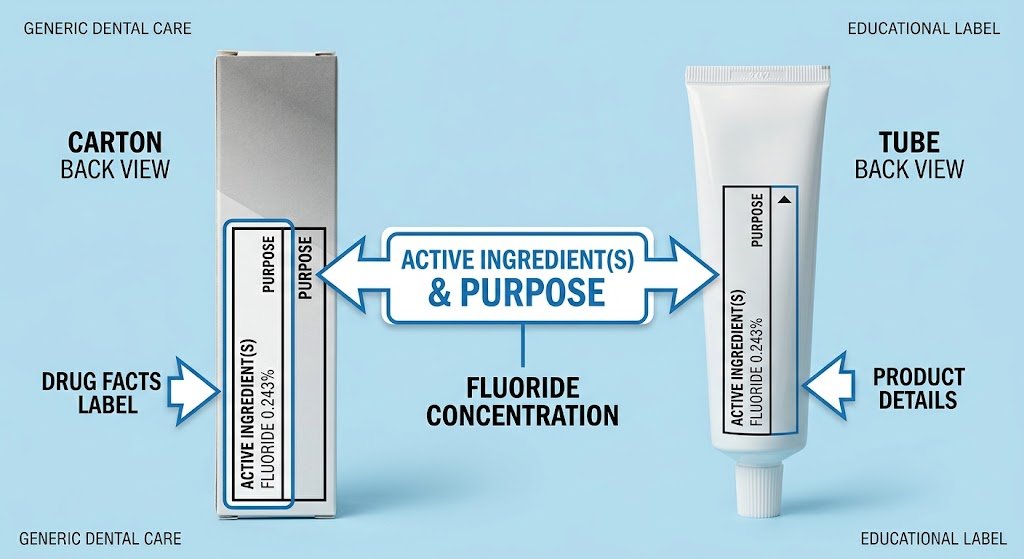
The first thing to check is the active ingredient rather than the front-of-package marketing.
The ADA identifies three fluoride compounds commonly used as anticaries ingredients in toothpaste:
- Sodium fluoride
- Stannous fluoride
- Sodium monofluorophosphate
These ingredients are recognized for their role in cavity prevention, although their formulations and additional benefits can differ.
A label might also contain numerous inactive ingredients for flavor, texture, foaming, preservation, polishing, or other purposes. Those ingredients can influence the experience of using the toothpaste, but they should not distract from identifying the active anticaries ingredient.
2. An appropriate fluoride concentration
Concentration matters, but higher numbers should not automatically be interpreted as “better.”
The ADA states that U.S. over-the-counter fluoride toothpastes generally contain 1,000–1,500 ppm fluoride. Prescription-strength fluoride toothpaste is different: ADA guidance identifies products containing 5,000 ppm fluoride as sodium fluoride.
Prescription-strength toothpaste is generally something to discuss with a dental professional rather than something to select simply because the fluoride number looks more impressive.
3. Evidence for the claim you actually care about
“Multi-benefit” can sound impressive, but ask what benefit you need.
The ADA notes that toothpastes may include ingredients or formulations intended to address concerns such as tooth sensitivity, gingivitis or tartar buildup, enamel erosion, whitening, and bad breath in addition to fluoride’s anticaries role.
That means a good buying decision starts with a simple question:
What do I want this toothpaste to do besides clean my teeth?
If the answer is “mainly help prevent cavities,” you may not need a toothpaste with a dozen additional claims.
If the answer is “help prevent cavities and reduce sensitivity,” then a sensitivity-focused fluoride toothpaste may make more sense.
4. A formulation you will actually use consistently
The best theoretical toothpaste is not very useful if you dislike its flavor, texture, or other characteristics enough to stop using it.
Daily consistency matters. The ADA recommends brushing twice daily with fluoride toothpaste for most people.
So practical factors such as taste, foaming, texture, availability, and price can legitimately influence your choice once the basic clinical requirements are satisfied.
That is especially relevant when comparing two fluoride toothpastes that address the same primary concern. If both are reasonable options, the one you are comfortable using consistently may be the more practical purchase.
Best Fluoride Toothpaste for Everyday Cavity Protection
For someone without a specialized oral-care concern, the selection process can be relatively straightforward.
Look for a toothpaste that:
- Contains a recognized fluoride anticaries active ingredient.
- Is intended for regular use by the person buying it.
- Has clear directions and warnings.
- Ideally has a credible third-party evaluation such as the ADA Seal when available and relevant.
- Fits your taste and budget well enough that you will use it consistently.
One example is Colgate Cavity Protection Gel & Toothpaste. The ADA’s current product listing says its acceptance is based on a finding that it is safe and has shown efficacy in helping prevent tooth decay when used as directed. Its listed active ingredient is sodium monofluorophosphate.
That does not make it the universal winner. It illustrates the type of evidence a product guide should look for: a clearly identified fluoride active, a defined purpose, and a verifiable product-level evaluation.
What about “natural” fluoride toothpaste?
“Natural” is not a substitute for evaluating the active ingredient.
Some shoppers prefer products marketed around natural ingredients, fewer additives, or particular flavoring choices. Those preferences are legitimate, but they do not tell you by themselves whether the toothpaste provides the cavity-prevention benefit you are looking for.
If cavity prevention is important to you, check the actual active ingredient panel rather than relying on front-label language.
Best Fluoride Toothpaste for Sensitive Teeth
Tooth sensitivity changes the buying decision because you are looking for two things at once: routine cavity protection and help with sensitivity.
The ADA notes that toothpastes can contain desensitizing ingredients in addition to fluoride. Its toothpaste guidance also cites evidence supporting twice-daily use of certain self-applied dentifrices for reducing dentin hypersensitivity pain.
For this reason, someone with sensitive teeth does not necessarily need to abandon fluoride toothpaste. Instead, look for a fluoride toothpaste formulated specifically around sensitivity.
Products in this category may use different approaches and active ingredients, so compare the exact formulation rather than assuming every “sensitive” toothpaste works in precisely the same way.
Potential examples include Sensodyne fluoride toothpaste and Hello Sensitivity Relief Fluoride Toothpaste, but the exact variant should be checked before publication because product formulations and claims can change.
When sensitivity needs more than a toothpaste change
Tooth sensitivity can have multiple causes. A toothpaste may help manage symptoms, but persistent, severe, localized, or newly developing sensitivity deserves professional evaluation rather than endless product switching.
That is particularly important if sensitivity is associated with pain, a damaged tooth, visible wear, swelling, or other symptoms.
A product guide should therefore avoid promising that a particular toothpaste will “fix” sensitivity. The more defensible claim is that some fluoride toothpastes are formulated to help reduce sensitivity when used as directed.
Fluoride Toothpaste for Enamel Concerns
Enamel is the hard outer layer of the tooth, and fluoride is relevant because it helps strengthen teeth and supports remineralization of enamel during the early stages of tooth decay.
But “enamel health” is broader than simply choosing a toothpaste with the highest fluoride number.
If your concern is enamel erosion from dietary acids, look for a product with an appropriate documented claim rather than assuming that every toothpaste marketed as “enamel strengthening” has identical evidence.
The ADA has a separate product category for enamel erosion control, covering products that have been found safe and to show efficacy in preventing or reducing enamel erosion from dietary acids.
Fluoride versus “remineralizing” marketing
“Remineralizing” is another area where marketing terminology can become confusing.
Fluoride has a well-established role in caries prevention, but toothpaste formulas can contain other ingredients marketed for enamel or mineral-related benefits. Rather than treating every remineralizing ingredient as equivalent to fluoride, evaluate what evidence exists for the specific ingredient, formulation, and claim.
Best Fluoride Toothpaste for Gum and Plaque Concerns
If plaque buildup or gum health is one of your main concerns, a fluoride toothpaste can still serve as the foundation of your routine. The difference is that you may want additional benefits beyond cavity protection.
What to look for
If gum or plaque concerns are your priority, compare:
- The fluoride active ingredient.
- The specific additional claim made by the product.
- Whether the exact product has been evaluated by the ADA for that claim.
- Whether you need a toothpaste focused on gingivitis, tartar, sensitivity, enamel, or simply routine plaque control.
- Whether the product fits comfortably into your normal brushing routine.
A toothpaste should not replace professional dental care when you have persistent bleeding, swelling, pain, loose teeth, or other concerning symptoms. Product selection is most useful as part of a broader oral-care routine.
Best Fluoride Toothpaste for Whitening
Whitening is one of the easiest toothpaste claims to misunderstand.
A whitening toothpaste generally works by helping remove or manage surface stains rather than changing the natural internal color of a tooth in the same way as professional bleaching treatments.
That means someone shopping for a whitening toothpaste should first decide what kind of result they actually want.
If your goal is simply to reduce surface staining from foods, drinks, or other sources, a whitening fluoride toothpaste may be a reasonable everyday option. If you are looking for a substantial change in the underlying color of your teeth, toothpaste alone may not provide the result you expect.
Do whitening toothpastes weaken enamel?
It is too simplistic to assume that every whitening toothpaste damages enamel, just as it would be too simplistic to assume that every whitening toothpaste is equally gentle.
For everyday use, the more useful approach is to choose a product appropriate for your needs and use it as directed rather than selecting a toothpaste solely because it promises the most aggressive whitening.
Sodium Fluoride vs. Stannous Fluoride vs. Sodium Monofluorophosphate
The words on the active-ingredient panel can make fluoride toothpaste seem more complicated than it is.
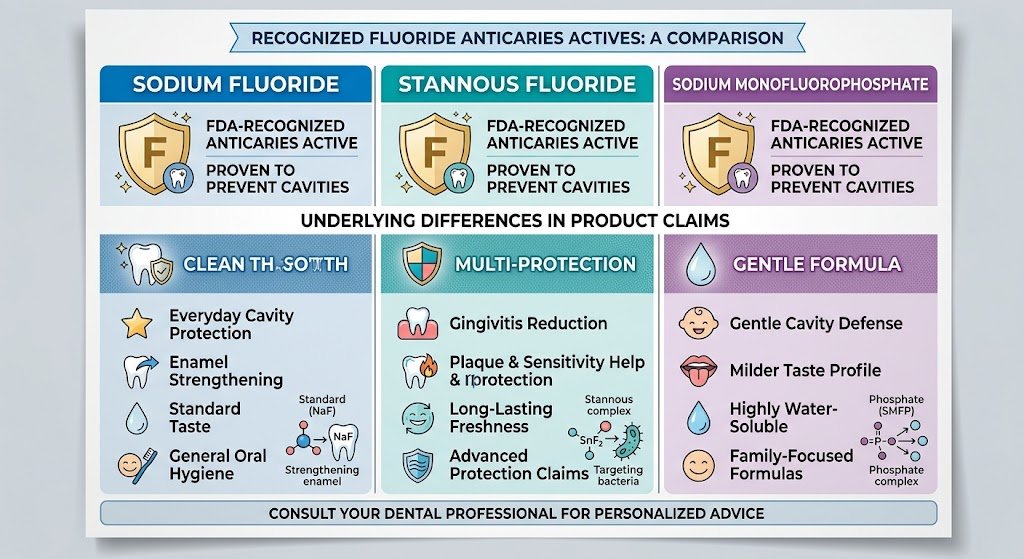
The three fluoride compounds commonly used in U.S. toothpastes include:
| Fluoride active | What to know |
| Sodium fluoride | A common fluoride anticaries ingredient used in toothpaste |
| Stannous fluoride | A fluoride compound used for cavity protection and, depending on formulation, additional oral-care benefits |
| Sodium monofluorophosphate | Another recognized fluoride anticaries ingredient used in toothpaste |
So you should not assume that seeing one ingredient automatically means the toothpaste is ineffective because it does not contain another.
The more useful question is:
What does this particular formulation claim to do, and what evidence supports that claim?
Stannous fluoride
Stannous fluoride is particularly interesting when a product is designed around multiple oral-care benefits. Depending on the formulation, products containing stannous fluoride may make claims relating not only to cavities but also to sensitivity, plaque, gingivitis, or enamel erosion.
However, those benefits should be evaluated at the product level rather than assumed from the ingredient name alone.
A toothpaste containing stannous fluoride is not automatically interchangeable with every other stannous fluoride formulation.
Sodium fluoride
Sodium fluoride is another common anticaries active ingredient. For a consumer whose main objective is routine cavity prevention, seeing sodium fluoride on the active-ingredient panel is generally much more meaningful than the marketing language surrounding the rest of the package.
Sodium monofluorophosphate
How to Choose the Right Fluoride Toothpaste
Once you understand the basic ingredients, choosing becomes much easier.
Use this sequence rather than starting with the brand name.
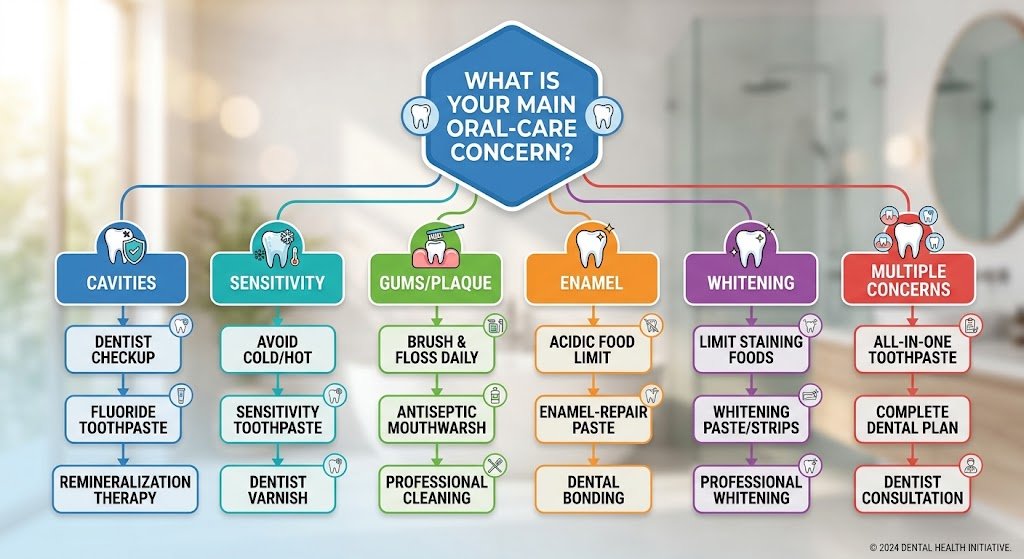
Step 1: Identify your primary problem
Ask yourself what you actually want the toothpaste to accomplish.
Mainly cavity prevention?
A conventional fluoride toothpaste may be sufficient.
Sensitive teeth?
Choose a fluoride toothpaste formulated specifically for sensitivity.
Gum or plaque concerns?
Look for a product with relevant documented claims rather than assuming every multi-benefit toothpaste is identical.
Enamel concerns?
Look for evidence and claims relevant to enamel protection or erosion.
Surface stains?
A whitening fluoride toothpaste may be useful if your expectations are limited to surface-stain removal.
Several concerns at once?
A multi-benefit fluoride toothpaste may be more convenient.
Step 2: Check the active ingredient
Turn the package over and look at the Active Ingredients section.
Do not rely solely on phrases such as:
- Advanced protection
- Natural protection
- Enamel defense
- Professional formula
- Deep clean
- Total care
Those descriptions can tell you what the manufacturer wants to emphasize, but they do not replace checking the actual active ingredient.
Step 3: Check the fluoride concentration
Do not automatically choose a higher concentration simply because the number is larger. Prescription-strength 5,000 ppm fluoride toothpaste is a different category and may be recommended for people with particular clinical needs.
Step 4: Look for product-level evidence
If a product carries the ADA Seal, verify the exact product and variant, not simply the brand.
Step 5: Consider secondary features
Only after the basics are covered should you compare:
- Flavor
- Texture
- Foaming
- Whitening
- Sensitivity ingredients
- Gum-care claims
- Enamel-related claims
- Packaging and price
- Availability
This order helps prevent marketing features from overshadowing the most important part of the decision.
Fluoride-Free vs. Fluoride Toothpaste
Some people deliberately choose fluoride-free toothpaste because of personal preferences, ingredient concerns, or interest in alternatives such as hydroxyapatite.
That is a separate decision from choosing the best fluoride toothpaste.
If your goal is specifically cavity prevention with fluoride, a fluoride-free product cannot simply be treated as another equivalent formulation in the same category. The evidence and mechanisms need to be evaluated separately.
The practical takeaway is simple: decide whether you are comparing different fluoride formulations or deciding whether to use fluoride at all. Those are two different purchasing questions.
When Regular OTC Fluoride Toothpaste May Not Be Enough
Most people shopping for everyday toothpaste are looking for an over-the-counter product. But there are situations where toothpaste selection should involve a dental professional.
That does not mean a 5,000 ppm product is “better” for everyone. It means it has a different fluoride concentration and is used in a different clinical context.
Talk with a dentist if you have:
- Repeated cavities despite good oral hygiene.
- A history of particularly high cavity risk.
- Persistent or severe sensitivity.
- Significant enamel erosion.
- Gum symptoms that do not improve.
- Dental pain or swelling.
- A need for prescription-strength fluoride.
A toothpaste guide can help you understand the available categories, but it cannot determine an individual’s clinical diagnosis or treatment plan.
How Much Should You Spend on Fluoride Toothpaste?
Price is one of the least reliable ways to judge whether a fluoride toothpaste is appropriate.
A premium toothpaste may include additional features that matter to a particular user. A basic cavity-protection toothpaste may provide exactly what another user needs.
Instead of asking, “Which toothpaste costs the most?” ask:
Am I paying for a feature that solves my actual problem?
For example, if your only priority is routine cavity protection, paying substantially more for features you do not care about may not provide much practical value.
On the other hand, if you have sensitivity and a specialized formulation helps you brush comfortably and consistently, the additional cost may be meaningful to you.
When comparing Amazon listings, compare cost per ounce or cost per tube, not just the headline price. Multipacks can appear more expensive while costing less per unit.
Check the current product size, pack count, and price before purchasing because Amazon listings can change.
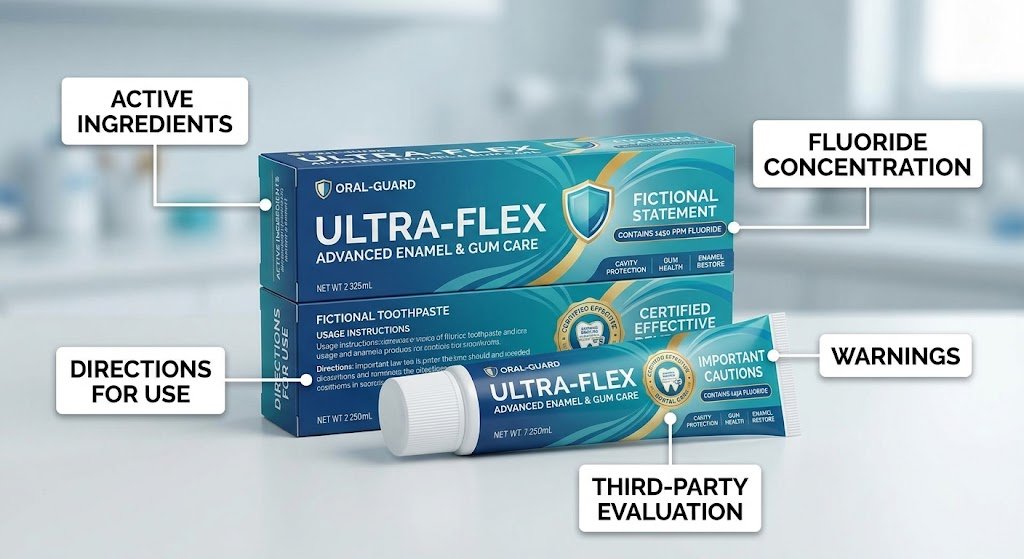
How to Evaluate a Fluoride Toothpaste Label
A toothpaste package can be simplified into a few questions.
Front of package
Use this mainly to identify the product and its major claims.
Do not make your final decision from the front label alone.
Active ingredients
This is where you identify the fluoride compound and any additional active ingredients.
Fluoride concentration
Check the stated concentration where provided.
Directions
Follow the manufacturer’s directions. Children, in particular, may have different recommendations depending on age.
Warnings
Read the warnings and age-related instructions rather than assuming an adult toothpaste is appropriate for every child.
Third-party evaluation
If the ADA Seal is important to you, verify the exact product through the ADA’s current product information rather than assuming a brand-wide approval.
Common Mistakes When Buying Fluoride Toothpaste
Choosing by marketing language alone
Words such as “advanced,” “natural,” “professional,” and “complete” do not tell you enough about cavity protection.
Assuming more ingredients means better toothpaste
A long ingredient list is not automatically a sign of a superior product.
Treating every fluoride ingredient as identical
Sodium fluoride, stannous fluoride, and sodium monofluorophosphate are all recognized fluoride anticaries ingredients, but individual formulations can have different additional benefits and claims.
Treating the ADA Seal as a ranking
Buying prescription-strength fluoride without professional guidance
A higher fluoride concentration is not simply an upgrade for everyone.
Ignoring the exact product variant
A brand can sell many toothpaste formulations. Always verify the specific product, active ingredient, claims, and current ADA status where relevant.
Changing toothpaste constantly
If your current fluoride toothpaste meets your needs and you use it consistently, switching products simply because another package has more marketing claims may not offer a meaningful advantage.
Frequently Asked Questions
What is the best fluoride toothpaste for preventing cavities?
There is not one universally best product for every person. For routine cavity prevention, prioritize a toothpaste containing a recognized fluoride anticaries active ingredient at an appropriate concentration. You can then compare product-level evidence, ADA acceptance where applicable, personal preferences, and any additional oral-care needs.
Is fluoride toothpaste better than fluoride-free toothpaste?
If your specific goal is fluoride-based cavity prevention, fluoride toothpaste is the relevant category to evaluate. Fluoride-free alternatives should be considered separately because they use different active ingredients and evidence bases.
What fluoride concentration should toothpaste have?
Is stannous fluoride better than sodium fluoride?
Neither should automatically be called “better” in every situation. Both are recognized fluoride anticaries ingredients. The relevant comparison depends on the exact formulation and the additional benefits you need.
Does the ADA Seal mean a toothpaste is the best?
Is whitening fluoride toothpaste safe for daily use?
A whitening toothpaste should be evaluated according to its specific formulation and directions. Whitening toothpastes are generally intended to address surface staining rather than provide the same type of whitening as professional bleaching. If you have sensitivity or other dental concerns, a sensitivity-focused or professionally recommended option may be more appropriate.
Can fluoride toothpaste help sensitive teeth?
Some fluoride toothpastes contain additional ingredients designed to help reduce dentin sensitivity. The important distinction is that not every fluoride toothpaste is specifically formulated for sensitivity.
Should I use prescription-strength fluoride toothpaste?
That is generally a question for a dental professional. Prescription-strength fluoride toothpaste is a separate category from ordinary OTC toothpaste and may be appropriate for people with particular cavity-risk profiles.
Can I use a fluoride toothpaste if I prefer “natural” products?
Yes, if the product fits your preferences and contains an appropriate fluoride active ingredient. “Natural” and “fluoride” are not necessarily mutually exclusive concepts, but the specific product label matters more than the marketing category.
How often should I use fluoride toothpaste?
The Bottom Line
The best fluoride toothpaste is usually the one that combines appropriate fluoride protection with the features you actually need.
Start with the fundamentals: identify the fluoride active ingredient, check the concentration, verify the product’s claims where possible, and then consider secondary needs such as sensitivity, gum care, enamel concerns, or whitening.
For everyday cavity protection, a straightforward fluoride toothpaste may be all you need. If sensitivity or another specific concern is important, choose a formulation designed around that problem rather than paying for features that do not matter to you.
And if you are comparing products on Amazon, verify the exact variant, current ingredients, package size, and current product information before purchasing.
The goal is not to find the most heavily marketed toothpaste. It is to find a fluoride toothpaste that fits your oral-care needs, is supported by credible evidence, and is practical enough for you to use consistently.
