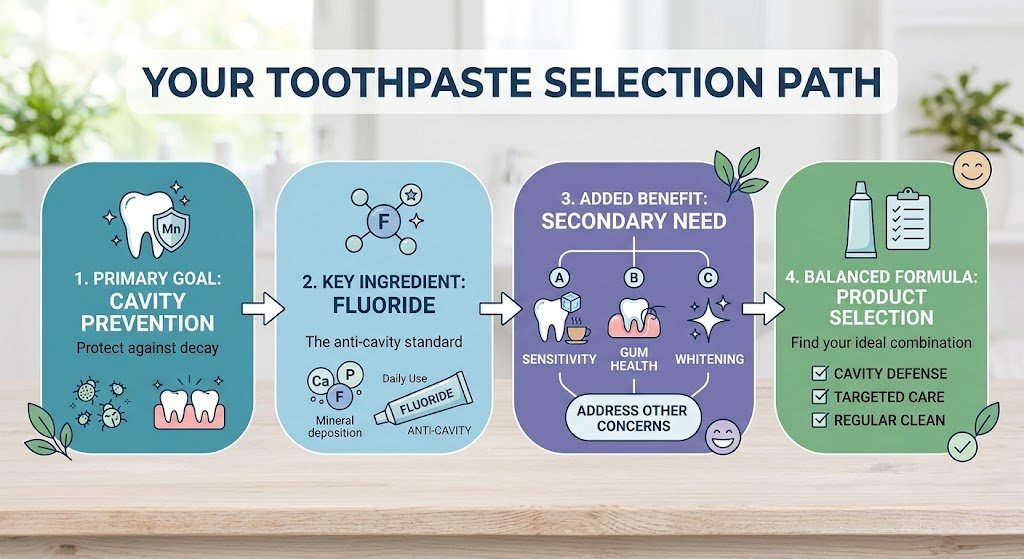
If your main goal is preventing cavities, fluoride toothpaste is the most important category to consider. The American Dental Association (ADA) identifies fluoride-containing compounds as the anticaries ingredients used in toothpaste, and its cavity-protection requirements for accepted toothpastes require fluoride. (American Dental Association)
But choosing a toothpaste for cavities is not only about picking a tube that says “cavity protection” on the label. You may also need to consider tooth sensitivity, gum health, enamel concerns, age, fluoride concentration, and whether the product carries the ADA Seal of Acceptance.
This guide explains what to look for, how the main fluoride ingredients differ, which toothpaste types make sense for different needs, and what to check before buying.
Affiliate disclosure: This article may contain affiliate links. If you purchase through one of our links, we may earn a commission at no additional cost to you. Our recommendations are based on product characteristics, available evidence, and clearly stated selection criteria.
Quick Answer: What Is the Best Toothpaste for Cavities?
For most people looking specifically for cavity prevention, start with a fluoride toothpaste from a reputable manufacturer.
In the U.S., common fluoride active ingredients include:
- Sodium fluoride
- Stannous fluoride
- Sodium monofluorophosphate
The ADA explains that these fluoride compounds are used as anticaries agents in toothpaste. U.S. over-the-counter fluoride toothpastes generally contain 1,000 to 1,500 ppm fluoride, while higher-strength prescription fluoride toothpaste is a separate category used under professional guidance. (American Dental Association)
Your final choice can then depend on your other oral-health needs.
| If your main concern is… | Look for… |
| Cavity prevention | Fluoride toothpaste |
| Cavities + sensitivity | Fluoride toothpaste with a sensitivity benefit |
| Cavities + gum concerns | Fluoride toothpaste with relevant gum-care benefits |
| Cavities + enamel concerns | Fluoride toothpaste with appropriate enamel-related benefits |
| Children’s cavity prevention | Age-appropriate fluoride toothpaste and proper supervision |
The key is to choose based on your actual dental needs, rather than assuming the most expensive or heavily marketed toothpaste is automatically the right one.
What Makes a Toothpaste Good for Cavities?
To understand which toothpaste to buy, it helps to first understand what a cavity actually is.
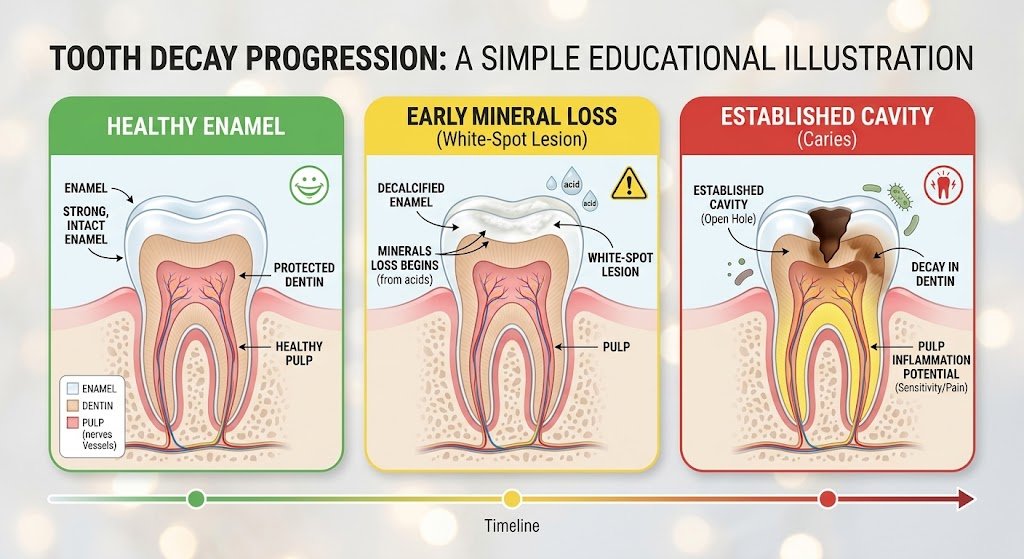
Tooth decay begins when bacteria in the mouth interact with sugars and starches and produce acids. Repeated acid attacks can cause enamel to lose minerals. At the early stage, this mineral loss can sometimes be stopped or reversed. If the process continues, the enamel can weaken and eventually form a cavity. (NIDCR)
This is where fluoride becomes important.
Fluoride helps reduce mineral loss from enamel and supports the repair of early mineral damage. It also helps make the tooth surface more resistant to acid attacks. (American Dental Association)
So when evaluating toothpaste for cavities, the first question should not be:
“Which toothpaste has the most ingredients?”
A better question is:
“Does this toothpaste provide an appropriate fluoride-based cavity-prevention benefit?”
The three fluoride ingredients you’ll commonly see
Sodium Fluoride
Sodium fluoride is one of the fluoride active ingredients used in toothpaste for cavity prevention. It is included among the fluoride compounds recognized for anticaries use in U.S. toothpaste. (American Dental Association)
If your only major concern is cavity prevention, a standard sodium fluoride toothpaste can be a straightforward option.
Stannous Fluoride
Stannous fluoride is another fluoride active ingredient used in toothpaste.
It can be particularly relevant when someone wants cavity protection alongside other oral-health benefits. The ADA notes that some stannous fluoride formulations are also used for concerns such as tooth sensitivity and gingival health. (American Dental Association)
That does not mean every stannous fluoride toothpaste is automatically the right choice for everyone. The complete formulation and the product’s intended benefits still matter.
Sodium Monofluorophosphate
Sodium monofluorophosphate is another fluoride compound used in toothpaste.
The ADA’s product information, for example, identifies sodium monofluorophosphate as the active ingredient in certain cavity-protection toothpaste formulations. (American Dental Association)
For shoppers, the important point is that you should not judge a toothpaste solely by the name of its fluoride compound. Look at the complete product, its intended benefit, and your own oral-health needs.
Our Criteria for Choosing Toothpaste for Cavities
A useful “best toothpaste” article should not simply list products and ask readers to trust a ranking.
Instead, each product should be evaluated against criteria that relate directly to cavity prevention.
1. Cavity-prevention active ingredient
The first consideration is whether the toothpaste contains an appropriate fluoride active ingredient.
For someone specifically concerned about cavities, this is more important than cosmetic features such as flavor, packaging, or whitening claims.
2. Fluoride concentration
The concentration can help you understand what type of fluoride toothpaste you’re looking at.
The ADA says U.S. OTC fluoride toothpastes generally contain 1,000–1,500 ppm fluoride. Prescription-strength toothpaste can contain substantially higher concentrations and is a different category. (American Dental Association)
Most shoppers should not assume that “more fluoride” automatically means “better for me.” Higher-strength products may be appropriate for particular patients under dental guidance.
3. ADA Seal of Acceptance
The ADA Seal can be another useful screening factor.
To receive the ADA Seal, manufacturers submit scientific information that is evaluated against specified safety and efficacy requirements. For fluoride toothpastes, the ADA evaluates evidence related to the product’s ability to help prevent tooth decay. (American Dental Association)
The Seal should be understood as an evidence-based product evaluation, not as a universal ranking of every toothpaste on the market.
4. Your secondary oral-health needs
Cavity prevention may be your main goal, but it may not be your only goal.
For example, someone who gets cavities and also has sensitive teeth may prefer a toothpaste designed to address both concerns.
Someone with plaque or gingivitis concerns may look for a formulation with an appropriate gum-health benefit.
This is why there isn’t one toothpaste that can reasonably be called the right choice for every person.
5. Age and intended use
Children should not automatically use toothpaste according to adult habits.
The CDC recommends brushing at least twice daily with fluoride toothpaste and gives age-specific guidance on the amount of toothpaste used by young children. For children ages 3–6, it recommends no more than a pea-sized amount; for children younger than 3, no more than a rice-sized amount is recommended, with additional guidance for very young children. (CDC)
If you’re buying toothpaste for a child, check the product label and follow advice from the child’s dentist or healthcare professional.
6. Whether you’ll actually use it consistently
A toothpaste can only be useful as part of a routine if you can comfortably use it as directed.
Flavor, texture, foaming, and sensitivity can therefore matter from a practical standpoint.
These factors should not replace the basic cavity-prevention criteria, but they can influence whether someone sticks with their oral-care routine.
Best Toothpaste Types for Cavity Prevention
Once you understand the selection criteria, it becomes easier to compare toothpaste categories.
Rather than treating one product as universally best, the more useful approach is to match the toothpaste type to the person’s main need.
1. Standard Fluoride Cavity-Protection Toothpaste
If your primary concern is simply preventing cavities, a standard fluoride toothpaste can be a straightforward starting point.
You do not necessarily need a toothpaste with a long list of specialty claims. The core purpose is to provide fluoride during regular brushing.
The ADA describes fluoride toothpaste as the most commonly used form of self-applied fluoride and states that fluoride toothpastes help prevent tooth decay. (American Dental Association)
Best suited for:
- Adults primarily concerned about cavities
- People who want a simple daily toothpaste
- Shoppers who do not have a major secondary oral-health concern
What to check before buying:
- Fluoride active ingredient
- Fluoride concentration
- Product directions
- ADA Seal, if applicable
- Current ingredient and product information
Amazon transition point:
This is a natural place to compare several current fluoride cavity-protection products rather than presenting a single product as universally best.
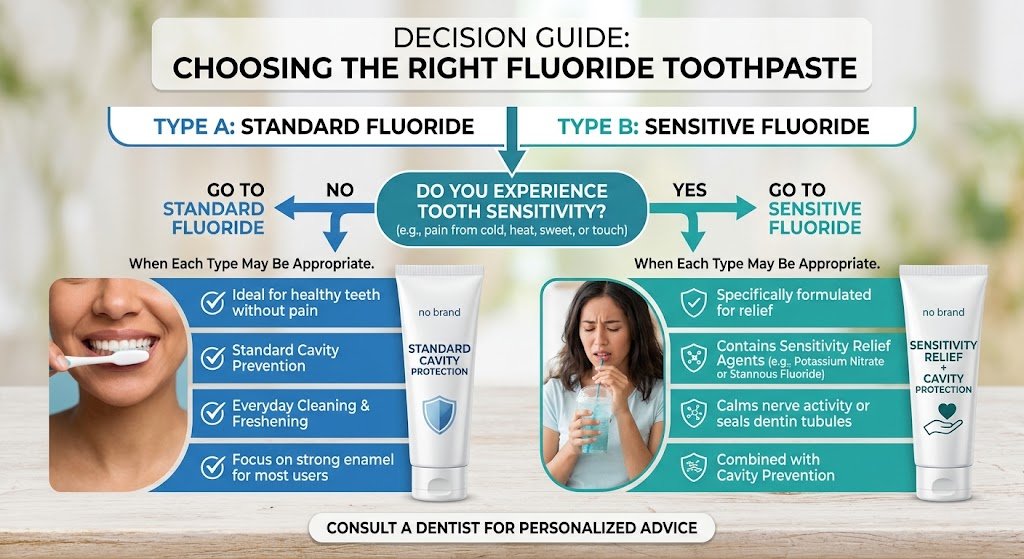
2. Fluoride Toothpaste for Cavities and Sensitive Teeth
If your teeth are sensitive to cold, heat, sweets, or brushing, cavity prevention may not be your only concern.
Some toothpaste formulations combine fluoride with ingredients intended to help reduce dentin hypersensitivity. The ADA notes that certain stannous-, potassium-, and arginine-containing formulations have evidence for reducing sensitivity, depending on the formulation. (American Dental Association)
This makes a sensitivity-focused fluoride toothpaste worth considering when both issues are present.
Best suited for:
- People concerned about cavities and sensitivity
- People who find regular brushing uncomfortable
- Shoppers looking for combined oral-care benefits
The exact active ingredients matter, so check the current product label rather than assuming every “sensitive teeth” toothpaste works the same way.
3. Fluoride Toothpaste With Gum-Care Benefits
Some people searching for cavity toothpaste also have plaque buildup, bleeding gums, or gingivitis concerns.
In that situation, it can make sense to evaluate products that provide fluoride cavity protection alongside a relevant gum-care benefit.
The ADA’s accepted-product categories include toothpastes with claims related to plaque and gingivitis as well as fluoride cavity protection. (American Dental Association)
Best suited for:
- People concerned about cavities and gum health
- People who want multiple relevant oral-care benefits from one toothpaste
But don’t let the additional claims distract from the primary question: does the product provide appropriate cavity protection?
4. Fluoride Toothpaste With Enamel-Focused Benefits
Enamel and cavities are closely connected because tooth decay involves the loss and eventual breakdown of enamel.
Early tooth decay can involve mineral loss before a visible cavity develops. Fluoride can help stop or reverse this early stage under appropriate conditions. (NIDCR)
If enamel concerns are part of your situation, look beyond a generic “enamel strengthening” marketing phrase and examine what the product actually contains and what claim it supports.
Best suited for:
- People concerned about early enamel mineral loss
- People with a history of tooth decay
- People whose dentist has identified elevated caries risk
What Ingredients Should You Look for in Cavity Toothpaste?
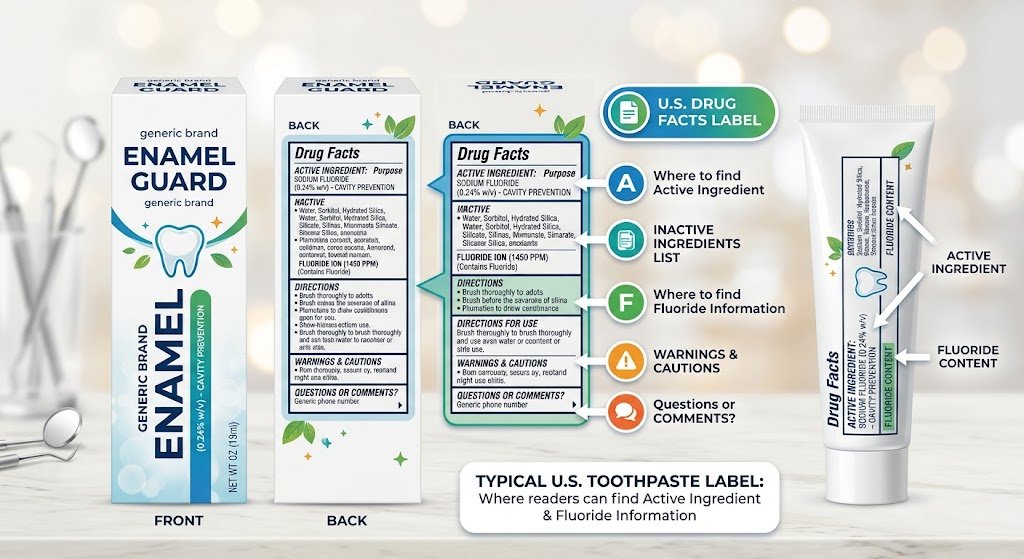
When you turn a toothpaste tube around and read the label, the active ingredients deserve more attention than the long list of inactive ingredients.
Fluoride
For cavity prevention, fluoride is the main ingredient category to investigate.
The ADA explains that fluoride is taken up by dental plaque and demineralized enamel and increases fluoride levels in saliva. This helps explain why regular fluoride toothpaste is an important part of cavity prevention. (American Dental Association)
Sodium Fluoride
Sodium fluoride is a common anticaries active ingredient in toothpaste and is recognized in the FDA’s OTC anticaries framework. (American Dental Association)
For a shopper, the practical takeaway is simple: sodium fluoride can be an appropriate fluoride source in a cavity-prevention toothpaste when used according to the product directions.
Stannous Fluoride
Stannous fluoride is also used for cavity protection and, depending on formulation, may provide additional benefits related to sensitivity or gum health. (American Dental Association)
It can therefore be relevant when a person has more than one oral-health concern.
Sodium Monofluorophosphate
Sodium monofluorophosphate is another fluoride active ingredient used in toothpaste.
Its presence should not automatically be interpreted as making a toothpaste better or worse than one containing another fluoride compound. The complete formulation and intended use are more useful when comparing products. (American Dental Association)
What to Look for in a Toothpaste for Cavities
Once you understand how cavities develop, choosing a toothpaste becomes much easier. The main question is not whether a toothpaste is labeled “natural,” “clean,” or “non-toxic.” For cavity prevention, you need to look at the active ingredients and evidence behind the formula.
Here are the main things to check.
1. Fluoride as the Active Ingredient
For most people looking for toothpaste specifically to help prevent cavities, fluoride is the most important ingredient to look for.
Fluoride helps protect enamel from acid attacks and supports remineralization when teeth have experienced early mineral loss. The American Dental Association (ADA) notes that toothpastes with a cavity-protection claim and the ADA Seal contain fluoride. Common fluoride compounds used in toothpaste include sodium fluoride, stannous fluoride, and sodium monofluorophosphate.
This does not mean every toothpaste containing fluoride will be identical. Different formulas may provide additional benefits, such as sensitivity relief, tartar control, or gum-care support.
2. Check the Fluoride Concentration
The amount of fluoride also matters.
In the United States, over-the-counter fluoride toothpastes generally contain 1,000 to 1,500 ppm fluoride. The exact concentration and active fluoride compound should be listed on the package.
For everyday cavity prevention, this range covers many conventional fluoride toothpastes. However, people with a particularly high risk of tooth decay may receive different recommendations from a dentist.
For example, prescription fluoride toothpaste can contain 5,000 ppm fluoride and may be recommended in certain higher-risk situations. That is not something you generally need to choose on your own simply because a higher number sounds better.
Simple rule: Don’t choose toothpaste based only on the highest fluoride number. Choose based on your dental risk and the guidance appropriate for your situation.
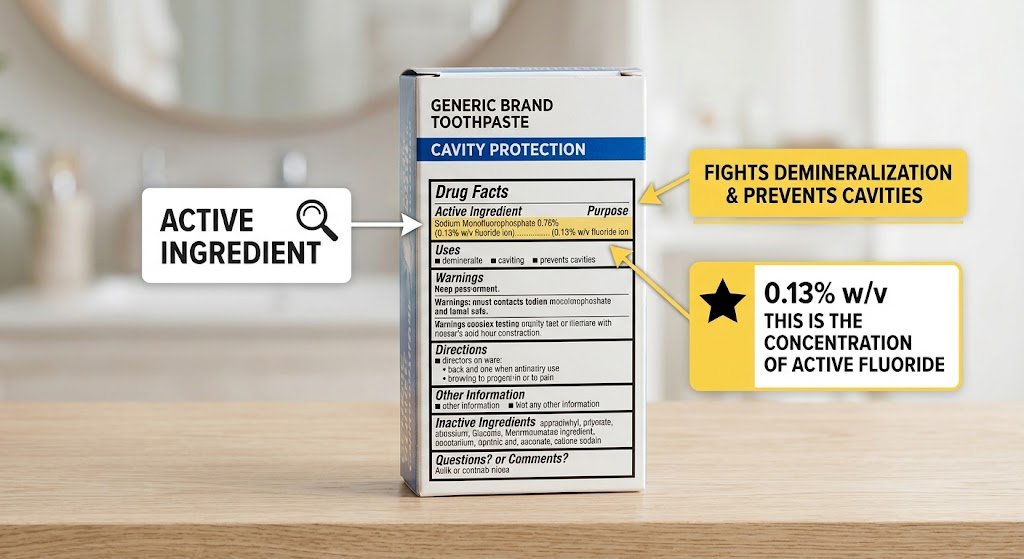
3. Look for the ADA Seal of Acceptance
The ADA Seal of Acceptance can be a useful shortcut when comparing toothpaste.
Products that carry the ADA Seal have submitted information for evaluation by the ADA Council on Scientific Affairs. The evaluation considers predefined requirements related to safety and effectiveness.
For someone shopping online, this can be particularly useful because marketing language can otherwise make different products difficult to compare.
Words such as:
- Natural
- Clean
- Gentle
- Herbal
- Plant-based
- Non-toxic
- Enamel-safe
may describe a product’s positioning, but they do not automatically tell you whether it provides strong cavity protection.
The ADA Seal is therefore one useful verification signal, while the active ingredient list tells you what the toothpaste is actually formulated to do.
4. Consider Your Other Dental Needs
Cavity protection is usually the starting point, but it may not be your only concern.
For example, you might need toothpaste that also addresses:
- Tooth sensitivity
- Gum problems
- Tartar buildup
- Bad breath
- Whitening
- Dry mouth
- Braces or orthodontic appliances
In these situations, look for a toothpaste that provides cavity protection while also matching your secondary need.
The important point is to avoid sacrificing your primary cavity-prevention goal simply because another feature sounds attractive.
A toothpaste marketed mainly for whitening, for example, should still be evaluated for its cavity-protection ingredients if preventing decay is your priority.
5. Don’t Confuse “Clean Ingredients” With Cavity Protection
If you’re specifically looking for a non-toxic or clean toothpaste, ingredient preferences may be important to you. But those preferences should be considered alongside, rather than instead of, cavity protection.
A toothpaste can avoid certain ingredients you personally prefer not to use and still contain fluoride.
This creates a useful distinction:
Ingredient preference:
“What ingredients do I want to avoid?”
Cavity protection:
“Does the toothpaste contain an evidence-supported anticaries active ingredient?”
Those are related questions, but they are not the same question.
For a cavity-focused toothpaste, start with the function you need. Then evaluate the rest of the ingredient list according to your personal preferences.
Fluoride Ingredients: Sodium Fluoride vs. Stannous Fluoride vs. Sodium Monofluorophosphate
You may notice different fluoride ingredients when comparing toothpaste.
The three common fluoride compounds used in U.S. toothpaste include:
| Fluoride ingredient | What to know |
| Sodium fluoride | A common anticaries fluoride ingredient |
| Stannous fluoride | Provides fluoride for cavity protection and can be used in formulas with additional oral-care benefits |
| Sodium monofluorophosphate | Another recognized fluoride source used in anticaries toothpaste |
The ADA identifies all three among fluoride-containing compounds used as anticaries agents.
This is important because shoppers sometimes assume that one fluoride compound automatically makes a toothpaste “better” than another.
That’s too simple.
The better question is:
What does the complete toothpaste formula provide for your specific dental needs?
For example, someone mainly concerned about everyday cavity prevention may focus first on fluoride and an appropriate concentration. Someone who also experiences sensitivity or gum concerns may want to examine the additional ingredients and claims of the complete formula.
Sodium Fluoride
Sodium fluoride is one of the standard fluoride ingredients used in toothpaste.
When comparing products, don’t judge a toothpaste solely because its label says “sodium fluoride.” Check the full active-ingredient section, fluoride concentration, intended benefits, and any relevant verification such as the ADA Seal.
Stannous Fluoride
Stannous fluoride is another commonly used fluoride compound.
It supplies fluoride for anticaries protection and can appear in formulas designed to provide other oral-care benefits as well.
If you see stannous fluoride on the label, there is no need to automatically treat it as either superior or inferior. Evaluate the complete product and your dental needs.
Sodium Monofluorophosphate
Sodium monofluorophosphate is also an established fluoride ingredient used in toothpaste.
Like the other fluoride compounds, its presence should be considered in the context of the entire formula rather than as an isolated “best ingredient.”
What About Fluoride-Free Toothpaste?
This is one of the most important questions for shoppers interested in “non-toxic” toothpaste.
Some people specifically want a fluoride-free toothpaste because of personal preferences or concerns about fluoride. But if your primary goal is cavity prevention, you should understand the trade-off before making that choice.
The ADA states that toothpastes carrying a cavity-protection claim with the ADA Seal contain fluoride.
That doesn’t mean every fluoride-free toothpaste is identical or that ingredients other than fluoride have no potential oral-care value. It means you should not automatically assume that a fluoride-free formula provides the same cavity-prevention protection as a fluoride toothpaste.
This distinction becomes especially important if you have:
- A history of frequent cavities
- High sugar or acid exposure
- Dry mouth
- Gum recession
- Exposed tooth roots
- Previous extensive dental work
- Other factors that increase your risk of decay
If you are at higher risk, your dentist can help determine which fluoride strategy is appropriate.
What About Hydroxyapatite Toothpaste?
Hydroxyapatite is another ingredient you’ll frequently see when researching non-toxic toothpaste.
It is a calcium-phosphate mineral related to the mineral structure of teeth. Because of this, hydroxyapatite toothpaste is often marketed around enamel support and remineralization.
However, when you’re specifically asking:
“What is the best toothpaste for cavities?”
you should separate interest in an ingredient from the level of evidence and regulatory positioning behind cavity-protection claims.
Fluoride remains the central ingredient to look for in conventional cavity-prevention toothpaste, and the ADA’s cavity-protection framework specifically centers on fluoride-containing toothpaste.
That doesn’t mean hydroxyapatite should simply be dismissed. If you prefer hydroxyapatite, learn what the particular product claims, what evidence supports those claims, and whether it fits your own dental risk.
If you’re deciding between fluoride and hydroxyapatite toothpaste, don’t make the decision based only on marketing terms such as “natural” or “chemical-free.” Compare their intended use, evidence, ingredients, and your personal cavity risk.
Best Toothpaste for Cavities by Dental Need
There isn’t one toothpaste that is automatically the right choice for every person.
The better approach is to start with cavity protection, then identify the additional feature that matters most to you.
If Your Main Goal Is Cavity Prevention
Look for a fluoride toothpaste designed for cavity protection.
Check:
- The active fluoride ingredient
- The fluoride concentration
- Whether the product has the ADA Seal
- Any additional ingredients relevant to your needs
For many adults, this provides a straightforward starting point.
If You Have Sensitive Teeth and Want Cavity Protection
Sensitivity and cavities are different problems, even though they can occur together.
If sensitivity is one of your concerns, look for a toothpaste that combines fluoride-based cavity protection with an ingredient or formulation intended for sensitivity.
Don’t assume that a toothpaste labeled “sensitive” automatically provides the cavity protection you want. Check its active ingredients.
If You Have Gum Concerns
If your priority is both cavity prevention and gum care, look for a formula that addresses both needs.
Again, start with the cavity-protection ingredient and then evaluate the secondary benefits.
Persistent bleeding, swelling, pain, or other gum symptoms should not be treated as a toothpaste-selection problem alone. Those symptoms may require professional evaluation.
If You Frequently Get Cavities
This is where toothpaste selection becomes more personal.
Someone who repeatedly develops cavities may need more than simply switching brands.
A dentist may evaluate factors such as:
- Oral hygiene
- Diet
- Saliva and dry mouth
- Existing dental restorations
- Gum recession
- Fluoride exposure
- Previous decay history
- Other individual risk factors
In some higher-risk situations, a dentist may recommend prescription-strength fluoride toothpaste.
So if you regularly develop new cavities despite brushing, don’t assume that buying a different “stronger” toothpaste is the complete solution.
If You Want a Non-Toxic Toothpaste
Start by defining what non-toxic means for you.
For example, you may want to avoid certain ingredients, artificial flavors, dyes, or other additives. That’s a legitimate product-selection preference.
But keep two separate checklists:
Cavity protection
- Fluoride or another ingredient supported for the intended use
- Appropriate concentration
- Clear active-ingredient labeling
- Relevant evidence or trusted verification
Ingredient preferences
- Ingredients you want to avoid
- Flavor preferences
- SLS preference
- Texture
- Sweeteners
- Other formulation preferences
This approach makes it easier to find a product that fits both your oral-health needs and your ingredient preferences.
How Toothpaste Actually Fits Into Cavity Prevention
Toothpaste is important, but it is only one part of cavity prevention.
Tooth decay develops through repeated cycles of mineral loss and repair. Bacteria in plaque use sugars and other carbohydrates to produce acids, which can remove minerals from enamel. Saliva and fluoride help support the repair process. If mineral loss continues, the enamel can eventually break down and form a cavity.
That is why simply buying an expensive toothpaste cannot compensate for an overall pattern that repeatedly exposes your teeth to acid.
A cavity-prevention routine generally involves several habits:
- Brush your teeth regularly with fluoride toothpaste
- Clean between your teeth
- Pay attention to frequent sugar and acid exposure
- Follow dental recommendations based on your personal risk
- Have regular dental examinations when appropriate
The CDC recommends brushing at least twice a day with fluoride toothpaste.
A Cavity Is Not the Same as Early Tooth Decay
This distinction can prevent a lot of confusion.
Early tooth decay may appear as a white spot where minerals have been lost from enamel. At this stage, the process can sometimes be stopped or reversed through remineralization.
But once enough mineral has been lost that an actual hole or cavity forms, toothpaste cannot simply rebuild the missing tooth structure.
An established cavity generally requires dental treatment, such as a filling, depending on the situation. Untreated decay can progress and may eventually cause pain, infection, or tooth loss.
So when an article or product description says a toothpaste “repairs enamel,” it’s important to understand what that wording actually means.
Supporting remineralization of early mineral loss is not the same thing as filling an established cavity.
That is one of the most important differences to understand before buying any toothpaste marketed for “repair.”
The Bottom Line So Far
For someone searching for the best toothpaste for cavities, the decision should start with cavity protection rather than marketing language.
A practical checklist is:
1. Look for an appropriate fluoride active ingredient.
Sodium fluoride, stannous fluoride, and sodium monofluorophosphate are common fluoride compounds used in anticaries toothpaste.
2. Check the fluoride concentration.
Many U.S. over-the-counter fluoride toothpastes contain 1,000–1,500 ppm fluoride.
3. Consider the ADA Seal.
It can provide an additional evidence-based signal when comparing products.
4. Match secondary benefits to your needs.
Sensitivity, gum care, tartar, whitening, and other concerns may influence which formula makes sense.
5. Keep ingredient preferences separate from cavity protection.
“Natural” or “non-toxic” positioning alone does not establish cavity-prevention effectiveness.
6. Remember that toothpaste prevents and supports—it does not replace dental treatment.
An established cavity needs professional evaluation.
In the next section, we’ll move from what makes a toothpaste suitable for cavities to how to compare actual products, including the ingredients, labels, ADA Seal, use cases, value, and the factors worth checking before buying online.
Next part: product-by-product evaluation framework, how to compare toothpaste on Amazon without relying on marketing claims, common mistakes, proper use, and the final buying decision framework.
Ab next section mein product comparison + Amazon buying decision par move karte hain, without repeating the previous sections.
How to Compare Toothpaste Before You Buy
Once you know that cavity protection should be your starting point, the next step is comparing individual products.
This is where toothpaste shopping can become confusing. Two products may both use words such as “cavity protection,” “enamel care,” or “natural,” while having very different formulas.
Instead of judging the front of the package, work through the following checklist.
Step 1: Check the Active Ingredient
Start with the Drug Facts or active-ingredient section.
For a conventional cavity-prevention toothpaste, look for a fluoride active ingredient such as:
- Sodium fluoride
- Stannous fluoride
- Sodium monofluorophosphate
These are recognized fluoride ingredients used in anticaries toothpaste.
Don’t stop at the product name or front label. The active-ingredient section gives you much more useful information.
Step 2: Check the Fluoride Level
After identifying the fluoride compound, check its concentration.
Many U.S. over-the-counter fluoride toothpastes contain 1,000–1,500 ppm fluoride.
If you’re comparing two products, don’t assume that the product with the highest number is automatically the right choice.
A person’s cavity risk, age, dental history, and professional recommendations can affect what type of fluoride toothpaste is appropriate.
Step 3: Look for the ADA Seal
If two products appear similar, the ADA Seal of Acceptance can make the comparison easier.
The ADA evaluates submitted products against predefined requirements for safety and effectiveness before awarding the Seal.
This is particularly useful when shopping online because product pages can contain a lot of marketing language.
However, the absence of an ADA Seal should not be treated as proof that a toothpaste is unsafe or ineffective. It simply means you should evaluate the available evidence and product information rather than treating the Seal as the only possible measure.
Step 4: Look at the Secondary Benefits
After cavity protection, consider what else you need from your toothpaste.
For example:
| Your priority | What to compare |
| Cavity prevention | Fluoride active ingredient and concentration |
| Sensitive teeth | Sensitivity-focused ingredients and claims |
| Gum concerns | Gum-care ingredients and product claims |
| Tartar | Tartar-control formulation |
| Whitening | Whitening ingredients and intended use |
| Ingredient preferences | Full ingredient list |
| Dry mouth | Formula and your dentist’s recommendations |
The goal is to find a toothpaste that fits your needs without losing sight of the primary goal.
What Makes a Toothpaste “Non-Toxic”?
The phrase non-toxic toothpaste does not have one universal definition that automatically tells you how well a product prevents cavities.
Different consumers may use the term to describe different ingredient preferences.
For example, someone may want to avoid:
- Artificial dyes
- Certain flavors
- SLS
- Particular sweeteners
- Specific preservatives
- Ingredients they personally prefer not to use
Another person may use “non-toxic” more broadly to describe a minimalist or naturally positioned formula.
The important thing is to avoid treating the label itself as scientific proof.
Instead, ask:
What does the product contain?
What is its active ingredient?
What benefit is the product actually intended to provide?
What evidence or verification supports that benefit?
This approach is especially important for a cavity-focused article because a toothpaste can have a very appealing “clean” ingredient profile while not necessarily being the right choice for someone whose main concern is preventing tooth decay.
Should You Avoid SLS if You Want Cavity Protection?
Sodium lauryl sulfate, commonly called SLS, is a foaming ingredient used in many personal-care products, including some toothpastes.
Some consumers prefer SLS-free toothpaste because of personal ingredient preferences or because they find certain formulas more comfortable.
But SLS and fluoride serve completely different functions.
SLS: primarily relates to the formulation and foaming experience.
Fluoride: is an anticaries active ingredient used to help prevent tooth decay.
Therefore, choosing an SLS-free toothpaste does not automatically mean giving up fluoride.
If you prefer SLS-free toothpaste, you can compare SLS-free formulas while still checking whether they provide the cavity protection you need.
How to Choose Toothpaste for Cavities on Amazon
Shopping for toothpaste online adds another layer to the decision because product pages can contain dozens of claims.
A simple process can help.
1. Start With the Product Facts
Don’t begin with the star rating or promotional headline.
First identify:
- Active ingredient
- Fluoride concentration
- Product size
- Intended benefits
- Full ingredient list
- Manufacturer information
These details help you understand what you’re actually considering.
2. Check the Product Packaging
Product descriptions can change, and online listings may sometimes use outdated images or descriptions.
Before relying on a specific claim, check the current product packaging and Drug Facts information when available.
This is especially important for:
- Fluoride concentration
- Active ingredients
- ADA Seal claims
- Package size
- Formula changes
3. Compare Price Per Ounce
A toothpaste tube that looks cheaper may actually contain less product.
For a more useful price comparison, calculate:
Price ÷ total ounces = price per ounce
For example, if one tube costs $6 and contains 4 ounces:
$6 ÷ 4 = $1.50 per ounce
This gives you a better way to compare differently sized packages.
Prices can change, so treat price as a temporary purchasing factor rather than a permanent product characteristic.
4. Don’t Choose Based Only on Reviews
Customer reviews can help you understand practical issues such as:
- Flavor
- Texture
- Packaging
- Foaming
- Whether users like the taste
- Whether the tube is easy to use
But reviews are not a substitute for evaluating the product’s active ingredients or clinical claims.
A toothpaste receiving thousands of positive reviews does not automatically mean it is the most appropriate toothpaste for cavity prevention.
5. Don’t Assume “Natural” Means Better for Cavities
Natural ingredients and cavity protection answer different questions.
A product can be natural-positioned, fluoride-free, fluoride-containing, SLS-free, or formulated with other ingredients.
Your decision should depend on what you need the toothpaste to accomplish.
For cavity prevention, evaluate the anticaries ingredients first.
Common Mistakes When Choosing Toothpaste for Cavities
Mistake 1: Choosing the Most Expensive Toothpaste
Higher price does not automatically mean better cavity protection.
A more expensive formula may offer additional features, premium packaging, specialty ingredients, or a particular brand positioning.
But if cavity prevention is your main goal, start with the active ingredients and evidence.
Mistake 2: Assuming Whitening Toothpaste Is Better
Whitening and cavity prevention are separate goals.
If you want both, look for a toothpaste that combines the benefits you need rather than assuming that stronger whitening automatically provides stronger cavity protection.
Mistake 3: Treating “Enamel Repair” as Filling a Cavity
This is a particularly important distinction.
Fluoride can support remineralization and help reverse early mineral loss, but a formed cavity is different from early enamel demineralization. Once a cavity has formed, toothpaste cannot simply fill the hole.
If you suspect you already have a cavity, professional dental evaluation is more appropriate than simply switching toothpaste.
Mistake 4: Switching to Fluoride-Free Without Considering Cavity Risk
If you have a low-risk situation and strong personal preferences about ingredients, you may approach your toothpaste choice differently from someone who frequently develops cavities.
But if your cavity risk is high, removing fluoride from your routine is a decision worth discussing with your dentist.
Mistake 5: Focusing on One Ingredient
A toothpaste is a complete formulation.
One ingredient rarely tells you everything about:
- Cavity protection
- Sensitivity
- Gum care
- Flavor
- Texture
- Abrasivity
- User experience
Look at the whole product rather than searching for a single “magic” ingredient.
How to Use Toothpaste for Better Cavity Protection
Even a well-formulated toothpaste cannot do much if it is not used consistently.
The CDC recommends brushing at least twice a day with fluoride toothpaste.
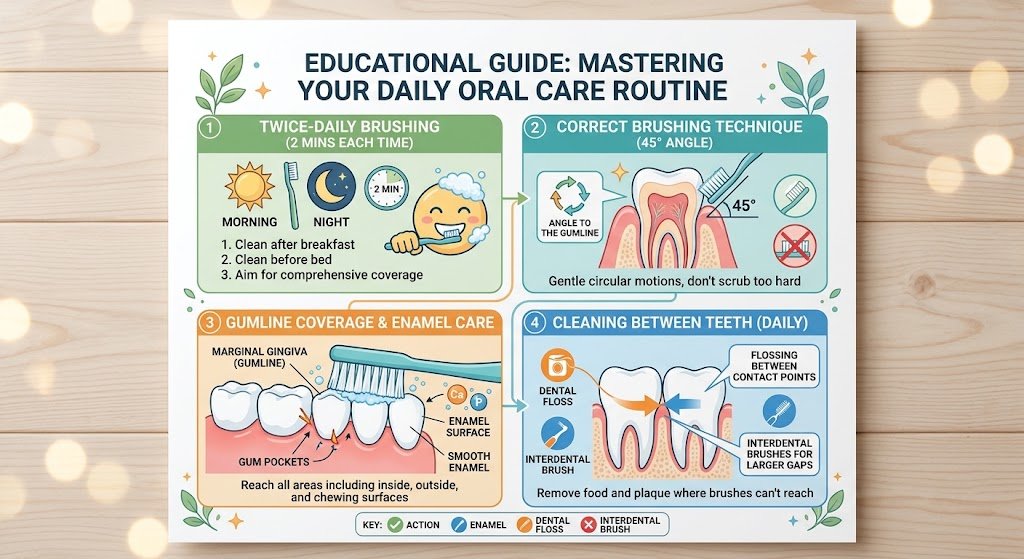
For everyday use, focus on technique and consistency rather than using an excessive amount of toothpaste.
For children, the amount matters. CDC guidance recommends a rice-grain amount for children under age 3 and a pea-sized amount for children ages 3–6, with supervision to help prevent swallowing.
Adults should also pay attention to the areas where plaque commonly accumulates, including along the gumline and around difficult-to-clean surfaces.
Cleaning between teeth is another important part of oral hygiene because brushing alone does not clean every surface between teeth. NIDCR includes cleaning between teeth among helpful tooth-decay prevention practices.
When Toothpaste Is Not Enough
Sometimes the best decision is not to buy another toothpaste.
If you have symptoms such as:
- Persistent tooth pain
- A visible hole
- Swelling
- Tooth sensitivity that does not improve
- Pain when biting
- Signs of infection
- Repeated new cavities
you should consider professional dental evaluation.
Tooth decay can progress if mineral loss continues. NIDCR explains that once a cavity forms, the damaged tooth structure generally requires dental treatment rather than simply relying on toothpaste.
Toothpaste is primarily part of prevention and daily oral care. It is not a replacement for diagnosis or restorative dental treatment.
A Simple Toothpaste Decision Framework
If you’re standing in front of several toothpaste options and don’t know which one to choose, use this sequence.
Question 1: Do I want cavity protection?
If yes, begin by checking for an appropriate anticaries active ingredient, particularly fluoride in conventional U.S. toothpaste.
Question 2: What fluoride ingredient does it contain?
Check whether the product uses:
- Sodium fluoride
- Stannous fluoride
- Sodium monofluorophosphate
These are recognized fluoride compounds used in anticaries toothpaste.
Question 3: What is the fluoride concentration?
Check the product label rather than guessing from the brand name.
Question 4: Does it have an ADA Seal?
If it does, this can provide an additional evidence-based signal when comparing products.
Question 5: Do I have another dental concern?
If yes, choose a formula that also addresses that concern where appropriate.
Question 6: Does the ingredient list fit my preferences?
Now evaluate SLS, flavoring, sweeteners, dyes, and other ingredients according to your personal preferences.
Question 7: Is the product practical for me?
Consider:
- Price
- Tube size
- Flavor
- Texture
- Availability
- Whether you will actually use it consistently
A theoretically suitable toothpaste isn’t very useful if you dislike using it and regularly skip brushing.
Best Toothpaste for Cavities: The Selection Checklist
Before buying, you can save this checklist:
Cavity Protection
- Appropriate anticaries active ingredient
- Fluoride concentration checked
- Intended cavity-protection benefit clearly stated
- ADA Seal considered where applicable
Your Dental Needs
- Sensitivity
- Gum concerns
- Tartar
- Whitening
- Dry mouth
- Other individual concerns
Ingredient Preferences
- SLS preference
- Flavor preferences
- Sweetener preferences
- Dye preferences
- Other ingredients you want to avoid
Buying Factors
- Correct package size
- Price per ounce
- Current product information
- Reliable seller
- Product is suitable for your intended use
This makes toothpaste comparison much more objective.
What Should You Prioritize: Fluoride, Hydroxyapatite, or “Clean” Ingredients?
When these three ideas appear together, it helps to put them into separate categories.
Fluoride is an anticaries active ingredient used to help prevent tooth decay.
Hydroxyapatite is a mineral-based ingredient commonly discussed in relation to enamel and remineralization.
Clean or non-toxic positioning describes an ingredient-selection preference or product philosophy, not a single standardized measure of cavity protection.
Therefore, don’t ask:
“Which ingredient sounds healthiest?”
Ask:
“Which formula best matches my cavity-prevention needs while also meeting my ingredient preferences?”
That question produces a much more useful comparison.
Product Comparison: What Matters Most
When this article’s recommendations are narrowed down to individual toothpaste products, the comparison should focus on measurable or clearly documented characteristics rather than vague marketing claims.
A useful product comparison can include:
| Factor | Why it matters |
| Active ingredient | Shows what provides the intended cavity-protection function |
| Fluoride concentration | Helps compare fluoride formulations |
| ADA Seal | Additional evidence-based verification |
| Secondary benefits | Helps match toothpaste to individual needs |
| Ingredient preferences | Determines whether the formula fits your priorities |
| Size | Useful for value comparison |
| Price per ounce | Makes different package sizes easier to compare |
| Flavor/texture | Affects whether you will use it consistently |
| Availability | Matters when choosing a product for regular use |
This is also the framework that should be used when evaluating products for an affiliate recommendation.
The goal isn’t to declare a universal winner.
The goal is to explain why a particular product may make sense for a particular type of user.
Before You Buy: Five Questions to Ask
If you want the shortest possible decision process, ask these five questions:
1. Does this toothpaste provide the cavity protection I need?
2. What is its active ingredient and concentration?
3. Does the product have credible evidence or verification supporting its claims?
4. Does it address my other dental needs?
5. Does the formula fit my ingredient preferences and budget?
If you can answer all five questions, you’re much less likely to choose a toothpaste simply because of attractive packaging or marketing language.
Frequently Asked Questions
What is the best toothpaste for cavities?
For conventional cavity prevention, look for a toothpaste containing an appropriate fluoride active ingredient. Common U.S. fluoride toothpaste ingredients include sodium fluoride, stannous fluoride, and sodium monofluorophosphate.
The right product can then be narrowed down based on your other needs, such as sensitivity, gum care, ingredient preferences, flavor, and budget.
Is fluoride toothpaste better for cavities?
Fluoride toothpaste is widely used for cavity prevention and is the foundation of conventional anticaries toothpaste. Fluoride helps strengthen enamel, reduce mineral loss, and support remineralization of early decay.
Individual recommendations can vary based on dental risk.
Can toothpaste remove a cavity?
No. Toothpaste cannot simply remove or fill an established cavity.
Fluoride can help prevent decay and support remineralization during early stages of mineral loss, but once a cavity has formed, professional dental treatment may be required.
Is fluoride-free toothpaste good for cavities?
A fluoride-free toothpaste may fit someone’s ingredient preferences, but it should not automatically be assumed to provide the same cavity-prevention protection as conventional fluoride toothpaste.
If preventing cavities is your main concern, especially if you have a high risk of decay, discuss fluoride use with your dentist.
Is hydroxyapatite good for cavities?
Hydroxyapatite is commonly used in toothpaste marketed for enamel and remineralization support. However, it should not simply be treated as interchangeable with fluoride based on marketing language alone.
When comparing products, look at the evidence, intended use, active ingredients, and your individual dental needs.
How often should I brush with cavity-prevention toothpaste?
The CDC recommends brushing at least twice daily with fluoride toothpaste.
For children, toothpaste amounts and supervision should be adjusted according to age.
Does expensive toothpaste prevent more cavities?
Not necessarily.
Price alone does not establish cavity-prevention effectiveness. Compare active ingredients, fluoride concentration, relevant verification, and the formula’s intended benefits instead.
Is natural toothpaste better for your teeth?
“Natural” does not by itself tell you whether a toothpaste provides the level of cavity protection you need.
If cavity prevention is your priority, evaluate the active ingredients first and then consider whether the rest of the formula matches your ingredient preferences.
Final Buying Takeaway
The best toothpaste for cavities is not necessarily the one with the most impressive packaging, the longest ingredient list, or the highest price.
A better approach is to work from your dental goal outward.
Start with cavity protection.
Then check the active ingredient and fluoride concentration.
Next, consider evidence or verification such as the ADA Seal.
After that, choose secondary benefits that match your needs—such as sensitivity, gum care, or tartar control.
Finally, evaluate ingredient preferences, flavor, price, size, and everyday usability.
For most people, this turns a confusing toothpaste aisle—or a long Amazon search—into a much simpler decision.
And remember the most important distinction: toothpaste can help prevent cavities and support early enamel remineralization, but it cannot replace professional treatment for an established cavity.
If you frequently develop cavities, have dental pain, or have been told you’re at high risk for decay, your dentist can help determine whether standard over-the-counter toothpaste is enough or whether you need a different fluoride strategy.
Ab article ka actual product-selection section add karte hain. Yahan main products ko kisi unsupported “#1” ranking mein nahi rakh raha; har product ko documented features ke basis par explain kar raha hoon.
Best Toothpaste for Cavities: How to Evaluate Specific Products
At this point, you know what makes a toothpaste appropriate for cavity prevention. The next step is applying those criteria to actual products.
Instead of asking which toothpaste is universally “the best,” compare products according to:
- Cavity-protection active ingredient
- Fluoride concentration
- ADA Seal status
- Additional dental benefits
- Ingredient preferences
- Price and package size
- Your own dental needs
This approach is more useful because different people may need different features from their toothpaste.
Product Option: Colgate Cavity Protection
Colgate Cavity Protection
Colgate Cavity Protection is an example of a straightforward cavity-focused toothpaste. The ADA’s product listing identifies sodium monofluorophosphate as its active ingredient and states that it has shown efficacy in helping prevent tooth decay when used as directed. (American Dental Association)
The product is therefore relevant for shoppers whose main goal is straightforward daily cavity protection rather than a specialized toothpaste for one particular dental concern.
What to check before buying:
- Current package size
- Current formulation
- Fluoride information on the package
- Seller and price
- Whether the current product listing matches the formula you’re considering
Best fit: Someone looking for a simple, cavity-focused fluoride toothpaste.
Product Option: Parodontax Daily Fluoride
Parodontax Daily Fluoride Anticavity and Antigingivitis Toothpaste
Parodontax Daily Fluoride is a different type of option because its ADA-accepted claims extend beyond cavity prevention.
The ADA lists it as a fluoride toothpaste that has shown efficacy in helping prevent tooth decay and in preventing and reducing plaque and gingivitis above the gumline when used as directed. (American Dental Association)
That makes its positioning different from a basic cavity-only formula.
What to consider:
- You want cavity protection
- You also care about gum health
- You want a product with ADA-accepted cavity and gingivitis-related claims
- You are comfortable with the product’s flavor and formulation
Best fit: Shoppers who want cavity protection alongside a gum-care focus.
The key point is that this does not make it universally better than a basic cavity toothpaste. It simply gives it a different use case.
How These Product Types Compare
| Feature | Basic cavity toothpaste | Cavity + gum-care toothpaste |
| Cavity protection | Primary focus | Primary focus |
| Fluoride | Yes, in conventional cavity-protection formulas | Yes |
| ADA Seal | Can provide additional verification | Can provide additional verification |
| Gum-care focus | May be limited | More prominent |
| Best for | Straightforward cavity prevention | Cavity prevention plus gum-care needs |
| Main consideration | Active ingredient and fluoride level | Active ingredient + additional gum-care benefits |
This is why a “best toothpaste” list should not simply rank products from first to last.
A better comparison asks:
Which product fits which need?
What If You Want the ADA Seal?
The ADA Seal can be particularly helpful when you’re comparing products online.
The ADA explains that fluoride toothpastes accepted under its relevant category have demonstrated safety and efficacy for helping prevent tooth decay. (American Dental Association)
The Seal is also claim-specific.
For example, an accepted product may have a statement such as “helps prevent cavities,” while another product may have additional accepted claims related to sensitivity or gingivitis.
That means you should read the statement associated with the Seal rather than assuming the Seal means a product is superior in every possible category.
The ADA also recommends checking its current product database when verifying whether a particular product has an active Seal. (American Dental Association)
Should You Buy a Toothpaste With a Lot of Extra Benefits?
Not necessarily.
A toothpaste may advertise several benefits:
- Cavity protection
- Whitening
- Enamel care
- Gum care
- Tartar control
- Sensitivity relief
- Fresh breath
More claims do not automatically mean more effective cavity prevention.
If your main problem is cavities, make sure the product’s cavity-protection function is clear before considering the extras.
For example, if you have both cavities and sensitivity, a combination formula may make sense.
If you only want cavity prevention, you may not need to pay extra for features that you don’t actually value.
How to Choose the Right Toothpaste for Your Situation
Choose a Standard Fluoride Toothpaste If:
Your main goal is everyday cavity prevention and you do not have a specialized dental concern that changes your toothpaste needs.
Look for an appropriate fluoride active ingredient and check the concentration and product information.
Choose a Cavity + Sensitivity Formula If:
You regularly experience sensitivity to cold, heat, air, or touch and also want cavity protection.
Sensitivity-control ingredients can be useful in this situation. The ADA recognizes a separate sensitivity-control category for products shown to help reduce tooth sensitivity. (American Dental Association)
Choose a Cavity + Gum-Care Formula If:
You want cavity protection while also focusing on plaque or gingivitis concerns.
For example, the ADA’s listing for Parodontax Daily Fluoride identifies accepted claims for preventing tooth decay and helping prevent and reduce plaque and gingivitis. (American Dental Association)
Ask Your Dentist About Prescription Fluoride If:
You repeatedly develop cavities or have been identified as having a particularly high risk of decay.
Prescription-strength fluoride toothpaste can contain 5,000 ppm fluoride, compared with the 1,000–1,500 ppm generally found in U.S. OTC fluoride toothpaste. (American Dental Association)
This does not mean everyone with cavities needs prescription toothpaste. It is a decision that depends on individual risk and professional assessment.
How to Build an Amazon Shortlist
If you’re using Amazon to compare cavity-prevention toothpaste, don’t open ten product pages and try to remember everything.
Create a small shortlist.
For each product, record:
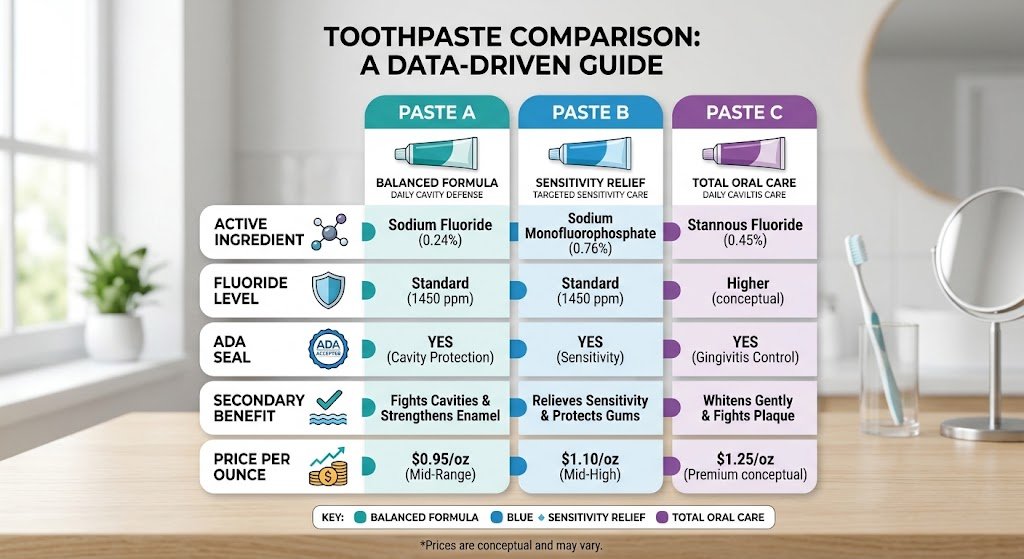
| Product | Active ingredient | Fluoride level | ADA Seal | Main additional benefit | Size | Price |
| Product A | Check label | Check label | Verify | Cavity protection | Check listing | Current price |
| Product B | Check label | Check label | Verify | Gum care | Check listing | Current price |
| Product C | Check label | Check label | Verify | Sensitivity | Check listing | Current price |
This table can quickly show whether you’re comparing genuinely different products or simply different packages of similar formulas.
Important: Product prices, availability, packaging, and formulas can change. For an affiliate article, these details should be verified immediately before publication rather than treated as permanent facts.
Don’t Use Amazon Reviews as Medical Evidence
Amazon reviews can be useful, but they have a limited role.
A review can help you understand whether people like:
- The flavor
- The texture
- The amount of foam
- The packaging
- The tube design
- The overall user experience
But a review cannot establish that a toothpaste prevents cavities.
For that, rely on the product’s active ingredients, official product information, relevant evidence, and credible dental sources.
This distinction is especially important in health-related affiliate content.
The article should help readers make a better-informed purchase rather than turning customer opinions into medical evidence.
How to Handle “Best” in a Product Roundup
The word best can be useful for search intent, but the article should not pretend there is one universally superior toothpaste.
A stronger structure is to divide products by use case:
Best for Basic Cavity Protection
Look for a straightforward fluoride toothpaste with a clearly identified anticaries active ingredient.
Best for Cavities + Gum Concerns
Look for a fluoride toothpaste that also has evidence-backed gum-care benefits.
Best for Cavities + Sensitivity
Look for fluoride plus a recognized sensitivity-focused ingredient or claim.
Best for Ingredient-Conscious Shoppers
Compare the full ingredient list while making sure the formula still meets your cavity-protection requirements.
Best for Higher Cavity Risk
Discuss the possibility of prescription-strength fluoride with a dental professional rather than simply recommending a stronger OTC product.
This gives the reader a useful decision instead of an unsupported ranking.
What About Toothpaste Without an ADA Seal?
An ADA Seal can be useful, but it should not be treated as the only source of information.
The ADA describes its Seal program as voluntary. Products that apply and successfully complete the relevant scientific review can display the Seal, while other products may not participate. (American Dental Association)
Therefore:
ADA Seal present:
You have an additional evidence-based verification signal.
ADA Seal absent:
You need to examine the product’s active ingredients, labeling, claims, manufacturer information, and available evidence more carefully.
This is a much more accurate way to interpret the Seal than saying:
“No ADA Seal means the toothpaste is bad.”
That conclusion is not supported by the Seal program itself.
A Note About Abrasivity
Some readers may also see a toothpaste’s RDA, or relative dentin abrasivity, discussed in product comparisons.
This measures abrasivity, but it should not be turned into a simple ranking where a lower number automatically means a safer or better toothpaste.
The ADA specifically notes that RDA values below 250 should not be used quantitatively to rank toothpaste safety. ADA-accepted dentifrices have an RDA of 250 or less. (American Dental Association)
For most readers, the more important first questions remain:
- Does it provide appropriate cavity protection?
- Does it fit your dental needs?
- Does the formula fit your ingredient preferences?
- Will you actually use it consistently?
Abrasivity can be a secondary comparison factor, particularly when considering specific dental concerns.
Affiliate Buying Guide: What Readers Should Know Before Clicking “Buy”
A useful affiliate recommendation should make the buying decision clearer without creating artificial pressure.
Instead of saying:
“Buy this now before it’s gone!”
use practical information such as:
- Who the product is suitable for
- What its active ingredient is
- What additional benefits it provides
- What type of shopper may prefer it
- What limitations to consider
- What to verify on the current product page
This keeps the recommendation useful even when prices or availability change.
A Better Product Card Structure
For each toothpaste recommendation, use a format like:
Product name
Best for: Specific user need
Active ingredient: Verified ingredient
Fluoride level: Verified current label
Why consider it: Short evidence-based explanation
Potential drawback: Relevant limitation
Where to check price: Amazon
Important: Verify the current product listing and packaging before publication.
This is more transparent than simply writing “#1 Best Toothpaste for Cavities.”
When an Amazon Link Makes Sense
An Amazon affiliate link should appear after the reader understands why the product may fit their needs.
A natural sequence is:
Problem → Criteria → Product → Why it fits → Potential limitation → Buy/check current price
For example, after explaining cavity protection and the product’s active ingredient, an Amazon button can be placed directly below the recommendation.
This gives the reader enough information to make a decision before clicking.
The affiliate link should not interrupt every paragraph.
A few well-placed product links are generally more useful than turning the entire article into a collection of purchase buttons.
Product Recommendation Rules for This Article
To keep the recommendations trustworthy, every product included in the final published version should pass these checks:
- Current product name verified
- Current formulation verified
- Active ingredient verified
- Fluoride concentration verified
- ADA Seal status checked if claimed
- Current package size checked
- Current Amazon availability checked
- No unsupported medical claims
- No invented personal testing
- No invented customer statistics
- No unsupported “best” ranking
- No fake urgency
- No claim that a toothpaste can treat an established cavity
This is particularly important because toothpaste formulas and product listings can change over time.
The Most Important Buying Rule
If you remember only one thing from this guide, remember this:
Choose toothpaste based on the dental problem you are trying to address, then use ingredient preferences, evidence, and price to narrow down your options.
For cavity prevention, fluoride is the key starting point for conventional toothpaste.
After that, your personal needs determine which formula makes the most sense.
You do not need the most expensive toothpaste.
You do not need the toothpaste with the longest ingredient list.
And you do not need to choose a product simply because it uses the words “natural,” “clean,” or “non-toxic.”
You need a toothpaste that provides the oral-care function you need and that you can use consistently as directed.
Final Decision: Which Type of Toothpaste Should You Choose?
Use this quick decision tree:
I want to prevent cavities.
→ Start with an appropriate fluoride toothpaste.
I want cavity protection + sensitivity support.
→ Compare fluoride toothpaste with a recognized sensitivity benefit.
I want cavity protection + gum care.
→ Compare fluoride formulas with documented gum-care benefits.
I want fluoride-free toothpaste.
→ Understand that this is a different approach to cavity prevention and discuss your choice with your dentist if your decay risk is significant.
I want hydroxyapatite.
→ Evaluate the specific product and evidence rather than assuming every hydroxyapatite formula provides the same cavity protection as fluoride toothpaste.
I keep getting cavities.
→ Don’t simply keep changing brands. Ask your dentist about your individual cavity risk and whether additional fluoride treatment is appropriate.
I already have a cavity.
→ Toothpaste is not a substitute for dental treatment. Arrange a dental evaluation.
Conclusion: Finding the Best Toothpaste for Cavities
Finding the best toothpaste for cavities is less about finding one magical product and more about understanding what actually matters.
For conventional cavity prevention, start with fluoride. Common U.S. fluoride toothpaste ingredients include sodium fluoride, stannous fluoride, and sodium monofluorophosphate. (American Dental Association)
Then check the fluoride concentration, product claims, and whether the toothpaste carries the ADA Seal of Acceptance.
After that, consider your personal needs.
If you have sensitivity, look for sensitivity support. If gum health is a concern, consider a formula with an appropriate gum-care focus. If ingredient preferences matter to you, evaluate the full ingredient list without allowing those preferences to hide the more important question of cavity protection.
For people at higher risk of decay, professional dental guidance may be more valuable than simply switching between over-the-counter brands.
Most importantly, remember that toothpaste is part of a larger oral-care routine. Regular brushing with fluoride toothpaste, cleaning between teeth, and appropriate dental care all contribute to cavity prevention. (American Dental Association)
And if an actual cavity has already formed, don’t wait for a toothpaste to fix it. Early mineral loss can sometimes be stopped or reversed, but an established cavity requires professional evaluation and may need restorative treatment. (American Dental Association)
The best purchase is ultimately the one that matches your dental needs, your ingredient preferences, and the level of cavity protection you actually require.
