Toothpaste foams because it contains ingredients called surfactants, which help spread the paste around your mouth and create bubbles while you brush. One common foaming ingredient is sodium lauryl sulfate (SLS), although some toothpastes use other ingredients or contain little to no foaming agent.
But does more foam mean cleaner teeth? No. A toothpaste does not need to produce lots of foam to clean your teeth effectively. What matters more is brushing thoroughly, using a suitable toothpaste, and choosing the right active ingredients for your dental needs.
Here is what causes toothpaste foam, how SLS works, whether it can irritate your mouth, and what to look for if you prefer a low-foam or SLS-free toothpaste.
What Makes Toothpaste Foam?
The bubbles you see while brushing mainly come from ingredients known as surfactants, sometimes called detergents. They help toothpaste spread and mix with saliva and water. Brushing then moves air through the mixture, making the foam more noticeable.
1. Sodium Lauryl Sulfate (SLS)
Sodium lauryl sulfate, commonly shortened to SLS, is a surfactant used in many toothpaste formulas. It helps create foam and allows the toothpaste to spread throughout the mouth.
SLS is a common foaming ingredient, but it is not essential for every toothpaste formula. Some people prefer to avoid it because they experience mouth irritation or want to try a different formulation.
Whether SLS is suitable for you depends on your individual needs and how you respond to the product. Its presence alone does not mean a toothpaste is unsafe.
2. Other Foaming Ingredients
SLS is not the only ingredient that can produce foam. Some formulas use other surfactants, such as sodium N-lauroyl sarcosinate, to help the toothpaste spread and create a foaming action.
The exact ingredients depend on the product. Two toothpastes can produce different amounts of foam even when both are designed for everyday brushing.
3. Ingredients That Do Other Jobs
Not every ingredient in toothpaste is responsible for bubbles. Different ingredients have different purposes.
| Ingredient or category | Main purpose |
| Surfactants, including SLS | Help spread the toothpaste and create foam |
| Fluoride compounds | Help prevent tooth decay |
| Mild abrasives | Help remove surface deposits and stains during brushing |
| Humectants, such as glycerin | Help keep toothpaste from drying out |
| Flavouring ingredients | Give toothpaste its taste and fresh sensation |
The formula as a whole matters more than the amount of foam you see. A toothpaste may foam heavily or only a little, depending on its ingredients and formulation.
Why Does Toothpaste Foam When You Brush?
Toothpaste does not usually produce all its visible foam while sitting on your toothbrush. The bubbles become more noticeable when the paste mixes with saliva and water and you begin brushing.
Three things contribute to the foaming action:
- Surfactants help form bubbles. These ingredients make it easier for air and liquid to mix into the toothpaste.
- Saliva and water mix with the paste. This changes the consistency of the toothpaste and helps it move around the mouth.
- Brushing creates movement. Moving the toothbrush back and forth introduces air into the mixture, helping bubbles form and spread.
This is why toothpaste may look much foamier after you have brushed for several seconds.
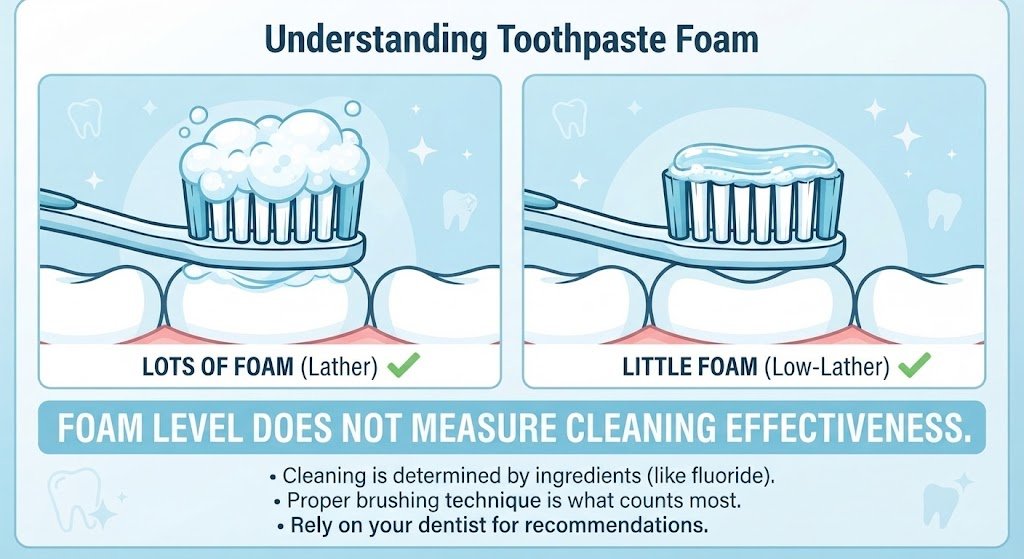
The amount of foam can vary depending on the formula, how much toothpaste you use, how much moisture is present, and your brushing technique. A toothpaste that creates a large amount of foam is not automatically more effective than one that creates very little.
Does More Toothpaste Foam Mean Cleaner Teeth?
No. More foam is not a reliable way to measure how well toothpaste cleans your teeth.
Foam is mainly a result of the formula’s surfactants and the movement of brushing. It does not directly tell you how much plaque has been removed or how well the toothpaste protects against cavities.
Effective oral hygiene depends on several factors:
- Brushing technique: Clean all tooth surfaces carefully instead of focusing only on the areas that feel foamy.
- Brushing time: Follow your dental professional’s advice; standard public guidance commonly recommends brushing for two minutes, twice a day.
- Active ingredients: Fluoride toothpaste helps prevent tooth decay. Other formulas may be designed for needs such as sensitivity, but the appropriate choice depends on your situation.
- Consistency: Brushing regularly and following a suitable oral-care routine matter more than producing a lot of bubbles.
A highly foaming toothpaste can still be used incorrectly if you rush through brushing. Likewise, a low-foam toothpaste can be a reasonable choice if it suits your needs and provides the protection you require.
Is Sodium Lauryl Sulfate (SLS) Bad for Your Mouth?
SLS is widely used in toothpaste, but some people may find it irritating. That does not mean everyone needs to avoid SLS. The important question is whether the ingredient suits your mouth and your individual needs.
Some research has examined whether SLS-free toothpaste may help people who experience recurrent canker sores, also called recurrent aphthous ulcers. Findings suggest that some people may benefit from avoiding SLS, but the evidence does not mean SLS causes mouth sores in everyone.
If you regularly experience irritation, burning, or mouth sores, consider these steps:
- Check the ingredient list of your current toothpaste.
- Consider whether symptoms seem to occur or worsen when using a particular product.
- Ask a dentist whether trying an SLS-free formula makes sense for you.
- Seek professional advice for persistent sores, swelling, or ongoing discomfort rather than assuming toothpaste is the only possible cause.
For further reading, consult the [ add a link ] to the American Dental Association’s information on toothpastes and their ingredients.
Can Toothpaste Clean Your Teeth Without Foaming?
Yes. Toothpaste can clean your teeth without producing lots of foam. Foaming is a feature of the formula, not a requirement for effective brushing.
Low-foam and SLS-free toothpastes may suit people who dislike a mouth full of bubbles or who suspect that SLS contributes to their irritation. Some alternatives use different surfactants, while other formulations may produce very little foam.
However, keep three points in mind:
- Low foam does not automatically mean better. A product should be assessed by its ingredients and intended use, not just its bubbles.
- SLS-free does not automatically mean safer for everyone. Other ingredients can also cause irritation or sensitivity in some people.
- Check cavity protection separately. If you need cavity protection, look for a toothpaste with an appropriate fluoride formulation unless your dental professional has advised otherwise.
How to Choose the Right Toothpaste for Your Needs
Instead of choosing toothpaste based on how much it foams, start with the reason you are buying it.
| Your priority | What to look for | What to keep in mind |
| Everyday cavity protection | A suitable fluoride toothpaste | Follow the label and your dentist’s advice |
| Less foam | A low-foaming formula | Foam level alone does not establish cleaning performance |
| Avoiding SLS | A clearly labelled SLS-free formula | Check the full ingredient list |
| Tooth sensitivity | A toothpaste designed for sensitivity | Choose based on your symptoms and dental advice |
| Comparing products | Active ingredients, intended use, directions, and cost per ounce | Do not rely only on marketing claims |
If you are comparing SLS-free options, check whether the product fits your specific needs before considering its price or flavour. Read the ingredient list, confirm its intended use, and check the label for relevant directions and warnings. Where applicable, you can also verify whether a product carries the American Dental Association’s Seal of Acceptance.
Should You Buy a Low-Foam or SLS-Free Toothpaste?
It may be worth considering one if you dislike heavy foam or suspect your current toothpaste is contributing to irritation. If you are happy with your current toothpaste and have no concerns, there is no general need to switch simply because it foams.
If you do change products, keep your main oral-health needs in mind. A preference for less foam should not cause you to overlook cavity protection or other advice from your dental professional.
Frequently Asked Questions
Why does toothpaste foam so much?
Toothpaste can foam because surfactants, such as SLS, help bubbles form when the paste mixes with saliva and water. Brushing introduces movement and air, making the foam more visible. The amount varies by formula.
Does more foam mean toothpaste cleans better?
No. Foam is not a reliable measure of plaque removal or cavity protection. Brushing technique, brushing time, and appropriate active ingredients are more useful factors to consider.
Is SLS in toothpaste bad for you?
Not necessarily. SLS is a common toothpaste ingredient, but some people may experience irritation. People with recurring mouth sores may wish to discuss an SLS-free option with a dentist.
Can toothpaste work without foam?
Yes. Low-foam and SLS-free formulas are available. The important consideration is whether the toothpaste suits your oral-health needs and provides appropriate protection.
Which toothpaste ingredients cause foam?
Sodium lauryl sulfate (SLS) is a common foaming ingredient. Other surfactants, including sodium N-lauroyl sarcosinate, can also contribute to foaming.
Should I switch to SLS-free toothpaste?
Not everyone needs to switch. It may be worth considering if you dislike heavy foam or suspect SLS contributes to irritation. Check the full formula and ask a dentist if you have ongoing symptoms or need help choosing a suitable toothpaste.
Conclusion
Toothpaste foams mainly because surfactants help bubbles form as the paste mixes with saliva and water during brushing. More foam does not mean cleaner teeth, and toothpaste can clean effectively without producing a large amount of bubbles.
Choose toothpaste according to your oral-health needs, ingredient preferences, and dental professional’s advice—not foam level alone. If you prefer a lower-foam option or suspect SLS irritates your mouth, compare suitable alternatives while keeping cavity protection in mind.
