Looking for the best toothpaste with hydroxyapatite? The right choice depends on the formula, the type of hydroxyapatite used, whether you want fluoride, and how clearly the manufacturer explains its ingredients.
Four products worth comparing are Boka Ela Mint, RiseWell Mineral Toothpaste, RiseWell PRO, and Davids Hydroxi. Each offers a different approach to hydroxyapatite-based oral care, but none should be treated as a universal winner without comparing its formula and evidence.
This guide explains what distinguishes these options, what to look for on the ingredient label, and how hydroxyapatite compares with fluoride toothpaste. Product formulas and retailer listings can change, so confirm the current details before buying.
Best Hydroxyapatite Toothpaste Options at a Glance
The following products are a starting shortlist, not independently tested rankings. Their exact formulas, availability, and package details should be checked against current manufacturer information.
| Toothpaste | Main point to compare | Fluoride status | May suit shoppers who… |
| Boka Ela Mint | Nano-hydroxyapatite formula | Marketed as fluoride-free; verify the current label | Specifically want to explore nano-hydroxyapatite |
| RiseWell Mineral Toothpaste | Micro-hydroxyapatite formula | Marketed as fluoride-free; verify the current label | Want to compare a micro-hydroxyapatite option |
| RiseWell PRO | Manufacturer describes both micro- and nano-hydroxyapatite | Marketed as fluoride-free; verify the current label | Want a formula described as containing both types |
| Davids Hydroxi | Nano-hydroxyapatite and published ingredient information | Marketed as fluoride-free; verify the current label | Want to examine a disclosed ingredient list |
Important: A product containing hydroxyapatite is not automatically the right choice for every dental need. If cavity prevention is your main priority, consider established dental guidance on fluoride before switching to a fluoride-free formula.
1. Boka Ela Mint Nano-Hydroxyapatite Toothpaste
Boka Ela Mint is an option to investigate if you are specifically interested in nano-hydroxyapatite. The brand markets its toothpaste around this ingredient and describes the formula as fluoride-free.
That may make it relevant to shoppers who are researching hydroxyapatite-based oral care or intentionally seeking a fluoride-free product. However, the ingredient name alone does not prove that a particular toothpaste will provide a specific result for every user.
What to check before buying
- Confirm that the listing is for Boka Ela Mint, rather than another product from the brand.
- Read the current ingredient list and check the flavoring ingredients.
- Look for information about the hydroxyapatite type and whether its concentration is disclosed.
- Compare the tube size and price with other options.
- Consider your cavity risk before choosing a fluoride-free toothpaste.
Potential advantages: The product is positioned around nano-hydroxyapatite, and its fluoride-free status may match the preferences of some shoppers.
Potential limitations: The formula may not be suitable for everyone, and you should not assume that every performance claim has been independently established for the exact product.
For current product information, check the manufacturer’s website and compare it with the label on the retailer listing before ordering.
2. RiseWell Mineral Toothpaste
RiseWell Mineral Toothpaste is another option to compare if you are interested in a hydroxyapatite formula. The manufacturer describes the original Mineral Toothpaste as fluoride-free and identifies its hydroxyapatite as the micro form.
Its published ingredient information can also help shoppers review the rest of the formula instead of judging the product by its headline ingredient alone.
What to check before buying
- Make sure you are looking at the original Mineral Toothpaste, not RiseWell PRO.
- Confirm how the manufacturer describes the hydroxyapatite type.
- Review the complete ingredient list if you prefer to avoid particular flavorings or other ingredients.
- Compare the price per ounce with similar products.
- Check whether the current package and formula match the product description.
Potential advantages: The manufacturer identifies the hydroxyapatite type and publishes ingredient information, which can make formula comparisons more straightforward.
Potential limitations: The product is marketed as fluoride-free, so shoppers prioritizing established fluoride-based cavity protection should consider that difference before buying. Its ingredient list may also contain flavoring ingredients that do not suit every preference.
addalink—AnchorText:”RiseWellMineralToothpaste”—Destination:officialRiseWellproductpageadd a link — Anchor Text: “RiseWell Mineral Toothpaste” — Destination: official RiseWell product page
3. RiseWell PRO Hydroxyapatite Toothpaste
RiseWell PRO is worth comparing if you specifically want a product whose manufacturer describes it as containing both micro- and nano-hydroxyapatite. A flavorless version is also offered, which may be relevant if you prefer to avoid strong toothpaste flavors.
The presence of two described particle types does not, by itself, establish that this formula performs better than products using one type. It is one characteristic to consider alongside the full ingredient list, available evidence, and your personal preferences.
What to check before buying
- Confirm whether you want the regular PRO formula or the flavorless version.
- Review the current ingredient list for flavorings, extracts, and other ingredients relevant to your preferences.
- Check the product’s fluoride status and any manufacturer statements about its intended use.
- Compare package size and price with the original RiseWell Mineral Toothpaste.
- Do not assume the two products have identical formulas.
Potential advantages: The manufacturer specifically describes both micro- and nano-hydroxyapatite, and the flavorless version provides another option for shoppers with flavor preferences.
Potential limitations: It is marketed as fluoride-free, and a more complex ingredient description does not automatically demonstrate superior clinical performance. A flavorless product should still be checked for all ingredients that matter to you.
addalink—AnchorText:”RiseWellPROhydroxyapatitetoothpaste”—Destination:officialRiseWellPROproductpageadd a link — Anchor Text: “RiseWell PRO hydroxyapatite toothpaste” — Destination: official RiseWell PRO product page
4. Davids Hydroxi Nano-Hydroxyapatite Toothpaste
Davids Hydroxi is another product to investigate if you are comparing nano-hydroxyapatite toothpastes. The manufacturer’s product information includes an ingredient list, allowing readers to examine more than the product’s headline claims.
One detail to look for is whether the manufacturer discloses the exact hydroxyapatite concentration. If a company identifies a percentage as proprietary or does not publish it, treat that information as undisclosed rather than trying to estimate it.
What to check before buying
- Confirm that the specific Davids Hydroxi product lists hydroxyapatite.
- Check the exact variant, including any whitening or other formula distinctions.
- Read the complete ingredient list and flavor description.
- Compare the package size and price with the other candidates.
- Verify the current fluoride status from the product label.
Potential advantages: The manufacturer identifies nano-hydroxyapatite and provides ingredient information for shoppers who want to compare formulas.
Potential limitations: The exact concentration may not be publicly disclosed, and a fluoride-free formula may not fit everyone’s cavity-prevention needs. Marketing claims should not be treated as proof that the product outperforms every alternative.
addalink—AnchorText:”DavidsHydroxitoothpaste”—Destination:officialDavidsHydroxiproductpageadd a link — Anchor Text: “Davids Hydroxi toothpaste” — Destination: official Davids Hydroxi product page
Best Toothpaste With Hydroxyapatite: 4 Options to Compare
Best Toothpaste With Hydroxyapatite: 4 Options to Compare
Looking for the best toothpaste with hydroxyapatite? The right choice depends on the formula, the type of hydroxyapatite used, whether you want fluoride, and how clearly the manufacturer explains its ingredients.
Four products worth comparing are Boka Ela Mint, RiseWell Mineral Toothpaste, RiseWell PRO, and Davids Hydroxi. Each offers a different approach to hydroxyapatite-based oral care, but none should be treated as a universal winner without comparing its formula and evidence.
This guide explains what distinguishes these options, what to look for on the ingredient label, and how hydroxyapatite compares with fluoride toothpaste. Product formulas and retailer listings can change, so confirm the current details before buying.
Best Hydroxyapatite Toothpaste Options at a Glance
The following products are a starting shortlist, not independently tested rankings. Their exact formulas, availability, and package details should be checked against current manufacturer information.
| Toothpaste | Main point to compare | Fluoride status | May suit shoppers who… |
| Boka Ela Mint | Nano-hydroxyapatite formula | Marketed as fluoride-free; verify the current label | Specifically want to explore nano-hydroxyapatite |
| RiseWell Mineral Toothpaste | Micro-hydroxyapatite formula | Marketed as fluoride-free; verify the current label | Want to compare a micro-hydroxyapatite option |
| RiseWell PRO | Manufacturer describes both micro- and nano-hydroxyapatite | Marketed as fluoride-free; verify the current label | Want a formula described as containing both types |
| Davids Hydroxi | Nano-hydroxyapatite and published ingredient information | Marketed as fluoride-free; verify the current label | Want to examine a disclosed ingredient list |
Important: A product containing hydroxyapatite is not automatically the right choice for every dental need. If cavity prevention is your main priority, consider established dental guidance on fluoride before switching to a fluoride-free formula.
1. Boka Ela Mint Nano-Hydroxyapatite Toothpaste
Boka Ela Mint is an option to investigate if you are specifically interested in nano-hydroxyapatite. The brand markets its toothpaste around this ingredient and describes the formula as fluoride-free.
That may make it relevant to shoppers who are researching hydroxyapatite-based oral care or intentionally seeking a fluoride-free product. However, the ingredient name alone does not prove that a particular toothpaste will provide a specific result for every user.
What to check before buying
- Confirm that the listing is for Boka Ela Mint, rather than another product from the brand.
- Read the current ingredient list and check the flavoring ingredients.
- Look for information about the hydroxyapatite type and whether its concentration is disclosed.
- Compare the tube size and price with other options.
- Consider your cavity risk before choosing a fluoride-free toothpaste.
Potential advantages: The product is positioned around nano-hydroxyapatite, and its fluoride-free status may match the preferences of some shoppers.
Potential limitations: The formula may not be suitable for everyone, and you should not assume that every performance claim has been independently established for the exact product.
For current product information, check the manufacturer’s website and compare it with the label on the retailer listing before ordering.
2. RiseWell Mineral Toothpaste
RiseWell Mineral Toothpaste is another option to compare if you are interested in a hydroxyapatite formula. The manufacturer describes the original Mineral Toothpaste as fluoride-free and identifies its hydroxyapatite as the micro form.
Its published ingredient information can also help shoppers review the rest of the formula instead of judging the product by its headline ingredient alone.
What to check before buying
- Make sure you are looking at the original Mineral Toothpaste, not RiseWell PRO.
- Confirm how the manufacturer describes the hydroxyapatite type.
- Review the complete ingredient list if you prefer to avoid particular flavorings or other ingredients.
- Compare the price per ounce with similar products.
- Check whether the current package and formula match the product description.
Potential advantages: The manufacturer identifies the hydroxyapatite type and publishes ingredient information, which can make formula comparisons more straightforward.
Potential limitations: The product is marketed as fluoride-free, so shoppers prioritizing established fluoride-based cavity protection should consider that difference before buying. Its ingredient list may also contain flavoring ingredients that do not suit every preference.
addalink—AnchorText:”RiseWellMineralToothpaste”—Destination:officialRiseWellproductpageadd a link — Anchor Text: “RiseWell Mineral Toothpaste” — Destination: official RiseWell product page
3. RiseWell PRO Hydroxyapatite Toothpaste
RiseWell PRO is worth comparing if you specifically want a product whose manufacturer describes it as containing both micro- and nano-hydroxyapatite. A flavorless version is also offered, which may be relevant if you prefer to avoid strong toothpaste flavors.
The presence of two described particle types does not, by itself, establish that this formula performs better than products using one type. It is one characteristic to consider alongside the full ingredient list, available evidence, and your personal preferences.
What to check before buying
- Confirm whether you want the regular PRO formula or the flavorless version.
- Review the current ingredient list for flavorings, extracts, and other ingredients relevant to your preferences.
- Check the product’s fluoride status and any manufacturer statements about its intended use.
- Compare package size and price with the original RiseWell Mineral Toothpaste.
- Do not assume the two products have identical formulas.
Potential advantages: The manufacturer specifically describes both micro- and nano-hydroxyapatite, and the flavorless version provides another option for shoppers with flavor preferences.
Potential limitations: It is marketed as fluoride-free, and a more complex ingredient description does not automatically demonstrate superior clinical performance. A flavorless product should still be checked for all ingredients that matter to you.
4. Davids Hydroxi Nano-Hydroxyapatite Toothpaste
Davids Hydroxi is another product to investigate if you are comparing nano-hydroxyapatite toothpastes. The manufacturer’s product information includes an ingredient list, allowing readers to examine more than the product’s headline claims.
One detail to look for is whether the manufacturer discloses the exact hydroxyapatite concentration. If a company identifies a percentage as proprietary or does not publish it, treat that information as undisclosed rather than trying to estimate it.
What to check before buying
- Confirm that the specific Davids Hydroxi product lists hydroxyapatite.
- Check the exact variant, including any whitening or other formula distinctions.
- Read the complete ingredient list and flavor description.
- Compare the package size and price with the other candidates.
- Verify the current fluoride status from the product label.
Potential advantages: The manufacturer identifies nano-hydroxyapatite and provides ingredient information for shoppers who want to compare formulas.
Potential limitations: The exact concentration may not be publicly disclosed, and a fluoride-free formula may not fit everyone’s cavity-prevention needs. Marketing claims should not be treated as proof that the product outperforms every alternative.
addalink—AnchorText:”DavidsHydroxitoothpaste”—Destination:officialDavidsHydroxiproductpageadd a link — Anchor Text: “Davids Hydroxi toothpaste” — Destination: official Davids Hydroxi product page
Show more
What Is Hydroxyapatite in Toothpaste?
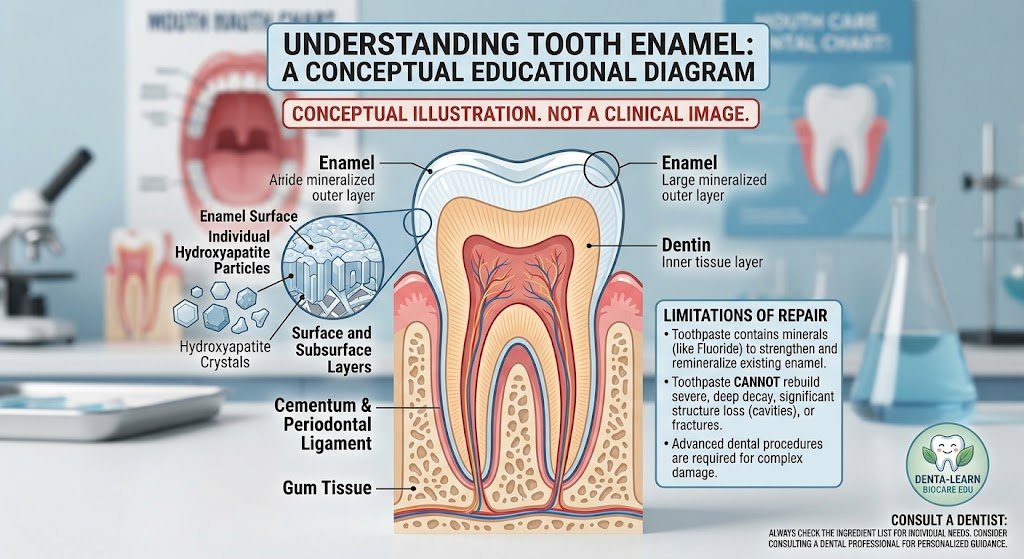
Hydroxyapatite is a calcium-phosphate mineral closely related to the mineral component of teeth and bones. Tooth enamel contains a highly mineralized structure, and hydroxyapatite-containing oral-care products are designed to interact with the mineral surface of teeth.
Researchers have studied hydroxyapatite in toothpaste for its potential role in enamel remineralization and dental caries prevention. Some published reviews report promising findings, but results need to be interpreted in context: a study of one formulation does not prove that every product containing the same ingredient will produce the same outcome.
When evaluating a hydroxyapatite toothpaste, remember three important points:
- The ingredient is only one part of the formula. Concentration, particle characteristics, and other ingredients can differ between products.
- Evidence varies by product and outcome. Research on early enamel changes does not necessarily establish that a product can treat an existing cavity.
- Marketing language is not the same as clinical evidence. Look for research and clear information about what was actually studied.
addalink—AnchorText:”publishedresearchonhydroxyapatitetoothpaste”—Destination:relevantpeer−reviewedsystematicreviewsadd a link — Anchor Text: “published research on hydroxyapatite toothpaste” — Destination: relevant peer-reviewed systematic reviews
Hydroxyapatite toothpaste should not be viewed as a replacement for professional dental care. Tooth pain, a visible hole in a tooth, or persistent sensitivity may require assessment by a dentist.
Nano-Hydroxyapatite vs. Micro-Hydroxyapatite
The terms nano-hydroxyapatite and micro-hydroxyapatite refer to different particle-size categories. Toothpaste manufacturers may use these terms to describe the form of hydroxyapatite in a product.
However, particle size alone does not tell you which toothpaste will work best. Product performance depends on more than a single ingredient characteristic, and comparisons should be based on appropriate evidence rather than assumptions.
Use these questions when comparing labels and manufacturer information:
| What to compare | What to look for |
| Hydroxyapatite type | Does the manufacturer identify nano, micro, or both? |
| Concentration | Is the percentage disclosed, or is it unspecified? |
| Particle information | Are particle characteristics clearly described? |
| Complete formula | What other active and inactive ingredients are present? |
| Evidence | Is there research on the exact product, or only research on the ingredient generally? |
Do not automatically assume that nano-hydroxyapatite is superior to every micro-hydroxyapatite formula. Equally, a product that lists both types should not be considered better solely because it includes both.
If a manufacturer does not disclose a concentration, record it as “not disclosed.” Avoid filling the gap with estimates from unofficial websites.
Hydroxyapatite vs. Fluoride: Which Should You Choose?
This is an important consideration when choosing a toothpaste.
Hydroxyapatite and fluoride are different ingredients, and they should not be treated as interchangeable simply because both are discussed in relation to tooth mineral health. Research into hydroxyapatite toothpaste has expanded, but established dental guidance continues to recommend fluoride toothpaste for cavity prevention.
The American Dental Association provides guidance on fluoride and toothpaste, including the role of fluoride in helping prevent tooth decay. addalink—AnchorText:”ADAguidanceontoothpasteandfluoride”—Destination:officialAmericanDentalAssociationtoothpasteandfluorideresourcesadd a link — Anchor Text: “ADA guidance on toothpaste and fluoride” — Destination: official American Dental Association toothpaste and fluoride resources
When fluoride toothpaste may be the appropriate choice
Consider fluoride toothpaste if you want to follow established cavity-prevention guidance, have a history of frequent cavities, or have been advised by your dentist to use fluoride because of your individual risk.
The ADA Seal of Acceptance can also help consumers identify products that meet the ADA’s requirements for the relevant accepted claims. Check the exact product and the scope of its acceptance rather than assuming that every toothpaste carries the Seal.
When you may want to compare a hydroxyapatite formula
You may wish to investigate hydroxyapatite toothpaste if you are interested in the ingredient, have a preference about the formula, or are evaluating fluoride-free oral-care options. In that case, review the evidence and consider whether the product fits your dental needs.
Do not assume that every hydroxyapatite toothpaste has been shown to offer the same cavity protection as an ADA-accepted fluoride toothpaste. Published research may examine specific formulas, populations, or outcomes that do not apply to every product on the market.
If you have frequent cavities, dry mouth, exposed roots, or other factors that may increase your risk of decay, speak with your dentist before replacing fluoride toothpaste with a fluoride-free alternative.
How to Choose the Best Hydroxyapatite Toothpaste for You
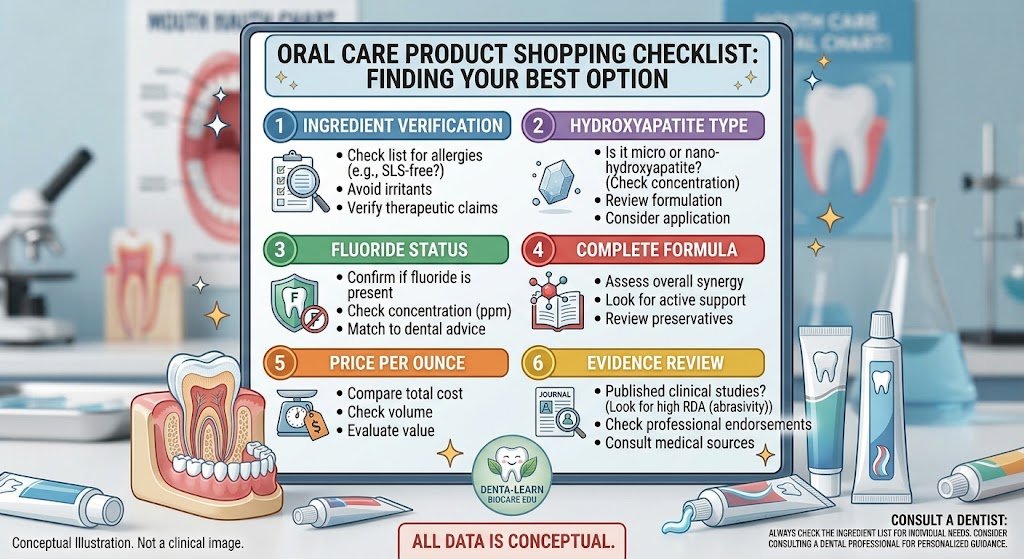
Once you understand the product differences, use this checklist to narrow your options.
1. Confirm the exact ingredient
Check the current ingredient list on the packaging and manufacturer website. Confirm that hydroxyapatite is actually listed and note whether the manufacturer specifies nano-hydroxyapatite, micro-hydroxyapatite, or both.
Do not rely on a search result, social media post, or broad brand description alone. Different products from the same brand may use different formulas.
2. Decide whether you want fluoride
Some hydroxyapatite products are marketed as fluoride-free. If you specifically want fluoride, check the active ingredients instead of assuming it is present because the product is described as mineral-based.
Your decision should account for your cavity risk and any guidance from your dentist—not just a general preference or a marketing claim.
3. Review the complete ingredient list
Look beyond the headline ingredient. Depending on the formula, toothpaste may contain abrasives, sweeteners, humectants, flavorings, foaming agents, or other ingredients.
If you are avoiding a particular ingredient because of a previous reaction or personal preference, check the full label. If you experience recurring mouth irritation, discuss it with a dental professional rather than repeatedly switching products without identifying the cause.
4. Compare package size and price
A lower price per tube does not always mean better value. Compare the net weight and price of each product.
Price per ounce = package price ÷ ounces in the package
Use current prices and actual package sizes, especially when comparing products sold in different quantities. Subscription offers, coupons, and retailer promotions may change the effective cost.
5. Examine the evidence behind product claims
Look for a clear explanation of what has been studied. Research on hydroxyapatite as an ingredient can provide useful background, but it does not automatically prove every claim made about a specific toothpaste.
Be cautious about broad promises such as “repairs all enamel damage” or “works better than every other toothpaste” when the supporting evidence is not provided.
6. Choose a formula you will use consistently
Flavor, texture, foaming, and packaging can affect your daily experience. These preferences do not establish clinical effectiveness, but they can matter when choosing between otherwise suitable products.
The goal is to select a toothpaste that fits your preferences and dental-care needs—not to buy the product with the longest ingredient list or the strongest marketing language.
Common Mistakes to Avoid
Assuming all hydroxyapatite toothpastes are the same. Particle descriptions, formulas, and disclosed concentrations can differ.
Treating fluoride-free as automatically better. Fluoride has an established role in cavity prevention. Whether a fluoride-free product is appropriate depends on individual needs and preferences.
Choosing by concentration alone. A disclosed percentage can be useful, but it does not independently prove superior performance.
Trusting every marketing claim. Distinguish manufacturer statements from findings demonstrated by independent research.
Buying without checking the variant. A brand may sell several toothpastes with different ingredients and intended uses.
Expecting toothpaste to treat every dental problem. Persistent pain, visible cavities, gum swelling, or worsening sensitivity may require professional assessment.
What Is Hydroxyapatite in Toothpaste?
What Is Hydroxyapatite in Toothpaste?
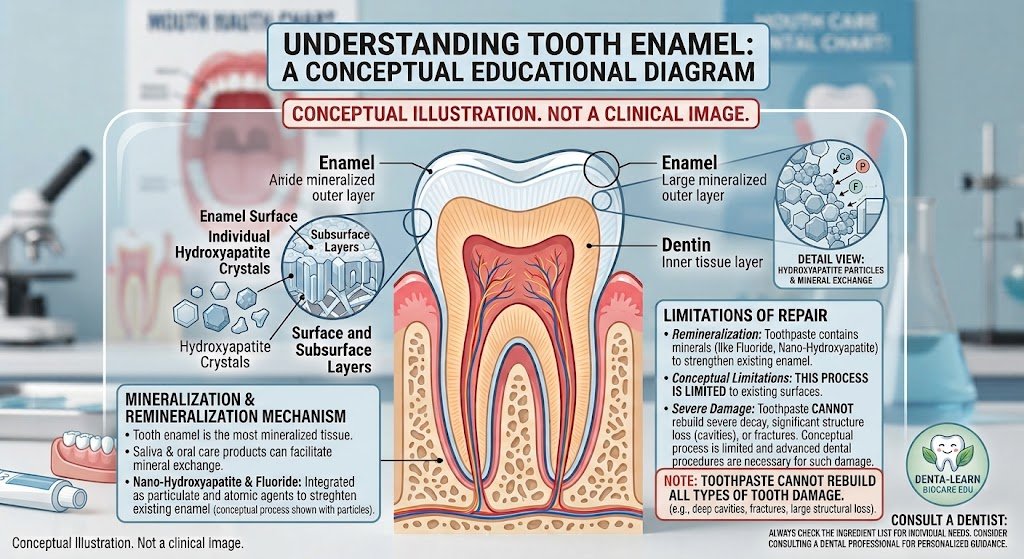
Hydroxyapatite is a calcium-phosphate mineral closely related to the mineral component of teeth and bones. Tooth enamel contains a highly mineralized structure, and hydroxyapatite-containing oral-care products are designed to interact with the mineral surface of teeth.
Researchers have studied hydroxyapatite in toothpaste for its potential role in enamel remineralization and dental caries prevention. Some published reviews report promising findings, but results need to be interpreted in context: a study of one formulation does not prove that every product containing the same ingredient will produce the same outcome.
When evaluating a hydroxyapatite toothpaste, remember three important points:
- The ingredient is only one part of the formula. Concentration, particle characteristics, and other ingredients can differ between products.
- Evidence varies by product and outcome. Research on early enamel changes does not necessarily establish that a product can treat an existing cavity.
- Marketing language is not the same as clinical evidence. Look for research and clear information about what was actually studied.
addalink—AnchorText:”publishedresearchonhydroxyapatitetoothpaste”—Destination:relevantpeer−reviewedsystematicreviewsadd a link — Anchor Text: “published research on hydroxyapatite toothpaste” — Destination: relevant peer-reviewed systematic reviews
Hydroxyapatite toothpaste should not be viewed as a replacement for professional dental care. Tooth pain, a visible hole in a tooth, or persistent sensitivity may require assessment by a dentist.
Nano-Hydroxyapatite vs. Micro-Hydroxyapatite
The terms nano-hydroxyapatite and micro-hydroxyapatite refer to different particle-size categories. Toothpaste manufacturers may use these terms to describe the form of hydroxyapatite in a product.
However, particle size alone does not tell you which toothpaste will work best. Product performance depends on more than a single ingredient characteristic, and comparisons should be based on appropriate evidence rather than assumptions.
Use these questions when comparing labels and manufacturer information:
| What to compare | What to look for |
| Hydroxyapatite type | Does the manufacturer identify nano, micro, or both? |
| Concentration | Is the percentage disclosed, or is it unspecified? |
| Particle information | Are particle characteristics clearly described? |
| Complete formula | What other active and inactive ingredients are present? |
| Evidence | Is there research on the exact product, or only research on the ingredient generally? |
Do not automatically assume that nano-hydroxyapatite is superior to every micro-hydroxyapatite formula. Equally, a product that lists both types should not be considered better solely because it includes both.
If a manufacturer does not disclose a concentration, record it as “not disclosed.” Avoid filling the gap with estimates from unofficial websites.
Hydroxyapatite vs. Fluoride: Which Should You Choose?
This is an important consideration when choosing a toothpaste.
Hydroxyapatite and fluoride are different ingredients, and they should not be treated as interchangeable simply because both are discussed in relation to tooth mineral health. Research into hydroxyapatite toothpaste has expanded, but established dental guidance continues to recommend fluoride toothpaste for cavity prevention.
The American Dental Association provides guidance on fluoride and toothpaste, including the role of fluoride in helping prevent tooth decay. addalink—AnchorText:”ADAguidanceontoothpasteandfluoride”—Destination:officialAmericanDentalAssociationtoothpasteandfluorideresourcesadd a link — Anchor Text: “ADA guidance on toothpaste and fluoride” — Destination: official American Dental Association toothpaste and fluoride resources
When fluoride toothpaste may be the appropriate choice
Consider fluoride toothpaste if you want to follow established cavity-prevention guidance, have a history of frequent cavities, or have been advised by your dentist to use fluoride because of your individual risk.
The ADA Seal of Acceptance can also help consumers identify products that meet the ADA’s requirements for the relevant accepted claims. Check the exact product and the scope of its acceptance rather than assuming that every toothpaste carries the Seal.
When you may want to compare a hydroxyapatite formula
You may wish to investigate hydroxyapatite toothpaste if you are interested in the ingredient, have a preference about the formula, or are evaluating fluoride-free oral-care options. In that case, review the evidence and consider whether the product fits your dental needs.
Do not assume that every hydroxyapatite toothpaste has been shown to offer the same cavity protection as an ADA-accepted fluoride toothpaste. Published research may examine specific formulas, populations, or outcomes that do not apply to every product on the market.
If you have frequent cavities, dry mouth, exposed roots, or other factors that may increase your risk of decay, speak with your dentist before replacing fluoride toothpaste with a fluoride-free alternative.
How to Choose the Best Hydroxyapatite Toothpaste for You
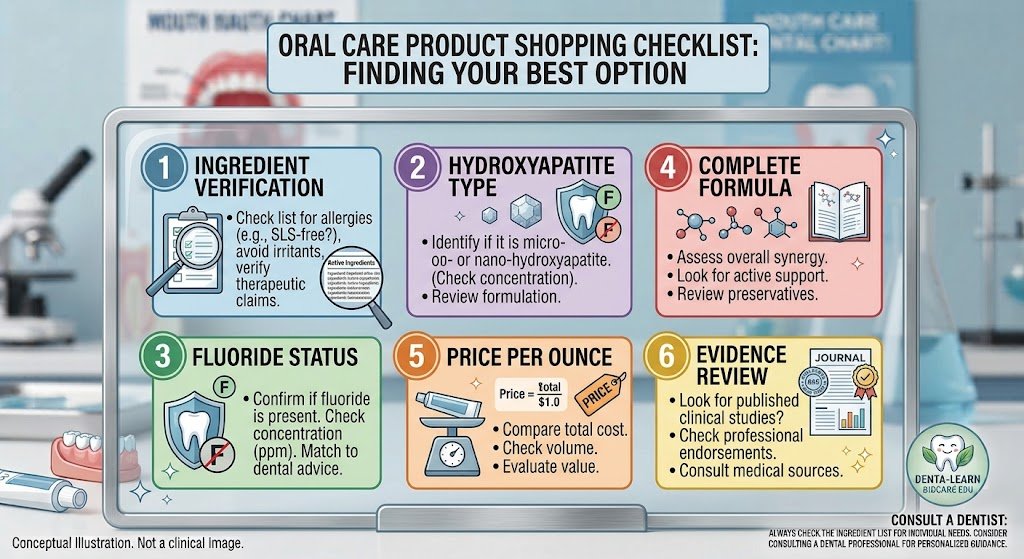
Once you understand the product differences, use this checklist to narrow your options.
1. Confirm the exact ingredient
Check the current ingredient list on the packaging and manufacturer website. Confirm that hydroxyapatite is actually listed and note whether the manufacturer specifies nano-hydroxyapatite, micro-hydroxyapatite, or both.
Do not rely on a search result, social media post, or broad brand description alone. Different products from the same brand may use different formulas.
2. Decide whether you want fluoride
Some hydroxyapatite products are marketed as fluoride-free. If you specifically want fluoride, check the active ingredients instead of assuming it is present because the product is described as mineral-based.
Your decision should account for your cavity risk and any guidance from your dentist—not just a general preference or a marketing claim.
3. Review the complete ingredient list
Look beyond the headline ingredient. Depending on the formula, toothpaste may contain abrasives, sweeteners, humectants, flavorings, foaming agents, or other ingredients.
If you are avoiding a particular ingredient because of a previous reaction or personal preference, check the full label. If you experience recurring mouth irritation, discuss it with a dental professional rather than repeatedly switching products without identifying the cause.
4. Compare package size and price
A lower price per tube does not always mean better value. Compare the net weight and price of each product.
Price per ounce = package price ÷ ounces in the package
Use current prices and actual package sizes, especially when comparing products sold in different quantities. Subscription offers, coupons, and retailer promotions may change the effective cost.
5. Examine the evidence behind product claims
Look for a clear explanation of what has been studied. Research on hydroxyapatite as an ingredient can provide useful background, but it does not automatically prove every claim made about a specific toothpaste.
Be cautious about broad promises such as “repairs all enamel damage” or “works better than every other toothpaste” when the supporting evidence is not provided.
6. Choose a formula you will use consistently
Flavor, texture, foaming, and packaging can affect your daily experience. These preferences do not establish clinical effectiveness, but they can matter when choosing between otherwise suitable products.
The goal is to select a toothpaste that fits your preferences and dental-care needs—not to buy the product with the longest ingredient list or the strongest marketing language.
Common Mistakes to Avoid
Assuming all hydroxyapatite toothpastes are the same. Particle descriptions, formulas, and disclosed concentrations can differ.
Treating fluoride-free as automatically better. Fluoride has an established role in cavity prevention. Whether a fluoride-free product is appropriate depends on individual needs and preferences.
Choosing by concentration alone. A disclosed percentage can be useful, but it does not independently prove superior performance.
Trusting every marketing claim. Distinguish manufacturer statements from findings demonstrated by independent research.
Buying without checking the variant. A brand may sell several toothpastes with different ingredients and intended uses.
Expecting toothpaste to treat every dental problem. Persistent pain, visible cavities, gum swelling, or worsening sensitivity may require professional assessment.
Show more
Frequently Asked Questions
Frequently Asked Questions
What is the best toothpaste with hydroxyapatite?
There is no single best choice for everyone. Boka Ela Mint, RiseWell Mineral Toothpaste, RiseWell PRO, and Davids Hydroxi are options to compare based on hydroxyapatite type, fluoride status, ingredient transparency, flavor, and price. Verify each current formula before buying.
Is nano-hydroxyapatite better than micro-hydroxyapatite?
Nano-hydroxyapatite and micro-hydroxyapatite have different particle-size characteristics. However, particle size alone does not establish that every nano formula performs better than every micro formula. Consider the complete formulation and evidence for the specific product.
Is hydroxyapatite toothpaste as effective as fluoride toothpaste?
Some research on hydroxyapatite-containing products has reported promising findings, but the evidence should be interpreted according to the products and outcomes studied. The ADA recommends fluoride toothpaste for cavity prevention. If you are considering switching to a fluoride-free formula, discuss your individual cavity risk with your dentist.
Can hydroxyapatite toothpaste help with sensitive teeth?
Hydroxyapatite has been investigated for potential applications in sensitivity-related oral care, but results can vary by formulation and the cause of sensitivity. Persistent, severe, or worsening sensitivity should be assessed by a dental professional.
Does hydroxyapatite toothpaste contain fluoride?
Some toothpastes may contain hydroxyapatite alongside fluoride, while many products marketed specifically around hydroxyapatite are fluoride-free. Check the exact product’s current ingredient list rather than assuming all formulas are alike.
What concentration of hydroxyapatite should I look for?
No single percentage can identify the best toothpaste for every person. Some manufacturers disclose a concentration, while others do not. Consider the complete formula and available evidence instead of using concentration as your only selection criterion.
Can I use hydroxyapatite toothpaste every day?
Follow the product label and your dental professional’s advice. If you are considering a fluoride-free toothpaste, take your cavity risk into account before changing your regular oral-care routine.
How can I verify that a toothpaste contains hydroxyapatite?
Read the current ingredient list, confirm the exact product variant, and compare the packaging with the manufacturer’s official product information. If the type or concentration is not disclosed, treat it as undisclosed rather than estimating it.
Final Verdict: How to Choose Your Hydroxyapatite Toothpaste
The right hydroxyapatite toothpaste depends on your priorities. Boka Ela Mint and Davids Hydroxi are candidates to compare if you are interested in nano-hydroxyapatite. RiseWell Mineral Toothpaste is an option to investigate if you prefer a micro-hydroxyapatite formula, while RiseWell PRO is described by its manufacturer as containing both types.
Before choosing, compare the current ingredient lists, fluoride status, package sizes, prices, and available evidence. Verify that the retailer listing matches the exact product discussed.
Most importantly, do not base your decision on a single marketing claim. If preventing cavities is your main concern, use established dental guidance and ask your dentist whether a fluoride-free product is appropriate for your needs.
Affiliate disclosure: This article may contain affiliate links. If you purchase through qualifying links, the publisher may earn a commission at no additional cost to you. Product formulas, prices, and availability can change, so verify details with the manufacturer and retailer before buying.
