Enamel demineralization occurs when acids cause minerals to leave the hard outer surface of your teeth. It can be an early stage of tooth decay, sometimes appearing as white spots before a cavity forms. Early mineral loss may be reversible, but enamel that has physically broken down cannot simply grow back.
Understanding what causes demineralization can help you protect your teeth. This guide explains the warning signs, how remineralization works, which toothpaste ingredients may help, and when to seek professional dental care.
What Is Enamel Demineralization?
Tooth enamel is the hard, protective outer layer covering the visible portion of each tooth. It consists primarily of mineral crystals made from calcium and phosphate, arranged in a structure known as hydroxyapatite.
Enamel demineralization is the loss of these minerals when the tooth surface is exposed to acidic conditions. If mineral loss repeatedly exceeds the mouth’s natural repair processes, weakened areas can develop and may progress toward tooth decay.
Your teeth experience cycles of mineral loss and mineral replacement throughout the day. These cycles are normal. The concern arises when repeated acid exposure shifts the balance toward ongoing mineral loss.
For example, when you consume a sugary snack, bacteria in dental plaque can use the sugars to produce acids. These acids lower the pH around your teeth and encourage minerals to dissolve from the enamel. Saliva and fluoride help protect the tooth surface and support the recovery process afterward.
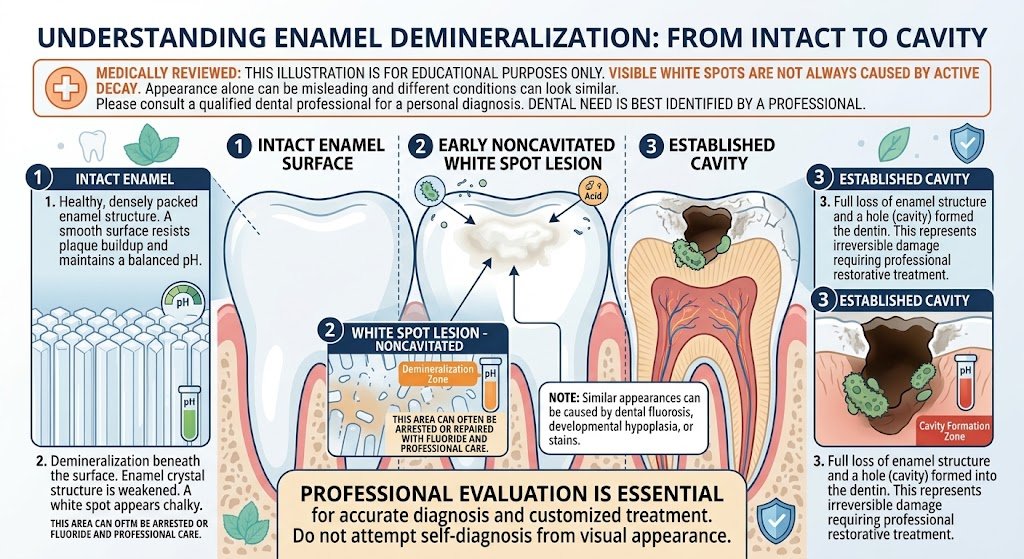
Demineralization does not always mean that a cavity has formed. In an early, noncavitated lesion, the enamel surface may remain intact even though minerals have been lost beneath it. With appropriate preventive care, some early lesions can be stopped or reversed.
Once the surface breaks down and a physical cavity develops, however, remineralization alone cannot replace the missing tooth structure.
What Causes Enamel Demineralization?
Enamel demineralization can develop when teeth experience repeated acid challenges without enough protection and recovery between them. Several factors can contribute, and more than one may be involved in the same person.
1. Plaque bacteria and sugary foods
Dental plaque is a sticky film containing bacteria that collects on tooth surfaces. When certain oral bacteria metabolize fermentable carbohydrates, they produce acids that can dissolve minerals from enamel.
Common sources of fermentable carbohydrates include:
- Candy, cookies and other sugary snacks.
- Sugar-sweetened soft drinks and beverages.
- Sweetened coffee or tea.
- Foods containing fermentable carbohydrates that remain around the teeth.
The frequency of exposure matters. Frequently snacking on sugary foods or sipping sweetened drinks over several hours can subject the teeth to repeated acid attacks.
You do not need to eliminate every carbohydrate-containing food to protect your enamel. Instead, limit frequent sugary exposures, maintain effective oral hygiene and follow a balanced eating pattern.
2. Acidic foods and drinks
Citrus juices, soft drinks, sports drinks and other acidic foods or beverages can expose teeth directly to acids.
This is closely related to enamel erosion, a process in which acids chemically wear away tooth structure. However, erosion and caries-related demineralization are not identical.
In dental caries, acids produced by plaque bacteria are central to the process. In erosion, the acid comes from sources such as acidic foods, drinks or stomach contents rather than bacterial metabolism.
Both processes can affect enamel, and they may occur together. Frequent exposure to acidic drinks can increase the risk of surface wear, especially when other risk factors are present.
3. Inadequate plaque removal
When plaque remains on tooth surfaces, acid-producing bacteria have more opportunity to act on available carbohydrates.
Brushing twice daily with fluoride toothpaste and cleaning between the teeth helps control plaque and lower the risk of tooth decay.
Pay particular attention to areas that are harder to clean, including the gumline and the spaces around orthodontic brackets. Plaque accumulation in these areas can contribute to early white spot lesions.
4. Reduced saliva protection
Saliva helps neutralize acids, wash away food debris and supply calcium and phosphate that support remineralization.
Reduced salivary flow can make it harder for the mouth to maintain a protective environment. Dry mouth may be associated with certain medications, medical conditions or other factors.
If your mouth frequently feels dry, or you regularly wake up with significant dryness, discuss it with a dentist or healthcare professional. Addressing the underlying cause may be an important part of protecting your teeth.
5. Frequent acid exposure
The timing and frequency of exposure can affect the balance between mineral loss and recovery.
For example, continuously sipping a sugary or acidic beverage throughout the afternoon may expose your teeth to repeated acid challenges. Drinking water between meals and limiting prolonged sipping can help reduce unnecessary exposure.
The goal is not to eliminate every acidic food or prevent every natural episode of demineralization. It is to reduce avoidable challenges and give saliva and preventive oral care an opportunity to protect the teeth.
What Are the Signs of Enamel Demineralization?
Enamel demineralization does not always cause noticeable symptoms. Early changes may be identified during a dental examination before you feel pain or see an obvious difference.
White spots on teeth
White or chalky-looking areas can be a sign of early enamel mineral loss, particularly when they appear in places where plaque tends to collect, such as around orthodontic brackets or near the gumline.
However, not every white spot indicates active demineralization. Developmental enamel changes and dental fluorosis can also cause white markings.
A dentist can assess the appearance, location and history of the spots to determine whether they are consistent with early caries or another condition.
Tooth sensitivity
Sensitivity to cold, heat or sweet foods may occur with several dental problems. It can be associated with exposed dentin, gum recession, erosion, cracks or tooth decay.
Sensitivity alone cannot confirm that enamel has demineralized. Persistent, worsening or localized sensitivity should be assessed by a dental professional rather than treated as proof that a particular toothpaste is needed.
Discoloration or visible surface changes
White, brown or dark areas may occur with tooth decay and other enamel conditions. A visible pit or hole can indicate that the tooth’s surface has broken down.
Not every discolored area is a cavity, and early cavities do not always hurt. Avoid trying to diagnose the condition based on color alone.
When should you take these signs seriously?
Arrange a dental examination if you notice persistent white spots, new pits, worsening discoloration or unexplained sensitivity. A dentist can distinguish between possible causes and determine whether monitoring, preventive treatment or restorative care is appropriate.
Demineralization vs. Remineralization
Demineralization and remineralization are two related processes that influence the condition of your tooth enamel.
| Feature | Demineralization | Remineralization |
| What happens? | Minerals dissolve from the tooth surface | Minerals are deposited into weakened areas |
| Main influences | Acid exposure and plaque bacteria | Saliva, calcium, phosphate and fluoride |
| Potential result | Weakened enamel and early caries | Support for enamel recovery and resistance to decay |
| Prevention approach | Reduce repeated acid challenges and control plaque | Support saliva protection and use appropriate preventive care |
The important distinction is that your teeth are not completely static. Mineral loss and replacement can occur repeatedly, and the overall balance helps determine whether an early lesion progresses or improves.
Fluoride is particularly important because it helps prevent tooth decay, reduces mineral loss under acidic conditions and supports remineralization. Remineralized enamel may also become more resistant to subsequent acid attacks.
What role do calcium, phosphate and saliva play?
Calcium and phosphate are important components of tooth mineral. Saliva helps supply these minerals and maintain conditions that support the tooth surface.
When the mouth becomes acidic, minerals can dissolve from enamel. As the oral environment returns toward a less acidic state, saliva can help restore mineral balance.
However, this process has limits. It cannot reliably rebuild a missing piece of enamel or repair an established cavity. The stage of the lesion, the person’s cavity risk and the preventive measures used all influence the outcome.
Can enamel recover without treatment?
Some early enamel lesions can improve with appropriate preventive care, including fluoride exposure, effective plaque removal and changes to dietary habits.
That does not mean every lesion will reverse on its own. A dentist may recommend professional fluoride treatment, prescription products or other interventions when a person’s cavity risk is elevated.
If you have visible white spots or suspect decay, professional assessment is more reliable than waiting to see whether the appearance changes.
Can Demineralized Enamel Be Repaired?
The answer depends on whether the enamel has lost minerals while remaining structurally intact or has already suffered physical damage.
Early mineral loss without a cavity
When an early caries lesion has not developed into a physical cavity, the process can sometimes be stopped or reversed.
Appropriate oral hygiene, fluoride toothpaste, reduced frequency of sugar exposure and professional preventive care can help create conditions that favor remineralization.
The aim is to control the disease process and preserve the remaining tooth structure. The visible appearance of a white spot may not disappear completely, even when the lesion becomes inactive.
An established cavity
Once tooth decay creates a hole in the tooth, toothpaste cannot rebuild the missing structure. Depending on the size and location of the cavity, a dentist may recommend a filling or another restorative treatment.
This is why early detection matters. Preventing a lesion from progressing is generally preferable to waiting until structural damage requires restoration.
Enamel that has physically worn away
Enamel erosion and other forms of physical tooth wear can remove tooth structure. The body cannot regenerate a missing section of mature enamel in the way that skin can heal a superficial cut.
Treatment therefore focuses on controlling the cause, protecting the remaining tooth structure and addressing any resulting sensitivity or damage.
For readers comparing preventive products, the key question is not simply whether a toothpaste claims to “repair enamel.” It is whether its active ingredients and intended use are supported by credible evidence, and whether the product is appropriate for the person’s particular problem.
How to Prevent Further Enamel Demineralization
A consistent daily routine can reduce avoidable acid exposure, control plaque and support the mouth’s natural protective processes.
1. Brush twice daily with fluoride toothpaste
For most adults, brushing twice a day with fluoride toothpaste is a central part of cavity prevention.
Many US over-the-counter fluoride toothpastes contain approximately 1,000–1,500 ppm fluoride. The most appropriate product depends on the user’s needs and any individualized advice from a dentist.
Use a soft-bristled toothbrush, brush gently along the gumline and follow the instructions on the toothpaste packaging.
Fluoride toothpaste supports cavity prevention, but it should not be presented as a way to regrow enamel that has physically disappeared. If you have a high risk of decay, ask your dentist whether additional preventive measures are appropriate.
2. Clean between your teeth
Brushing does not reliably remove plaque from every surface between teeth. Floss or another suitable interdental cleaner can help clean these areas.
Choose a method that fits your teeth, dexterity and dental needs. People with braces, bridges or other dental appliances may benefit from specific cleaning tools recommended by their dental professional.
Consistency matters more than buying numerous overlapping products.
3. Reduce frequent sugar exposure
The aim is to reduce repeated acid challenges rather than focus only on the total amount of sugar consumed.
Practical changes include:
- Limiting frequent sugary snacks between meals.
- Avoiding prolonged sipping of sweetened beverages.
- Choosing water as a regular drink.
- Keeping an overall balanced eating pattern.
You do not need to eliminate every food that contains sugar or starch. Instead, consider how often your teeth are exposed and whether your current routine leaves opportunities for recovery between eating occasions.
4. Be mindful of acidic drinks
If you regularly consume acidic beverages, reduce the frequency of exposure and avoid holding the drink in your mouth.
Rinsing with water after an acidic drink may help clear some of the acid. If erosion is a concern, ask your dentist for individualized advice on brushing timing and other protective steps.
5. Address persistent dry mouth
Saliva provides natural protection against acids and contributes minerals that support remineralization.
Stay adequately hydrated, and discuss persistent dry mouth with a dentist or healthcare professional. If a medication may be contributing, ask the prescribing clinician about appropriate options rather than stopping it yourself.
Sugar-free gum may stimulate saliva in people who can safely chew it, but it does not replace brushing, fluoride toothpaste or professional care.
6. Follow a personalized prevention plan
People with frequent cavities, reduced saliva, orthodontic appliances or other risk factors may need more than a standard home-care routine.
A dentist can assess individual risk and recommend measures such as professional fluoride applications, prescription-strength fluoride products or other preventive treatments when appropriate.
If you have active decay, do not rely on an over-the-counter toothpaste alone to determine whether treatment is needed.
7. Avoid unproven enamel-repair remedies
Be cautious about products that promise complete enamel regeneration, guaranteed cavity reversal or dramatic results within a fixed number of days.
A product’s marketing language does not establish that its claims are clinically supported. Consider its active ingredients, intended purpose and available evidence before purchasing it.
The most useful purchase is one that addresses a genuine need within an effective oral-care routine—not simply the product with the strongest “enamel repair” claim.
[ARTICLE CONTINUES — NEXT PART STARTS WITH: H2: “Which Toothpaste Ingredients Help Protect Enamel?”]
Which Toothpaste Ingredients Help Protect Enamel?
Toothpaste ingredients serve different purposes. Some have established roles in cavity prevention, while others are marketed for enamel care or sensitivity. The right choice depends on your oral-health needs and the evidence supporting the product’s intended use.
Fluoride
Fluoride has well-established benefits for preventing tooth decay. It helps reduce mineral loss during acid exposure and supports remineralization of early lesions.
Common fluoride ingredients include:
- Sodium fluoride.
- Stannous fluoride.
- Sodium monofluorophosphate.
For many adults, fluoride toothpaste is an appropriate starting point for everyday cavity prevention. People with a higher risk of decay may need additional measures recommended by their dentist.
When comparing products, look for the active ingredient, intended anticaries benefit and any relevant dental recommendations. Where applicable, the American Dental Association’s Seal of Acceptance can provide additional information about products that have met its requirements.
Hydroxyapatite
Hydroxyapatite is a calcium-phosphate mineral related to the mineral structure of teeth. Some toothpaste formulations contain hydroxyapatite and are marketed for enamel care or sensitivity.
Research on hydroxyapatite toothpaste is developing, but the evidence varies by formulation, study design and intended benefit. It would be misleading to assume that all products have the same effect or that hydroxyapatite is universally superior to fluoride for cavity prevention.
If you are considering a hydroxyapatite toothpaste, examine the product’s ingredients, intended use and supporting evidence. If you have a high cavity risk, discuss your preventive options with a dentist before replacing an established fluoride routine.
Desensitizing ingredients
Some toothpaste formulations are designed to reduce dentin hypersensitivity. Ingredients may include potassium nitrate or certain stannous fluoride formulations.
These products may be useful when sensitivity is part of the problem, but sensitivity does not automatically mean that enamel is demineralized. A cracked tooth, gum recession, exposed dentin or tooth decay can cause similar symptoms.
If sensitivity persists, seek dental advice rather than assuming that a sensitivity toothpaste will address the underlying cause.
How to choose an enamel-care toothpaste
Before purchasing a product, consider the following:
| Selection criterion | What to check |
| Main purpose | Cavity prevention, sensitivity relief or another specific need |
| Active ingredient | The ingredient and concentration stated on the packaging |
| Supporting evidence | Whether credible evidence supports the intended benefit |
| Suitability | Age, cavity risk, sensitivity and relevant dental advice |
| Cost | Price relative to the amount provided and your routine needs |
| Product claims | Whether the promises are realistic and supported |
A more expensive toothpaste is not necessarily more effective for your situation. A consistent, evidence-based routine is more important than buying multiple products with overlapping claims.
If your primary concern is cavity prevention, start by understanding the role of fluoride. If you are comparing different enamel-care formulations, review the evidence and discuss any uncertainty with your dentist.
When Should You See a Dentist?
Arrange a dental appointment if you notice persistent white spots, visible pits, worsening discoloration or unexplained tooth sensitivity. A dentist can examine the affected area, assess your cavity risk and determine whether monitoring, preventive treatment or restoration is appropriate.
Seek prompt dental care for significant tooth pain or suspected infection. Facial swelling accompanied by fever or difficulty swallowing or breathing requires urgent medical attention.
Professional assessment is particularly important when you suspect that a cavity has formed. Preventive products may help protect teeth, but they cannot replace restorative treatment when tooth structure has already been lost.
Frequently Asked Questions
What is enamel demineralization?
Enamel demineralization is the loss of minerals from the hard outer surface of a tooth, often because of acid exposure. It can occur during the early stages of tooth decay before a physical cavity forms.
Can demineralized enamel repair itself naturally?
Early mineral loss may improve through remineralization supported by saliva, fluoride and appropriate preventive care. However, results depend on the lesion and the person’s oral-health circumstances. Missing enamel and established cavities cannot simply grow back.
What causes enamel demineralization?
Common contributors include acids produced by plaque bacteria, frequent consumption of sugary foods and drinks, direct exposure to dietary acids, inadequate plaque removal and reduced saliva protection.
Can fluoride toothpaste help remineralize enamel?
Yes. Fluoride toothpaste helps prevent tooth decay and supports remineralization of early lesions. It cannot rebuild a missing piece of enamel or restore an established cavity.
Are white spots on teeth a sign of demineralization?
White spots can be associated with early mineral loss, but they can also result from developmental enamel changes or dental fluorosis. A dentist can assess their cause and determine whether treatment is needed.
Is enamel demineralization the same as enamel erosion?
No. Demineralization describes mineral loss, often associated with bacterial acids in dental caries. Enamel erosion refers to chemical wear caused by acids that are not produced by plaque bacteria. The processes are different, although they can occur together.
Does hydroxyapatite toothpaste help enamel?
Some hydroxyapatite toothpaste formulations are designed to support enamel care, and research is ongoing. Evidence varies by formulation and intended outcome. Compare the available evidence and ask your dentist which option fits your cavity risk.
When should I see a dentist?
Arrange an assessment for persistent white spots, visible holes, worsening discoloration or unexplained sensitivity. Significant pain or suspected infection also requires professional attention.
Conclusion
Enamel demineralization occurs when repeated acid exposure causes minerals to leave the tooth surface. Early mineral loss may be reversible, but an established cavity or physically missing enamel cannot be restored with toothpaste alone.
To protect your teeth, brush twice daily with fluoride toothpaste, clean between your teeth, limit frequent sugar exposure, address persistent dry mouth and attend regular dental check-ups.
When choosing an enamel-care toothpaste, focus on its active ingredients, intended benefits and supporting evidence rather than marketing claims. If you notice persistent changes or symptoms, a dentist can help identify the cause and recommend the most appropriate care.
