If you’re looking for the best toothpaste for bad breath, don’t choose based only on how strong or minty the toothpaste tastes.
A good choice should support the underlying oral-health factors that can contribute to bad breath, such as plaque, bacteria, tongue coating, and gum problems. Some toothpastes also contain ingredients specifically intended to help control bad breath. The American Dental Association (ADA) even has an Oral Malodor category for accepted products that demonstrate efficacy in helping reduce bad breath.
The important distinction is that fresh breath and odor control aren’t always the same thing. A strongly flavored toothpaste can temporarily make your mouth feel fresher, while a suitable oral-care routine addresses plaque, bacteria, and other potential sources of odor.
In this guide, we’ll explain what causes bad breath, what to look for in toothpaste, which ingredients matter, and how to choose a product based on your specific needs.
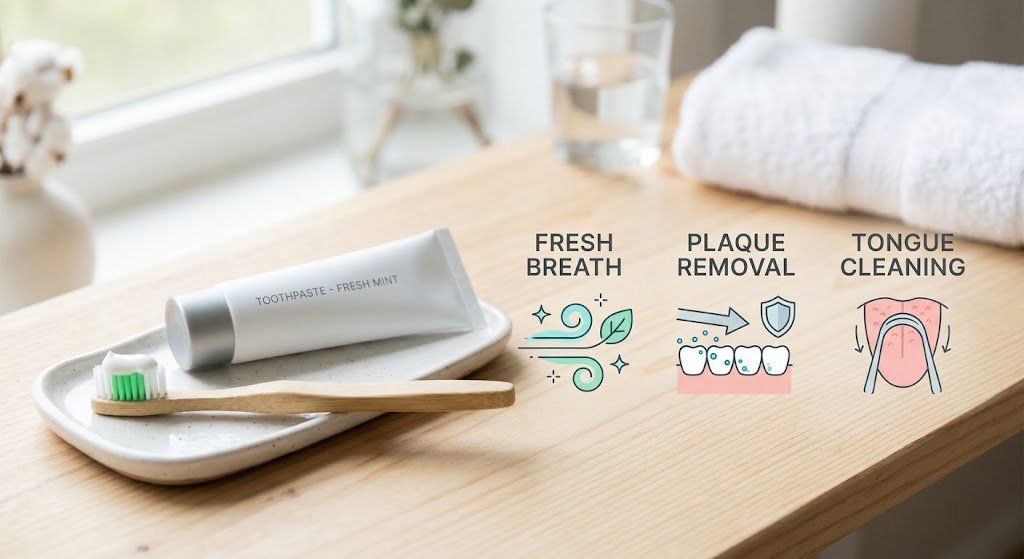
What Is the Best Toothpaste for Bad Breath?
There isn’t one toothpaste that is automatically the best choice for everyone with bad breath.
The right option depends partly on why the odor is occurring and what other oral-health needs you have.
For example, someone with occasional morning breath may need a straightforward fluoride toothpaste and better tongue cleaning, while someone with persistent bad breath and plaque buildup may need a more comprehensive oral-care routine and potentially a toothpaste with an antibacterial component.
Mayo Clinic notes that most bad breath starts in the mouth and can be associated with food particles, plaque, tongue bacteria, gum disease, dry mouth, tobacco use, infections, and other conditions.
For everyday toothpaste shopping, prioritize these characteristics:
- Fluoride, if you want standard cavity protection.
- Plaque and oral-health support, because plaque can contribute to bad breath.
- A formula with a specific bad-breath or oral-malodor claim, when available.
- Ingredients that suit your individual needs, including sensitivity or irritation concerns.
- Transparent labeling so you can evaluate what you’re actually buying.
- Credible evidence or recognized product claims, rather than relying only on marketing language.
The ADA explains that toothpastes can contain ingredients designed to improve oral health and may also provide cosmetic benefits such as improving bad breath. Fluoride-containing toothpaste is also the standard category for ADA-accepted cavity-protection claims.
What to Look for Before Buying
If you’re comparing several products, don’t start with the front of the package. Start with the active ingredients and product claims.
A practical shortlist might look like this:
| What to check | Why it matters |
| Bad-breath claim | Shows that odor control is an intended benefit |
| Fluoride | Supports cavity prevention |
| Plaque control | Plaque can contribute to oral odor |
| Antibacterial/antimicrobial properties | May help address odor-associated bacteria |
| Sensitivity benefits | Useful if whitening or brushing causes discomfort |
| Ingredient list | Helps identify ingredients you want or prefer to avoid |
| ADA Seal | Can provide an additional evidence-based product signal |
| Daily-use instructions | Helps determine whether it fits your normal routine |
The ADA’s Seal program includes oral-malodor products such as toothpaste and mouthwash, with the relevant claim being that the product helps reduce bad breath.
What Causes Bad Breath?
Before choosing a toothpaste, it’s worth understanding why bad breath happens.
Bad breath, also called halitosis, isn’t always caused by something as simple as needing a stronger toothpaste. In many cases, the source is inside the mouth.
Mayo Clinic lists several possible causes, including food particles, plaque, tongue bacteria, gum disease, dry mouth, tobacco use, oral infections, tonsil stones, and certain other health conditions.
That matters because the best toothpaste for one person may not address the main issue affecting another person.
Tongue Bacteria
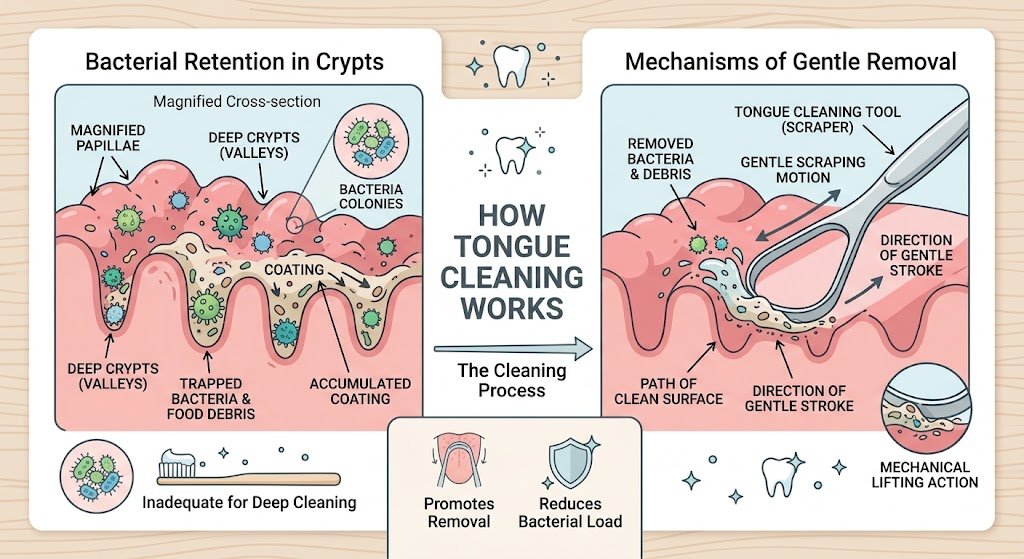
Your tongue has an uneven surface that can trap bacteria.
Mayo Clinic specifically notes that bacteria on the tongue can produce odors and that cleaning the tongue can help reduce them.
This is one reason someone can brush their teeth carefully and still notice bad breath.
If your tongue has a noticeable coating, simply switching between different mint toothpastes may not address the entire problem.
A practical routine can include gently brushing the tongue or using a tongue scraper where appropriate.
Plaque and Food Particles
Plaque is a sticky film of bacteria that forms on teeth.
When teeth aren’t cleaned effectively, food particles and plaque can remain in the mouth. Mayo Clinic explains that this buildup can contribute to bad breath and can also irritate the gums.
This is why toothpaste shouldn’t be viewed independently from brushing technique and interdental cleaning.
If plaque is the main issue, choosing a stronger-flavored toothpaste without improving plaque removal may not make a meaningful difference.
Gingivitis and Gum Disease
Bad breath can also be associated with gum problems.
Plaque can irritate the gums and contribute to gingivitis. More advanced gum disease can create spaces around teeth where odor-causing bacteria can accumulate.
If you have persistent bad breath together with bleeding, swollen, tender, or receding gums, don’t treat the issue as simply a toothpaste-shopping problem.
A dental examination can help identify whether gum disease or another oral condition is contributing to the odor.
Dry Mouth
Saliva plays an important role in keeping the mouth clean.
When saliva production decreases, food particles and other substances aren’t cleared as effectively. Dry mouth, also called xerostomia, can therefore contribute to bad breath. Mayo Clinic lists dry mouth as one of the possible causes of halitosis.
Morning breath is a familiar example because saliva production naturally decreases during sleep.
If you regularly experience a very dry mouth rather than occasional morning dryness, the solution may involve more than changing toothpaste.
Food and Tobacco
Certain foods can temporarily affect breath odor. Mayo Clinic specifically mentions foods such as onions, garlic, and spices. Tobacco use can also contribute to unpleasant mouth odor and is associated with gum disease.
In these situations, toothpaste may improve oral cleanliness and provide temporary freshness, but it cannot necessarily eliminate every source of odor immediately.
Other Oral or Medical Causes
Bad breath can sometimes be associated with problems beyond ordinary plaque buildup.
Examples can include:
- Tooth decay
- Mouth infections
- Tonsil stones
- Sinus or throat conditions
- Persistent dry mouth
- Certain medical conditions
Mayo Clinic recommends seeing a dentist when bad breath continues despite improvements in oral hygiene, so an underlying cause can be evaluated.
This is an important limitation to keep in mind when reading any “best toothpaste for bad breath” recommendation: toothpaste can support oral hygiene, but it isn’t a universal treatment for every cause of halitosis.
How Does Toothpaste Help With Bad Breath?
Toothpaste can contribute to fresher breath in several ways, depending on its formulation.
Cleaning Teeth and Removing Plaque
Regular brushing physically removes plaque and food particles from tooth surfaces.
A toothpaste provides the ingredients and texture used during that cleaning process, while the brushing itself provides the mechanical action.
This means toothpaste selection should be considered alongside:
- Brushing twice a day
- Cleaning between teeth
- Cleaning the tongue
- Keeping the mouth adequately hydrated
- Regular dental care
Mayo Clinic recommends brushing with fluoride toothpaste at least twice a day and flossing at least once a day as part of bad-breath prevention.
Supporting Gum Health
Healthy gums are an important part of managing oral hygiene.
If plaque accumulates around the gumline, it can contribute to inflammation and potentially more serious gum problems.
For someone whose bad breath is connected to plaque or gum health, choosing toothpaste based only on flavor misses an important part of the decision.
Providing Cavity Protection
Fluoride is primarily associated with cavity prevention rather than being a “breath freshener.”
However, maintaining good overall oral health is part of a sensible strategy for reducing oral causes of bad breath.
The ADA states that fluoride compounds used in US toothpastes include sodium fluoride, sodium monofluorophosphate, and stannous fluoride.
If cavity prevention is one of your priorities, don’t automatically reject fluoride simply because you’re shopping for a bad-breath toothpaste.
Providing Antibacterial or Antimicrobial Benefits
Some toothpastes contain ingredients intended to provide antimicrobial benefits.
Mayo Clinic notes that when bad breath is related to plaque bacteria, a dentist may recommend a toothpaste containing an antibacterial agent. It also states that toothpaste with antibacterial properties has been shown to reduce bad breath.
This is more meaningful than choosing a toothpaste solely because it has an intense mint flavor.
However, the exact ingredients and evidence vary by product, so the claim should be evaluated at the individual-product level.
Freshening the Mouth
Flavoring agents can make your mouth taste and feel fresher.
That’s useful, but temporary freshness isn’t necessarily the same as controlling the cause of bad breath.
The ADA makes a similar distinction for mouthrinses: cosmetic products may temporarily control bad breath and improve taste, whereas therapeutic products contain active ingredients intended to address conditions such as bad breath, plaque, gingivitis, or tooth decay.
The same principle is useful when evaluating toothpaste:
Don’t judge a bad-breath toothpaste only by how minty it feels immediately after brushing.
Ingredients to Look For in a Toothpaste for Bad Breath
Once you understand the difference between freshness and odor control, you can evaluate toothpaste ingredients more intelligently.
There isn’t one ingredient that makes a toothpaste automatically the best choice for everyone. Instead, consider the combination of oral-health benefits, bad-breath claims, personal tolerance, and your other dental priorities.
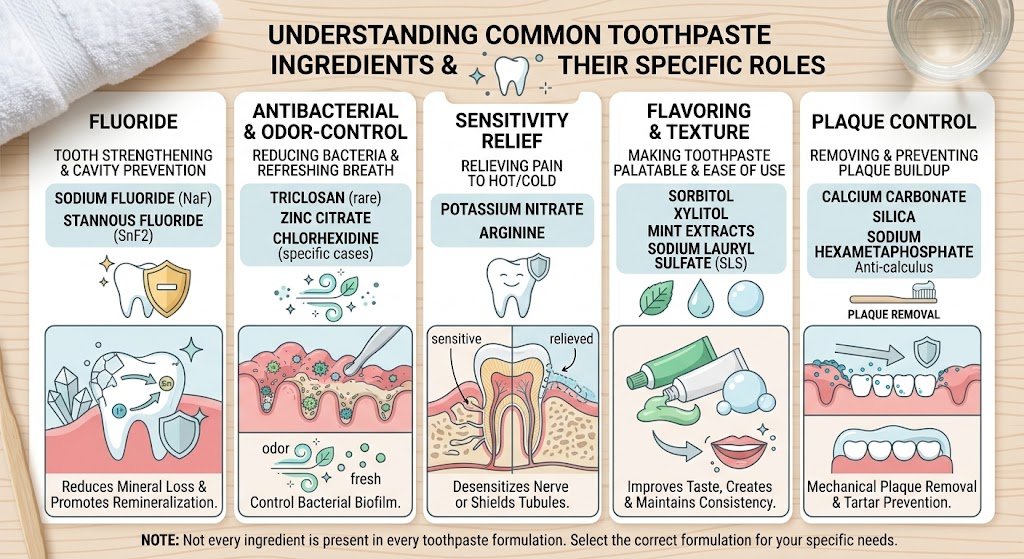
Fluoride
Fluoride should be considered if you want standard cavity protection from your toothpaste.
The ADA identifies sodium fluoride, sodium monofluorophosphate, and stannous fluoride as fluoride compounds used as anticaries agents in toothpaste.
For a person who wants one everyday toothpaste that supports both cavity prevention and oral cleanliness, fluoride can therefore be an important selection criterion.
It isn’t necessary to treat fluoride as a bad-breath ingredient. Its primary role is cavity prevention, while the broader benefit comes from maintaining a healthier mouth.
Stannous Fluoride
Stannous fluoride deserves particular attention when comparing toothpaste because it is both a fluoride anticaries active and an ingredient used in some formulations with additional oral-health benefits.
The ADA lists stannous fluoride among the fluoride compounds used in toothpaste.
If you’re comparing products containing different fluoride types, don’t choose solely because one ingredient sounds more advanced. Look at the product’s actual claims, formulation, intended use, and any evidence supplied for those claims.
Antimicrobial Ingredients
Antimicrobial ingredients are relevant when the product specifically targets bacteria associated with plaque or bad breath.
This is where checking the actual product claim becomes important.
A toothpaste marketed simply as “fresh mint” is making a very different proposition from one that has an evidence-supported oral-malodor or antibacterial claim.
The ADA’s Oral Malodor category is specifically designed around products that demonstrate safety and efficacy in helping reduce bad breath.
Zinc-Containing Formulas
Zinc compounds are another category consumers may encounter in oral-care products marketed around odor control.
However, don’t assume that simply seeing “zinc” on an ingredient list proves that a toothpaste will eliminate bad breath.
The formulation, amount, intended claim, and evidence behind the particular product matter.
For that reason, product-specific claims should be verified before adding a toothpaste to an affiliate recommendation.
Flavoring and Mint
Mint can make toothpaste feel strongly associated with fresh breath, but flavor alone shouldn’t be your primary selection criterion.
If your only goal is a temporary fresh sensation, a strongly flavored toothpaste may seem effective. If you’re dealing with recurring bad breath, however, you need to think about the potential source of the odor as well.
Ingredients for Sensitive Teeth
If your teeth are sensitive, don’t ignore that requirement simply because bad breath is your main concern.
Some toothpaste formulas include desensitizing ingredients. The ADA notes that active toothpaste ingredients can include agents intended to reduce dentin hypersensitivity.
Your final choice should therefore balance:
bad-breath control + oral-health protection + comfort.
Best Toothpaste for Bad Breath by Need
Once you’ve identified the features that matter, product selection becomes much easier.
Instead of assuming that one toothpaste is ideal for every person, the most useful approach is to match the product to the specific oral-care need behind the search.
Best Type for Overall Bad Breath Control
For general bad-breath concerns, look for a toothpaste that combines everyday oral-health support with a clearly stated bad-breath or oral-malodor benefit.
A practical formula may prioritize:
- Fluoride for cavity protection
- Effective plaque cleaning
- A verified antibacterial or odor-control benefit
- A complete, transparent ingredient list
- Suitability for regular use
If an individual product has the ADA Seal under the Oral Malodor category, that provides a useful additional signal because the ADA category specifically concerns products shown to help reduce bad breath.
Amazon product opportunity: Insert a currently verified US toothpaste that meets these criteria.
[ AMAZON PRODUCT SLOT — Verify current product name, active ingredients, bad-breath claim, ADA status if applicable, directions, and current Amazon listing before publishing. ]
Best Type for Bad Breath + Cavity Protection
If you want your everyday toothpaste to address bad breath concerns while also providing standard cavity protection, a fluoride toothpaste is the logical category to investigate.
The ADA states that fluoride-containing toothpaste is used for anticaries protection and identifies sodium fluoride, sodium monofluorophosphate, and stannous fluoride as common fluoride actives in toothpaste.
The important point is that fluoride doesn’t need to be marketed as a “bad-breath ingredient” for the toothpaste to be useful in a bad-breath routine.
You are combining:
cavity protection + regular cleaning + appropriate odor-control features.
[ AMAZON PRODUCT SLOT — Insert a verified current fluoride toothpaste with a legitimate bad-breath or oral-health positioning. ]
Best Type for Bad Breath + Gum Health
If bad breath occurs alongside plaque buildup, bleeding gums, or other gum concerns, prioritize oral-health support rather than simply choosing the strongest mint flavor.
Persistent bad breath can be associated with gum disease, and Mayo Clinic notes that professional treatment may sometimes be necessary when odor-causing bacteria accumulate around diseased gums.
For this category, examine:
- Plaque-control claims
- Gingivitis-related claims
- Fluoride status
- Antibacterial properties
- ADA acceptance where applicable
[ AMAZON PRODUCT SLOT — Insert a verified current toothpaste appropriate for the stated gum-health use case. ]
Best Type for Bad Breath + Sensitive Teeth
If you experience sensitivity, don’t assume that a more aggressive or intensely flavored toothpaste will solve your problem.
Instead, look for a formulation that addresses your sensitivity needs while still providing appropriate oral-health and breath-control benefits.
The ADA identifies desensitizing ingredients as one category of active toothpaste ingredients.
[ AMAZON PRODUCT SLOT — Insert a verified current toothpaste specifically suitable for sensitive teeth and relevant to bad-breath concerns. ]
Best Type for Dry Mouth + Bad Breath
Dry mouth requires a slightly different approach.
If reduced saliva is contributing to your bad breath, changing toothpaste alone may not address the main issue. Mayo Clinic recommends measures such as drinking water, using sugar-free gum or candy to stimulate saliva, and addressing persistent dry mouth with a healthcare professional when necessary.
For this reader, the product selection should focus on gentle everyday oral care, while the broader routine addresses moisture.
[ AMAZON PRODUCT SLOT — Insert only if a verified toothpaste has a relevant dry-mouth-friendly formulation or claim. Do not imply that toothpaste treats xerostomia unless supported by product-specific evidence. ]
Best Type for People Who Prefer SLS-Free Toothpaste
Some consumers specifically prefer toothpaste without sodium lauryl sulfate.
That can be a reasonable personal formulation preference, especially for someone who has experienced irritation with particular toothpaste products. The ADA notes that SLS is among the toothpaste ingredients that have been reported as a potential contact irritant or allergen in some people.
But SLS-free does not automatically mean better for bad breath.
If you choose an SLS-free toothpaste, still evaluate:
- Fluoride status
- Plaque-control properties
- Bad-breath claims
- Other active ingredients
- Overall formulation
[ AMAZON PRODUCT SLOT — Insert a verified current SLS-free toothpaste that also has relevant oral-health or bad-breath positioning. ]
How to Choose the Right Toothpaste for Bad Breath
Choosing a toothpaste for bad breath is easier when you focus on what the formula is designed to do rather than how strong or refreshing it tastes.
1. Check the Active Ingredients
Start by checking the active ingredients on the package. Fluoride is important for everyday cavity protection, while some formulas also contain ingredients intended to provide antimicrobial benefits or help control oral malodor. The American Dental Association notes that toothpaste can contain different active ingredients for purposes such as cavity prevention, sensitivity, and antimicrobial effects.
[INTERNAL LINK: Best Fluoride Toothpaste]
2. Look for a Bad-Breath or Oral-Malodor Claim
Some toothpaste products are specifically evaluated for claims related to oral malodor. The ADA Seal program includes an Oral Malodor category for products that claim to help reduce bad breath.
That does not mean an ADA Seal product is automatically the best choice for everyone. It simply gives you an additional evidence-based product-quality signal for the specific claim being made.
3. Decide Whether You Want Fluoride
For most adults, fluoride toothpaste is a practical default because fluoride helps prevent cavities and supports the remineralization of early enamel lesions. In the United States, over-the-counter fluoride toothpastes commonly contain about 1,000–1,500 ppm fluoride.
If you specifically prefer fluoride-free toothpaste, compare the formula based on your other oral-health needs rather than assuming that fluoride-free automatically means healthier.
[INTERNAL LINK: Fluoride vs Fluoride-Free Toothpaste]
4. Consider Tooth Sensitivity
If cold drinks, hot foods, or brushing cause sensitivity, your bad-breath toothpaste should not create a trade-off with comfort.
Look for a formula that addresses sensitivity while still providing appropriate everyday oral care.
[INTERNAL LINK: Best Toothpaste for Sensitive Teeth]
5. Consider Irritation and Personal Tolerance
A toothpaste can be effective for one person but uncomfortable for another. Flavoring agents, essential oils, or ingredients such as sodium lauryl sulfate (SLS) may cause irritation in some people.
This does not mean these ingredients are universally harmful. If a particular toothpaste repeatedly causes burning, irritation, or discomfort, switching formulas may be reasonable.
[INTERNAL LINK: SLS vs SLS-Free Toothpaste]
6. Check the Full Ingredient List
Don’t choose a toothpaste only because the front of the package says “fresh breath.”
Look at the active ingredients, fluoride concentration when applicable, and other ingredients that matter to your personal needs. This is especially useful when comparing products with similar marketing claims.
[INTERNAL LINK: How to Read Toothpaste Ingredients]
7. Use the ADA Seal as One Buying Signal
When available, the ADA Seal can provide additional confidence that a product has met the program’s requirements for safety and efficacy related to its accepted claims.
Use the Seal as one part of your decision—not as a universal ranking of toothpaste quality.
Toothpaste Ingredients and Claims to Be Careful With
Not every toothpaste marketed for fresh breath addresses the underlying reasons for bad breath.
Strong Mint Does Not Necessarily Mean Better Breath Control
A strong mint flavor can make your mouth feel fresher immediately, but freshness and treatment of the underlying cause are not the same thing.
Bad breath can come from bacteria on the tongue, plaque, gum disease, dry mouth, food particles, tobacco, and other oral or medical conditions.
So when comparing products, don’t use “strongest mint” as your main selection criterion.
SLS Is Not Automatically a Bad-Breath Ingredient
SLS is a foaming ingredient used in many toothpaste formulas. Some people may experience irritation or sensitivity to certain toothpaste ingredients, but that does not make SLS universally harmful.
If you tolerate SLS well, its presence alone does not tell you whether a toothpaste is effective for bad breath.
[INTERNAL LINK: Is SLS in Toothpaste Bad?]
Flavoring and Essential Oils Can Affect Personal Tolerance
Flavoring ingredients can contribute to the sensation of freshness. However, some people may experience irritation from particular flavoring ingredients or essential oils.
If a toothpaste consistently makes your mouth uncomfortable, consider a milder formula rather than assuming stronger flavor means stronger protection.
[INTERNAL LINK: Essential Oils in Toothpaste]
Be Careful With “Detox” and Other Broad Marketing Claims
Terms such as “detox,” “deep cleanse,” “chemical-free,” or “kills everything” can sound impressive but don’t tell you enough about the product’s actual oral-health benefits.
Instead, look for specific information about active ingredients, cavity protection, oral-malodor claims, and directions for use.
[INTERNAL LINK: Toothpaste Ingredients to Avoid]
Charcoal Deserves Extra Scrutiny
Charcoal toothpaste is often marketed around freshness or whitening. If you are considering one specifically for bad breath, examine the complete formula and the actual claims being made rather than assuming charcoal itself is what controls the odor.
[INTERNAL LINK: Charcoal Toothpaste]
How to Build a Bad-Breath Routine Beyond Toothpaste
Toothpaste is only one part of bad-breath control.
A consistent oral-care routine is often more important than choosing a toothpaste based solely on its flavor or marketing.
Brush Your Teeth Twice a Day
Mayo Clinic recommends brushing your teeth with fluoride toothpaste at least twice a day. Brushing helps remove plaque and food debris that can contribute to unpleasant mouth odor.
Clean Your Tongue
The tongue can collect bacteria that contribute to bad breath. Mayo Clinic notes that cleaning the tongue can help reduce odor in some people.
A tongue scraper or gentle tongue brushing can therefore be a useful addition to your routine.
Clean Between Your Teeth
Flossing or another appropriate interdental-cleaning method helps remove material that a toothbrush cannot reach.
This matters because trapped food and plaque can contribute to oral odor and gum problems.
[INTERNAL LINK: Dental Plaque]
Stay Hydrated
Dry mouth can contribute to bad breath because reduced saliva affects the mouth’s natural cleaning process.
Drinking water and addressing factors that contribute to dry mouth can help. Mayo Clinic also notes that sugar-free gum or candy may stimulate saliva production.
[INTERNAL LINK: Best Toothpaste for Dry Mouth]
Avoid Tobacco
Tobacco can contribute to unpleasant breath and oral-health problems. Avoiding tobacco is therefore part of a broader approach to maintaining oral health and fresher breath.
Keep Oral Appliances Clean
If you use dentures, retainers, aligners, night guards, or other removable oral appliances, follow the manufacturer’s cleaning instructions.
An appliance that is not cleaned properly can become another source of odor.
Keep Regular Dental Appointments
Regular dental care can help identify plaque buildup, gum disease, tooth decay, and other oral problems that may contribute to persistent bad breath.
When Toothpaste Isn’t Enough
If bad breath continues even after improving brushing, tongue cleaning, interdental cleaning, and hydration, don’t simply keep switching toothpaste.
Persistent bad breath can sometimes be associated with gum disease, tooth decay, dry mouth, tonsil stones, sinus or throat conditions, reflux, or other health conditions.
Consider seeing a dentist if you have:
- Persistent bad breath that does not improve with good oral hygiene
- Bleeding, swollen, or tender gums
- Tooth pain or suspected decay
- Persistent dry mouth
- Significant changes in your oral health
- Ongoing odor with no obvious explanation
A dentist can check for common oral causes and determine whether further evaluation is appropriate.
How to Compare Toothpaste on Amazon
When shopping for toothpaste on Amazon, avoid choosing solely from the product title or star rating.
Use this quick checklist instead:
| What to Check | Why It Matters |
| Active ingredients | Shows what the product is actually designed to do |
| Fluoride status | Helps you decide whether the formula fits your cavity-protection needs |
| Oral-malodor claim | Indicates whether bad-breath control is an intended product benefit |
| Full ingredient list | Helps identify ingredients you prefer or need to avoid |
| ADA Seal | Provides an additional evidence-based product signal when applicable |
| Sensitivity needs | Important if your teeth or gums are easily irritated |
| Directions | Shows how the manufacturer intends the product to be used |
| Current listing | Helps avoid relying on outdated information or an old formulation |
[AMAZON PRODUCT SLOT — Overall Bad-Breath Toothpaste]
[AMAZON PRODUCT SLOT — Bad Breath + Cavity Protection]
[AMAZON PRODUCT SLOT — Bad Breath + Gum Care]
[AMAZON PRODUCT SLOT — Bad Breath + Sensitive Teeth]
[AMAZON PRODUCT SLOT — SLS-Free Option]
Product recommendations should be verified against the current Amazon listing before publication, including the current ingredient list, package size, formulation, seller, and available claims.
Also remember that customer reviews can help you understand user experiences, but they are not a substitute for clinical evidence.
Frequently Asked Questions
What is the best toothpaste for bad breath?
The most suitable toothpaste depends on why you have bad breath and what other oral-health needs you have. Look for a formula that supports everyday oral hygiene and, when appropriate, includes ingredients or claims intended to help control oral malodor.
Does toothpaste actually get rid of bad breath?
Toothpaste can help reduce factors that contribute to bad breath by cleaning teeth, removing plaque, supporting gum health, and in some formulas providing antimicrobial benefits. However, toothpaste cannot correct every possible cause of persistent bad breath.
Is fluoride toothpaste better for bad breath?
Fluoride’s primary role is cavity prevention and enamel protection rather than simply freshening breath. For many adults, fluoride toothpaste is useful as part of a complete oral-care routine while other ingredients or habits address bad breath.
What ingredient is best for bad breath?
There is no single ingredient that is best for every cause of bad breath. Depending on the formula, antimicrobial ingredients, certain fluoride formulations, zinc-containing ingredients, and other components may have different roles.
The cause of the odor and the complete formulation matter more than one ingredient alone.
Can toothpaste fix bad breath from the tongue?
Toothpaste can support cleaning, but the tongue itself can harbor odor-producing bacteria. Gently cleaning the tongue as part of your daily routine can help reduce tongue-related odor.
Is SLS bad for bad breath?
SLS is not automatically a cause of bad breath. Some people may find certain SLS-containing formulas irritating, while others tolerate them without a problem. Personal tolerance and the overall toothpaste formula are more useful considerations.
Is stannous fluoride good for bad breath?
Stannous fluoride is a fluoride active used in toothpaste and can provide cavity-protection benefits. Some toothpaste formulas containing stannous fluoride also make antimicrobial or gingival-health claims. The specific product formulation and accepted claims should be checked rather than assuming that every stannous-fluoride toothpaste works identically.
[INTERNAL LINK: Sodium Fluoride vs Stannous Fluoride]
What toothpaste is best for bad breath and sensitive teeth?
Look for a toothpaste that addresses both everyday oral health and sensitivity. A formula designed for sensitivity may be preferable if aggressive brushing or certain ingredients make your teeth uncomfortable.
[INTERNAL LINK: Best Toothpaste for Sensitive Teeth]
Why do I still have bad breath after brushing?
Brushing does not remove every possible source of bad breath. Odor can come from the tongue, spaces between teeth, gum disease, dry mouth, food debris, tobacco, or conditions outside the mouth.
If the problem persists despite good oral hygiene, consider speaking with a dentist.
When should I see a dentist about bad breath?
If bad breath persists despite consistent oral hygiene, or if it occurs alongside bleeding gums, tooth pain, swelling, decay, or other oral symptoms, a dental evaluation can help identify the underlying cause.
Final Takeaway
The best toothpaste for bad breath is not necessarily the one with the strongest mint flavor or the most aggressive marketing claim.
A better approach is to choose a toothpaste that fits your overall oral-health needs while supporting fresh-breath control. For many adults, that means considering fluoride protection, the product’s active ingredients, oral-malodor claims, sensitivity, personal tolerance, and the complete ingredient list.
Just as importantly, toothpaste should be part of a larger routine that includes brushing twice daily, cleaning between the teeth, cleaning the tongue, staying hydrated, and maintaining regular dental care.
If bad breath continues despite these steps, the next step may not be another toothpaste—it may be finding and addressing the underlying cause.
