If you are looking for the best toothpaste for enamel remineralization, the first thing to know is that toothpaste cannot simply grow back enamel that has already been permanently lost.
What it can do is support the natural process that helps teeth recover minerals after early mineral loss. Saliva supplies minerals such as calcium and phosphate, while fluoride from toothpaste can help replace lost minerals and make enamel more resistant to acid attacks.
That makes the right toothpaste especially important if you are concerned about weak enamel, early mineral loss, acid erosion, sensitivity, or cavities.
In this guide, we’ll compare several toothpaste options, explain which ingredients matter, show you how remineralization actually works, and help you choose a formula based on your specific dental needs.
Best Toothpaste for Enamel Remineralization at a Glance
There is no single toothpaste that is automatically right for every person. The better choice depends on why your enamel is weakening and what other oral-health concerns you have.
| Toothpaste | Main focus | May suit | What to check |
| Sensodyne Pronamel | Enamel protection and acid-erosion concerns | Sensitive or acid-exposed teeth | Exact Pronamel formula |
| Crest Pro-Health | Multi-benefit fluoride care | Enamel plus everyday oral-care needs | Specific product and active ingredient |
| Colgate Total | Multi-benefit fluoride care | Everyday cavity and whole-mouth care | Current formulation |
| Tom’s of Maine fluoride toothpaste | Fluoride + ingredient preferences | Ingredient-conscious shoppers | Confirm the exact product contains fluoride |
These are product options to compare, not a universal ranking. Toothpaste formulas can differ within the same brand, so the exact product label matters.
What Is Enamel Remineralization?
Enamel remineralization is the process of replacing minerals that have been lost from tooth enamel.
Your teeth are constantly exposed to a cycle of mineral loss and mineral replacement.
When bacteria in dental plaque use sugars and starches from food and drinks, they produce acids. Those acids can pull minerals out of enamel. At the same time, saliva contains minerals that help restore the tooth surface, and fluoride can support that process.
A simplified version looks like this:
Acid exposure → mineral loss → saliva + fluoride → mineral replacement
When the balance stays healthy, your teeth can recover from small amounts of mineral loss.
When acid attacks happen frequently or mineral loss becomes greater than mineral replacement, enamel can weaken. Early tooth decay may appear as a white spot where minerals have been lost. At this stage, the process can sometimes be stopped or reversed.
This is one reason the phrase “remineralizing toothpaste” can be confusing.
Remineralization Does Not Mean Regrowing Lost Enamel
Enamel is the hard outer layer of the tooth, but it does not regenerate like skin or other living tissues.
If early mineral loss is caught before a cavity forms, remineralization can help restore minerals to the affected area. But if decay progresses to an actual hole or cavity, toothpaste cannot simply fill that damage. NIDCR explains that an established cavity is permanent damage that generally needs dental treatment.
So when you see a toothpaste described as:
- Enamel repair
- Enamel strengthening
- Remineralizing
- Restoring
- Rebuilding
look at what the product actually means by those claims.
The practical goal is usually supporting enamel that has experienced early mineral loss and protecting it from further damage, not creating brand-new enamel.
Why Does Enamel Lose Minerals?
Understanding the cause of enamel damage makes it easier to choose toothpaste.
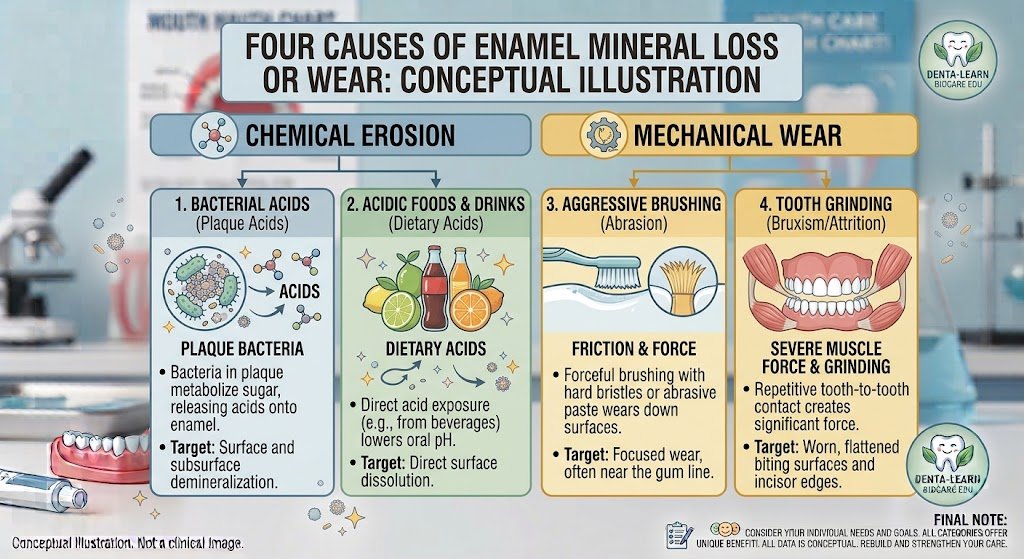
Acid From Plaque Bacteria
One major pathway is tooth decay.
When bacteria metabolize sugars and starches, they produce acids that attack enamel. Repeated acid exposure can progressively remove minerals.
This is why frequent sugary snacks and drinks can matter even if you brush regularly.
Acidic Foods and Drinks
Enamel can also be exposed to acids directly from foods and beverages.
Common examples include:
- Soft drinks
- Fruit juices
- Citrus foods
- Some sports and energy drinks
- Other acidic foods and beverages
This is different from cavity formation caused by bacterial acids, although both involve acid-related mineral loss.
Sensodyne notes that dietary acids can contribute to enamel erosion and that enamel lost through erosion does not grow back.
Aggressive Brushing
More brushing pressure does not necessarily mean cleaner teeth.
Aggressive brushing can contribute to tooth wear, particularly when combined with other sources of enamel or dentin exposure.
If you already have sensitivity or signs of enamel wear, your toothpaste choice should therefore be considered alongside your brushing technique.
Teeth Grinding
Grinding or clenching can also contribute to tooth wear.
If you regularly wake with jaw discomfort, notice flattened tooth surfaces, or suspect that you grind your teeth at night, changing toothpaste alone may not address the underlying problem.
A dental professional can help determine whether mechanical wear is contributing to your enamel concerns.
How Does Toothpaste Support Enamel Remineralization?
The most important ingredient to understand is fluoride.
Fluoride has a well-established role in preventing and controlling tooth decay. The ADA explains that fluoride promotes enamel remineralization and helps create a tooth surface that is more resistant to acid attack.
NIDCR similarly explains that fluoride can prevent mineral loss and help replace minerals during the early stages of tooth decay.
That means choosing a toothpaste for enamel concerns should not start with the front-of-package phrase “repair.”
Start with the actual formulation.
Fluoride and the Enamel Surface
Enamel contains a mineral structure based largely on calcium and phosphate.
During an acid attack, some of those minerals can dissolve away. Fluoride can help the enamel surface become more resistant to future acid attacks and supports remineralization. The ADA describes fluoride’s ability to promote formation of a more acid-resistant mineral structure.
This is why fluoride toothpaste is relevant even when the searcher is specifically thinking about enamel strength rather than cavities.
The two concerns overlap because preventing mineral loss and supporting remineralization are important parts of preventing early tooth decay.
Saliva Matters Too
Toothpaste does not perform remineralization by itself.
Your saliva is an important part of the process because it supplies minerals and helps buffer acids in the mouth. NIDCR describes saliva and fluoride as working together to help enamel recover minerals after acid attacks.
So a more accurate model is:
Healthy saliva + fluoride + good oral hygiene + reduced acid exposure = better conditions for enamel protection and remineralization.
This is also why simply buying a more expensive toothpaste cannot compensate for frequent acid exposure or poor oral hygiene.
Fluoride Is Not the Only Thing to Consider
Although fluoride is important, the complete toothpaste formula can matter depending on your situation.
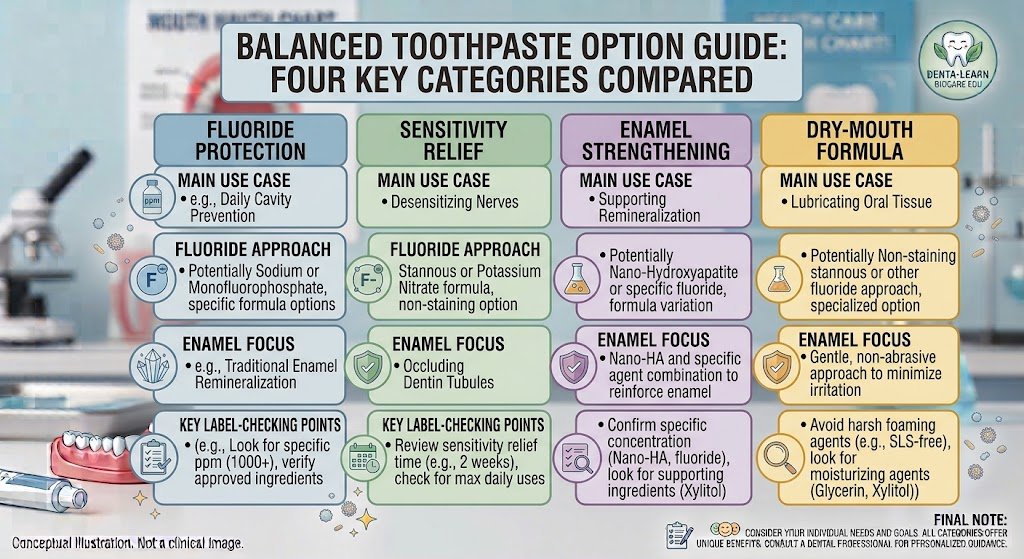
The ADA notes that toothpastes may contain additional ingredients intended to address concerns such as tooth sensitivity, gingivitis, tartar buildup, enamel erosion, whitening, and bad breath.
For example, someone with enamel erosion and sensitivity may have different priorities from someone who mainly wants cavity protection.
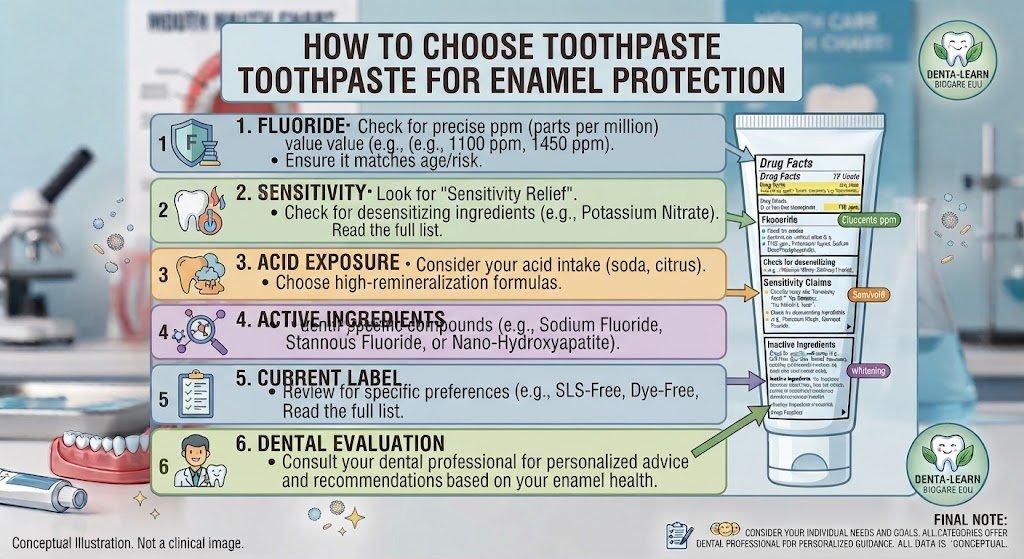
Before choosing a toothpaste, ask:
- Is cavity protection important to me?
- Do I have sensitivity?
- Am I dealing with acid erosion?
- Do I need whitening?
- Do I have gum or plaque concerns?
- Are there ingredients I personally need or want to avoid?
- Does the exact product match those needs?
That approach is more useful than searching for a toothpaste based on one marketing phrase.
What Fluoride Should You Look For?
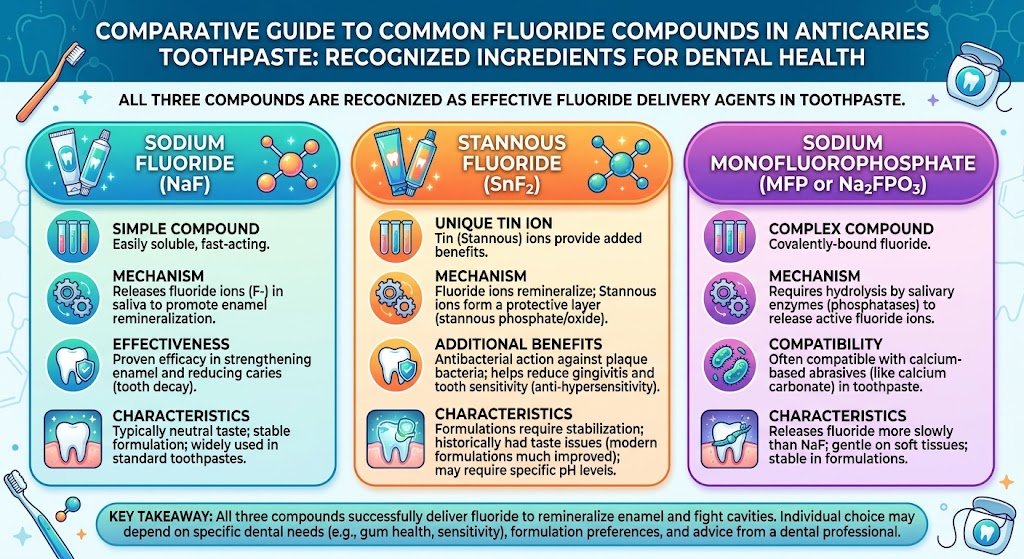
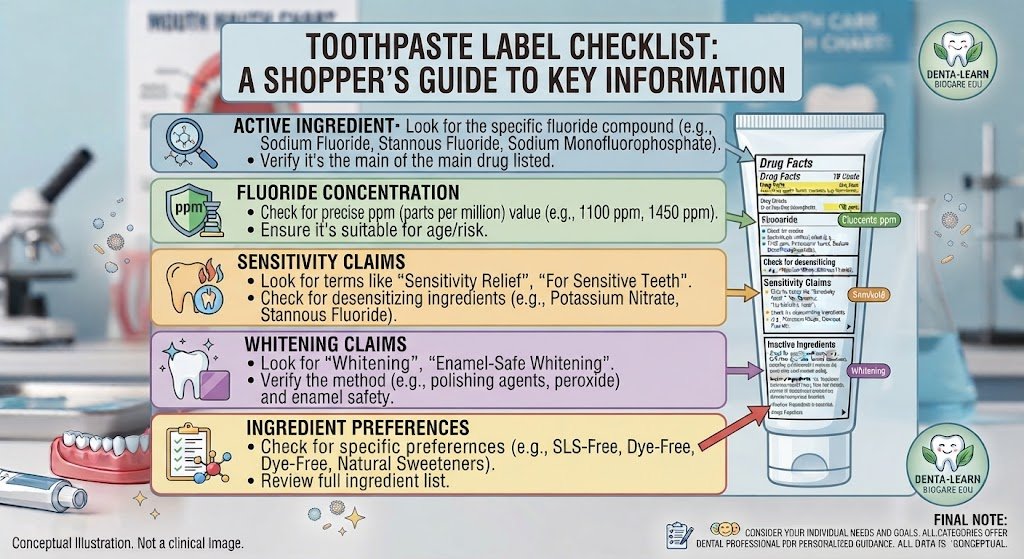
For U.S. toothpaste shoppers, common fluoride active ingredients include:
- Sodium fluoride
- Stannous fluoride
- Sodium monofluorophosphate
The ADA identifies these as fluoride-containing anticaries ingredients used in toothpaste.
For typical U.S. over-the-counter fluoride toothpaste, the ADA states that concentrations generally range from 1,000 to 1,500 ppm fluoride. Prescription-strength toothpaste is a separate category and can contain 5,000 ppm fluoride.
Sodium Fluoride
Sodium fluoride is a widely used fluoride active in toothpaste.
If your primary concern is cavity prevention and enamel protection, seeing sodium fluoride on the label is a straightforward indication that the product contains an established anticaries fluoride ingredient.
It does not automatically make that toothpaste better than every toothpaste using another fluoride compound.
Stannous Fluoride
Stannous fluoride is another established fluoride active.
It is particularly common in multi-benefit toothpaste formulations designed to combine cavity protection with additional oral-care benefits.
That can make it relevant when enamel concerns occur alongside sensitivity, plaque, or gum concerns.
Sodium Monofluorophosphate
Sodium monofluorophosphate is another fluoride compound used in toothpaste.
The important point is that you should compare the complete product and its intended use, rather than assuming one fluoride name automatically means the toothpaste is superior.
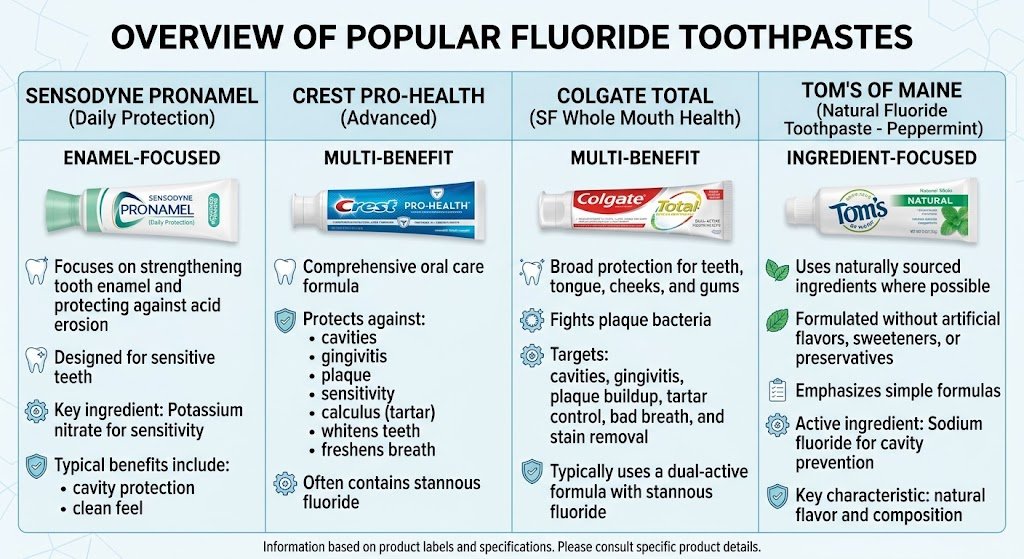
Best Toothpaste Options for Enamel Remineralization
Now that you understand what remineralization means, the next step is comparing toothpaste formulas based on the needs they are designed to address.
The products below are options to consider, not a ranked list. Toothpaste formulas can change, and different versions within the same brand may use different active ingredients. Always check the current package and Drug Facts label before buying.
Sensodyne Pronamel
Sensodyne Pronamel is designed with enamel protection in mind and is especially relevant for people concerned about acid-related enamel erosion and sensitivity.
Acidic foods and drinks can contribute to enamel erosion, and Sensodyne positions Pronamel as a fluoride toothpaste intended to help protect enamel from the effects of dietary acids.
If your main concern is sensitive teeth combined with acid exposure or enamel wear, this is the type of product category worth investigating.
What to check:
- Current fluoride active ingredient
- Fluoride concentration
- Whether the exact version addresses sensitivity
- Whether you need whitening or another additional benefit
- Current ingredient list and product claims
Crest Pro-Health
Crest Pro-Health includes fluoride-based toothpaste options designed around multiple oral-care concerns.
Depending on the specific formula, the product line may address more than one need, making it relevant for shoppers who want enamel and cavity protection alongside broader oral-care benefits.
Because “Crest Pro-Health” refers to a product family rather than one single formula, check the exact product before comparing it with another toothpaste.
What to check:
- Fluoride type
- Fluoride concentration
- Sensitivity-related claims
- Plaque or gum-care benefits
- Whitening or other additional features
- Current ingredient list
Colgate Total
Colgate Total is another multi-benefit fluoride toothpaste line.
For someone who wants everyday cavity protection with broader oral-care support, a Total formula can be worth comparing with more specialized enamel-focused products.
Again, the exact formulation matters. Product names and formulas can change, so use the current package information rather than relying only on an older review or product description.
What to check:
- Active fluoride ingredient
- Current fluoride concentration
- Sensitivity needs
- Whitening ingredients or claims
- Other oral-care benefits
- Ingredient preferences
Tom’s of Maine Fluoride Toothpaste
Tom’s of Maine offers fluoride toothpaste options that may appeal to shoppers who place additional importance on ingredient preferences while still wanting fluoride-based cavity protection.
The important distinction is that not every toothpaste from an ingredient-focused brand is necessarily a fluoride toothpaste.
If enamel remineralization and cavity protection are priorities, confirm that the specific Tom’s of Maine product you are considering contains fluoride and check its current active ingredient.
What to check:
- Fluoride active ingredient
- Fluoride concentration
- Exact product formula
- Flavor and ingredient preferences
- Any additional claims relevant to your needs
Ingredients to Look for in Remineralizing Toothpaste
The phrase “remineralizing toothpaste” does not tell you enough by itself.
Instead, look at the active ingredients and the purpose of the complete formula.
Fluoride
For most U.S. adults looking for cavity protection and support against mineral loss, fluoride is one of the most important ingredients to understand.
Common forms include:
- Sodium fluoride
- Stannous fluoride
- Sodium monofluorophosphate
Fluoride helps strengthen enamel, supports remineralization, and makes teeth more resistant to acid attacks.
The ADA also recommends looking for toothpaste with fluoride and the ADA Seal when appropriate, because products carrying the Seal have undergone evaluation for safety and effectiveness for their claimed uses.
Hydroxyapatite
Hydroxyapatite is a calcium-phosphate mineral that resembles the mineral component of natural teeth.
It is increasingly used in toothpaste marketed for enamel support and remineralization.
However, don’t automatically assume that a toothpaste containing hydroxyapatite is better than a fluoride toothpaste. The evidence, product formulation, intended use, and your individual dental needs all matter.
If you are specifically comparing these two approaches, look at the active ingredients and the evidence behind the particular product rather than judging by marketing language alone.
Calcium and Phosphate
Calcium and phosphate are important minerals in tooth enamel and are involved in the natural remineralization process.
Saliva naturally provides minerals that can help repair early mineral loss.
Some toothpaste formulations use calcium- or phosphate-containing ingredients as part of their approach to enamel support.
The presence of a mineral ingredient by itself, however, does not tell you how effective the finished toothpaste will be.
Ingredients for Sensitivity
If enamel wear has exposed more of the underlying dentin, you may also experience dentin hypersensitivity.
Sensitivity-focused toothpastes can contain ingredients designed to reduce sensitivity. The ADA notes that toothpaste can include ingredients for sensitivity in addition to fluoride for cavity protection.
This creates an important distinction:
A toothpaste can support enamel protection while also addressing the symptom of sensitivity.
If cold drinks, hot foods, sweets, or brushing cause sharp discomfort, choosing based only on “remineralization” may overlook an important part of your problem.
How to Choose the Best Toothpaste for Your Enamel
There is no universal formula that matches every enamel concern.
Instead, start with the cause of the problem and then choose the toothpaste features that match it.
If You Have Acid Erosion
If your enamel concern is linked to frequent acidic foods or drinks, look for a toothpaste that provides fluoride and is specifically formulated or positioned around enamel protection.
You should also reduce the frequency of acid exposure where possible.
Brushing technique matters too. If you brush aggressively immediately after consuming acidic foods or drinks, ask your dentist about the best timing and technique for your situation.
If You Have Sensitive Teeth
For sensitivity, look beyond the word “remineralizing.”
You may want a toothpaste that combines fluoride-based cavity protection with a sensitivity-focused ingredient.
A product such as a Pronamel-type formula may be relevant to compare because it combines enamel-focused positioning with sensitivity care.
But persistent or worsening sensitivity should not simply be treated as a toothpaste-shopping problem.
If Your Main Concern Is Cavities
For cavity prevention, fluoride should be a central consideration.
NIDCR explains that fluoride helps prevent mineral loss and supports replacement of minerals during the early stages of tooth decay.
If you already have a visible hole in a tooth, however, toothpaste cannot repair the established cavity.
If You Want Whitening Too
Whitening can be useful for people who want to improve the appearance of their teeth, but it should not automatically become the primary goal when enamel is already sensitive or worn.
Some whitening products rely on polishing or abrasive ingredients to help remove surface stains.
The ADA notes that toothpastes can be formulated for whitening as well as other oral-health purposes.
If you have enamel erosion or sensitivity, compare the product’s whitening approach with your other priorities rather than assuming that a stronger-feeling toothpaste provides better enamel care.
If You Prefer Specific Ingredients
Some shoppers avoid certain ingredients because of personal preferences or because a dentist has recommended a particular formula.
That is reasonable, but separate ingredient preference from proven dental benefit.
For example, a toothpaste can be marketed as natural, clean, botanical, or free from a particular ingredient without necessarily being the right choice for cavity protection.
Read the active-ingredient section first.
Common Mistakes When Choosing Remineralizing Toothpaste
Choosing toothpaste based only on front-label claims can lead to the wrong product for your needs.
Mistake 1: Assuming “Enamel Repair” Means New Enamel
Toothpaste cannot regrow enamel that has already been permanently lost.
Remineralization refers to replacing minerals in enamel after mineral loss. It is not the same thing as regenerating an entirely new layer of enamel.
Mistake 2: Ignoring Fluoride
Some shoppers specifically search for “remineralizing” products and overlook fluoride.
For cavity prevention and early mineral loss, fluoride has a well-established role. The ADA and NIDCR both describe fluoride as supporting remineralization and helping protect enamel from acid damage.
Mistake 3: Treating All Enamel Damage the Same Way
Enamel problems can have different causes.
For example:
Bacterial acids → tooth decay
Dietary acids → erosion
Grinding → mechanical wear
Aggressive brushing → mechanical abrasion
The right response depends partly on which process is affecting your teeth.
Mistake 4: Choosing the Most Abrasive Whitening Formula
A stronger polishing effect is not automatically better for someone concerned about enamel wear or sensitivity.
The ADA evaluates abrasivity as part of its toothpaste standards, but it also cautions that RDA values should not be used to quantitatively rank the safety of one toothpaste against another.
So instead of searching for the lowest possible RDA number, focus on whether the product is appropriate for your needs and whether your dentist has identified a concern with wear.
Mistake 5: Assuming a More Expensive Toothpaste Will Remineralize Better
Price is not a substitute for the right active ingredients.
A more expensive product may offer additional features, but the important question is whether those features address your actual dental concern.
Mistake 6: Forgetting That Formulas Change
A product review written several years ago may describe a different formula from the one currently sitting on a store shelf.
Always check the current label, active ingredients, fluoride concentration, and product-specific claims before purchasing.
Fluoride vs Hydroxyapatite for Enamel Remineralization
Fluoride and hydroxyapatite are often compared because both are associated with enamel-focused toothpaste products.
The important difference is that they should not be treated as interchangeable marketing terms.
How Fluoride Works
Fluoride is well established in dental care.
It helps prevent mineral loss, supports remineralization, and increases resistance to acid attack. It is also a major reason fluoride toothpaste is recommended for cavity prevention.
How Hydroxyapatite Fits In
Hydroxyapatite is chemically related to the mineral structure of teeth.
Toothpaste containing hydroxyapatite is marketed for enamel support and remineralization, and it is an area of ongoing dental research.
When comparing a hydroxyapatite toothpaste with a fluoride toothpaste, look at:
| Factor | Fluoride toothpaste | Hydroxyapatite toothpaste |
| Enamel mineral support | Established role | Used in enamel-focused formulations |
| Cavity prevention | Strongly established | Evidence depends on formulation and research |
| Common U.S. active ingredient | Yes | Varies by product |
| ADA cavity-protection framework | Fluoride is required for ADA-accepted anticaries toothpaste | Not interchangeable with fluoride in this framework |
| Best comparison method | Check active ingredient and concentration | Check active ingredient, formulation, and evidence |
For U.S. shoppers, this comparison is especially important because “fluoride-free” and “remineralizing” are not synonyms.
If you are considering fluoride-free toothpaste because of a personal preference, discuss your cavity risk and alternatives with your dentist.
How to Protect Enamel Beyond Toothpaste
Even the best toothpaste cannot overcome constant acid exposure or poor oral-hygiene habits.
Think of enamel protection as a system rather than a single product.
Limit Frequent Acid Exposure
Frequent exposure to acidic foods and drinks can increase opportunities for enamel erosion.
You do not necessarily need to eliminate every acidic food. The bigger issue is often how frequently your teeth are exposed.
Reduce Frequent Sugary Snacking
Sugar and starch can feed plaque bacteria, which then produce acids that contribute to tooth decay.
Reducing repeated snacking and keeping regular meals can help reduce the number of acid-producing episodes.
Brush Twice a Day
NIDCR recommends brushing twice daily with fluoride toothpaste for tooth-decay prevention.
The technique matters as well. Use a soft toothbrush and avoid using excessive pressure.
Give Your Saliva Time to Work
Saliva naturally helps buffer acids and supplies minerals involved in enamel remineralization.
Staying hydrated and addressing conditions that reduce saliva flow can therefore be relevant to enamel protection.
If you regularly experience dry mouth, discuss it with a dental professional or healthcare provider because the underlying cause may need attention.
Keep Up With Dental Visits
A dentist can identify early mineral loss, cavities, enamel erosion, gum problems, and mechanical wear that cannot be reliably diagnosed through toothpaste packaging.
If enamel loss is progressing, finding the cause is more important than simply switching brands.
When Toothpaste Is Not Enough
Toothpaste is a daily prevention and oral-care tool. It is not a replacement for dental diagnosis or treatment.
You should consider seeing a dentist if you have:
- A visible hole or suspected cavity
- Persistent or worsening tooth sensitivity
- Tooth pain that does not go away
- Cracked or chipped teeth
- Significant enamel wear
- Severe or frequent acid exposure
- Bleeding or swollen gums
- White, brown, or dark spots that are changing
- Pain when biting or chewing
An established cavity generally requires dental treatment rather than toothpaste alone. NIDCR explains that a cavity is permanent tooth damage and may require a filling or other treatment.
If you are unsure whether you have early mineral loss or an actual cavity, a dental examination can help distinguish the two.
FAQs About Toothpaste for Enamel Remineralization
What is the best toothpaste for enamel remineralization?
The appropriate toothpaste depends on why you are experiencing enamel mineral loss or wear.
For many U.S. adults, a fluoride toothpaste is an important starting point because fluoride supports remineralization and helps protect enamel against acid attacks. If sensitivity or acid erosion is also a concern, look for a formula designed to address those needs.
Can toothpaste actually remineralize enamel?
Yes, toothpaste can support the natural remineralization process, particularly when it contains fluoride.
However, this does not mean toothpaste can regrow enamel that has already been permanently lost.
Can toothpaste rebuild worn enamel?
No. Toothpaste cannot regenerate permanently lost enamel.
It can help protect the enamel that remains and support remineralization of early mineral loss.
Is fluoride or hydroxyapatite better for enamel?
These are different approaches and should be compared based on the evidence, formulation, cavity risk, and your personal dental needs.
Fluoride has a long-established role in cavity prevention and enamel remineralization. Hydroxyapatite is used in some enamel-focused toothpaste formulations, but it should not simply be assumed to be equivalent to fluoride for every purpose.
Can remineralizing toothpaste fix a cavity?
No.
Once tooth decay has progressed to an established cavity, toothpaste cannot rebuild the missing tooth structure. Dental treatment may be required.
How long does enamel remineralization take?
There is no single timeline that applies to everyone.
Remineralization depends on factors such as the extent of mineral loss, acid exposure, saliva, oral hygiene, fluoride exposure, and overall cavity risk.
Early mineral loss may be managed differently from established decay, so a dentist can give you a more useful answer based on your teeth.
Should I use whitening toothpaste if my enamel is weak?
It depends on why your enamel is weak and how sensitive your teeth are.
If you have significant sensitivity or enamel wear, prioritize a toothpaste that addresses those concerns rather than choosing solely for whitening.
Ask your dentist if you are unsure which whitening approach is appropriate.
Conclusion: Choosing a Toothpaste for Enamel Protection
The best toothpaste for enamel remineralization is not necessarily the one with the strongest “repair” claim on the package.
Start with the actual dental problem.
If you are concerned about early mineral loss or cavity prevention, fluoride is an important ingredient to understand. If you have acid erosion or sensitivity, look for a formula that addresses those concerns as well. If you prefer hydroxyapatite or specific ingredients, compare the complete formulation and available evidence rather than relying on marketing language.
Most importantly, remember that remineralization is different from regrowing enamel. Toothpaste can support natural mineral replacement and help protect your teeth, but it cannot repair an established cavity or regenerate enamel that has already been permanently lost.
Quick Buying Checklist
Before buying, check:
- Does the toothpaste contain fluoride if you want fluoride-based cavity protection?
- What is the active fluoride ingredient?
- What fluoride concentration does the label show?
- Does it address your main concern: erosion, sensitivity, cavities, or another issue?
- Are you comfortable with its ingredients and flavor?
- Are whitening or abrasive features appropriate for your teeth?
- Have you checked the current product label?
- Do you need a dentist to evaluate an existing problem?
For shoppers comparing products online, use this checklist alongside the current Drug Facts label and manufacturer information rather than relying on an old product review.