Tooth sensitivity can make ordinary things like drinking cold water, eating ice cream, drinking hot coffee, or brushing your teeth unexpectedly painful. The discomfort is often sharp and brief, but that does not mean you should automatically ignore it.
Sensitive teeth can have several possible causes, including exposed dentin, gum recession, enamel wear, tooth whitening, cavities, cracked teeth, and other dental problems. The right way to manage sensitivity depends on what is causing it.
This guide explains what tooth sensitivity is, what commonly triggers it, how you can reduce it, when toothpaste may help, which ingredients matter, and when persistent sensitivity should be checked by a dentist.
Affiliate disclosure: We may earn a commission if you purchase through links on this page, at no additional cost to you.
What Is Tooth Sensitivity?
Tooth sensitivity, also called dentin hypersensitivity, is a sharp or uncomfortable response to certain triggers such as cold, heat, sweet foods, acidic drinks, touch, or brushing.
To understand why this happens, it helps to know the basic structure of a tooth.
Your tooth has several important layers:
- Enamel: The hard outer layer that protects the tooth.
- Dentin: The layer underneath enamel. It contains microscopic pathways that can transmit changes toward the inner part of the tooth.
- Pulp: The innermost area containing nerves and blood vessels.
- Root: The part of the tooth anchored in the jaw and normally protected by surrounding gum and bone.
When enamel becomes thinner or the gum moves away from the tooth, dentin or the root surface can become more exposed. This can make certain temperature changes, foods, or physical contact feel much more noticeable.
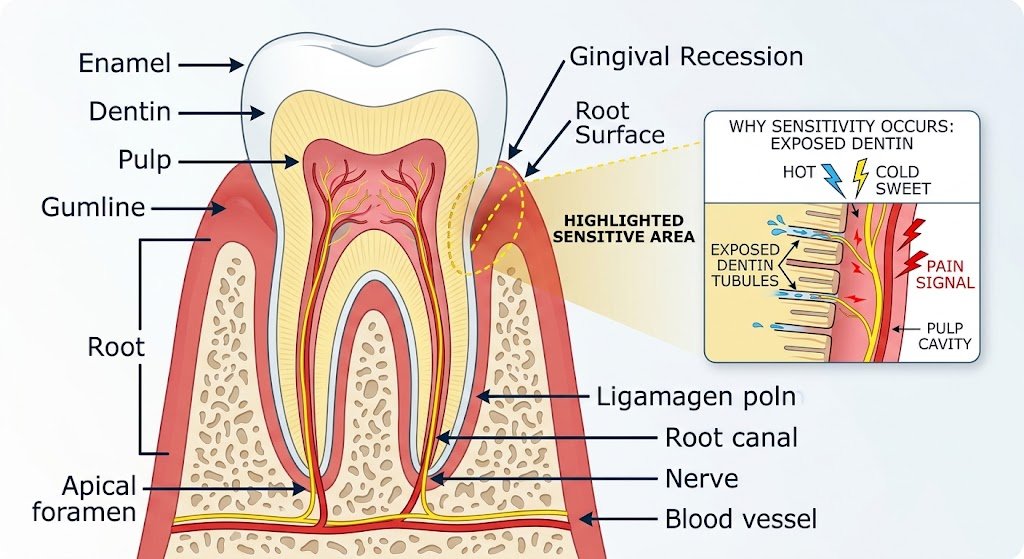
The important point is that tooth sensitivity is a symptom, not necessarily the underlying problem. A person may have sensitivity because of something relatively simple, such as temporary irritation after whitening, or because of a dental issue that needs professional treatment.
That is why understanding the possible cause matters before simply changing toothpaste.
What Does Tooth Sensitivity Feel Like?
Sensitivity often feels different from the dull or persistent discomfort associated with some other dental problems.
Common descriptions include:
- A sudden sharp pain from cold water
- A quick shock when eating ice cream
- Pain when drinking hot coffee or tea
- Discomfort from sweet foods
- A sharp sensation while brushing
- Pain when a tooth is touched
- Sensitivity when cold air reaches the teeth
- Discomfort from acidic foods or drinks
For many people, the pain is short-lived and triggered by something specific. However, the pattern matters.
For example, generalized sensitivity affecting several teeth after whitening is different from sudden, persistent pain coming from one specific tooth.
If sensitivity is severe, keeps returning, lingers after the trigger is gone, or is limited to one tooth, it is worth discussing with a dentist rather than assuming you simply need a different toothpaste.
What Causes Sensitive Teeth?
There is no single cause of tooth sensitivity. Several different conditions can expose or irritate sensitive tooth surfaces.
Enamel Wear and Erosion
Enamel protects the underlying dentin. When enamel becomes worn or eroded, the dentin underneath may become more exposed.
Acidic foods and drinks can contribute to enamel erosion, especially when exposure is frequent. Brushing aggressively immediately after acidic exposure may also be unhelpful because acid can temporarily soften the tooth surface.
Enamel does not grow back in the same way skin or other tissues repair themselves, so protecting the enamel you have is an important part of long-term oral care.
Gum Recession and Exposed Roots
Your gums normally cover and protect the roots of your teeth. If the gumline recedes, part of the root may become exposed.
Root surfaces do not have the same thick enamel covering found on the crown of the tooth. As a result, exposed roots can be more sensitive to temperature, touch, and other triggers.
Gum recession can have different causes, including brushing too aggressively, gum disease, and other factors. If you notice that your teeth appear longer or that the gumline has visibly changed, a dental evaluation can help determine what is happening.
Brushing Too Hard
Brushing harder does not necessarily mean brushing better.
Using excessive force, especially with a firm toothbrush, can irritate the gums and contribute to wear around the gumline over time.
A soft-bristled toothbrush and gentle brushing technique are generally better choices for routine oral care.
Acidic Foods and Drinks
Foods and drinks containing acids can contribute to enamel erosion.
Common examples include:
- Citrus fruits and juices
- Soft drinks
- Sports and energy drinks
- Vinegar-heavy foods
- Some acidic beverages
The issue is not necessarily one occasional acidic food. Frequency and overall exposure matter.
If acidic foods or drinks regularly trigger sensitivity, reducing frequent exposure can be a useful part of managing the problem.
Teeth Whitening
Teeth whitening is another common situation associated with sensitivity.
Some people experience temporary sensitivity during or after whitening treatments. If you already have sensitive teeth, adding a whitening product without considering that sensitivity may make the problem more noticeable.
That does not mean everyone with sensitive teeth must avoid whitening forever. It means whitening should be considered alongside your sensitivity level and overall dental health.
Cavities
A cavity can cause tooth sensitivity, particularly when the decay reaches deeper portions of the tooth.
This is one reason you should not automatically treat every sensitive tooth with desensitizing toothpaste and assume the problem is solved.
If sensitivity is persistent or associated with other symptoms, a dentist can determine whether decay or another dental problem is involved.
Cracked or Damaged Teeth
A cracked tooth can sometimes cause sensitivity when you bite or when the tooth is exposed to temperature changes.
A crack is not something toothpaste can repair.
If one tooth suddenly becomes sensitive, particularly after biting something hard or experiencing dental trauma, professional evaluation is more appropriate than simply switching toothpaste.
Worn Fillings
Older or damaged dental fillings can sometimes contribute to sensitivity.
If the discomfort is concentrated around a tooth with an existing filling, tell your dentist about the symptoms so the restoration and surrounding tooth can be evaluated.
Gum Disease
Gum disease can affect the tissues supporting your teeth and may contribute to gum recession or exposed root surfaces.
Signs such as bleeding gums, swelling, persistent bad breath, or changes around the gumline should not be treated as a toothpaste-selection problem alone.
Teeth Grinding
Grinding or clenching your teeth can place repeated stress on the teeth.
Over time, this may contribute to tooth wear or other problems that can make sensitivity more noticeable.
If you frequently wake up with jaw discomfort, headaches, worn-looking teeth, or unexplained sensitivity, mention these symptoms to your dentist.
What Triggers Tooth Sensitivity?
A trigger is not always the same thing as the cause.
For example, cold water may trigger pain, but exposed dentin may be the underlying reason that cold water causes the pain.
| Common trigger | Why it may cause discomfort |
| Cold drinks | Temperature changes can affect exposed sensitive tooth structures |
| Hot drinks | Heat can trigger discomfort in sensitive teeth |
| Sweet foods | Sugary foods can sometimes provoke sensitivity |
| Acidic foods | Acid exposure can contribute to enamel erosion |
| Brushing | Contact can irritate exposed or sensitive areas |
| Cold air | Air reaching exposed surfaces can cause a sharp sensation |
| Whitening products | Whitening can temporarily increase sensitivity in some people |
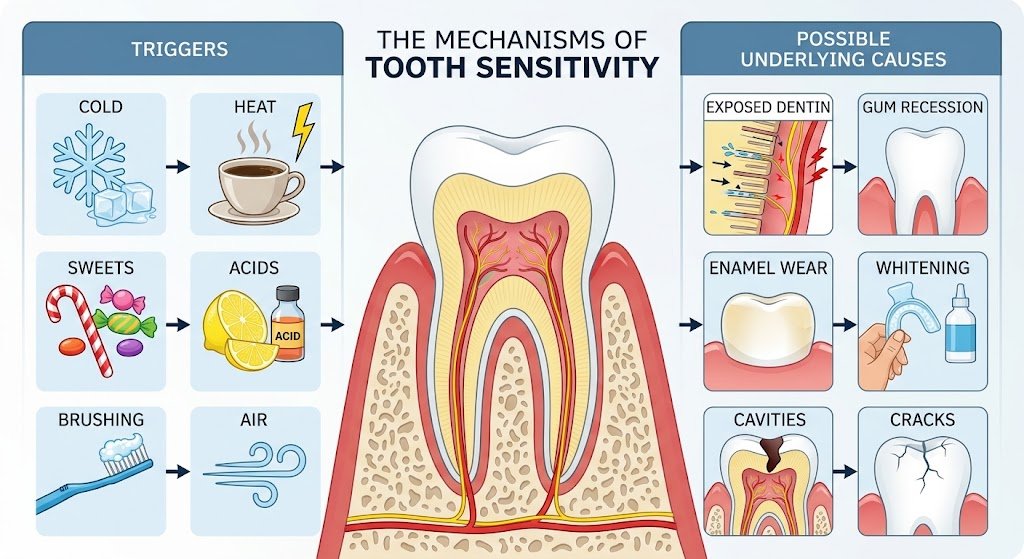
Understanding this distinction is useful because removing a trigger may reduce discomfort, but it does not necessarily solve the reason the sensitivity developed.
How Can You Reduce Tooth Sensitivity at Home?
For mild sensitivity, everyday oral-care habits can make a meaningful difference.
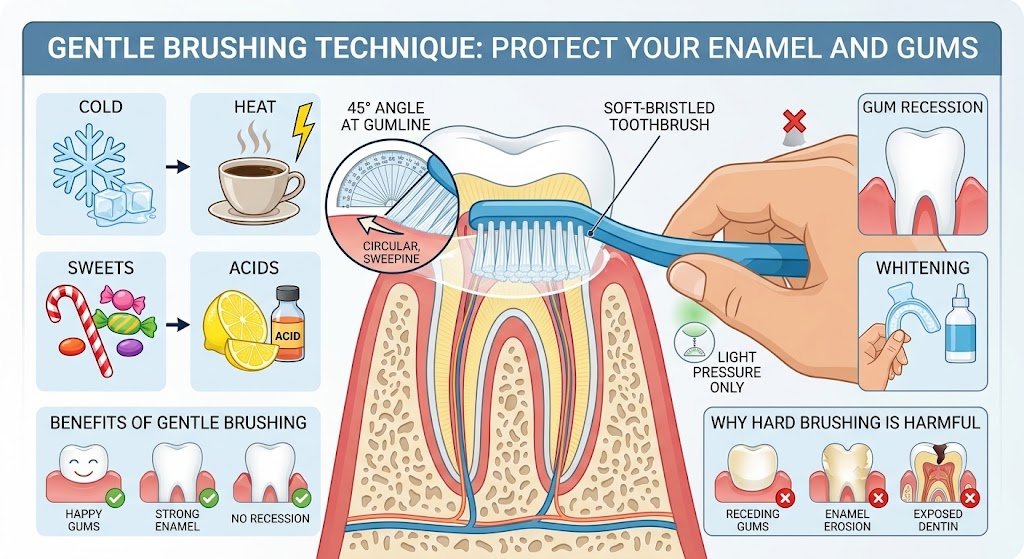
Use a Soft-Bristled Toothbrush
A soft-bristled toothbrush can help you clean your teeth without relying on excessive pressure.
You do not need to scrub aggressively to remove plaque.
Brush Gently
Hold the toothbrush gently and use controlled movements rather than pressing hard against the teeth and gums.
If you frequently notice gum irritation or wear around the gumline, discuss your brushing technique with your dentist.
Choose an Appropriate Toothpaste
A toothpaste designed for sensitive teeth may help reduce sensitivity for some people.
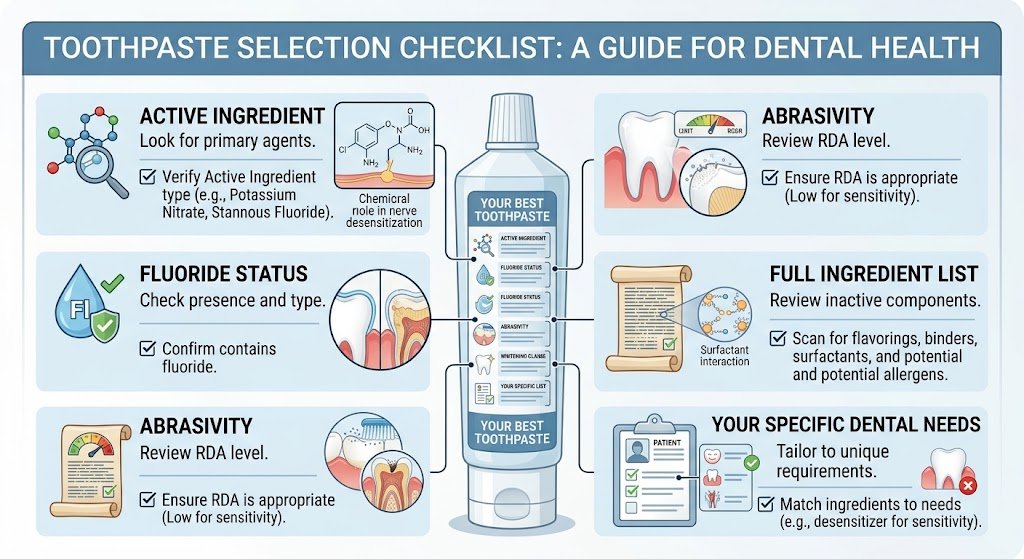
The important part is looking beyond the front of the package and checking:
- The active ingredients
- Fluoride status
- Abrasivity
- Whitening claims
- Other ingredients that matter to you
- Whether the formulation fits your other dental needs
We discuss these factors in more detail below.
Reduce Frequent Acid Exposure
If acidic drinks or foods are frequent parts of your day, consider reducing how often your teeth are exposed to them.
After acidic exposure, avoid immediately brushing aggressively. Rinsing with water can be a simpler first step.
Be Careful With Whitening Products
If sensitivity started after whitening, consider pausing the whitening routine and discussing the issue with your dentist if it persists.
Whitening should not take priority over addressing unexplained or significant tooth pain.
Don’t Stop Cleaning Sensitive Areas
It can be tempting to avoid brushing an area because brushing causes discomfort.
That can create another problem: inadequate plaque removal.
Instead, use a gentle technique and an appropriate toothbrush. If one particular area remains painful, have it evaluated rather than simply avoiding it.
Address Teeth Grinding if Relevant
If grinding or clenching may be contributing to your symptoms, talk with your dentist about appropriate options.
A toothpaste cannot address the mechanical stress caused by repeated grinding.
Can Toothpaste Help Sensitive Teeth?
Yes, desensitizing toothpaste can help reduce tooth sensitivity for some people, but it is important to understand what toothpaste can and cannot do.
Sensitive-teeth toothpaste is formulated with ingredients intended to reduce the response of sensitive teeth. The American Dental Association recognizes dentinal hypersensitivity as a category for products designed to help reduce sensitivity and discusses several ingredients used for this purpose.
The important distinction is:
A sensitivity toothpaste can help manage sensitivity, but it does not automatically treat the underlying cause.
For example, if sensitivity is caused by a cavity, cracked tooth, damaged filling, or significant gum problem, changing toothpaste may not be enough.
Toothpaste is most useful when it is treated as one part of an overall oral-care routine rather than a replacement for dental diagnosis.
For someone whose main problem is recurring sensitivity and who has already ruled out a more serious dental issue, a sensitivity-focused toothpaste can be a reasonable product category to consider.
If you want to compare specific options, see our guide to:
That guide can focus more heavily on individual products, while this article explains the underlying problem and selection criteria.
Which Toothpaste Ingredients Help With Sensitivity?
Different sensitivity-focused toothpastes use different active ingredients. The goal is not to find a single ingredient that everyone must use, but to understand what each type is intended to do.
Potassium Nitrate
Potassium nitrate is used in many desensitizing toothpaste formulations.
It is commonly included in products designed specifically for people who experience tooth sensitivity.
When comparing products, look at the actual active ingredient information rather than relying only on phrases such as “sensitive,” “gentle,” or “natural” on the front of the package.
Stannous Fluoride
Stannous fluoride is another important ingredient to know when evaluating toothpaste for sensitive teeth.
It can be relevant to both sensitivity management and cavity protection, making it particularly interesting for people who want one toothpaste to address multiple oral-care needs.
The American Dental Association discusses stannous-containing formulations among approaches used for sensitivity-control toothpaste.
Fluoride
Fluoride is primarily important for cavity prevention and protecting teeth against decay.
That matters when choosing toothpaste for sensitivity because sensitivity and cavity prevention are two different needs that can exist at the same time.
Someone may want a toothpaste that helps with sensitivity while also providing fluoride-based cavity protection.
For people at elevated risk of cavities, removing fluoride simply because a toothpaste is marketed as “natural” or “clean” may not necessarily be the best decision.
The appropriate choice depends on individual dental risk and professional advice.
Hydroxyapatite
Hydroxyapatite is a calcium-phosphate mineral related to the mineral found naturally in teeth and bones. It is used in some toothpaste formulations, including products marketed as fluoride-free alternatives.
For people specifically interested in mineral-based toothpaste, hydroxyapatite can be a category worth investigating.
However, it should not automatically be presented as the best choice for every person with sensitivity.
Its relevance depends on the rest of the formulation and the reader’s oral-health priorities.
Readers who specifically want to understand the ingredient before buying can also explore:
What About Arginine?
Arginine is another ingredient found in some sensitivity-focused oral-care formulations.
It is useful to recognize it when comparing product labels, but the presence of an ingredient alone does not guarantee that a particular product will work equally well for every person.
The better approach is to consider the complete formulation, the intended use, and your specific dental needs.
What Should You Look for in a Toothpaste for Sensitive Teeth?
Once you know that toothpaste may be useful, the next question becomes more practical:
What should you actually look for on the label?
Start with these factors.
1. A Clear Sensitivity-Focused Ingredient
Look for a formulation specifically designed to address sensitivity rather than relying only on general marketing language.
2. Fluoride Status
Decide whether fluoride is appropriate for your needs.
If cavity prevention is a major concern, fluoride may be an important consideration. If you specifically prefer fluoride-free toothpaste, understand the trade-off and consider discussing your choice with a dental professional.
3. Abrasivity
Abrasives help toothpaste clean teeth and remove surface deposits, but someone with enamel wear, exposed roots, or sensitivity may want to avoid unnecessarily aggressive formulations.
If abrasivity is one of your main concerns, you can learn more here:
4. Whitening Claims
If sensitivity is already a problem, be cautious about choosing a product primarily for aggressive whitening.
A toothpaste marketed around stain removal may not be the first priority when your immediate goal is reducing sensitivity.
5. Full Ingredient List
Do not judge a toothpaste solely by the front label.
If you are sensitive to certain ingredients, flavors, or oral-care formulations, review the complete ingredient list.
For a deeper explanation, see:
6. Your Other Dental Needs
Your ideal toothpaste is not determined by sensitivity alone.
You may also need to consider:
- Cavity prevention
- Enamel protection
- Gum health
- Whitening
- Dry mouth
- Ingredient preferences
- Fluoride preference
This is why “the best toothpaste” is rarely one universal formula for everyone.
Is Whitening Toothpaste Bad for Sensitive Teeth?
Not necessarily, but it may not be the best priority if sensitivity is already bothering you.
Whitening products can be associated with tooth sensitivity, and some people experience increased discomfort during or after whitening treatments.
If you have mild sensitivity and also want to remove surface stains, you may be able to balance both goals. But if your teeth are already painful, it makes sense to address the sensitivity first rather than continuously adding whitening products.
Ask yourself:
- Did the sensitivity begin after whitening?
- Does the toothpaste focus heavily on stain removal?
- Are you already experiencing enamel wear or exposed roots?
- Is whitening more important to you right now than comfort?
If sensitivity is persistent, severe, or unexplained, talk with a dentist before continuing a whitening routine.
For readers specifically comparing whitening products:
Should You Choose Fluoride or Fluoride-Free Toothpaste for Sensitive Teeth?
This decision should be separated into two questions:
What do you need for sensitivity?
and
What do you need for cavity prevention?
They are not exactly the same thing.
Fluoride has an established role in helping prevent tooth decay. A person with sensitive teeth may therefore choose a fluoride toothpaste that also contains an ingredient intended for sensitivity control.
On the other hand, some consumers specifically prefer fluoride-free toothpaste and may look toward hydroxyapatite-based formulations.
That does not mean fluoride-free automatically equals safer, and it does not mean fluoride is appropriate in exactly the same way for every individual. Your cavity risk, dental history, age, and professional dental advice all matter.
If this is the main decision you’re trying to make, see:
The goal is not to choose a label based on marketing. It is to choose a formulation that matches your oral-health needs.
When Should You See a Dentist for Tooth Sensitivity?
Some sensitivity can be managed with changes to daily oral care, but persistent or unusual symptoms should not be ignored.
Consider seeing a dentist if:
- Sensitivity continues despite changing your routine.
- One tooth suddenly becomes very sensitive.
- Pain is severe.
- Pain continues after the hot or cold trigger is removed.
- You have visible damage to a tooth.
- You suspect a cavity.
- You have swelling.
- Your gums bleed frequently or appear to be receding.
- You have pain when biting.
- Sensitivity follows dental trauma.
- You are unsure what is causing the problem.
A dentist can determine whether the discomfort is actually dentin hypersensitivity or whether another condition needs treatment.
Professional treatment can vary depending on the cause. Options may include fluoride treatment, restorative treatment, management of gum problems, treatment of cracks, or other dental procedures.
The biggest mistake is continuing to switch toothpaste while an underlying dental problem remains untreated.
How to Choose a Toothpaste Based on Your Situation
Instead of asking which toothpaste is universally best, start with your particular situation.
| Your situation | What to consider |
| General tooth sensitivity | A toothpaste specifically formulated for sensitivity |
| Sensitivity + cavity concerns | A sensitivity toothpaste with appropriate fluoride protection may be relevant |
| Sensitivity + fluoride-free preference | Consider a hydroxyapatite-based formulation and understand the trade-offs |
| Sensitivity + whitening goals | Prioritize sensitivity management before aggressive whitening |
| Sensitivity + gum recession | Gentle brushing and toothpaste selection, plus dental evaluation |
| Sensitivity + ingredient concerns | Review the complete ingredient list rather than relying on marketing terms |
| Sensitivity + enamel wear | Consider gentle brushing and a suitable low-abrasive formulation |
| Sudden sensitivity in one tooth | Dental evaluation should take priority over simply changing toothpaste |
This approach turns toothpaste shopping into a needs-based decision instead of a search for a universal winner.
Best Toothpaste for Sensitive Teeth: Where to Start
If you have already determined that your symptoms are consistent with ordinary tooth sensitivity and you want to compare toothpaste options, focus on the factors discussed above:
- Sensitivity-focused active ingredients
- Fluoride status
- Abrasivity
- Your cavity risk
- Your ingredient preferences
- Other dental goals such as whitening or enamel care
You can then compare specific products based on those criteria rather than choosing one simply because its packaging says “for sensitive teeth.”
For a dedicated product comparison, continue to:
FAQs About Tooth Sensitivity
What causes tooth sensitivity?
Tooth sensitivity can have several causes, including exposed dentin, gum recession, enamel wear, acidic exposure, aggressive brushing, teeth whitening, cavities, cracked teeth, worn fillings, and gum problems. The trigger you notice, such as cold water, is not always the underlying cause. If sensitivity persists or is concentrated in one tooth, a dental examination can help identify the reason.
How can I stop tooth sensitivity?
You can often reduce sensitivity by brushing gently with a soft-bristled toothbrush, using an appropriate sensitivity-focused toothpaste, limiting frequent acid exposure, and being cautious with whitening products. However, the right treatment depends on the cause. If sensitivity is persistent, severe, or localized to one tooth, see a dentist rather than relying only on toothpaste.
Does sensitive toothpaste really work?
Desensitizing toothpaste can help reduce sensitivity for some people. Different formulations use different active ingredients, so results can vary. Consistent use is also important. However, sensitive toothpaste does not fix every underlying cause of tooth pain. A cavity, crack, damaged filling, or gum problem may require professional treatment.
What is the best toothpaste for sensitive teeth?
There is no single toothpaste that is best for everyone with sensitivity. Consider the active sensitivity ingredient, fluoride status, abrasivity, whitening claims, complete ingredient list, and your other oral-health needs. Someone with high cavity risk may have different priorities from someone primarily looking for a fluoride-free mineral-based toothpaste.
Is fluoride toothpaste good for sensitive teeth?
Fluoride can be useful for protecting teeth against decay, while some toothpaste formulations also include ingredients specifically intended for sensitivity. Therefore, fluoride and sensitivity are not necessarily competing goals. Whether fluoride is appropriate for you depends on your individual dental needs and professional advice.
Can hydroxyapatite toothpaste help sensitive teeth?
Hydroxyapatite is used in some toothpaste formulations and may be relevant to people looking for mineral-based or fluoride-free options. However, it should not automatically be considered superior for every person with sensitive teeth. Evaluate the complete formulation and consider your cavity-prevention needs as well as your sensitivity.
Can whitening toothpaste cause sensitive teeth?
Whitening products can be associated with sensitivity in some people. If your teeth are already sensitive, a whitening-focused toothpaste may not be the best first priority. If sensitivity began after whitening or continues despite stopping the product, consider discussing it with a dentist.
Why is only one tooth sensitive?
Sensitivity affecting one tooth can have several possible causes, including decay, a crack, a damaged filling, exposed root surfaces, or other dental problems. A single sensitive tooth should not automatically be assumed to have ordinary generalized sensitivity, especially if the discomfort is persistent, severe, or associated with biting pain.
When should I see a dentist for sensitive teeth?
See a dentist when sensitivity is persistent, severe, unexplained, concentrated in one tooth, associated with swelling or visible damage, or accompanied by pain that lingers after a trigger is removed. Dental evaluation is particularly important when changing toothpaste does not improve the problem.
Is low-abrasive toothpaste better for sensitive teeth?
A gentle, low-abrasive formulation can be worth considering when sensitivity is associated with enamel wear or exposed root surfaces. However, abrasivity is only one factor. The active ingredients, fluoride status, overall formulation, and your individual dental needs also matter.
Bottom Line
Tooth sensitivity is often triggered by cold, heat, sweets, acidic foods, brushing, or touch, but the trigger is not necessarily the underlying cause.
Exposed dentin, gum recession, enamel wear, whitening, cavities, cracks, worn fillings, and gum problems can all play a role.
For appropriate cases, a sensitivity-focused toothpaste may help reduce discomfort. When choosing one, look beyond marketing claims and consider the active ingredient, fluoride status, abrasivity, complete formulation, and your other oral-health needs.
Most importantly, don’t use toothpaste as a substitute for finding the cause of persistent or unusual tooth pain. If sensitivity is severe, localized, recurring, or accompanied by other symptoms, a dental examination is the safer next step.
For readers who have identified toothpaste as the next step, compare products according to your actual needs rather than simply choosing the product with the strongest marketing claim.
