Dental caries is the medical term for tooth decay. It develops when bacteria in dental plaque use carbohydrates from food and drinks to produce acids that gradually remove minerals from the tooth. If this process continues, the damage can progress from an early enamel change to a cavity.
The good news is that many risk factors for dental caries can be managed. Daily brushing with an appropriate toothpaste, cleaning between teeth, limiting frequent exposure to sugary foods and drinks, and regular dental care all have a role in prevention.
In this guide, you’ll learn how dental caries develops, what increases your risk, the signs to watch for, how fluoride helps, what toothpaste can and cannot do, and when professional dental treatment is needed.
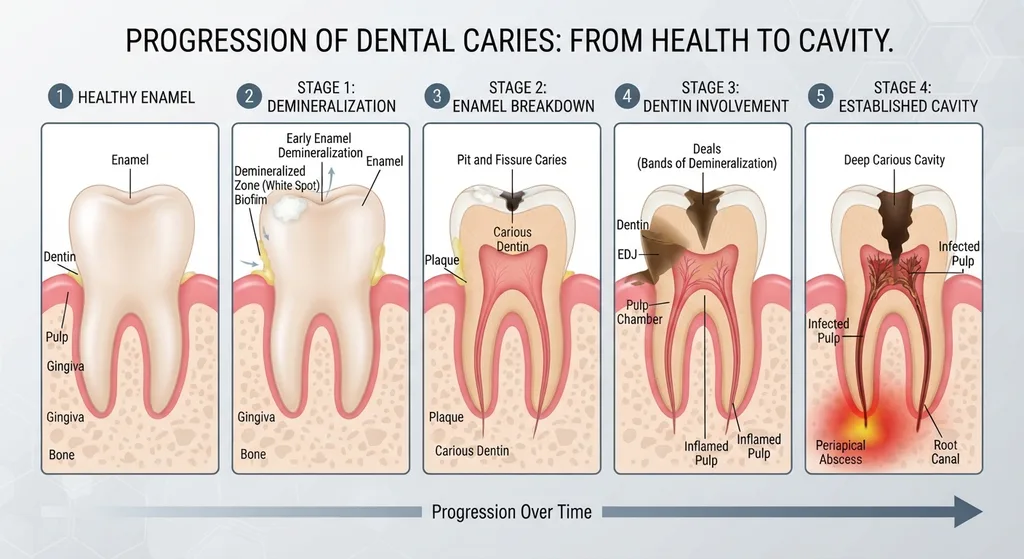
What Is Dental Caries?
Dental caries is a disease process that damages the hard tissues of a tooth. In everyday language, it is usually called tooth decay. A cavity is the hole or structural damage that can develop when the decay progresses.
These terms are related but are not exactly interchangeable:
- Dental caries: the disease process.
- Tooth decay: the common term for that process.
- Cavity: a permanent area of structural damage created when decay progresses far enough.
A tooth has several important layers. The outer layer is enamel, which is the hard protective covering. Underneath it is dentin, which is less mineralized and more sensitive. At the center is the pulp, which contains nerves and blood vessels.
Dental caries can begin on the enamel surface. At an early stage, mineral is being lost from the tooth, but there may not yet be a visible hole. If the process continues without enough mineral replacement or other preventive intervention, the tooth structure can eventually break down and form a cavity.
This is why a cavity does not simply appear overnight. It is usually the result of a process involving plaque, bacteria, dietary carbohydrates, acids, tooth minerals, saliva, and other risk factors over time.
How Does Dental Caries Develop?
Dental caries develops through a balance between mineral loss and mineral repair at the tooth surface. Understanding this process makes cavity prevention much easier to understand.
Plaque and Oral Bacteria
Dental plaque is a sticky microbial biofilm that forms on teeth. It contains many types of microorganisms and can build up when teeth are not cleaned effectively.
When you eat foods or drink beverages containing fermentable carbohydrates, bacteria within plaque can use those carbohydrates and produce acids. These acids can lower the pH around the tooth surface.
The problem is not simply that bacteria are present. The important issue is the repeated interaction between the tooth surface, plaque, diet, acids, and protective factors such as saliva and fluoride.
Acid Production
After exposure to fermentable carbohydrates, acid production can increase within plaque.
Repeated acid exposure creates conditions in which minerals can leave the enamel. Frequent exposures can give the tooth less time to recover between acid attacks.
This is one reason dietary pattern matters. A person who repeatedly exposes their teeth to fermentable carbohydrates throughout the day may create more frequent periods of low pH than someone whose exposure is less frequent.
Enamel Demineralization
Demineralization means that minerals are being lost from the tooth.
Enamel is largely made from mineral crystals. When the environment around the tooth becomes sufficiently acidic, minerals can dissolve from the enamel.
At this point, the tooth may not necessarily have a cavity.
An early caries lesion can sometimes appear as a white or chalky area because the structure of the enamel has changed.
Remineralization
The process is not always one-way.
Remineralization is the return of minerals to areas of the tooth that have experienced mineral loss. Saliva provides minerals and helps buffer acids, while fluoride can support the tooth’s resistance to acid-related mineral loss and assist remineralization.
So, at an early stage, there can be an ongoing balance:
Demineralization ↔ Remineralization
When protective factors are strong enough, early mineral loss may be controlled. When damaging factors repeatedly outweigh protective factors, the lesion can progress.
From Early Lesion to Cavity
If caries continues to progress, the enamel can lose enough mineral and structural integrity that a permanent cavity forms.
Once there is an established hole in the tooth, simply improving brushing or changing toothpaste cannot reliably rebuild the missing tooth structure. A dentist needs to evaluate the tooth and determine the appropriate treatment.
That distinction is important:
Preventing or slowing early disease is different from treating an established cavity.
What Causes Dental Caries?
Dental caries usually develops from multiple interacting risk factors, rather than one single cause.
Oral Bacteria and Plaque
Bacteria living in dental plaque can produce acids when they metabolize fermentable carbohydrates. If plaque is allowed to remain on the teeth, this acidic environment can contribute to mineral loss.
Effective plaque removal is therefore an important part of prevention.
Frequent Sugar and Carbohydrate Exposure
Sugary foods and drinks can contribute to caries because their carbohydrates can be used by oral bacteria.
However, saying simply “sugar causes cavities” leaves out an important part of the picture.
Frequency matters too. Repeated exposure to fermentable carbohydrates can create repeated periods of acid production around the teeth.
This does not mean you need to completely eliminate every carbohydrate-containing food. A more useful approach is to reduce unnecessary, frequent exposure and maintain good oral hygiene.
Inadequate Fluoride Exposure
Fluoride is an important tool for preventing dental caries because it helps teeth withstand acid attacks and supports remineralization.
For people at risk of cavities, choosing an appropriate fluoride toothpaste can therefore be more important than choosing toothpaste based primarily on cosmetic features.
Poor Plaque Removal
If plaque remains on tooth surfaces, bacteria continue to interact with dietary carbohydrates and produce acids.
Brushing helps remove plaque and delivers toothpaste ingredients to the tooth surface. Cleaning between teeth is also important because a toothbrush cannot effectively clean every area between teeth.
Dry Mouth
Saliva is one of the mouth’s natural protective systems. It helps clear food debris, buffer acids, and contribute minerals that support the tooth surface.
When saliva production is reduced, the risk of dental caries can increase.
Dry mouth can have different causes, including certain medications and medical conditions, so persistent dry mouth should not simply be ignored.
Other Individual Risk Factors
Caries risk can also be influenced by factors such as:
- Previous history of cavities
- Oral hygiene habits
- Diet
- Fluoride exposure
- Saliva flow
- Tooth anatomy
- Certain medications
- Individual oral-health circumstances
This is why two people with apparently similar diets may not have exactly the same cavity risk.
Signs and Symptoms of Dental Caries
One of the challenges with dental caries is that early decay may not cause obvious symptoms.
A person can have an early lesion without significant pain. As damage progresses, symptoms may become more noticeable.
Possible signs include:
- White or chalky areas on a tooth
- Brown, gray, or dark discoloration
- Increased sensitivity to hot, cold, or sweet foods
- Toothache
- Pain when biting
- Food repeatedly getting stuck in one area
- A visible hole or pit in the tooth
- Persistent discomfort
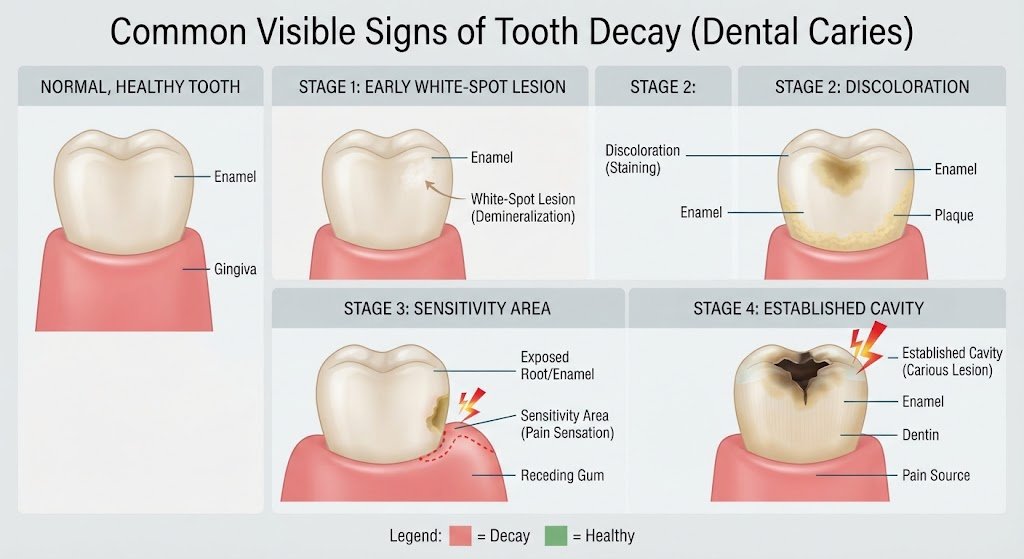
Not every change in tooth color means you have dental caries, and symptoms alone cannot tell you how deep decay has progressed.
For example, a tooth can have decay without significant pain, while tooth sensitivity can have causes other than caries.
When Should You See a Dentist?
If you suspect that you have a cavity, professional evaluation is the safest way to determine what is happening.
Seek dental care particularly when you have:
- Persistent tooth pain
- Swelling around the tooth or gums
- Significant sensitivity
- A visible hole or damaged area
- Pain when biting
- Symptoms that are getting worse
- Signs that could indicate infection
A dental professional can examine the tooth and determine whether preventive care, monitoring, restoration, or another treatment is appropriate.
Do not rely on toothpaste or an online article to diagnose or treat an established cavity.
Can Dental Caries Be Prevented?
Yes, many important dental-caries risk factors can be managed through a consistent oral-care routine.
The goal is not simply to find a “cavity-fighting” product. Effective prevention combines several behaviors.
Brush Twice Daily
Regular brushing helps remove plaque and delivers toothpaste ingredients to the teeth.
For many people, brushing twice a day is a basic foundation of oral hygiene. Your dentist may recommend a different or more personalized routine depending on your oral-health needs.
Use a toothbrush that allows you to clean the teeth effectively without aggressive scrubbing.
Use Fluoride Toothpaste When Appropriate
Fluoride has an important role in caries prevention.
A fluoride toothpaste can provide topical fluoride during brushing, helping protect teeth against the effects of acid-related mineral loss.
The appropriate fluoride product and amount can vary according to age and individual risk, particularly for children.
Clean Between Your Teeth
Brushing alone does not clean every surface between teeth.
Floss or another appropriate interdental cleaning method can help remove plaque and food debris from areas that a toothbrush cannot reach effectively.
The best method is one you can use consistently and correctly.
Reduce Frequent Sugar Exposure
You do not necessarily need to think about cavity prevention as simply “never eat sugar.”
Instead, pay attention to how frequently your teeth are exposed to fermentable carbohydrates.
Frequent snacking or sipping sugary beverages throughout the day can repeatedly create an environment favorable to acid production.
Water can be a useful everyday beverage choice, particularly between meals.
Manage Dry Mouth
If your mouth frequently feels dry, do not assume it is harmless.
Reduced saliva can remove an important protective factor against tooth decay. If dry mouth persists, discuss it with a dental or medical professional, particularly if you take medications that may contribute to it.
Maintain Regular Dental Care
Professional dental visits can help identify developing problems and assess your individual caries risk.
Your dentist may recommend a different preventive approach depending on your history, oral condition, age, diet, medications, saliva flow, and other factors.
What Toothpaste Should You Use to Help Prevent Dental Caries?
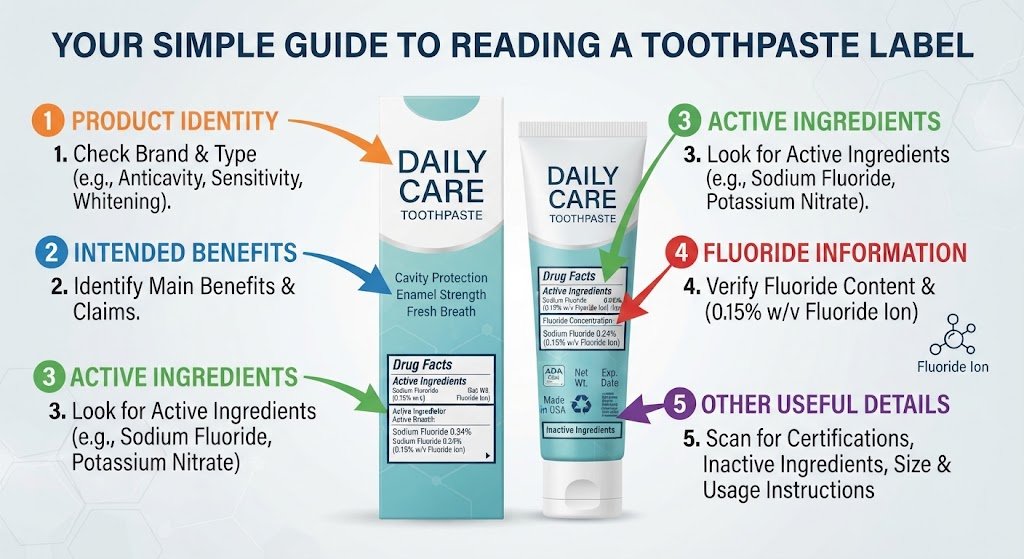
If cavity prevention is your main concern, start with the active ingredients and their intended oral-health benefit rather than the marketing language on the front of the package.
Look for Fluoride
For people who use fluoride toothpaste, the important question is not simply whether the package says “cavity protection.” Check the active ingredient information and understand what the product is designed to do.
Fluoride is widely used in toothpaste for caries prevention.
The specific fluoride compound can vary. Common fluoride ingredients include:
- Sodium fluoride
- Stannous fluoride
- Sodium monofluorophosphate
These ingredients should not automatically be treated as interchangeable in every respect because formulations can have different intended benefits.
Check the Active Ingredient
When comparing toothpaste, look beyond words such as:
- Natural
- Clean
- Whitening
- Fresh
- Herbal
Those labels may describe a product category or marketing position, but they do not by themselves tell you how well a toothpaste addresses caries risk.
Instead, consider:
- What active ingredient does it contain?
- What oral-health benefit is it intended to provide?
- Is it appropriate for your age and needs?
- Do you have sensitivity, dry mouth, enamel concerns, or another condition that affects your choice?
- Does the product provide enough information for you to understand what you are buying?
Consider Your Other Oral-Health Needs
Cavity prevention may be your main goal, but it may not be your only concern.
For example, someone with sensitive teeth may also want a toothpaste containing an appropriate desensitizing ingredient. Someone concerned about enamel may prioritize a formulation and brushing routine that support enamel protection.
That does not mean every person needs a specialized toothpaste.
The best choice depends on the problem you are actually trying to address.
Don’t Choose Only by “Natural” or “Whitening”
A toothpaste being marketed as natural does not automatically mean it is the right choice for preventing dental caries.
Likewise, whitening may be a cosmetic goal rather than a cavity-prevention feature.
If caries prevention is your priority, evaluate the product according to its evidence-supported active ingredients and intended function first.
Can Early Dental Caries Be Reversed?
The answer depends heavily on how advanced the caries process is.
Early tooth mineral loss does not necessarily mean that a permanent cavity has already formed. At this stage, preventive measures can help control the factors contributing to mineral loss and support remineralization.
Fluoride is particularly important in this context because it can help strengthen the tooth’s resistance to acid-related mineral loss and support remineralization.
Hydroxyapatite is another ingredient that may be relevant to readers researching remineralization-focused toothpaste. However, readers should distinguish between supporting early mineral changes and claiming that an established cavity can be rebuilt with toothpaste.
Once tooth structure has been lost and a true cavity has formed, toothpaste cannot simply recreate the missing structure.
If you have a suspected cavity, a dentist should evaluate it rather than relying on a product to reverse it.
How Is Dental Caries Treated?
Treatment depends on how far the caries process has progressed and which parts of the tooth are affected.
A dentist may first assess the tooth clinically and, when appropriate, use additional diagnostic methods to determine the extent of the problem.
Early or Non-Cavitated Lesions
When mineral loss has occurred but the tooth has not developed a permanent structural cavity, management may focus on controlling risk factors and supporting the tooth’s ability to resist further mineral loss.
The appropriate approach depends on the individual situation.
Established Cavities
When a cavity has formed, the damaged tooth structure may require restorative treatment.
A filling is one common treatment for a tooth with a cavity, although the exact treatment depends on the tooth and the extent of damage.
Deeper Decay
If decay progresses deeper into the tooth and reaches or seriously affects the pulp, more extensive treatment may be required.
Depending on the condition of the tooth, this can include root canal treatment or, when a tooth cannot be predictably saved, extraction.
The important point is that prevention and treatment are different stages of care.
A fluoride toothpaste, toothbrush, or floss can support a preventive routine, but none should be presented as a replacement for professional treatment of a significant cavity.
How to Choose Oral-Care Products for Cavity Prevention
A simple decision framework can make product selection easier.
| Your main need | What to consider |
| Cavity prevention | Fluoride toothpaste and consistent brushing |
| Tooth sensitivity | Appropriate desensitizing ingredients |
| Enamel concerns | Fluoride and remineralization considerations |
| Between-teeth cleaning | Floss or an appropriate interdental cleaner |
| Plaque removal | An effective toothbrush and brushing technique |
| Dry mouth | Products designed for dry-mouth needs and professional advice when persistent |
The goal is not to buy the largest collection of oral-care products.
Instead, choose products that solve a specific problem in your routine.
For example, if your main concern is dental caries and you do not have another special oral-health requirement, start with an appropriate cavity-prevention toothpaste and an effective brushing routine. Add other products when there is a clear reason to use them.
This approach also helps prevent a common affiliate-shopping mistake: buying several products because they sound impressive rather than because they address an actual need.
Dental Caries Prevention: A Simple Daily Routine
A practical routine can be kept fairly simple:
- Brush your teeth twice a day using an appropriate toothpaste.
- Clean between your teeth with floss or another suitable interdental method.
- Pay attention to frequent sugary exposures, especially repeated snacking and sipping.
- Do not ignore persistent dry mouth or recurring oral symptoms.
- Do not assume that the absence of pain means there is no decay.
- See a dentist regularly and follow recommendations based on your individual cavity risk.
Consistency matters more than constantly switching products.
If you are choosing toothpaste specifically around cavity prevention, focus first on its active ingredients and intended benefit, then consider secondary preferences such as flavor, texture, SLS status, whitening, or other features.
Frequently Asked Questions About Dental Caries
What is dental caries?
Dental caries is the disease process commonly known as tooth decay. It occurs when conditions around a tooth allow acids produced by plaque bacteria to contribute to mineral loss. If the process progresses, it can eventually cause a cavity.
Is dental caries the same as a cavity?
Not exactly. Dental caries describes the disease process, while a cavity is the structural damage that can result when the process progresses far enough to create a hole in the tooth.
What causes dental caries?
Dental caries results from interacting factors including plaque bacteria, fermentable carbohydrates, repeated acid exposure, tooth susceptibility, saliva, fluoride exposure, oral hygiene, and other individual risk factors. It is more complicated than simply eating sugar.
Can dental caries be prevented?
Many important caries risk factors can be managed. Regular brushing with appropriate toothpaste, cleaning between teeth, reducing frequent exposure to fermentable carbohydrates, maintaining adequate fluoride exposure, and regular dental care can all contribute to prevention.
Can early tooth decay be reversed?
Early mineral loss may be managed before a permanent cavity develops, depending on the situation. Preventive care can support remineralization and reduce further mineral loss. An established cavity is different and may require restorative dental treatment.
Does fluoride toothpaste prevent cavities?
Fluoride toothpaste is an important part of cavity-prevention care because fluoride can help teeth resist acid-related mineral loss and support remineralization. The appropriate product and use can depend on age and individual risk.
Can you have a cavity without pain?
Yes. Early decay may cause little or no noticeable discomfort. Pain is not a reliable way to determine whether decay is present or how advanced it is.
When should you see a dentist for possible tooth decay?
You should seek professional evaluation if you notice a suspected cavity, persistent pain, significant sensitivity, swelling, pain when biting, or symptoms that are getting worse. A dentist can determine whether the problem needs preventive management, restoration, or other treatment.
Conclusion
Dental caries is a process of tooth decay that develops through the interaction of plaque bacteria, fermentable carbohydrates, acids, tooth minerals, saliva, fluoride, and individual risk factors.
Understanding that process makes prevention more practical. Rather than focusing on one “magic” product, build a consistent routine around effective plaque removal, appropriate toothpaste, between-teeth cleaning, sensible dietary habits, and professional dental care.
If cavity prevention is your specific goal, toothpaste selection should begin with the active ingredients and evidence-supported purpose, rather than relying only on labels such as natural, clean, or whitening.
