Bleeding, red, or swollen gums can be signs of gingivitis, an inflammation of the gums that is commonly associated with plaque buildup. It is one of the earliest forms of gum disease, so understanding what causes it and how to control plaque can help you take action before gum problems become more serious.
This guide explains what gingivitis is, its common causes and symptoms, how it differs from periodontitis, what you can do to improve gum health, and which oral-care products may be useful.
What Is Gingivitis?
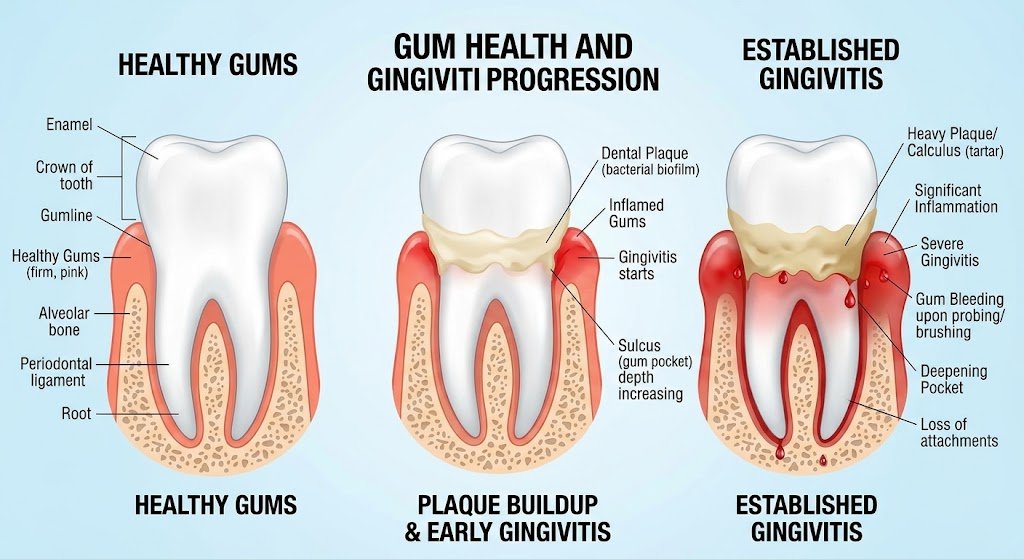
Gingivitis is inflammation of the gums, also called the gingiva. It commonly develops when plaque, a sticky bacterial film, remains around the teeth and along the gumline.
Plaque contains bacteria. When it is not removed regularly through daily oral hygiene, it can irritate the gums and contribute to inflammation.
Common signs of gingivitis include:
- Red or darker-looking gums
- Swollen gums
- Tender or sensitive gums
- Bleeding during brushing or cleaning between teeth
- Persistent bad breath
- Changes in how the gums look around the teeth
Gingivitis is different from advanced periodontal disease. In gingivitis, the main problem is inflammation of the gums. Periodontitis can involve deeper tissues that support the teeth.
The good news is that early plaque-related gingivitis can often improve when plaque control and oral hygiene are improved. However, symptoms that persist or become more severe should be evaluated by a dental professional.
What Causes Gingivitis?
The main process behind plaque-related gingivitis starts with bacteria accumulating on tooth surfaces.
Dental Plaque
Plaque is a soft, sticky bacterial biofilm that develops continuously in the mouth. It can collect on the teeth, around the gumline, and in areas that are difficult to clean.
When plaque stays in place, the bacteria and their byproducts can irritate nearby gum tissue. The gums may then become red, swollen, tender, or prone to bleeding.
This is why plaque control is central to preventing and managing gingivitis.
Tartar and Calculus
Plaque does not always remain soft. Over time, it can become mineralized and harden into tartar, also called calculus.
Unlike soft plaque, hardened tartar cannot simply be brushed away with a normal toothbrush. Professional dental cleaning may be needed to remove it.
Tartar can also make plaque control more difficult because its rough surface can provide additional places for buildup.
Poor Plaque Removal
Gingivitis does not necessarily mean someone never brushes their teeth. Plaque can remain even when a person brushes regularly if certain areas are repeatedly missed.
Common problem areas include:
- Along the gumline
- Between teeth
- Behind the lower front teeth
- Around crowded teeth
- Around braces or other dental appliances
Brushing technique, toothbrush design, and interdental cleaning all influence how effectively plaque is disrupted.
Other Risk Factors
Plaque is an important cause of gingivitis, but other factors can affect gum health and a person’s risk of developing gum disease.
These can include:
- Tobacco use
- Diabetes
- Hormonal changes
- Certain medications
- Genetic factors
- Conditions that affect the body’s ability to fight infection
- Difficulty maintaining daily oral hygiene
These factors do not mean that a person will automatically develop gingivitis. They can, however, affect gum health and may change how the condition needs to be managed.
What Are the Symptoms of Gingivitis?
Gingivitis can develop gradually, so some people may not immediately recognize that their gums are inflamed.
Red or Inflamed Gums
Healthy gums generally have a firm appearance and fit closely around the teeth. With inflammation, the gums may appear red, swollen, or otherwise different from their normal appearance.
Bleeding Gums
Bleeding during brushing or cleaning between teeth can be a sign of gum inflammation.
It should not simply be dismissed as something that happens because you floss or brush. If bleeding occurs regularly, improving your oral-hygiene routine and discussing persistent symptoms with a dental professional can help identify the cause.
Swelling or Tenderness
Inflamed gums may feel swollen, sore, or tender. Some people notice discomfort when brushing or eating.
Bad Breath
Persistent bad breath can occur alongside plaque buildup and gum problems. However, bad breath has many possible causes, so it should not be used by itself to diagnose gingivitis.
Changes Around the Gumline
You may notice that the gums look puffy or that their shape around individual teeth has changed.
The important point is that symptoms can suggest a problem, but they do not provide a definitive diagnosis. Persistent bleeding, swelling, pain, gum recession, or other changes should be evaluated by a dentist.
Gingivitis vs Periodontitis
Gingivitis and periodontitis are related, but they are not the same condition.
| Feature | Gingivitis | Periodontitis |
| Main problem | Gum inflammation | Deeper periodontal disease |
| Primary area affected | Gums | Gums and supporting tissues |
| Plaque relationship | Important contributor | Important contributor |
| Bone loss | Not the defining feature | Can occur |
| Early intervention | Important | Important |
| Professional evaluation | May be needed | Particularly important |
Gingivitis involves inflammation of the gums. Periodontitis is more advanced and can damage the tissues and bone that support the teeth.
This distinction matters because someone should not assume that every gum problem is “just gingivitis.” Persistent or worsening symptoms deserve professional evaluation.
The progression is also not as simple as saying that every case of gingivitis will automatically become periodontitis. Risk varies between people, and multiple factors can influence periodontal health.
Can Gingivitis Be Reversed?
Early plaque-related gingivitis can often improve when the underlying plaque buildup is brought under better control.
The basic approach is straightforward:
- Brush your teeth consistently.
- Clean between your teeth.
- Pay attention to the gumline.
- Address hardened tartar with professional care.
- Follow dental advice when symptoms persist.
The key is consistent plaque removal, not aggressive cleaning.
If plaque has hardened into tartar, simply brushing harder is not the solution. Tartar generally requires professional removal.
It is also important to remember that improvement does not happen by choosing a toothpaste alone. Toothpaste supports the brushing process, but the broader oral-hygiene routine matters.
How to Get Rid of Gingivitis
The practical goal is not to scrub the gums aggressively or search for a single product that promises to fix the problem. The goal is to reduce plaque buildup while protecting the gums from unnecessary irritation.
Brush Twice a Day
Brush your teeth twice a day using a toothbrush and an appropriate fluoride toothpaste.
Focus on the areas where teeth and gums meet rather than concentrating only on the front surfaces that are easiest to see.
A useful routine is to divide your mouth into sections and work systematically across:
- Outer tooth surfaces
- Inner tooth surfaces
- Chewing surfaces
- Gumline areas
Use controlled movements rather than pressing the brush aggressively against your gums.
For readers comparing toothpaste options, a fluoride toothpaste can be a useful choice when cavity protection is also part of the goal.
Clean Between Your Teeth
A toothbrush cannot effectively reach every surface between your teeth.
That is why interdental cleaning is an important part of plaque control.
Depending on your teeth and personal preference, options include:
- Dental floss
- Floss picks
- Interdental brushes
- Water flossers
The “best” method is not necessarily the most expensive one. It is a method that fits your mouth and that you can use correctly and consistently.
If you are unsure which interdental method suits you, a dental professional can help you choose one.
Pay Attention to the Gumline
Plaque commonly accumulates around the area where the tooth meets the gum.
When brushing, angle your attention toward this transition rather than cleaning only the middle of each tooth.
The goal is gentle, thorough plaque disruption—not force.
Consider an Electric Toothbrush
A powered toothbrush may be useful for people who have difficulty maintaining a consistent brushing technique or who prefer the features of an electric brush.
Depending on the model, useful features may include:
- Built-in brushing timers
- Different brushing modes
- Pressure feedback
- Replaceable brush heads
- Comfortable handles
- Easy-to-use controls
An electric toothbrush is not automatically necessary for everyone, and buying a more expensive model does not guarantee better gum health.
Choose based on whether the features actually help you brush consistently and comfortably.
Consider Mouthwash When Appropriate
Mouthwash can be useful as an additional part of an oral-care routine, but it should not replace brushing or cleaning between the teeth.
Some therapeutic mouthrinses are designed to help control plaque or gingivitis. The right choice depends on the product’s active ingredients, intended use, and your individual dental needs.
When considering a mouthwash, look at:
- What the product is designed to do
- Its active ingredients
- Whether it is intended for daily or specific use
- Whether the flavor is comfortable for you
- Whether it fits any recommendations from your dentist
Avoid choosing a mouthwash simply because the packaging uses terms such as “deep clean,” “natural,” or “fresh.” Those descriptions do not tell you everything about what the product is designed to accomplish.
If your main problem is plaque around the gumline, focus first on effective brushing and interdental cleaning. Mouthwash should complement those habits rather than become a substitute for them.
Get Professional Dental Cleaning When Needed
If plaque has hardened into tartar, home brushing cannot simply turn it back into soft plaque.
A dental professional can examine your gums and teeth and determine whether professional cleaning or other treatment is appropriate.
Professional care becomes especially important when you have:
- Persistent gum bleeding
- Significant swelling
- Gum recession
- Persistent bad breath
- Tooth pain
- Loose teeth
- Visible hardened deposits
- Symptoms that do not improve with better home care
The goal is not to avoid the dentist by buying more oral-care products. Products can support daily plaque control, but they cannot replace professional assessment when there is an underlying dental problem.
What Products Can Help With Gingivitis?
Once you understand that plaque control is central to gum health, product selection becomes much easier.
Instead of asking:
“What is the one product that treats gingivitis?”
A better question is:
“Which part of my oral-care routine needs improvement?”
Different products solve different problems.
| Product | Main purpose | When it may be useful |
| Manual toothbrush | Physical plaque removal | Basic daily brushing |
| Electric toothbrush | Powered brushing | People who prefer powered cleaning or need brushing support |
| Fluoride toothpaste | Brushing + cavity protection | Regular toothbrushing |
| Dental floss | Cleaning between teeth | Tight spaces between teeth |
| Interdental brush | Cleaning between teeth | Suitable wider spaces or specific dental situations |
| Water flosser | Water-based interdental cleaning | People who prefer this method or have difficulty with traditional floss |
| Mouthwash | Additional oral-care support | When an appropriate rinse fits the user’s needs |
| Plaque-disclosing products | Shows remaining plaque | Improving brushing technique |
The important point is that you do not need every product on this list.
Start with the basic routine and identify the areas where you consistently struggle.
Toothbrushes
A toothbrush is the foundation of physical plaque removal.
A manual toothbrush can work well when used correctly. A powered toothbrush may be useful if its features make it easier for you to brush consistently.
When comparing toothbrushes, consider:
- Brush-head size
- Bristle softness
- Handle comfort
- Ease of reaching back teeth
- Timer or brushing feedback
- Pressure feedback
- Availability and cost of replacement heads
- Battery or charging requirements
For gum health, comfort matters. A toothbrush that feels too harsh or is difficult to control may make you less willing to maintain your routine.
Fluoride Toothpaste
Toothpaste helps during brushing by delivering ingredients to the teeth while the toothbrush physically disrupts plaque.
Fluoride is particularly relevant when cavity prevention is also a goal. The American Dental Association recognizes fluoride toothpaste as an important part of cavity-prevention-focused oral hygiene.
That does not mean every person with gingivitis needs a special “gingivitis toothpaste.”
Instead, consider the full picture:
- Do you need cavity protection?
- Do you have sensitive teeth?
- Are you concerned about gum irritation?
- Are there ingredients you prefer to avoid?
- Is the toothpaste comfortable enough to use twice every day?
- Does the product have appropriate evidence or an applicable ADA Seal?
Dental Floss and Interdental Brushes
If plaque tends to remain between your teeth, changing toothpaste may not solve the actual problem.
You need a way to physically clean those spaces.
Floss is commonly useful for tight spaces, while interdental brushes may be more suitable for certain larger spaces or specific dental situations.
The important consideration is fit. An interdental brush should be appropriate for the space rather than forced into an area where it does not fit comfortably.
If you have braces, dental bridges, implants, or other dental work, your dentist or hygienist can help you determine which interdental method is appropriate.
Water Flossers
A water flosser uses a stream of water to clean around and between teeth.
It can be an alternative for people who find traditional floss difficult to use or prefer a water-based approach.
When evaluating one, consider:
- Water-reservoir size
- Pressure settings
- Tip options
- Ease of cleaning
- Counter-space requirements
- Corded vs rechargeable design
- Whether you will actually use it consistently
The goal is not to buy the most feature-heavy model. A simpler device that fits your routine can be more useful than a complicated product you rarely use.
How to Choose Oral-Care Products for Gingivitis
Product selection becomes much easier when you start with the specific problem, rather than the marketing claim on the package.
Use this simple decision framework.
1. Identify Where Plaque Is Being Missed
Ask yourself:
- Is plaque staying along my gumline?
- Is it mostly between my teeth?
- Do I struggle to reach the back teeth?
- Do I rush through brushing?
- Do I find floss difficult to use?
Your answer determines which product category deserves attention.
2. Choose the Simplest Tool That Solves the Problem
If a normal toothbrush works well for you, you may not need an expensive electric model.
If you consistently miss areas while brushing, a powered brush with useful feedback features may be worth considering.
If your main problem is between-teeth cleaning, an interdental product may have greater practical value than upgrading your toothpaste.
3. Consider Comfort
A product only helps if you can use it consistently.
For toothbrushes, consider:
- Soft bristles
- Comfortable grip
- Appropriate head size
For interdental products, consider whether the method is practical and comfortable for your mouth.
For toothpaste and mouthwash, consider flavor and any irritation you notice.
4. Look at the Intended Purpose
Do not rely only on phrases such as:
- Natural
- Clean
- Detox
- Deep clean
- Gum protection
Look at what the product is actually designed to do and, where relevant, which active ingredients it contains.
5. Consider Independent Verification
Where applicable, an ADA Seal of Acceptance can be one useful piece of information when evaluating oral-care products. It indicates that a product has met the ADA’s requirements for safety and effectiveness for its accepted use.
It should be considered alongside your personal dental needs—not treated as a universal ranking system.
6. Don’t Assume More Expensive Means Better
A higher price may reflect additional features, design, accessories, or branding.
It does not automatically mean the product is more appropriate for your gums.
A useful product is one that:
fits your needs + is comfortable + is easy to maintain + you will use consistently.
When Should You See a Dentist?
Not every case of gum bleeding means advanced gum disease, but persistent symptoms deserve attention.
Make a dental appointment if you experience:
- Gums that continue to bleed regularly
- Persistent swelling or redness
- Gum tenderness that does not improve
- Gum recession
- Persistent bad breath
- Tooth pain
- Pain when chewing
- Loose or shifting teeth
- Visible hard deposits around the teeth
- Symptoms that continue despite improving your oral-hygiene routine
These signs can have different causes, so avoid trying to diagnose yourself based only on an online article.
A dentist can examine your gums, teeth, and supporting structures and determine whether you have gingivitis, periodontitis, tartar buildup, tooth decay, or another condition.
If you have hardened tartar, do not try to scrape it away with sharp objects at home. Professional cleaning is the safer approach.
How to Prevent Gingivitis
Preventing gingivitis largely comes down to maintaining consistent plaque control.
A practical routine includes:
Brush Twice Daily
Brush your teeth twice a day with fluoride toothpaste and clean the tooth surfaces along the gumline.
Clean Between Your Teeth
Use floss, an interdental brush, water flosser, or another method that works appropriately for your mouth.
Don’t Ignore Bleeding
Regular bleeding can be a sign of inflammation. If it continues, have your gums evaluated rather than simply accepting it as normal.
Avoid Tobacco
Tobacco use is associated with increased risk of gum disease and can negatively affect oral health.
Keep Up With Dental Care
Regular dental visits allow problems such as plaque, tartar, gingivitis, and other oral-health conditions to be identified and managed.
Make Your Routine Sustainable
You do not need a complicated routine.
The most useful routine is one you can perform correctly and consistently.
Frequently Asked Questions
Can gingivitis go away on its own?
Early plaque-related gingivitis can improve when plaque is controlled consistently through effective brushing and cleaning between the teeth.
However, persistent bleeding, swelling, tenderness, or other symptoms should not simply be ignored. If symptoms continue despite improving your oral-care routine, a dental professional can determine the cause.
How do I get rid of gingivitis?
The main goal is to improve plaque control.
This generally means brushing twice daily, cleaning between the teeth, paying attention to the gumline, and getting professional dental care when needed.
If tartar has formed, professional cleaning may be necessary because hardened deposits cannot be removed through normal brushing alone.
Why do my gums bleed when I brush?
Bleeding gums can occur when the gum tissue is inflamed, including with plaque-related gingivitis.
It does not automatically mean you have advanced gum disease, but regular bleeding should not be treated as something you simply have to live with.
Improving your oral-hygiene routine may help when plaque buildup is the cause. If bleeding continues, becomes heavy, or occurs with other symptoms, speak with a dentist.
Is gingivitis the same as periodontitis?
No.
Gingivitis is inflammation of the gums and is generally considered an earlier form of gum disease. Periodontitis is a more advanced condition involving the tissues that support the teeth and can involve loss of supporting bone.
This distinction matters because the two conditions should not be treated as interchangeable.
If you are concerned about persistent gum problems, a dental examination is the appropriate way to determine what is happening.
Can toothpaste cure gingivitis?
Toothpaste is not a standalone cure for gingivitis.
Toothpaste is used as part of brushing, while the physical action of brushing helps remove plaque from tooth surfaces and along the gumline.
Depending on the formulation, toothpaste can also provide additional benefits such as fluoride for cavity protection.
The important point is that changing toothpaste does not replace effective plaque removal, interdental cleaning, professional care when necessary, or treatment of an underlying dental condition.
Is an electric toothbrush better for gingivitis?
An electric toothbrush can be helpful for some people because powered brushing and features such as timers or pressure feedback may make it easier to maintain a consistent technique.
However, an electric toothbrush is not automatically necessary for everyone.
A manual toothbrush can also be effective when used correctly and consistently.
The better choice is the toothbrush that allows you to clean your teeth and gumline comfortably and thoroughly.
Should I floss if my gums bleed?
Bleeding can be a sign of gum inflammation, so stopping all interdental cleaning is not necessarily the solution.
Instead, use an appropriate technique and avoid being excessively aggressive. If bleeding continues regularly, consult a dental professional rather than assuming that it is normal.
A dentist or hygienist can also help you choose the most suitable method for cleaning between your teeth.
When should I see a dentist for gingivitis?
Consider seeing a dentist when gum bleeding, swelling, redness, tenderness, bad breath, or other symptoms persist.
You should also seek professional evaluation if you notice gum recession, loose teeth, significant pain, or other changes that concern you.
A dental professional can distinguish gingivitis from periodontitis and identify other possible causes of your symptoms.
Conclusion
Gingivitis is inflammation of the gums that is commonly associated with plaque buildup.
The most important step is not finding a single “gingivitis toothpaste.” It is building an effective oral-care routine that consistently controls plaque.
For most people, that means:
- Brushing twice daily
- Cleaning between the teeth
- Paying attention to the gumline
- Using oral-care products that fit their needs
- Getting professional dental care when necessary
- Taking persistent gum symptoms seriously
Toothpaste can support your brushing routine, but it is only one part of the bigger picture.
If you are choosing toothpaste specifically because of gum concerns, look beyond marketing claims. Consider the toothpaste’s ingredients, intended purpose, fluoride status, comfort, and how it fits with your overall oral-health needs.
Most importantly, remember that “natural” or “non-toxic” does not automatically mean better for gum health. The goal is to choose products based on evidence, appropriate ingredients, personal needs, and consistent use.
