Choosing toothpaste for toddlers can be confusing when products advertise fluoride-free formulas, natural ingredients, fun flavors, and age-specific benefits. Parents also need to know how much toothpaste to use and what to do when their child cannot reliably spit it out.
For most toddlers, an age-appropriate fluoride toothpaste is a sensible starting point. The American Dental Association (ADA) recommends a smear about the size of a grain of rice for children younger than 3, followed by a pea-sized amount from ages 3 through 6. An adult should dispense the toothpaste, supervise brushing, and help clean all tooth surfaces.
This guide explains how to choose toddler toothpaste, understand fluoride and fluoride-free options, use the correct amount, and make daily brushing easier without paying for unnecessary extras.
Affiliate disclosure: This article may contain affiliate links. We may earn a commission from qualifying purchases at no additional cost to you.
What Toothpaste Should Toddlers Use?
For most toddlers, choose a toothpaste with fluoride that is appropriate for the child’s age and use it according to professional guidance. Look for clear ingredient information, understandable directions, and a flavor your child can tolerate.
Fluoride helps strengthen tooth enamel and makes teeth more resistant to the acids that contribute to cavities. Because baby teeth can develop decay, dental care should begin when the first tooth appears rather than waiting for a complete set of teeth.
When choosing a toothpaste, prioritize:
- Fluoride content: Check whether the product contains fluoride and follow your child’s dentist’s advice.
- Age suitability: Read the label instead of relying only on the words “baby,” “toddler,” or “kids.”
- Flavor and texture: A tolerable flavor and texture can make brushing more manageable.
- Clear directions: You should be able to identify the recommended amount and intended use.
- Credible product evaluation: Where applicable, check whether the product has earned the ADA Seal of Acceptance for its stated claims.
Does a toddler need a special toddler toothpaste?
Not necessarily. Some products marketed specifically for toddlers have child-friendly flavors or packaging, but these features do not automatically make them more effective at preventing cavities.
Instead, examine the actual formulation, fluoride content, age directions, and any relevant professional recommendations. A straightforward toothpaste with appropriate ingredients may be a better choice than a more expensive product selected mainly for its packaging.
If a product is labeled for babies or young children, still read the ingredient list. Some children’s toothpastes contain fluoride, while others are fluoride-free.
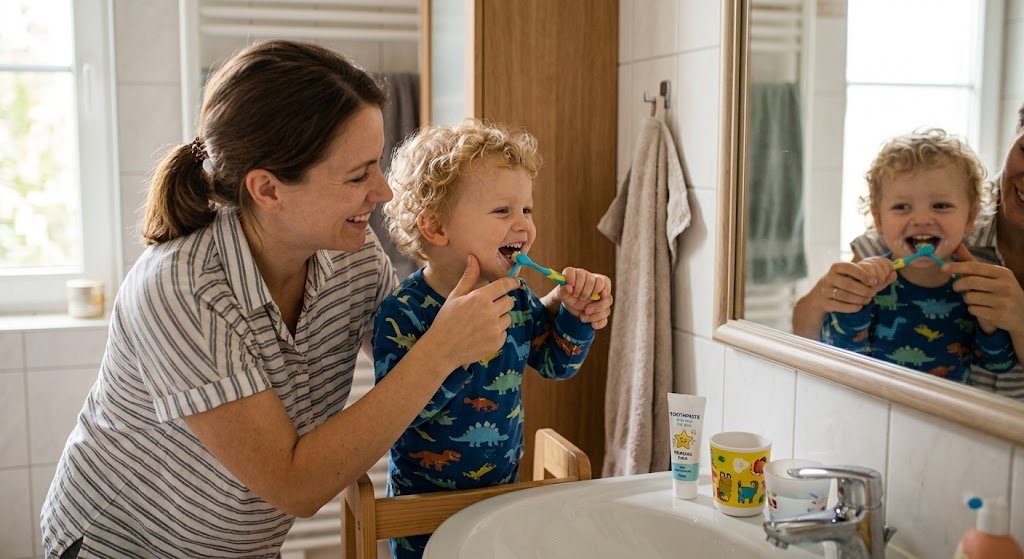
How Much Toothpaste Should a Toddler Use?
Using the correct amount helps limit how much toothpaste a young child may swallow while supporting an effective brushing routine.
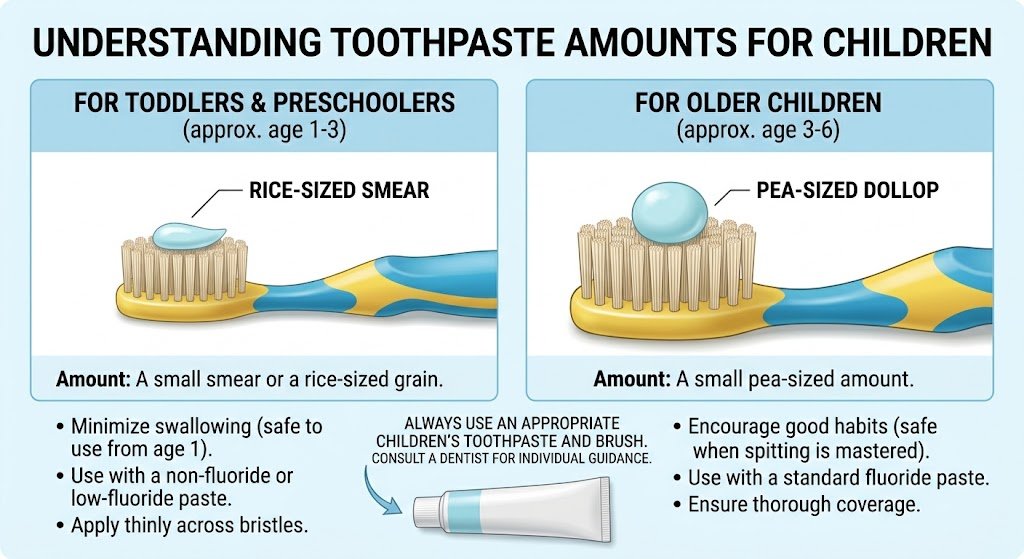
The ADA recommends these amounts for children using fluoride toothpaste:
| Child’s age | Recommended amount |
|---|---|
| Younger than 3 years | A smear about the size of a grain of rice |
| Ages 3–6 years | A pea-sized amount |
These are small quantities. A toddler does not need a long stripe of toothpaste across the toothbrush.
What does a rice-sized smear look like?
A rice-sized smear is a tiny dab spread across part of the toothbrush bristles. It should not cover the entire brush head.
To dispense the correct amount:
- Hold the toothbrush yourself.
- Squeeze out a tiny smear of toothpaste.
- Keep the tube out of your toddler’s reach.
- Brush the outside, inside, and chewing surfaces of the teeth.
- Encourage your child to spit out excess toothpaste when they are developmentally ready.
Young children may squeeze too much toothpaste onto a brush if allowed to dispense it independently. Keeping control of the tube helps prevent unnecessary use and accidental ingestion.
When should you switch to a pea-sized amount?
The usual transition occurs at age 3. From ages 3 through 6, the recommended amount is no more than a pea-sized portion.
Do not increase the amount simply because your toddler has more teeth or likes the taste. More toothpaste does not automatically mean better cleaning.
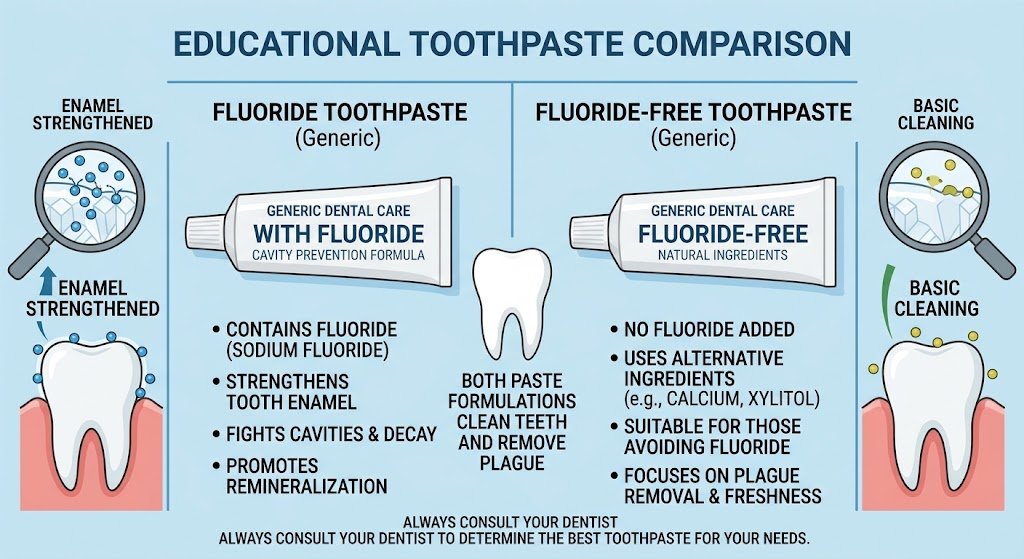
Fluoride vs. Fluoride-Free Toothpaste for Toddlers
Fluoride is a common concern for parents of toddlers because young children may swallow toothpaste while learning to brush.
Fluoride helps protect tooth enamel against acid attacks that contribute to decay. The recommended approach is to use a small, age-appropriate amount, supervise brushing, and teach children to spit when they are able.
What are the benefits of fluoride toothpaste?
Fluoride toothpaste helps prevent cavities and supports the health of primary teeth. These teeth matter for eating, speaking, and maintaining space for developing permanent teeth.
The important distinction is between appropriate use and excessive ingestion. Following the recommended quantity and supervising brushing helps limit the amount a young child may swallow.
For most children, fluoride toothpaste is a sensible choice unless their dental professional recommends a different approach for their individual circumstances.
Is fluoride-free toothpaste a good alternative?
Fluoride-free toothpaste may appeal to parents who prefer a particular ingredient profile or are concerned about their child’s swallowing habits. However, fluoride-free products should not automatically be considered equivalent to fluoride toothpaste for cavity prevention.
If you are considering a fluoride-free formula, ask a pediatric dentist about your child’s cavity risk and suitable alternatives. This is particularly important if your child has experienced cavities or has other factors that increase the risk of tooth decay.
Also remember that terms such as “natural,” “clean,” and “gentle” do not establish how effectively a toothpaste prevents cavities.
Should toddlers use whitening or charcoal toothpaste?
Whitening and charcoal toothpaste products are generally unnecessary for toddlers. Young children need routine oral care rather than cosmetic whitening.
Choose a product intended for children’s everyday dental care. If your child has unusual tooth discoloration or another dental concern, ask a dentist to assess the cause rather than trying a specialty whitening product.
How to Choose the Best Toothpaste for Your Toddler
The right toothpaste should suit your child’s age and dental needs while making consistent brushing manageable. It does not have to be the most expensive option on the shelf.
1. Check the ingredients and fluoride information
Read the ingredient panel and identify whether the toothpaste contains fluoride. Common fluoride compounds in toothpaste include sodium fluoride, stannous fluoride, and sodium monofluorophosphate.
The presence of a particular ingredient alone does not prove that a product is superior. The complete formulation, labeling, intended use, and supporting evidence all matter.
Where applicable, check whether the product has earned the ADA Seal of Acceptance for its stated claims. The Seal is not a guarantee that one product is better than every other accepted product.
2. Choose a flavor your child tolerates
Some toddlers dislike strong mint flavors, while others prefer a mild fruit flavor or another familiar taste.
Flavor is a practical consideration because a child who tolerates the taste may be easier to brush consistently. However, flavor preference does not replace the need for appropriate ingredients and correct brushing.
If your toddler resists brushing because of the taste, consider another age-appropriate flavor while keeping the rest of the selection criteria in mind.
3. Consider texture and foaming
Some toothpaste formulas foam more than others. A toddler who dislikes a strong foaming sensation may find a lower-foaming product more comfortable.
Foam is not a reliable measure of cavity-prevention effectiveness. Choose based on the formulation, age directions, and your child’s tolerance rather than how much foam appears during brushing.
4. Read the age directions carefully
Do not assume that every toothpaste marketed to children is intended for toddlers. Products can differ in ingredients, fluoride content, and recommended use.
Read the label and check the instructions before buying. If the age guidance is unclear, choose a product with clear directions or ask your child’s dentist for advice.
5. Compare price and package size
Toothpaste is a recurring purchase, so affordability matters. Compare the price per ounce rather than the price of each tube alone.
Multipacks may be convenient if you already know that your child tolerates the formula. Check the package size, expiration information, and storage requirements before buying several tubes.
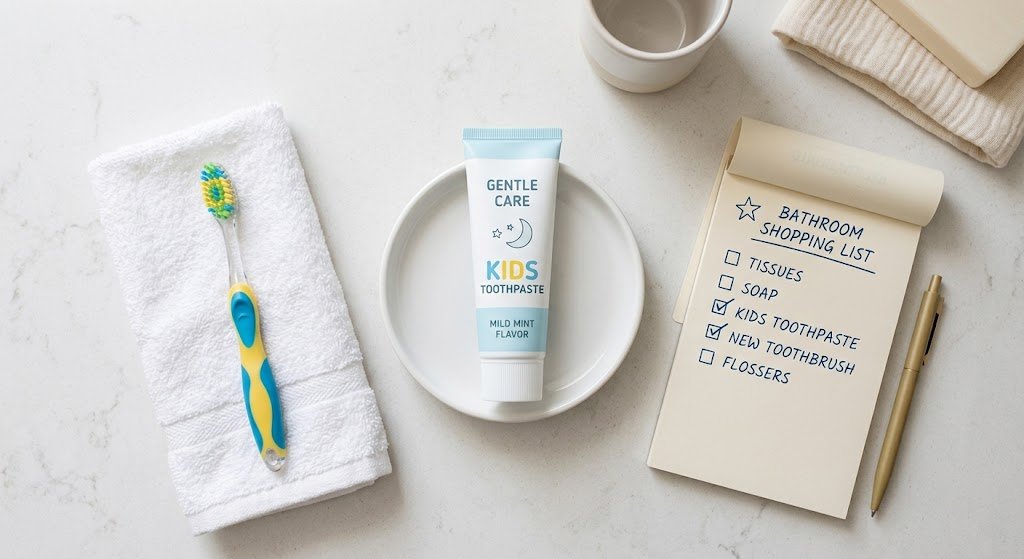
A simple toddler toothpaste buying checklist
Before adding a product to your cart, check that:
- It is appropriate for your child’s age.
- You understand whether it contains fluoride.
- The package provides clear directions.
- The flavor and texture are likely to be tolerable.
- The tube can be stored securely out of reach.
- Product claims are supported by credible evidence.
- The price and quantity fit your budget.
How to Brush a Toddler’s Teeth Correctly
Choosing the right toothpaste is only one part of oral care. A consistent routine and careful brushing help clean the surfaces where plaque can collect.
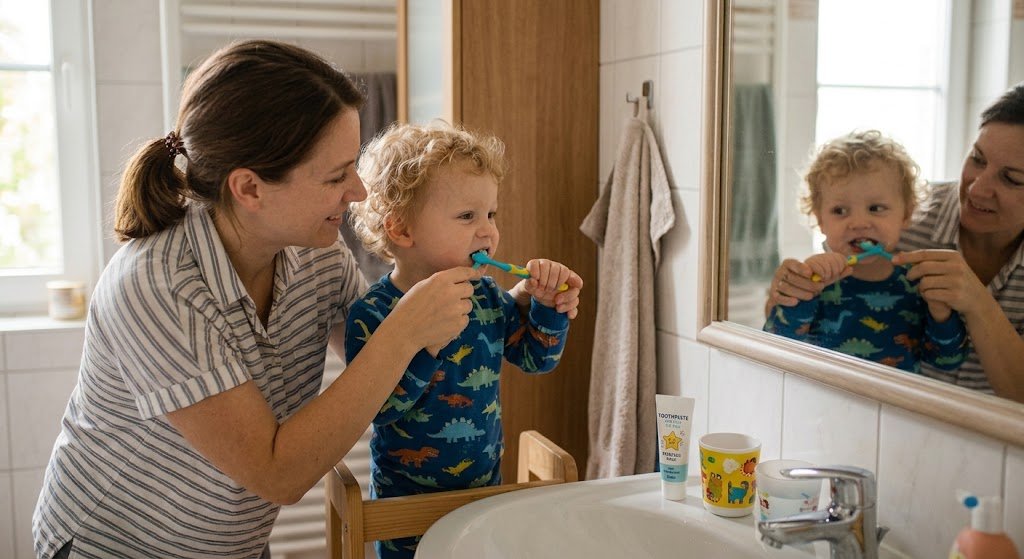
Use a child-size toothbrush with soft bristles and brush twice daily with the recommended amount of fluoride toothpaste. An adult should supervise and help throughout the process.
Follow a simple brushing routine
Step 1: Choose a suitable toothbrush.
Select a small brush head that fits comfortably in your toddler’s mouth. Soft bristles help clean teeth gently.
Step 2: Dispense the right amount of toothpaste.
Use a rice-sized smear for children younger than 3 and a pea-sized amount from ages 3 through 6.
Step 3: Brush every tooth surface.
Gently clean the outside, inside, and chewing surfaces of the teeth. Use small, controlled movements, paying attention to the gumline.
Step 4: Let your toddler participate.
Your child may want to hold the toothbrush or copy your movements. Allow supervised practice, then brush their teeth yourself to ensure they are cleaned thoroughly.
Step 5: Encourage spitting when possible.
Teach your toddler to spit out excess toothpaste as they develop the ability. Do not assume that a child who cannot spit reliably can manage toothpaste without supervision.
Step 6: Keep brushing predictable.
Brush in the morning and before bed. A familiar song, a simple timer, or a consistent sequence of steps may make the routine easier to maintain.
Does your toddler need an electric toothbrush?
Not necessarily. A manual toothbrush with soft bristles and a small head can work well when used correctly.
An electric toothbrush designed for young children may appeal to some families, but it is optional. If you choose one, check the manufacturer’s age guidance, brush-head size, and cleaning instructions.
What If Your Toddler Swallows Toothpaste?
Toddlers may swallow some toothpaste while learning to brush. The aim is to limit the amount used, supervise brushing, and prevent children from accessing the tube themselves.
A small accidental swallow of ordinary toothpaste used for brushing is different from eating a large quantity directly from the tube. Larger ingestions can cause symptoms such as nausea, vomiting, or diarrhea, and excessive fluoride ingestion can be dangerous.
How can you reduce the risk?
- Dispense toothpaste yourself.
- Use only the recommended amount.
- Keep the tube out of sight and reach.
- Supervise brushing closely.
- Teach your child to spit when developmentally ready.
What should you do after an accidental ingestion?
If your child has swallowed more than the small amount normally used for brushing, you are unsure how much was swallowed, or you find them eating toothpaste directly from the tube, contact Poison Control for individualized advice.
In the United States, Poison Control can be reached at 1-800-222-1222. Keep the toothpaste packaging available so you can identify the product and its ingredients.
Do not induce vomiting. If your child has severe symptoms, trouble breathing, a seizure, or becomes unresponsive, call 911 immediately.
Common Toddler Toothpaste Mistakes to Avoid
Even well-intentioned parents can make a few avoidable mistakes.
Using too much toothpaste. A thick stripe is unnecessary. Follow the recommended amount for your child’s age.
Choosing fluoride-free toothpaste without considering cavity risk. Do not assume that a fluoride-free formula offers the same cavity protection. Discuss alternatives with a pediatric dentist.
Letting a toddler dispense toothpaste independently. Young children may squeeze out too much or eat the product. Keep control of the tube.
Assuming expensive means better. A higher price does not automatically indicate greater effectiveness. Compare ingredients, labeling, evidence, and intended use.
Choosing based only on packaging. Colorful designs and appealing flavors may attract children, but they do not establish product effectiveness.
Giving up when brushing becomes difficult. Try a predictable routine, gentle encouragement, and a flavor your child tolerates. If brushing causes pain or resistance persists, seek advice from a pediatric dentist.
Toddler Toothpaste Buying Guide: What Is Worth Paying For?
For most families, a suitable toothpaste and a properly sized toothbrush are the essentials. Extra features are optional and should be judged by whether they solve a real problem.
| Product feature | Priority | Why it matters |
|---|---|---|
| Appropriate fluoride formulation | High for most children, subject to dental advice | Supports cavity prevention |
| Clear age directions | High | Helps parents select and use the product correctly |
| Soft, child-size toothbrush | High | Supports comfortable cleaning of small teeth |
| Tolerable flavor | Useful | May make brushing easier |
| Character-themed packaging | Optional | May make brushing more appealing |
| Premium or “natural” claims | Not automatically necessary | Marketing language does not prove better cavity prevention |
| Electric toothbrush | Optional | May suit some families but is not essential |
When is a multipack worth buying?
A multipack may be convenient if you have already confirmed that the toothpaste suits your child. Compare the total price, price per ounce, expiration information, and storage requirements.
Avoid buying several tubes simply because the unit price is lower if you have not yet checked the flavor, ingredients, or age directions.
Before buying through Amazon, verify the current ingredient list, package size, age directions, and seller information. Product listings and formulations can change, so an old review or product photograph should not replace checking the current packaging.
Frequently Asked Questions
What is the best toothpaste for toddlers?
For most toddlers, choose an age-appropriate fluoride toothpaste with clear labeling and directions. Consider your child’s dental needs, flavor preferences, and any advice from their dentist. Do not choose solely by price or marketing claims.
Should a 2-year-old use fluoride toothpaste?
Yes. The ADA recommends fluoride toothpaste from the first tooth, using a smear about the size of a grain of rice for children younger than 3. An adult should dispense the toothpaste and supervise brushing.
How much toothpaste should a 2-year-old use?
Use a small smear about the size of a grain of rice. A larger amount is unnecessary and increases the quantity that may be swallowed.
When should a child start using a pea-sized amount?
The ADA recommends a pea-sized amount for children ages 3 through 6. Follow your child’s dentist’s instructions if their individual needs differ.
Is fluoride-free toothpaste safe for toddlers?
Safety and cavity-prevention effectiveness are separate considerations. A fluoride-free product may be tolerated, but it should not automatically be considered equivalent to fluoride toothpaste for preventing cavities. Ask a pediatric dentist whether it is appropriate for your child.
What if my toddler refuses mint toothpaste?
Try an age-appropriate formula with a flavor your child tolerates. Check that the ingredients and age directions remain suitable. Flavor should not be the only selection criterion.
Can toddlers use adult toothpaste?
Do not assume an adult formula is appropriate for a toddler. Check the ingredients, directions, and intended age, and follow dental guidance. A children’s formula may make age directions and flavor selection easier, but the label alone does not guarantee suitability.
Should toddlers rinse after brushing?
Young children may not be able to spit reliably. Teach them to spit when developmentally ready and follow their dentist’s advice. Do not encourage them to swallow toothpaste or use mouthwash without appropriate professional guidance.
When should a toddler first visit the dentist?
The ADA recommends arranging a child’s first dental visit when the first tooth appears and no later than the first birthday. A dentist can assess cavity risk and help parents establish an appropriate preventive-care routine.
Conclusion: Choosing Toothpaste for Toddlers
Choosing toothpaste for toddlers does not have to be complicated. Focus on age-appropriate fluoride use, the correct amount, clear product directions, a soft child-size toothbrush, and adult supervision.
For children younger than 3, use a rice-sized smear of fluoride toothpaste. From age 3, use a pea-sized amount. Brush twice daily and consult your child’s dentist if you have questions about cavity risk, ingredients, or swallowing.
When shopping, compare verified ingredients, package directions, flavor, and price rather than relying on labels such as “natural” or “clean.” A suitable product and a consistent brushing routine matter more than unnecessary extras.
If you are ready to compare products, check the current labeling and choose an option that fits your child’s needs. Your child’s dentist can help you determine which formula is most appropriate for their individual oral-health situation.
