If you are pregnant and wondering whether you need to switch toothpaste, the short answer is: usually, no special toothpaste is required just because you are pregnant. What matters more is choosing a toothpaste that supports your oral-health needs and is comfortable enough for you to use consistently.
Fluoride toothpaste remains an important part of routine cavity prevention, and the American College of Obstetricians and Gynecologists (ACOG) recommends brushing twice a day with fluoridated toothpaste during pregnancy.
Pregnancy can also bring changes that make oral care more difficult. Nausea may make strong toothpaste flavors hard to tolerate, hormonal changes can contribute to gum inflammation, and frequent vomiting or reflux can expose teeth to stomach acid.
This guide explains what to look for in toothpaste during pregnancy, how to think about fluoride and other ingredients, what to do if toothpaste triggers nausea, and how to choose a product based on your actual dental needs.
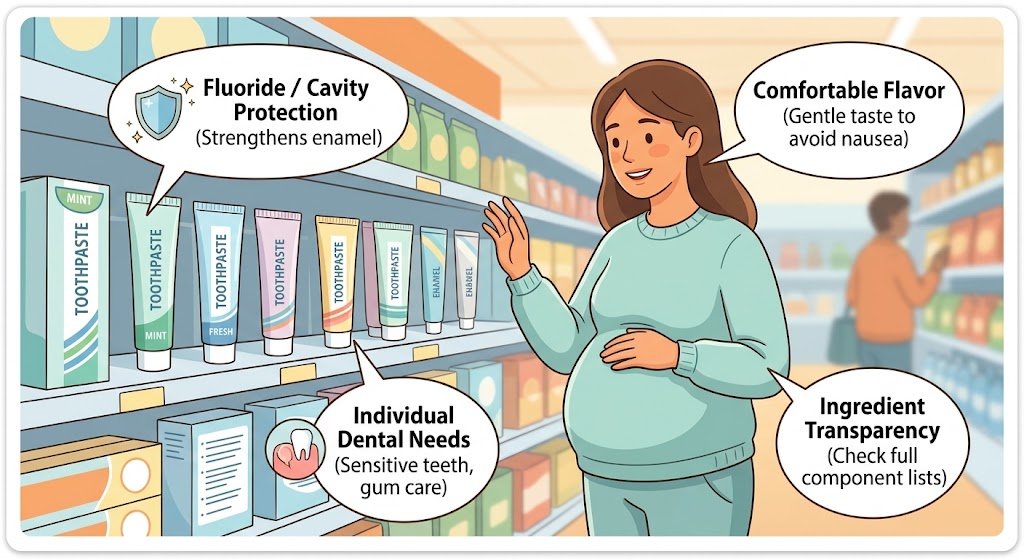
Is Toothpaste Safe During Pregnancy?
For most people, toothpaste can remain part of their normal oral-care routine during pregnancy. Pregnancy itself does not mean that you need to replace your everyday toothpaste with a product specifically labeled “pregnancy safe.”
Instead, the better question is:
Does your toothpaste provide the oral-health protection you need, and can you comfortably use it every day?
That distinction matters because pregnancy can change what feels comfortable without necessarily changing the basic goal of oral hygiene. You still want to remove plaque regularly and protect your teeth from cavities.
ACOG recommends maintaining good oral hygiene during pregnancy, including brushing twice a day with fluoridated toothpaste.
Can You Use Your Regular Toothpaste?
If your current toothpaste works well for you, there is generally no reason to change it solely because you became pregnant.
A practical starting point is to look at three things:
- Does it contain fluoride if cavity prevention is a priority for you?
- Can you tolerate the flavor and texture without triggering nausea?
- Does it address any dental problem you already have, such as sensitivity?
There is also no need to choose a toothpaste simply because its packaging uses terms such as “natural,” “clean,” or “non-toxic.” Those labels do not, by themselves, tell you whether a toothpaste is the right choice for cavity prevention or another specific dental need.
The ingredient list and active ingredients are more useful starting points than marketing language.
Is Fluoride Toothpaste Safe During Pregnancy?
Fluoride is one of the most important issues people consider when choosing toothpaste during pregnancy.
The available professional guidance does not recommend routinely avoiding fluoride toothpaste during pregnancy. ACOG recommends brushing twice daily with fluoridated toothpaste, and the ADA also identifies fluoride toothpaste as an important tool for preventing tooth decay.
Fluoride works primarily through topical contact with the teeth. Regular brushing with fluoride toothpaste helps support the teeth against the processes that lead to cavities.
That does not mean everyone must use exactly the same toothpaste. Individual dental history matters. Someone with frequent cavities may have different needs from someone whose main problem is sensitivity or difficulty tolerating strong flavors.
If your dentist has recommended a particular fluoride product or prescription toothpaste because of your cavity risk, follow that individualized advice rather than switching products based only on general pregnancy-related concerns.
What Should You Look for in Toothpaste During Pregnancy?
Once you know that you do not necessarily need a special pregnancy toothpaste, the next step is deciding what characteristics actually matter.
For most shoppers, the decision can be much simpler than toothpaste packaging makes it seem.
Look first at fluoride and cavity protection, then consider comfort, dental needs, and ingredient preferences.
Fluoride for Cavity Protection
If preventing cavities is your main priority, fluoride is an important attribute to consider.
The ADA explains that all toothpaste can help remove plaque through brushing, while fluoride toothpaste provides an additional cavity-prevention benefit.
That makes fluoride particularly relevant if you are choosing between a conventional fluoride toothpaste and a fluoride-free alternative.
The important point is not that every person must use one specific brand or formula. It is that the toothpaste should support the oral-health goal you are trying to achieve.
If you are unsure which fluoride formulation is appropriate for you, your dentist can help you choose based on your dental history.
Choose a Flavor You Can Actually Tolerate
Pregnancy can make certain smells and flavors much harder to tolerate.
A toothpaste that you normally enjoy may suddenly taste overwhelmingly strong. Mint, foaming, or even the smell of the toothpaste can trigger nausea or gagging for some people.
In that situation, comfort is not a trivial feature. If the toothpaste makes brushing difficult enough that you avoid brushing, a more tolerable product may be a practical improvement.
HRSA specifically recommends asking a dentist about toothpaste with little odor or taste when nausea makes toothpaste difficult to tolerate.
When shopping, you can compare products based on:
- Flavor intensity
- Foaming level
- Texture
- Aftertaste
- Whether the product makes you gag or feel nauseated
There is no need to choose the strongest mint simply because it feels more “fresh.” The better toothpaste is one you can use comfortably and consistently while still meeting your oral-health needs.
Choose Ingredients Based on Your Dental Needs
Ingredient lists can become overwhelming, especially when toothpaste brands use different combinations of active and inactive ingredients.
Rather than trying to identify a long list of ingredients as universally “good” or “bad,” start with the purpose of the product.
For example:
- Someone concerned mainly about cavities may prioritize fluoride.
- Someone with tooth sensitivity may look for a toothpaste formulated for sensitivity.
- Someone who dislikes strong flavors may prioritize a milder formula.
- Someone with a known ingredient sensitivity may need to avoid a specific ingredient based on professional advice.
- Someone interested in hydroxyapatite may want to understand how it compares with fluoride before choosing a fluoride-free product.
This approach is more useful than assuming that a shorter ingredient list automatically means a better toothpaste.
What About the ADA Seal of Acceptance?
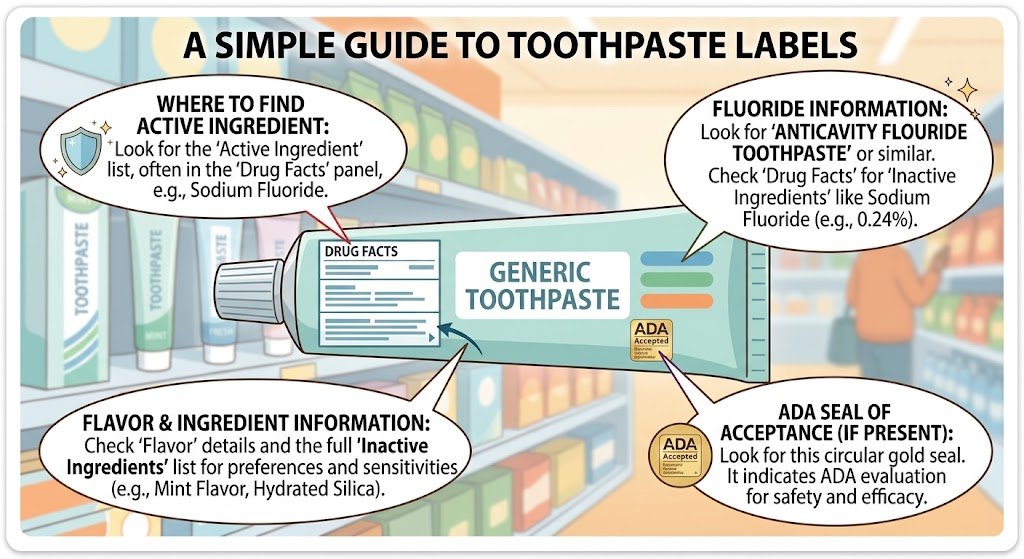
The ADA Seal of Acceptance can be a useful shopping signal when comparing toothpaste.
The ADA evaluates products submitted for the Seal against requirements related to safety and effectiveness. For cavity-protection toothpastes, the ADA also identifies fluoride as an important part of the product’s cavity-prevention function.
The Seal is not a substitute for considering your own needs, however. A product can meet an established standard and still have a flavor or texture that you personally cannot tolerate.
Think of the Seal as one useful piece of information, rather than the only factor in your decision.
Fluoride vs. Fluoride-Free Toothpaste During Pregnancy
The fluoride question deserves its own discussion because it is one of the most common reasons people start looking for a different toothpaste during pregnancy.
A pregnancy-specific concern does not automatically make fluoride-free toothpaste the better choice.
For cavity prevention, fluoride toothpaste has established professional support, including guidance from ACOG and the ADA.
Why Is Fluoride Commonly Recommended?
Fluoride helps strengthen teeth and supports their resistance to the processes that cause cavities.
For someone who is already at risk of tooth decay, removing fluoride from the toothpaste can therefore involve an important trade-off: you may be choosing a product that better matches your ingredient preferences but does not provide the same fluoride-based cavity-prevention benefit.
That trade-off should be understood before making the switch.
This is especially important if you have a history of frequent cavities, have been told that you are at elevated caries risk, or have received specific fluoride recommendations from your dentist.
When Might Someone Prefer Fluoride-Free Toothpaste?
People may choose fluoride-free toothpaste for different reasons, including personal ingredient preferences, taste, or interest in alternative ingredients such as hydroxyapatite.
That preference should not automatically be treated as a medical necessity during pregnancy.
If you prefer a fluoride-free toothpaste, consider discussing the choice with your dentist, particularly if cavity prevention is a significant concern for you.
A good product decision is not simply:
“Which toothpaste has the fewest ingredients?”
It is:
“Which toothpaste best fits my oral-health needs, preferences, and professional guidance?”
Is “Natural” Automatically Better?
No.
“Natural” describes a marketing or ingredient-positioning approach, not a guarantee of superior cavity protection or pregnancy-specific safety.
A toothpaste can be marketed as natural and still require careful consideration of its active ingredients and intended use. Likewise, a conventional toothpaste is not automatically inappropriate during pregnancy simply because it contains ingredients that sound unfamiliar.
If you prefer a natural or non-toxic toothpaste, evaluate it using the same basic questions:
- What is its active ingredient?
- What oral-health purpose does it serve?
- Does it provide the cavity protection you want?
- Can you comfortably use it twice a day?
- Does it fit any recommendations from your dentist?
This keeps the decision evidence-focused instead of turning pregnancy into a reason to fear ordinary toothpaste ingredients.
[ ARTICLE CONTINUES — NEXT PART STARTS WITH: H2: “What If Toothpaste Makes You Nauseous?” ]
Add a concise pregnancy safety disclaimerReduce repeated fluoride explanations
What If Toothpaste Makes You Nauseous?
For some people, pregnancy changes the way toothpaste feels and tastes. A toothpaste that was easy to use before pregnancy may suddenly trigger gagging or nausea.
If that happens, the goal is not to stop caring for your teeth. Instead, look for ways to make brushing easier to tolerate.
A milder toothpaste flavor may help. HRSA’s pregnancy oral-health guidance suggests asking a dentist about toothpaste with little odor or taste when nausea makes brushing difficult.
Try a Milder Flavor
Strong mint is one of the first things to reconsider if brushing makes you feel sick.
You can compare toothpaste based on:
- Mild or less intense flavor
- Lower sensory impact
- A texture you can tolerate
- Less foaming if foam triggers your gag reflex
- An aftertaste that does not make you nauseated
The right choice is personal. There is no benefit in choosing a toothpaste that makes you dread brushing if another suitable formula is easier to use consistently.
If you are comparing products on Amazon, read the ingredient and active-ingredient information rather than relying only on descriptions such as “fresh,” “natural,” or “gentle.”
Reduce Other Sensory Triggers
Sometimes the toothpaste itself is not the only problem.
The smell of the tube, the taste that remains after brushing, or brushing immediately after waking may contribute to nausea. Experimenting with the timing and environment of brushing can make the routine easier.
For example, if brushing immediately after waking triggers your gag reflex, you may find another time more manageable while still maintaining your twice-daily routine.
The important point is consistency. A toothpaste that you can tolerate is more useful than a theoretically appealing product that you regularly avoid.
Do Not Stop Brushing Completely
Nausea can make oral care frustrating, but pregnancy is not a reason to abandon regular brushing.
ACOG recommends maintaining oral hygiene during pregnancy, including brushing twice a day with fluoridated toothpaste.
If your usual toothpaste is difficult to tolerate, changing the flavor or formula may be more practical than stopping the routine.
If severe nausea or vomiting is making brushing consistently difficult, bring the problem up with your dentist or healthcare professional. They can help you find an approach that fits your situation.
What If You Vomit After Brushing or Eating?
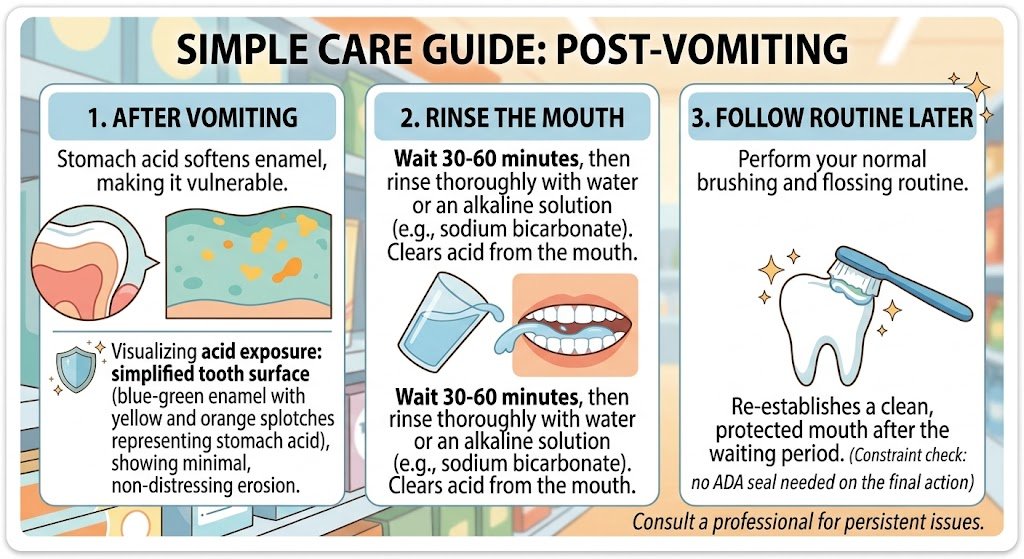
Vomiting introduces stomach acid into the mouth. Repeated acid exposure can affect tooth enamel, which is why people experiencing frequent pregnancy-related vomiting or reflux may need to pay extra attention to their teeth.
HRSA notes that vomiting and heartburn can expose teeth to stomach acid and recommends rinsing the mouth afterward with a baking-soda solution to help neutralize the acid.
Why Stomach Acid Matters
Tooth enamel is the hard outer layer of the tooth, but it can be affected by repeated exposure to acids.
This creates an important distinction between cavity prevention and acid exposure.
Fluoride toothpaste is useful for cavity prevention, but choosing a toothpaste does not eliminate the underlying problem if your teeth are repeatedly exposed to stomach acid.
If vomiting is frequent, oral-care habits after vomiting become part of the bigger picture.
What to Do After Vomiting
Rather than immediately scrubbing your teeth aggressively, first focus on getting the acid out of your mouth and following appropriate guidance for neutralizing it.
HRSA recommends rinsing with a mixture of baking soda and water after vomiting.
Because pregnancy symptoms vary, follow your dentist’s instructions if you have been given a specific plan for vomiting, reflux, enamel erosion, or tooth sensitivity.
When Reflux or Frequent Vomiting Needs Professional Advice
Occasional morning sickness is different from frequent vomiting or persistent reflux.
Talk with a dentist or healthcare professional if you notice:
- Increasing tooth sensitivity
- Tooth pain
- Changes in the appearance of your teeth
- Persistent mouth discomfort
- Frequent vomiting that is affecting your ability to maintain oral hygiene
- Ongoing reflux symptoms
A toothpaste change may help with comfort, but it cannot address every cause of enamel damage or dental symptoms.
Toothpaste for Common Dental Problems During Pregnancy
Pregnancy does not create one universal toothpaste requirement. Your existing dental needs still matter.
The best choice may therefore depend on whether your main concern is cavities, sensitivity, gum inflammation, or another oral-health issue.
Sensitive Teeth
If your teeth become sensitive during pregnancy, look for a toothpaste specifically formulated for sensitive teeth rather than choosing a product solely because it is marketed for pregnancy.
Sensitivity can have several causes, and toothpaste is only one part of managing it.
A desensitizing toothpaste may be useful for some people, but persistent or worsening sensitivity deserves professional evaluation.
If sensitivity occurs alongside frequent vomiting or reflux, mention both issues to your dentist. Acid exposure and sensitivity can overlap, so treating only the symptom may not address the underlying problem.
Bleeding or Inflamed Gums
Hormonal changes during pregnancy can make gums more susceptible to inflammation. HRSA notes that pregnancy can increase the likelihood of gum problems, including gingivitis.
If your gums bleed when you brush, that does not automatically mean your toothpaste is harmful.
Instead, think about the larger oral-care routine:
- Are you brushing regularly?
- Are you cleaning along the gumline?
- Are you flossing or using another interdental-cleaning method?
- Are the symptoms getting worse?
- Have you had a recent dental examination?
Changing toothpaste may improve comfort if a particular flavor or ingredient irritates you, but persistent gum bleeding should not simply be treated as a toothpaste-selection problem.
Higher Cavity Risk
Pregnancy does not mean that everyone will develop cavities, but maintaining effective cavity prevention remains important.
If you have a history of frequent cavities or your dentist has identified you as being at higher risk, fluoride may deserve particular attention when choosing toothpaste.
ACOG recommends brushing twice daily with fluoridated toothpaste during pregnancy.
If your dentist has recommended a specific fluoride concentration or prescription product, do not replace that recommendation with a generic “pregnancy-safe” product without discussing the change.
Dry Mouth
Some people experience changes in saliva or mouth comfort during pregnancy. If dry mouth becomes a concern, toothpaste is only one part of the solution.
Pay attention to:
- Regular brushing
- Cleaning between teeth
- Adequate fluid intake according to your healthcare provider’s guidance
- Cavity prevention
- Persistent symptoms that may require professional evaluation
A toothpaste marketed as “moisturizing” or “natural” should not automatically be assumed to solve dry mouth.
The product still needs to fit your broader oral-health needs.
Ingredients to Pay Attention To
Reading a toothpaste label can feel unnecessarily complicated. There may be several active and inactive ingredients, while different brands use different terminology for similar product functions.
The simplest approach is to separate active ingredients from personal preferences.
An active ingredient is included for a specific oral-health purpose. Other ingredients may affect flavor, texture, foaming, preservation, or other characteristics.
You do not need to treat every unfamiliar ingredient as a reason to avoid a toothpaste.
Fluoride
Fluoride is the most important ingredient to consider if your primary goal is cavity prevention.
Common fluoride compounds found in toothpaste include:
- Sodium fluoride
- Stannous fluoride
- Sodium monofluorophosphate
These are not simply different names for one ingredient; they are different fluoride compounds used in toothpaste formulations.
For pregnancy, the key point is that professional guidance supports the use of fluoridated toothpaste as part of routine oral care.
If you are unsure which fluoride formulation is appropriate, your dentist can help based on your individual oral-health history.
Stannous Fluoride
Stannous fluoride is one type of fluoride used in toothpaste.
When evaluating a toothpaste containing stannous fluoride, focus on what the product is designed to do and whether it fits your needs rather than assuming that the ingredient is automatically preferable or inferior simply because it has a different name.
For someone concerned about cavities, sensitivity, or other dental issues, the complete formulation and individual circumstances matter.
Sodium Fluoride
Sodium fluoride is another common fluoride compound used in toothpaste.
Again, the important question for a pregnant shopper is not whether the ingredient name sounds complicated. It is whether the toothpaste meets the person’s oral-health needs and is appropriate for their circumstances.
If you have received individualized instructions from your dentist, those instructions should take priority over general online guidance.
Sodium Monofluorophosphate
Sodium monofluorophosphate is another fluoride compound that may appear on a toothpaste ingredient label.
Seeing a different fluoride name does not by itself mean that a toothpaste is unsuitable during pregnancy.
When comparing products, look at the product’s intended oral-health benefit, active ingredient information, and any guidance relevant to your own dental needs.
Hydroxyapatite
Hydroxyapatite is another ingredient you may encounter when shopping for fluoride-free or alternative toothpaste.
It is particularly relevant to this site’s non-toxic toothpaste topic because some products use hydroxyapatite as an alternative active ingredient.
However, choosing hydroxyapatite toothpaste during pregnancy should be treated as a product-selection decision, not as a conclusion that fluoride toothpaste is unsafe.
If you are considering hydroxyapatite because you want a fluoride-free option, understand the difference between the two approaches before switching.
Flavoring and Essential Oils
Flavoring ingredients can matter more during pregnancy simply because nausea and sensory sensitivity may change.
An ingredient that never bothered you before may become unpleasant during pregnancy.
Essential oils also appear in some toothpaste formulations. If you have a known sensitivity or the product causes irritation, choose another formula and discuss persistent symptoms with a dental professional.
Avoid blanket claims that all essential oils are harmful during pregnancy. The relevant question is the specific product, its ingredients, the amount used, and the individual’s circumstances.
SLS and Foaming Ingredients
Sodium lauryl sulfate (SLS) is commonly used in some toothpastes as a foaming ingredient.
Some people prefer SLS-free toothpaste because they find certain formulas more comfortable, particularly if they are prone to irritation.
That is different from saying that SLS-containing toothpaste is inherently unsafe during pregnancy.
If a particular toothpaste irritates your mouth or makes brushing unpleasant, an SLS-free option may be worth considering as a personal preference.
[ ARTICLE CONTINUES — NEXT PART STARTS WITH: H2: “How to Choose the Right Toothpaste During Pregnancy” ]
Add actionable nausea-brushing alternativesClarify the post-vomiting brushing sequence
How to Choose the Right Toothpaste During Pregnancy
Choosing toothpaste during pregnancy does not have to be complicated. Instead of looking for a product marketed specifically for pregnancy, start with your actual oral-health needs.
A good decision usually comes down to four questions:
- Does it provide the cavity protection you need?
- Can you tolerate the flavor, smell, texture, and foaming?
- Does it address a specific problem such as sensitivity?
- Does the ingredient list fit your personal preferences and your dentist’s advice?
For most adults, fluoride toothpaste remains the standard choice for cavity prevention. The ADA recommends brushing twice daily with fluoride toothpaste, while HRSA specifically recommends fluoride toothpaste during pregnancy.
If You Have No Major Dental Problems
If your current toothpaste contains fluoride, feels comfortable, and does not make you nauseous, there may be no reason to change it simply because you are pregnant.
Pregnancy itself does not create a requirement to switch to a special toothpaste.
Your priority should be maintaining a routine you can follow consistently.
If You Have Morning Sickness
Choose a toothpaste that you can actually tolerate.
That might mean looking for:
- A milder flavor
- Less intense mint
- Less noticeable smell
- A texture that does not trigger gagging
- Less foaming if foam bothers you
- A toothpaste that does not leave an unpleasant aftertaste
HRSA specifically suggests asking about products with little odor or taste when nausea or vomiting makes oral care difficult.
If Your Teeth Are Sensitive
Look for a toothpaste designed for sensitive teeth rather than assuming that a toothpaste labeled “pregnancy safe” will solve the problem.
Some toothpastes contain desensitizing ingredients such as stannous fluoride, potassium compounds, or arginine. The best choice depends on the cause and severity of your sensitivity.
If sensitivity is new, severe, or getting worse, toothpaste alone may not be enough. A dental examination can help identify decay, enamel wear, gum recession, or another underlying problem.
If You Prefer Non-Toxic or Natural Toothpaste
This is where it is important to separate ingredient preference from oral-health performance.
A toothpaste being labeled natural, clean, organic, or non-toxic does not automatically mean it provides better cavity protection.
Instead, check:
- The active ingredient
- Whether it contains fluoride
- Its intended oral-health benefit
- Whether the flavor is tolerable
- Whether you have a specific dental need
- Whether your dentist has recommended something different
If you are considering fluoride-free or hydroxyapatite toothpaste during pregnancy, compare the options based on cavity-prevention needs rather than assuming that fluoride is unsafe simply because you are pregnant.
Pregnancy Toothpaste Buying Checklist
Before buying a toothpaste, use this simple checklist:
For cavity prevention:
Look for fluoride unless your dentist has given you a different recommendation.
For nausea:
Choose a mild flavor, low-odor formula, and texture you can tolerate.
For sensitive teeth:
Consider a toothpaste specifically formulated for sensitivity.
For ingredient-conscious shoppers:
Read the active and inactive ingredients instead of relying only on “natural” or “clean” claims.
For product verification:
If available, the ADA Seal of Acceptance can provide an additional quality signal. The ADA evaluates submitted products against specific safety and effectiveness requirements for their intended claims.
For high cavity risk:
Ask your dentist whether you need a particular fluoride concentration or prescription-strength product.
When Should You Talk to Your Dentist?
Pregnancy is a good time to stay connected with your dental provider, especially if you develop new or worsening symptoms.
Talk with your dentist if you have:
- Persistent bleeding or swollen gums
- Significant tooth sensitivity
- Tooth pain
- A suspected cavity
- Frequent vomiting that makes brushing difficult
- Repeated acid exposure from vomiting or reflux
- Severe mouth irritation
- Difficulty finding a toothpaste you can tolerate
- A history of frequent cavities
- Questions about switching from fluoride to fluoride-free toothpaste
You also do not need to wait until after pregnancy to receive necessary dental care. The ADA states that preventive, diagnostic, and restorative dental treatment can be safely provided during pregnancy.
If vomiting is frequent, remember that the issue is not only the toothpaste. Stomach acid can affect enamel. HRSA recommends rinsing after vomiting with a solution of one teaspoon of baking soda in one cup of water and advises avoiding brushing immediately after vomiting.
Your dentist and pregnancy-care provider can help you decide what is appropriate for your individual situation.
Frequently Asked Questions About Toothpaste During Pregnancy
Can I use regular toothpaste while pregnant?
Yes. Pregnancy does not automatically mean you need to replace your regular toothpaste. If it contains fluoride, is comfortable to use, and meets your dental needs, you can generally continue using it.
If the taste or texture suddenly makes you nauseous, switching to a milder formula may make brushing easier.
Is fluoride toothpaste safe during pregnancy?
Professional dental guidance recommends fluoride toothpaste for cavity prevention during pregnancy. HRSA recommends brushing twice daily with fluoride toothpaste, and the ADA identifies fluoride as an important anticaries ingredient.
If you have a specific medical or dental concern about fluoride exposure, discuss it with your dentist and pregnancy-care provider rather than removing fluoride automatically.
Should I use fluoride-free toothpaste during pregnancy?
Not simply because you are pregnant.
Some people prefer fluoride-free toothpaste for personal reasons or may be interested in alternatives such as hydroxyapatite. However, fluoride toothpaste has an established role in cavity prevention.
If you are considering a fluoride-free product and have a history of cavities or other risk factors, discuss the decision with your dentist.
Is natural toothpaste better during pregnancy?
Not necessarily.
“Natural” describes an ingredient or marketing approach; it does not by itself establish that a toothpaste is better at preventing cavities or more appropriate for your individual situation.
Look at the complete product rather than relying on one label. Consider the active ingredient, cavity protection, your dental needs, flavor tolerance, and professional recommendations.
What toothpaste is best for morning sickness?
There is no single best toothpaste for everyone with morning sickness.
A toothpaste with little odor or a mild flavor may be easier to tolerate. HRSA specifically recommends asking about products with little odor or taste when nausea or vomiting makes brushing difficult.
The important thing is finding a toothpaste that allows you to maintain your oral-hygiene routine.
What should I do if I vomit after brushing my teeth?
Avoid brushing immediately after vomiting because stomach acid can temporarily affect the tooth surface.
Instead, rinse your mouth. HRSA recommends a mixture of one teaspoon of baking soda in one cup of water after vomiting or heartburn.
If vomiting is frequent or you develop sensitivity, pain, or visible changes to your teeth, speak with your dentist.
Can pregnancy cause bleeding gums?
Pregnancy can increase the likelihood of gingivitis because hormonal changes can exaggerate the gum’s response to plaque.
Bleeding gums do not automatically mean your toothpaste is unsafe. Continue gentle oral hygiene and talk with your dentist if bleeding is persistent, heavy, painful, or worsening.
Can I use hydroxyapatite toothpaste while pregnant?
Hydroxyapatite toothpaste may be an option for people who prefer fluoride-free formulations, but pregnancy alone does not mean you need to replace fluoride toothpaste with hydroxyapatite.
If cavity prevention is an important concern, compare the two approaches carefully and discuss your individual risk with your dentist.
Do I need special “pregnancy toothpaste”?
Usually, no.
There is no need to choose toothpaste simply because the package says “for pregnancy.” A better approach is to select toothpaste based on your oral-health needs, cavity-prevention strategy, ingredient preferences, and how well you can tolerate the product.
The Bottom Line
The best toothpaste during pregnancy is usually not the one with the most pregnancy-focused marketing. It is the toothpaste that supports your oral health and that you can comfortably use consistently.
For most people, that means maintaining twice-daily brushing with fluoride toothpaste, choosing a milder product if nausea makes brushing difficult, and selecting specialized formulas when problems such as sensitivity require them.
If you prefer natural, fluoride-free, or hydroxyapatite toothpaste, make that decision based on your overall cavity risk and dental needs—not simply because you are pregnant.
And if you have persistent pain, bleeding, sensitivity, frequent vomiting, or difficulty maintaining oral hygiene, your dentist can help you choose the safest and most appropriate approach for your situation.
