For most people, the recommended routine is simple: brush your teeth twice a day with fluoride toothpaste for about two minutes each time. The two most important sessions are generally in the morning and before bed.
But brushing frequency is only part of the picture. How long you brush, how you brush, when you brush around meals, the type of toothbrush you use, and your individual dental needs can all affect your routine.
This guide explains how often you should brush your teeth, when those brushing sessions matter most, whether brushing after every meal is necessary, how long each session should take, and when a different routine may make sense.
How Often Should You Brush Your Teeth?
For most children, teens, and adults, twice-daily brushing is the standard recommendation. The American Dental Association (ADA) recommends brushing twice a day with fluoride toothpaste for two minutes.
A practical routine looks like this:
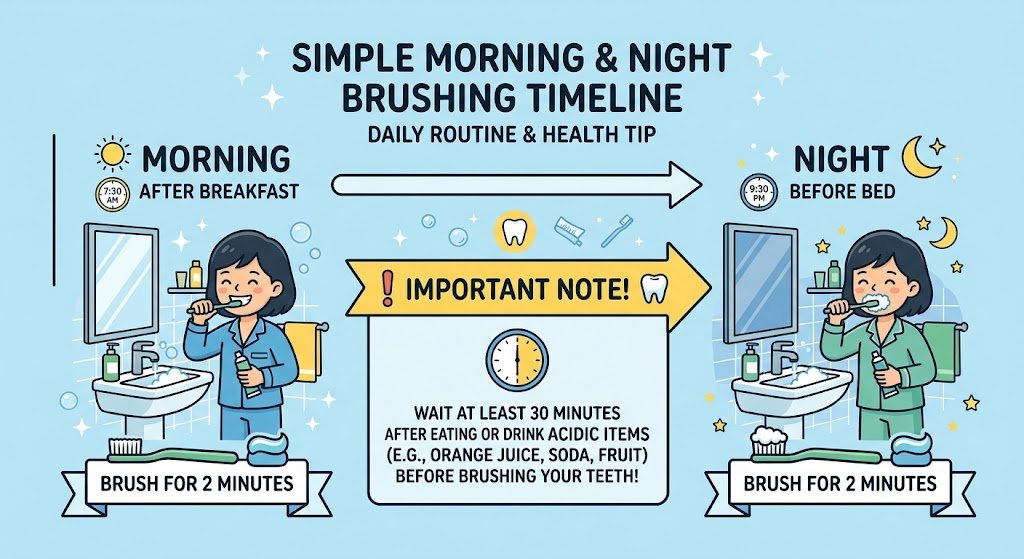
- Morning: Brush after you get up, taking your meal timing into account.
- Night: Brush before bed.
- Each session: Spend about two minutes brushing all tooth surfaces.
- Toothpaste: For most people, use a fluoride toothpaste unless your dentist has recommended something different.
The goal is not simply to brush as many times as possible. A consistent routine that thoroughly cleans the teeth and gums is more useful than adding extra brushing sessions without paying attention to technique, pressure, or timing.
Is Brushing Twice a Day Enough?
For most people, yes. Twice-daily brushing is the general evidence-based recommendation, rather than brushing once or repeatedly throughout the day. The ADA notes that evidence supports twice-daily brushing with fluoride toothpaste for reducing the risk of cavities and certain gum problems.
That does not mean everyone’s dental routine should be identical. Someone with braces, dry mouth, a high risk of cavities, gum disease, or another specific dental concern may receive additional instructions from a dentist.
Brushing twice a day also does not replace cleaning between the teeth. The ADA recommends cleaning between teeth once a day with floss or another interdental cleaner.
So a basic daily routine is better thought of as:
Brush twice daily + clean between teeth daily + follow individualized dental advice.
What Happens If You Only Brush Once a Day?
Brushing once a day is better than not brushing at all, but it does not provide the same routine recommended for most people.
Plaque builds up continuously on teeth and along the gumline. Regular brushing helps remove that plaque, while fluoride toothpaste provides additional protection against tooth decay. The ADA’s evidence review found twice-daily brushing to be preferable to lower brushing frequencies.
If you occasionally miss a brushing session, there is no need to compensate by brushing aggressively or repeatedly. Simply return to your normal routine at the next appropriate opportunity.
The bigger concern is when once-daily brushing becomes your normal habit. If mornings are consistently rushed, for example, making the nighttime session reliable is important—but the goal should still be to establish a twice-daily routine.
When Should You Brush Your Teeth?
The timing of your two daily brushing sessions matters because brushing is not just about hitting a number. You want to clean your teeth at useful points in your daily routine and avoid brushing in situations where your enamel may temporarily be more vulnerable.
For most people, the two key points are morning and before bed.
Should You Brush in the Morning?
Yes. Morning brushing is one of the two standard daily brushing sessions.
The exact timing can depend on your breakfast routine. Some people prefer brushing as soon as they wake up, while others prefer to brush after breakfast.
If you brush after eating or drinking something acidic, such as certain fruit juices or other acidic beverages, avoid immediately scrubbing your teeth. Acidic exposure can temporarily affect the tooth surface, so your dental routine may need to account for the timing of acidic foods and drinks. The ADA recommends considering water rinsing rather than brushing immediately after acidic intake.
For a simple routine, brushing when you wake up is an easy option because it removes plaque that accumulated overnight and makes the morning session less likely to be forgotten.
Should You Brush Before Bed?
Yes. Brushing before bed is one of the most important times to maintain consistently.
The reason is practical: brushing removes plaque and food debris from your teeth before you spend several hours sleeping. The ADA recommends brushing twice daily, with one of those sessions occurring before bedtime.
A useful nighttime sequence can be:
- Clean between your teeth.
- Brush for about two minutes with fluoride toothpaste.
- Spit out the toothpaste after brushing rather than treating the session like a mouthwash rinse.
The most important part is consistency. If you are trying to improve your oral-health routine, making nighttime brushing a non-negotiable habit is a good starting point.
Should You Brush Before or After Breakfast?
There is no need to make breakfast timing unnecessarily complicated. The important thing is maintaining your twice-daily routine while being sensible about acidic foods and drinks.
If you prefer to brush before breakfast, you can make brushing part of your morning routine immediately after waking.
If you prefer to brush after breakfast, give your mouth time after acidic foods or beverages rather than brushing immediately afterward. Rinsing with water can be a practical alternative immediately after acidic intake.
So instead of focusing on a universal rule that everyone must follow, choose a morning routine you can maintain consistently and adjust it if your dentist has given you specific advice.
Should You Brush After Every Meal?
Not necessarily. For most people, the standard recommendation is twice-daily brushing rather than brushing after every meal.
Brushing after every meal may sound like it would automatically produce cleaner teeth, but more brushing is not always better. Technique, brushing pressure, toothpaste, meal timing, and individual dental needs all matter.
If you have eaten something acidic, immediately brushing may not be the best choice. In that situation, rinsing with water can be a better immediate step while you wait before brushing.
If your dentist has specifically recommended additional brushing because of braces, a high cavity risk, gum problems, or another condition, follow that personalized guidance.
The practical takeaway: don’t feel that you need to brush after every meal just to maintain good oral hygiene. For most people, focus first on doing the recommended twice-daily sessions thoroughly and consistently.
How Long Should You Brush Each Time?
Frequency answers how often you should brush. Duration answers how well you use each session.
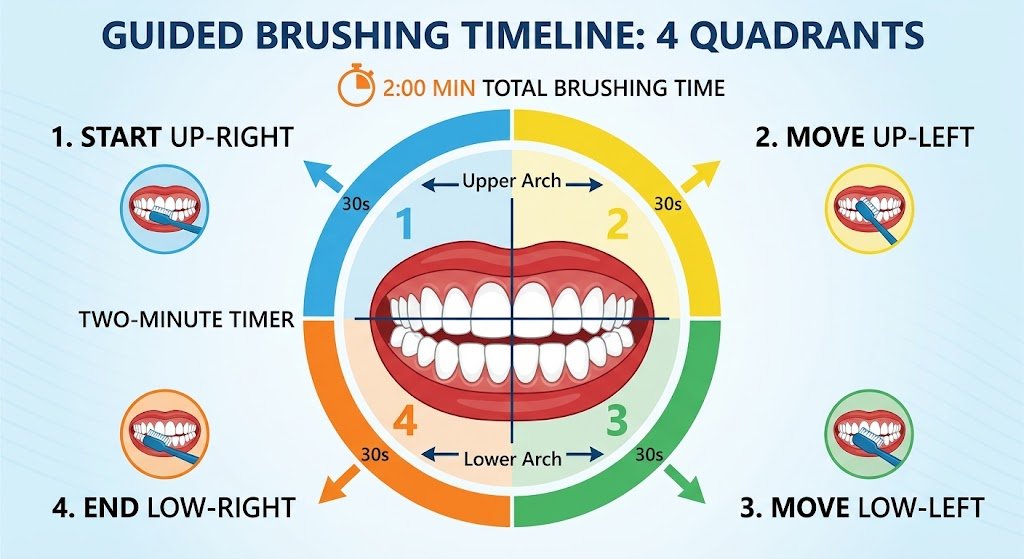
The ADA recommends brushing for about two minutes twice a day with fluoride toothpaste. Evidence reviewed by the ADA found that brushing for two minutes was associated with greater plaque reduction than brushing for one minute.
Why Two Minutes Matters
Two minutes gives you enough time to work systematically around the mouth instead of quickly brushing only the most visible teeth.
A simple approach is to divide your mouth into sections:
- Upper outside surfaces
- Upper inside surfaces
- Upper chewing surfaces
- Lower outside surfaces
- Lower inside surfaces
- Lower chewing surfaces
Use gentle, short strokes and pay attention to the gumline rather than aggressively scrubbing.
The ADA recommends a soft-bristled toothbrush and describes brushing techniques that include positioning the brush around the gumline and using gentle back-and-forth strokes.
Can a Toothbrush Timer Help?
Yes. A timer can be useful if you tend to stop brushing after only a short period or lose track of time.
This is where a toothbrush becomes more than a basic cleaning tool. A powered toothbrush or another toothbrush with a built-in timer can help you stay consistent with the recommended brushing duration.
You do not need an expensive electric toothbrush simply because the recommendation is two minutes. Manual and powered toothbrushes can both be used effectively.
If timing is your main problem, look for features such as:
- A two-minute timer
- Interval reminders that help you move around the mouth
- A comfortable handle
- Soft bristles or compatible soft brush heads
- Easy-to-find replacement brush heads
- Pressure feedback if you tend to brush too hard
The useful feature is the one that solves your actual problem. If you already brush thoroughly for two minutes with a manual toothbrush, switching to a powered model is not automatically necessary.
[ARTICLE CONTINUES — NEXT PART STARTS WITH: H2: “Can You Brush Too Often?”]
Sources used for this part
The brushing-frequency and two-minute guidance is based primarily on current ADA home-care and toothbrush guidance, with NIDCR/CDC guidance used for supporting fluoride and oral-hygiene context. ADA
Continue with “Continue” and I’ll start exactly at “Can You Brush Too Often?” without repeating Part 1.
Part 2
Can You Brush Too Often?
Brushing your teeth more often does not automatically mean better oral hygiene.
For most people, the goal is to brush twice a day thoroughly and gently, rather than repeatedly brushing throughout the day. Brushing too aggressively can irritate the gums and contribute to wear of tooth surfaces, particularly when combined with excessive pressure or an abrasive technique.
How often you brush is only one part of the equation. Pressure, technique, toothbrush bristle firmness, and exposure to acidic foods and drinks also matter.
If you feel that you need to brush more frequently because of your dental health, ask your dentist what routine is appropriate for you rather than simply increasing brushing frequency on your own.
A few habits can help keep brushing gentle:
- Choose a soft-bristled toothbrush.
- Use light pressure rather than scrubbing forcefully.
- Spend enough time cleaning all tooth surfaces.
- Pay attention to the gumline without aggressively brushing it.
- After acidic foods or drinks, avoid immediately brushing your teeth.
There is also an important distinction between cleaning more often and cleaning more effectively. If your normal two-minute sessions are rushed or incomplete, improving your technique may be more useful than adding another brushing session.
How Often Should Children Brush Their Teeth?
Children should generally brush their teeth twice a day, just like adults, using an age-appropriate amount of fluoride toothpaste and supervision or assistance when needed.
The details change as children grow. Young children may not have the coordination to brush every tooth surface effectively on their own, so parents or caregivers may need to help.
For children younger than 3, the ADA recommends using a smear of fluoride toothpaste about the size of a grain of rice. For children ages 3 to 6, a pea-sized amount is recommended. Children should also be encouraged to spit rather than swallow toothpaste. (ada.org)
The most useful approach is to make brushing a predictable part of the child’s morning and bedtime routine.
Parents can help by:
- Supervising brushing when the child still needs assistance.
- Encouraging gentle brushing rather than forceful scrubbing.
- Making sure all tooth surfaces are reached.
- Using an age-appropriate toothbrush.
- Helping children build a consistent morning and bedtime routine.
A child’s dentist can provide more specific guidance if the child has frequent cavities, orthodontic appliances, enamel problems, or other dental concerns.
Does Brushing Frequency Change for Special Dental Needs?
The twice-daily recommendation is a useful starting point, but some people need additional or customized oral-care instructions.
Dental conditions, medications, appliances, age, and other factors can change what an appropriate routine looks like. In these situations, the answer is not necessarily to brush more often. It may be more important to adjust the technique, toothpaste, cleaning method, or timing.
Brushing With Braces
Braces create additional areas where food and plaque can collect, making careful daily cleaning especially important.
If you have braces, your orthodontist or dentist may recommend additional cleaning steps or tools. These can include interdental cleaners, flossing aids, or specialized brushes designed to help clean around brackets and wires.
The important point is to maintain thorough cleaning rather than simply increasing the number of times you brush.
If you are considering an electric toothbrush, focus on features that make it easier to clean around orthodontic appliances without encouraging excessive pressure.
Brushing With Sensitive Teeth
If your teeth are sensitive, brushing harder or more frequently is not a good solution.
Instead, focus on gentle technique and consider whether a toothpaste formulated for sensitive teeth is appropriate for you.
Sensitivity can have different causes, including exposed dentin, gum recession, enamel wear, cavities, or other dental problems. Persistent or worsening sensitivity deserves professional evaluation rather than simply changing toothpaste.
Some toothpastes contain ingredients such as potassium nitrate or stannous fluoride that may be used in products designed for sensitivity. The appropriate choice depends on the individual’s dental needs.
Brushing With Gum Disease
If you have gingivitis or another form of gum disease, regular plaque removal remains important, but brushing should still be gentle.
Bleeding gums should not automatically be treated as a reason to stop brushing. However, persistent bleeding, swelling, tenderness, or other changes should be discussed with a dental professional.
A dentist or dental hygienist may recommend a more specific cleaning routine based on the condition of your gums.
The goal is to remove plaque effectively without damaging the gum tissue through aggressive brushing.
Brushing With Dry Mouth
Dry mouth can increase the risk of oral-health problems because saliva normally helps protect and lubricate the mouth.
People with persistent dry mouth may need a more individualized oral-care plan. Depending on the cause and severity, a dentist may recommend specific products or additional preventive measures.
Brushing twice a day with fluoride toothpaste remains an important part of routine care, but it may not be the only step needed.
If dry mouth is persistent, especially when related to medication or another health issue, discuss it with a healthcare professional or dentist.
Brushing During Pregnancy
Pregnancy does not mean you should automatically brush more frequently. Maintaining a consistent twice-daily brushing routine remains important.
Hormonal changes during pregnancy can affect the gums, and some people experience nausea or vomiting that makes oral care more difficult.
If vomiting or frequent acid exposure is an issue, avoid immediately brushing after vomiting. Rinsing with water first and asking your dental professional about the best routine can help protect your teeth.
If pregnancy-related nausea makes brushing difficult, especially because of a strong gag reflex, talk with your dentist about practical alternatives for maintaining oral hygiene.
How to Make Brushing Twice a Day a Habit
Knowing how often you should brush is easy. Making the routine automatic can be harder.
The best routine is one you can maintain consistently. Instead of relying on motivation, connect brushing to habits you already have.
Make Morning Brushing Automatic
Choose one predictable point in your morning.
For example:
Wake up → bathroom → brush → continue with your morning routine.
If you prefer brushing after breakfast, make that part of the same predictable sequence.
The goal is to remove the need to decide whether you will brush each morning.
Make Nighttime Brushing Non-Negotiable
Nighttime is often where routines fail. You may be tired, distracted, or ready to go to sleep.
A simple solution is to move brushing earlier in your evening routine rather than waiting until you are already in bed.
For example:
Finish dinner → clean between teeth → brush → get ready for bed.
This makes brushing less dependent on whether you remember it at the end of the night.
Use a Timer if You Rush
If you frequently think you brushed for two minutes but actually stop much sooner, a timer can remove the guesswork.
You can use:
- A phone timer
- A bathroom timer
- A manual toothbrush with a separate timer
- An electric toothbrush with a built-in timer
The important thing is not the technology itself. It is whether the tool helps you consistently complete a thorough two-minute brushing session.
Keep the Right Supplies Easy to Reach
A routine becomes easier when the tools you need are already available.
Keep your toothbrush and toothpaste somewhere convenient, and replace worn toothbrushes or brush heads when necessary.
If you have a specific dental need, such as sensitivity or braces, make sure the products recommended by your dental professional are easy to incorporate into your normal routine.
What Type of Toothbrush Should You Use?
Once you know that brushing twice a day for about two minutes is the goal, the next question is often: What toothbrush should you use?
There is no single toothbrush that every person needs.
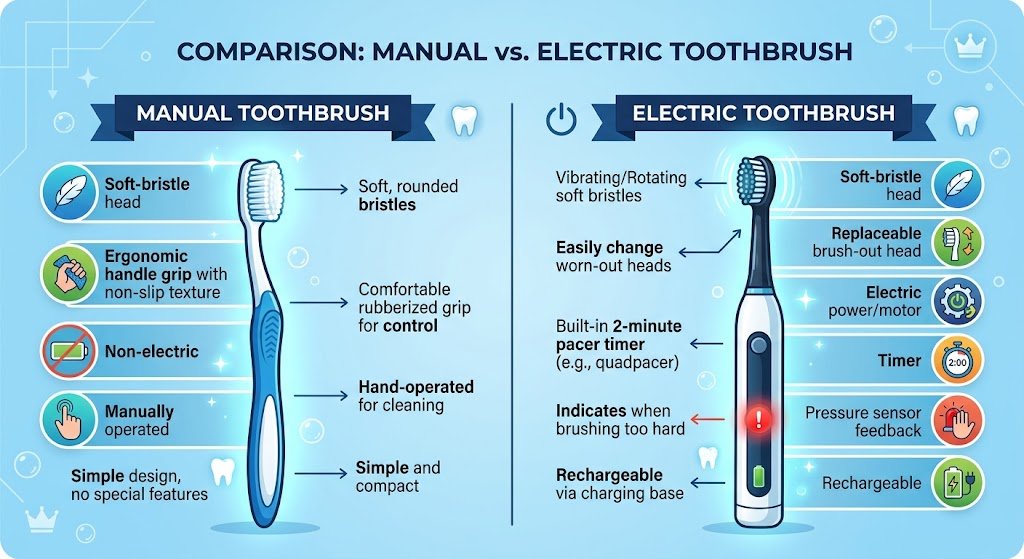
The ADA notes that both manual and powered toothbrushes can be effective, and recommends choosing a toothbrush with soft bristles. (ada.org)
The better choice is the one that allows you to clean your teeth thoroughly, comfortably, and consistently.
Manual Toothbrush
A manual toothbrush can be a simple and effective option.
When choosing one, look for:
- Soft bristles
- A comfortable handle
- A head size that allows you to reach the teeth easily
- A design you can use without excessive pressure
A manual toothbrush may be especially appealing if you prefer simplicity, do not want to recharge a device, or want a lower-cost option.
Electric Toothbrush
A powered toothbrush can make some parts of the routine easier, particularly for people who struggle with brushing technique, consistency, or timing.
Some models include features such as:
- Built-in timers
- Brushing intervals
- Pressure sensors
- Different cleaning modes
- Replaceable brush heads
These features can be useful, but more features do not automatically mean better oral hygiene.
When comparing electric toothbrushes, think first about your actual need. If you mainly forget when two minutes have passed, a timer may be more useful than a long list of additional modes.
Soft-Bristle Toothbrush
For routine brushing, soft bristles are generally recommended. They can clean plaque effectively while reducing the temptation to use excessive force. (ada.org)
Harder bristles are not automatically better at removing plaque. Cleaning effectiveness depends on the overall brushing technique, coverage, and consistency.
If you notice that your gums are frequently irritated after brushing or you have a habit of scrubbing aggressively, pay particular attention to pressure and bristle softness.
Do You Need a Toothbrush With a Timer?
No—but a timer can be helpful.
If you regularly brush for less than two minutes, a built-in timer can make it easier to follow the recommended duration without watching the clock.
A timer is particularly useful when it solves a real problem:
Problem: You consistently stop brushing too early.
Potential solution: Choose a toothbrush with a two-minute timer.
If you already use a manual toothbrush and naturally brush for around two minutes, you do not need to buy a powered toothbrush just to meet the time recommendation.
When comparing toothbrushes, prioritize useful features over unnecessary complexity. A comfortable handle, soft bristles, appropriate brush-head size, and easy replacement of worn brush heads may matter more to your everyday routine than having every available feature.
When Should You Replace Your Toothbrush?
Brushing twice a day is only useful if your toothbrush or brush head is still in good condition.
The ADA recommends replacing your toothbrush or electric toothbrush head every three to four months, or sooner if the bristles become frayed or worn. (ada.org)
A worn toothbrush may not clean as effectively as one with intact bristles. You also do not need to wait for a specific calendar date if the bristles become visibly damaged earlier.
Look for signs such as:
- Frayed or flattened bristles
- Bristles spreading in different directions
- Visible wear on the brush head
- A brush that no longer feels comfortable against your teeth and gums
Children may wear out toothbrushes sooner because they sometimes chew on the bristles or use more force while learning to brush.
If you use an electric toothbrush, the same basic principle applies to the replaceable brush head. Follow the replacement guidance for your specific model while also paying attention to visible bristle wear.
Replacing the brush head is therefore part of maintaining your brushing routine—not a reason to increase how often you brush.
Frequently Asked Questions
How often should you brush your teeth?
For most people, brush your teeth twice a day for about two minutes each time, using fluoride toothpaste. The ADA recommends this routine for adults and children, with age-appropriate toothpaste amounts for young children. (ada.org)
Your dentist may recommend a different or more detailed routine if you have specific dental needs.
Is brushing twice a day enough?
For most people, twice-daily brushing is the standard recommendation. It should be combined with cleaning between the teeth daily and regular dental care.
Brushing more frequently is not automatically necessary or better. If you have a condition such as braces, gum disease, high cavity risk, or persistent dry mouth, your dentist may recommend additional steps.
Should you brush after every meal?
Not necessarily. Most people do not need to brush after every meal.
Twice-daily brushing is the standard recommendation. If you have consumed acidic foods or drinks, avoid brushing immediately afterward. Rinsing with water can be a practical immediate step while you wait before brushing. (adanews.ada.org)
If your dentist has recommended additional brushing, follow that personalized advice.
Should you brush before or after breakfast?
Either can work as part of a consistent morning routine, but the timing matters if breakfast includes acidic foods or drinks.
If you brush after breakfast, avoid brushing immediately after acidic exposure. You can rinse with water and wait before brushing.
The most important thing is to maintain your overall twice-daily routine rather than becoming overly focused on one exact morning schedule.
Should you brush before bed?
Yes. Nighttime brushing is one of the two recommended daily brushing sessions.
Brushing before bed helps remove plaque and food debris accumulated during the day and allows fluoride toothpaste to remain part of your nighttime oral-care routine.
For many people, making nighttime brushing automatic is one of the easiest ways to improve consistency.
Can you brush your teeth too often?
More brushing is not automatically better.
Brushing with excessive force, using an overly aggressive technique, or repeatedly brushing around acidic exposure can contribute to irritation or tooth-surface wear.
For most people, focus on twice-daily brushing with gentle technique rather than trying to maximize the number of brushing sessions.
If you believe you need to brush more frequently because of your dental condition, ask your dentist for individualized advice.
How long should you brush your teeth?
Aim for about two minutes per brushing session.
A timer can be useful if you tend to stop too soon. You can use a phone timer, a separate timer, or a toothbrush with a built-in timer.
The goal is not to brush as hard as possible for two minutes. Use gentle pressure and make sure you reach the outside, inside, and chewing surfaces of your teeth.
How often should children brush?
Children should generally brush twice a day.
Young children may need help from a parent or caregiver because they may not yet have the coordination needed to clean their teeth thoroughly.
The amount of fluoride toothpaste should also be appropriate for the child’s age. For children younger than 3, the ADA recommends a smear about the size of a grain of rice; for children ages 3 to 6, a pea-sized amount is recommended. (ada.org)
Does an electric toothbrush change how often you should brush?
No. Switching from a manual toothbrush to an electric toothbrush does not mean you should automatically brush more often.
The standard goal remains twice-daily brushing for about two minutes.
An electric toothbrush may make certain aspects of the routine easier, such as timing or controlling pressure, depending on the model and how it is used.
The important factor is effective, consistent brushing—not whether the toothbrush is manual or powered.
How often should you replace your toothbrush?
The ADA recommends replacing your toothbrush or electric toothbrush head every three to four months, or sooner if the bristles become frayed or worn. (ada.org)
If the bristles are visibly worn before that point, replace the toothbrush or brush head rather than continuing to use it until the calendar reaches three months.
Conclusion
So, how often should you brush your teeth?
For most people, the answer is twice a day for about two minutes each time with fluoride toothpaste. The two most important sessions are in the morning and before bed.
But a good oral-care routine is about more than counting brushing sessions. Use gentle pressure, choose a soft-bristled toothbrush, clean between your teeth daily, and pay attention to the timing of brushing after acidic foods and drinks.
If you have braces, sensitive teeth, gum disease, dry mouth, pregnancy-related oral changes, or another specific dental concern, your dentist may recommend additional or modified care.
And when choosing a toothbrush, focus on the features that actually help you maintain the routine. A simple manual toothbrush can be perfectly suitable, while a powered toothbrush with a timer or pressure feedback may be useful if those features address a specific problem.
If your current routine is inconsistent, don’t try to overhaul everything at once. Start with the two daily brushing sessions, make them predictable, and build from there.
