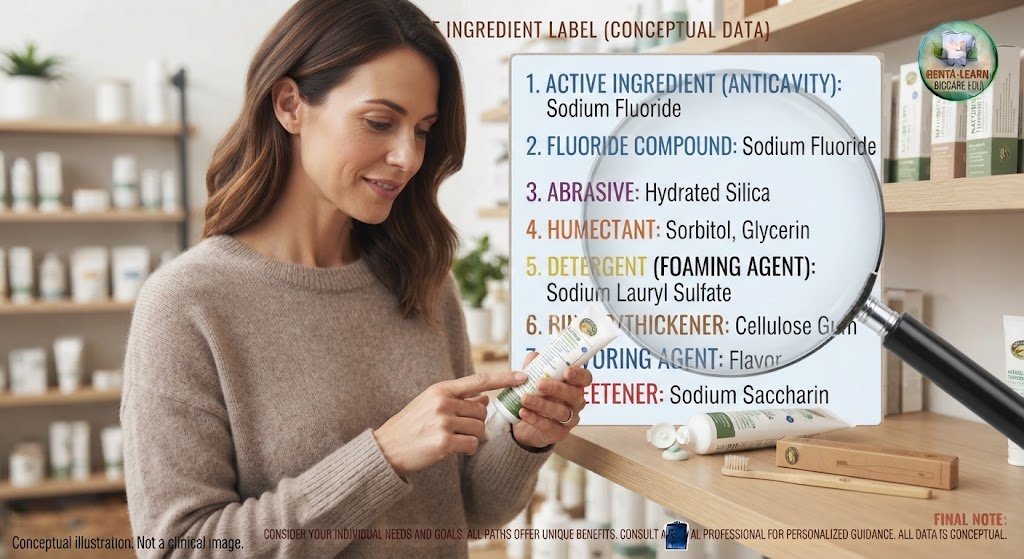
Choosing a toothpaste can feel surprisingly complicated. One product may say “natural,” another “clean,” another “SLS-free,” while online ingredient lists may warn you to avoid everything from fluoride to glycerin.
The problem is that not every ingredient people call “bad” or “toxic” is actually something everyone needs to avoid. Some ingredients have legitimate oral-health purposes, while others may cause irritation or be a concern for people with specific sensitivities.
This guide explains which toothpaste ingredients may be worth avoiding, why people avoid them, what the evidence says, and what to look for instead. You’ll also learn how to read a toothpaste label without having to treat every unfamiliar chemical name as a red flag.
Which Toothpaste Ingredients Should You Avoid?
There isn’t one universal list of toothpaste ingredients that every person should avoid.
A better way to look at the label is to separate ingredients into three groups:
- Ingredients that may cause irritation or reactions in some people
- Ingredients that may not fit your personal preferences or oral-health needs
- Ingredients that are commonly criticized online but have legitimate uses in toothpaste
For example, sodium lauryl sulfate (SLS) is a detergent used to create foam. Some people with recurrent mouth ulcers or oral irritation may prefer an SLS-free toothpaste. Research has found potential benefits from SLS-free toothpaste for people with recurrent aphthous ulcers, although the overall evidence is not a reason to say that SLS is harmful to everyone.
Likewise, fluoride should not simply be placed on a “bad ingredients” list. Fluoride is an active anticaries ingredient used to help prevent tooth decay, and FDA regulations specify fluoride compounds and concentrations for OTC anticaries dentifrices.
Here is a practical starting point:
| Ingredient or category | Why some people avoid it | What you should know |
| Sodium lauryl sulfate (SLS) | Possible oral irritation; some people prefer less foaming | Not everyone needs to avoid it |
| Certain flavoring agents | Can contribute to irritation or allergic reactions in susceptible people | Natural and artificial flavors can both matter |
| Essential oils | Some can trigger irritation or allergic reactions | “Natural” does not automatically mean irritation-free |
| Triclosan | Regulatory and formulation concerns | Not a current mainstream U.S. toothpaste ingredient |
| Known personal allergens | Can trigger individual reactions | Your own reaction history matters most |
| Highly abrasive formulations | May be a concern with tooth wear or sensitivity | One ingredient alone does not tell you the finished toothpaste’s abrasivity |
| Charcoal formulations | Limited whitening evidence and potential abrasivity concerns | Not automatically a healthier alternative |
| Some whitening formulas | May be less suitable for people with sensitivity or wear concerns | The exact formulation matters |
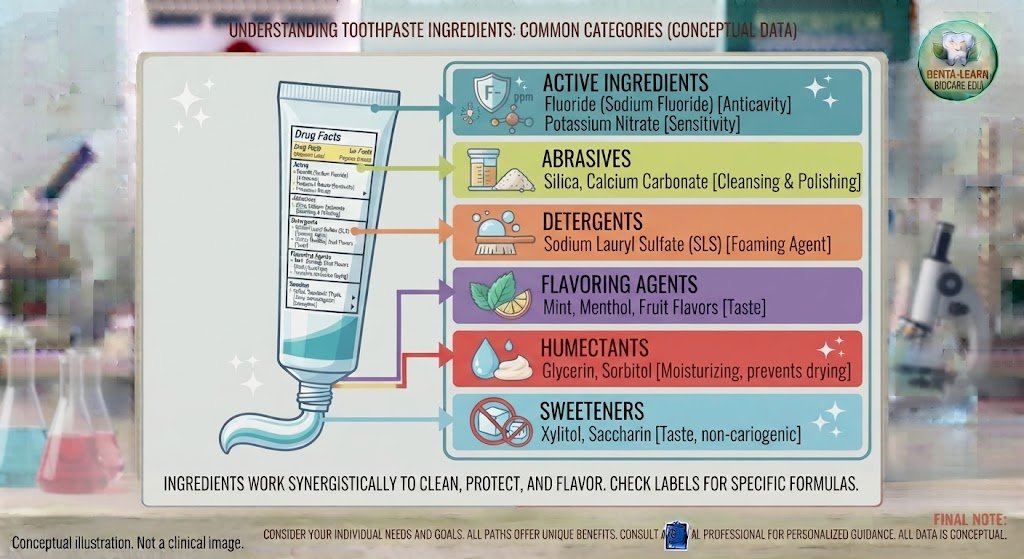
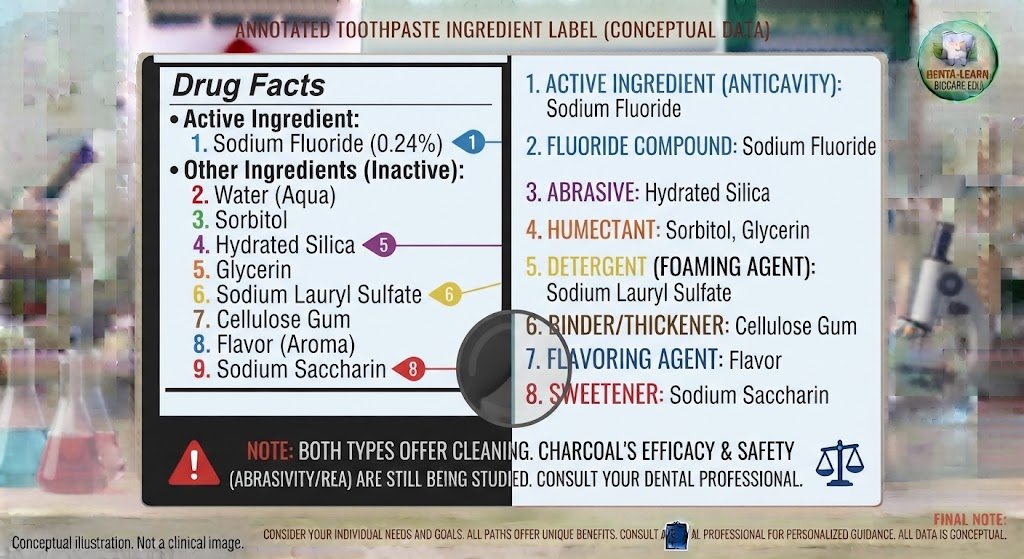
The American Dental Association explains that toothpaste can contain abrasives, detergents, flavoring agents, sweeteners, humectants, thickeners and other formulation ingredients. These ingredients serve different purposes, so judging an entire toothpaste based on one ingredient can be misleading.
How to Decide Whether a Toothpaste Ingredient Is Actually a Problem
Before deciding that an ingredient belongs on your personal “avoid” list, ask five questions.
What Does the Ingredient Do?
First, identify the ingredient’s function.
Is it there to:
- Prevent cavities?
- Clean teeth?
- Remove surface stains?
- Create foam?
- Keep the toothpaste moist?
- Improve texture?
- Add flavor?
- Prevent the formula from spoiling?
- Reduce sensitivity?
This matters because an ingredient cannot be evaluated properly without understanding why it is included.
For example, the ADA identifies abrasives such as silica and calcium carbonate as ingredients that help clean teeth and remove surface stains. It also identifies detergents such as SLS as ingredients used for foaming action and humectants such as glycerol, propylene glycol and sorbitol as ingredients that help minimize water loss.
Why Is It Included?
An ingredient being difficult to pronounce doesn’t make it unnecessary.
Likewise, an ingredient with a familiar name isn’t automatically beneficial.
The important question is whether the ingredient has a legitimate role in the finished formulation and whether that role matters to your needs.
This is especially important when comparing “natural” and conventional toothpastes. A natural product may still contain active ingredients, abrasives, flavoring agents and other components that can affect how the toothpaste performs or how well you tolerate it.
What Is the Actual Concern?
Try to identify the specific concern rather than relying on a broad label such as “toxic.”
For example, a concern might be:
- Oral irritation
- Allergic reaction
- Recurrent mouth ulcers
- Excessive abrasion
- Sensitivity
- Personal ingredient preference
- Concern about unnecessary additives
These are very different issues.
An ingredient that may irritate a sensitive person is not necessarily dangerous to everyone who uses it.
Does the Evidence Support Avoiding It?
This is where many online ingredient lists become misleading.
A blog or social-media post can label an ingredient “harmful,” but that does not tell you:
- How strong the evidence is
- Whether the research involved humans
- Whether the effect occurs at toothpaste concentrations
- Whether the concern applies to everyone
- Whether the ingredient provides a useful oral-health benefit
For a health-related topic, prioritize dental organizations, regulatory sources and peer-reviewed research over unsourced ingredient lists.
Who Is Most Likely to Care?
Some ingredient concerns are highly individual.
Someone who experiences recurring oral irritation may reasonably be more interested in an SLS-free toothpaste than someone who has never experienced a reaction.
Similarly, someone with tooth sensitivity may care more about abrasivity and sensitivity-focused ingredients than someone whose main goal is stain removal.
This is why the best toothpaste isn’t determined by a universal “cleanest ingredient list.”
It is determined by what you need your toothpaste to do and which ingredients you personally tolerate.
Toothpaste Ingredients Some People May Want to Avoid
Sodium Lauryl Sulfate (SLS)
Sodium lauryl sulfate, usually listed as SLS, is one of the most commonly discussed toothpaste ingredients.
Its primary role is as a detergent or surfactant. It helps toothpaste foam and contributes to the cleaning process. The ADA lists SLS among detergents commonly used in toothpaste for foaming action.
So why do some people want to avoid it?
The concern is mainly related to oral irritation and sensitivity of the mouth’s soft tissues. A 2022 scoping review found reports of mucosal irritation, inflammation and other oral effects associated with SLS-containing toothpaste, while also noting that more research is needed.
There is also evidence specifically involving people with recurrent aphthous ulcers, commonly called canker sores. A systematic review of randomized trials found that SLS-free toothpaste reduced several ulcer-related outcomes compared with SLS-containing toothpaste, although the authors noted that additional well-designed research is still needed.
That leads to a more useful conclusion than simply calling SLS “bad”:
If SLS appears to irritate your mouth or you frequently experience mouth ulcers, trying an SLS-free toothpaste may be reasonable. If you tolerate SLS without problems, there is not a general rule that every person must eliminate it.
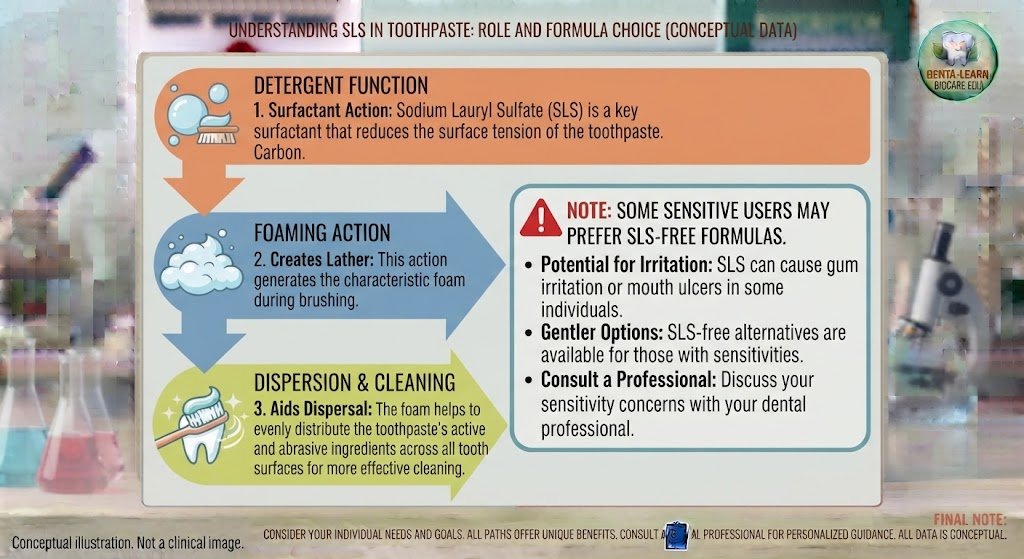
If you’re specifically looking for an SLS-free product, check the exact ingredient list rather than assuming that a toothpaste labeled “natural,” “gentle,” or “clean” is automatically SLS-free.
Certain Artificial Flavors and Flavoring Agents
Flavoring makes toothpaste easier and more pleasant to use.
Common toothpaste flavors include mint varieties, cinnamon and other flavor systems. The problem is not that every flavoring ingredient is inherently harmful. The concern is that some people can develop irritation or allergic reactions to particular flavoring substances.
The ADA identifies flavoring agents as common toothpaste ingredients and notes that certain flavoring ingredients can be associated with oral or perioral contact reactions in susceptible individuals.
This means “artificial flavor” should not automatically be interpreted as “unsafe.”
Instead, consider your own tolerance.
If a particular toothpaste repeatedly causes:
- Burning
- Redness
- Peeling or sloughing of the oral tissue
- Swelling
- Unusual soreness
- Irritation around the lips or mouth
then the flavoring system may be worth investigating with a dental professional.
A 2026 retrospective study and scoping review of toothpaste-induced contact stomatitis also highlights that toothpaste reactions can present with symptoms such as irritation, burning, swelling and discomfort.
Essential Oils
Essential oils are another category that often gets marketed as a sign of a “natural” toothpaste.
Peppermint, spearmint and cinnamon-derived flavoring components can be used to create the taste and sensation people associate with toothpaste.
But natural ingredients can still cause reactions.
The ADA identifies certain essential oils and flavoring substances among common sources associated with contact dermatitis, stomatitis or cheilitis.
So if you have a sensitive mouth, don’t assume that a toothpaste is automatically gentler simply because its flavor comes from plant-derived ingredients.
A better question is:
Do I tolerate the ingredients in this specific formula?
If a toothpaste consistently causes burning or irritation, switching to a simpler or differently flavored formula may be worth discussing with your dentist.
Triclosan
Triclosan has a complicated history in oral care because it was previously used in some toothpaste formulations for antimicrobial purposes.
Today, however, it is not something most U.S. toothpaste shoppers need to actively search for.
The ADA notes that triclosan-containing toothpaste is no longer commercially available in the United States.
That makes many online articles warning consumers specifically about “triclosan toothpaste” outdated for the current U.S. market.
The practical takeaway is simple:
Don’t choose a toothpaste based on an old ingredient warning without checking whether the ingredient is actually present in the current product you’re buying.
This is one reason checking the current product label matters more than relying on a generic “ingredients to avoid” list.
Ingredients That May Be Personal Allergens
Some people have a genuine allergy or sensitivity to a particular toothpaste ingredient.
That is different from saying the ingredient is unsafe for everyone.
The ADA notes that several toothpaste ingredients have been reported as allergens or contact irritants, including SLS, propylene glycol, PEG compounds, cocamidopropyl betaine, pyrophosphates and certain flavoring ingredients.
A recent 2026 clinical review of toothpaste-induced contact stomatitis also illustrates why ingredient-specific investigation can matter when oral symptoms repeatedly occur after brushing.
If you repeatedly experience mouth irritation after changing toothpaste, don’t simply keep cycling through products based on online “toxic ingredient” lists.
Instead, consider keeping track of:
- The exact toothpaste
- The full ingredient list
- When symptoms started
- Whether symptoms improve after switching
- Whether the reaction returns when the original product is used
For persistent or significant symptoms, a dentist or other qualified healthcare professional can help determine whether a specific ingredient or another oral-health issue is responsible.
Toothpaste Ingredients You Should Not Automatically Avoid
Not every ingredient with a long or unfamiliar name is a problem. Some ingredients are included because they help toothpaste clean your teeth, protect against cavities, control moisture, improve texture, or make the product easier to use.
The goal is not to remove as many ingredients as possible. It is to understand what each ingredient does, why it is there, and whether it fits your needs.
Fluoride
Fluoride is one of the ingredients that should not automatically go on an “avoid” list.
In toothpaste, fluoride is an active ingredient used to help prevent cavities. U.S. over-the-counter anticaries products can use fluoride compounds such as sodium fluoride, sodium monofluorophosphate, and stannous fluoride within permitted conditions.
That means seeing “sodium fluoride” or another approved fluoride compound on a toothpaste label does not, by itself, mean the product is unsafe.
The more useful question is:
Do you need or want fluoride based on your oral-health needs and personal preference?
For many people, fluoride toothpaste is an important part of everyday cavity prevention. Others specifically look for fluoride-free toothpaste because of personal preferences or because they want to use another active ingredient, such as hydroxyapatite.
If you are comparing fluoride and fluoride-free toothpaste, look at the purpose of the toothpaste, not simply whether fluoride appears on the label.
Glycerin
Glycerin is commonly used as a humectant. Its job is to help toothpaste retain moisture and maintain the right consistency. The ADA lists glycerol among the humectants commonly used in toothpaste.
You may see claims online suggesting that glycerin creates a coating that prevents minerals from reaching your teeth. Those claims should not be used as a simple reason to avoid every toothpaste containing glycerin.
Instead, look at the complete formula.
Glycerin’s presence tells you what role the ingredient performs in the formulation. It does not, by itself, tell you whether the finished toothpaste is a good or bad choice for your teeth.
Xylitol
Xylitol is a sweetener used in some toothpastes to improve taste.
Unlike ordinary sugar, xylitol is not used as a conventional sugar source that promotes tooth decay. Toothpaste formulations can use non-caloric or tooth-friendly sweetening ingredients to make the product more pleasant to use.
However, it is important not to give xylitol a job it does not have.
A toothpaste containing xylitol is not automatically a cavity-treatment product, and xylitol should not be treated as a replacement for an evidence-based anticaries active ingredient simply because it appears on the ingredient list.
Think of it as one part of the formula rather than the main reason to choose a toothpaste.
Hydrated Silica
Hydrated silica is an abrasive ingredient used in toothpaste.
Abrasives help remove debris and surface stains during brushing. The ADA lists forms of silica among the abrasive materials used in toothpaste.
This is where ingredient-conscious shoppers can easily get confused.
Seeing “hydrated silica” does not automatically mean that a toothpaste is too abrasive.
The abrasivity of a finished toothpaste depends on the overall formulation, including the type and amount of abrasive materials and how the product is formulated.
If you have enamel concerns, sensitive teeth, or simply prefer a gentler formula, it makes more sense to evaluate the toothpaste’s overall abrasivity rather than rejecting every product containing silica.
Calcium Carbonate
Calcium carbonate can also function as an abrasive in toothpaste.
Like silica, it can help with the physical cleaning action of brushing. The ADA identifies calcium carbonate among the abrasive materials used in toothpaste.
So, should you avoid it?
Not necessarily.
The presence of calcium carbonate alone does not tell you how aggressive the finished toothpaste will be. If abrasivity is your concern, evaluate the complete product and its intended use instead of treating one abrasive ingredient as automatically harmful.
What About Charcoal Toothpaste?
Charcoal toothpaste has become popular because of its dark color and whitening-focused marketing.
The problem is that the marketing can make charcoal sound more effective than the available evidence supports.
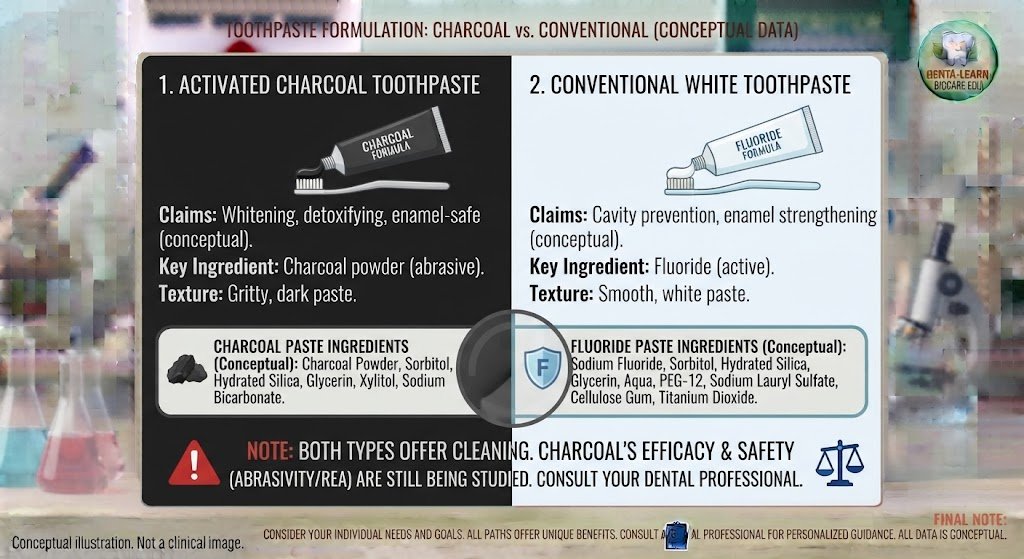
The ADA notes that evidence for measurable whitening benefits from charcoal oral-care products is limited. Charcoal products can also raise concerns about abrasivity, and some charcoal toothpastes may not contain fluoride.
That does not mean every charcoal toothpaste is automatically dangerous.
Instead, consider three questions:
- Does the toothpaste contain fluoride or another active ingredient you want?
- Is the product appropriately formulated for your teeth?
- Are you choosing it because of evidence or mainly because of the marketing claim?
If your primary goal is whitening, you may have more useful options than simply choosing the darkest toothpaste on the shelf.
What About Whitening Toothpaste?
Whitening toothpaste is another category that needs context rather than a simple “avoid” label.
According to the ADA, whitening toothpastes primarily work by using abrasives to help remove extrinsic surface stains. Some formulations also contain peroxide ingredients.
That means whitening toothpaste is not necessarily changing the natural color of your teeth in the same way as professional bleaching.
The important question is what kind of whitening you want.
If your concern is coffee, tea, wine, or other surface staining, a toothpaste designed to help remove those stains may make sense.
If you have sensitive teeth, however, you may want to pay closer attention to the overall formula and how your teeth respond to it.
Look for a toothpaste that matches your goal rather than assuming that stronger-feeling toothpaste equals better whitening.
How to Read a Toothpaste Ingredient Label
You do not need a chemistry degree to compare toothpaste labels.
A simple seven-step process can help you understand most formulas.
1. Check the Active Ingredient First
Start with the active ingredient rather than the marketing claims on the front of the package.
If cavity protection is your priority, check whether the toothpaste contains an appropriate fluoride active ingredient.
For U.S. OTC anticaries toothpaste, FDA requirements identify specific fluoride active ingredients and permitted conditions of use.
2. Check Whether It Contains Fluoride
Do not assume that “natural,” “clean,” or “non-toxic” automatically means fluoride-free is better.
Instead, decide whether fluoride fits your oral-care goals.
If you specifically want fluoride-free toothpaste, compare what the product uses instead and what benefit that alternative is intended to provide.
3. Look at the Detergents
Ingredients such as sodium lauryl sulfate (SLS) are used for foaming and cleaning action.
If SLS causes problems for you or you simply prefer to avoid it, look for an SLS-free formula.
But remember: SLS-free does not automatically mean that the toothpaste is better for every person.
4. Check the Flavoring Ingredients
Flavoring is a major part of the toothpaste experience.
Menthol, essential oils, and other flavoring components can make toothpaste taste fresh, but some people may be sensitive to particular flavoring ingredients.
If a toothpaste repeatedly causes burning, irritation, or discomfort, the flavor system is one part of the formula worth considering.
5. Look for Known Personal Allergens
This step is more important than trying to create a universal list of “bad” ingredients.
If you already know that you react to a particular ingredient, check every toothpaste label for it.
Toothpaste-related contact reactions can involve different ingredients, and recent clinical literature has reported cases involving substances such as flavors, SLS, hydrated silica, and other formulation components. That does not mean these ingredients are harmful to everyone.
6. Consider Abrasivity and Whitening Claims
If you have enamel concerns or sensitive teeth, do not focus only on whether the toothpaste contains silica or calcium carbonate.
Instead, consider the finished product’s intended cleaning and whitening function and whether it is appropriate for your needs.
7. Check the Current Formula
Formulas can change.
A product you bought six months ago may not necessarily have the same ingredient list today.
Before buying, check the current package or the manufacturer’s current product information. This is especially important if you are avoiding a specific allergen or ingredient.
What Ingredients Should You Look for Instead?
Avoiding ingredients is only half of the decision.
A better approach is to identify what you want your toothpaste to accomplish.
For Cavity Protection
If cavity prevention is your main goal, look for a toothpaste with an appropriate anticaries active ingredient, such as fluoride where appropriate. FDA regulations identify fluoride compounds used in OTC anticaries toothpaste, while the ADA describes fluoride toothpaste as part of cavity-prevention oral care.
For Sensitive Teeth
Look for a formula specifically designed around sensitivity rather than simply choosing the product with the fewest ingredients.
You may also prefer an SLS-free formula if SLS appears to contribute to irritation or mouth discomfort for you.
For Ingredient-Conscious Shopping
Look for:
- A clear ingredient list
- Clearly identified active ingredients
- A formula that matches your needs
- Transparent product information
- No unnecessary ingredients that you personally know you cannot tolerate
A shorter ingredient list can be useful for comparison, but shorter does not automatically mean safer or more effective.
For Enamel Concerns
Pay attention to the overall cleaning and abrasivity profile of the toothpaste.
An ingredient such as hydrated silica or calcium carbonate does not automatically make a formula too abrasive. What matters is the finished product and how it fits your needs.
For Hydroxyapatite Preference
Some shoppers specifically choose toothpaste containing hydroxyapatite or nano-hydroxyapatite instead of fluoride.
If this is your preference, compare the complete formula rather than choosing a product based only on the presence of hydroxyapatite.
Best Toothpaste Types for Different Needs
There is no single ingredient list that makes a toothpaste right for everyone.
Your ideal formula depends on what you are trying to accomplish.
| Your main concern | Toothpaste characteristics to consider |
| Cavity prevention | Appropriate anticaries active ingredient, including fluoride where appropriate |
| Sensitive mouth | Sensitivity-focused formula and ingredients you personally tolerate |
| SLS preference | SLS-free toothpaste |
| Enamel concerns | Reasonable abrasivity and appropriate daily-use formula |
| Ingredient-conscious shopping | Transparent labeling and a formula that fits your preferences |
| Whitening | A product designed for surface-stain removal, with attention to abrasivity |
| Hydroxyapatite preference | Toothpaste containing hydroxyapatite or nano-hydroxyapatite |
| Simple routine | Straightforward formula with clearly understood functions |
The important point is that these are different shopping goals.
Someone looking for cavity protection may prioritize an active anticaries ingredient. Someone with a sensitive mouth may care more about personal tolerance. Someone interested in natural toothpaste may prioritize ingredient sourcing and formula transparency.
The same toothpaste does not have to satisfy all three people.
How to Choose a Toothpaste Without Overthinking the Ingredient List
Once you understand the main ingredient categories, choosing toothpaste becomes much easier.
Use this simple process:
Step 1: Choose your main goal.
Are you trying to prevent cavities, manage sensitivity, remove surface stains, avoid SLS, use hydroxyapatite, or simply find a formula you tolerate well?
Step 2: Identify the ingredients that matter for that goal.
Do not start with a huge “ingredients to avoid” list.
Start with the benefit you want.
Step 3: Remove ingredients you personally know you cannot tolerate.
A personal allergy or recurring irritation is a much stronger reason to avoid an ingredient than a random internet claim.
Step 4: Check the active ingredient.
This prevents you from choosing a toothpaste based entirely on “clean” or “natural” marketing.
Step 5: Consider the whole formula.
Look at abrasives, detergents, flavors, sweeteners, humectants, and other ingredients together.
Step 6: Choose based on evidence and fit.
A toothpaste does not need to be marketed as “non-toxic” to be a sensible choice. Likewise, a product marketed as “natural” does not automatically fit every person’s needs.
The best label-reading habit is not asking:
“Does this toothpaste contain a bad ingredient?”
Instead, ask:
“What is this ingredient doing, what is the evidence behind the concern, and does this formula fit me?”
That question leads to much better decisions.
Common Mistakes When Avoiding Toothpaste Ingredients
Mistake 1: Treating Every Unfamiliar Ingredient as Dangerous
Chemical names can look intimidating.
But a complicated name does not tell you whether an ingredient is useful, unnecessary, irritating, or unsafe.
Look at its function first.
Mistake 2: Automatically Avoiding Fluoride
Fluoride is an anticaries active ingredient. Putting it into the same category as ingredients you may personally want to avoid can create a misleading picture.
If you choose fluoride-free toothpaste, understand what you are choosing and why.
Mistake 3: Assuming Natural Means Safer
Natural ingredients can still cause irritation or allergic reactions.
Essential oils are a good example: their plant-based origin does not guarantee that every person will tolerate them.
Mistake 4: Assuming SLS-Free Means Better for Everyone
SLS-free toothpaste can be useful for people who experience irritation or recurrent mouth ulcers, and clinical reviews have found potential benefits for some people with recurrent aphthous stomatitis. But the evidence is not a reason to label SLS universally harmful.
Mistake 5: Judging a Toothpaste by One Ingredient
A toothpaste is a complete formulation.
Seeing silica, glycerin, xylitol, calcium carbonate, or another individual ingredient does not tell you everything about the product.
Mistake 6: Ignoring the Active Ingredient
A toothpaste can have an attractive “clean” ingredient list and still fail to match your main oral-care goal.
Always check what the product is actually designed to do.
Mistake 7: Trusting Marketing More Than the Label
Words such as natural, clean, non-toxic, pure, whitening, fresh, and gentle can describe a product’s positioning.
They do not replace reading the ingredient list.
Mistake 8: Forgetting Personal Tolerance
Two people can use the same toothpaste and have different experiences.
If a toothpaste repeatedly causes burning, irritation, or another noticeable reaction, stop assuming that the problem is simply “normal toothpaste.” Review the formula and consider discussing persistent symptoms with a dental professional.
Best Non-Toxic Toothpaste Options
If your goal is to avoid ingredients you personally do not want in your toothpaste, the next step is not simply finding the product with the shortest ingredient list.
A better approach is to look for a toothpaste that combines:
- A clear purpose
- An appropriate active ingredient
- Ingredients you personally tolerate
- Reasonable abrasivity for your needs
- Transparent labeling
- A formula that matches your preferences
The term “non-toxic toothpaste” is commonly used by shoppers looking for simpler, more transparent, or more natural formulas. However, the label itself does not prove that one toothpaste is safer for everyone.
Instead, use the criteria discussed throughout this guide.
SLS-Free Fluoride Toothpaste
This category can make sense for someone who wants fluoride for cavity protection but prefers to avoid SLS.
The key is that you are making two separate decisions:
Fluoride: Does the toothpaste provide the anticaries protection you want?
SLS: Do you personally want to avoid this detergent because of irritation, mouth sensitivity, or preference?
Keeping these questions separate makes the comparison much easier.
Hydroxyapatite Toothpaste
Hydroxyapatite toothpaste is another option for people who prefer a fluoride-free approach or specifically want a toothpaste formulated with hydroxyapatite.
When comparing these products, do not stop at the words “hydroxyapatite toothpaste” on the front of the package.
Check the complete ingredient list, the product’s intended use, and the manufacturer’s current information.
Sensitive-Mouth Toothpaste
If your main concern is burning, irritation, or recurring mouth discomfort, focus on personal tolerance rather than simply choosing a product advertised as natural.
You may want to compare formulas that avoid ingredients you already know cause problems for you, including particular flavoring agents or detergents.
If symptoms continue despite changing products, consider getting professional dental advice rather than repeatedly switching toothpaste based on online ingredient lists.
Simple-Ingredient Toothpaste
Some shoppers prefer a shorter or easier-to-understand ingredient list.
That can make label reading easier, but simplicity should not become the only buying criterion.
A toothpaste with fewer ingredients still needs to perform its intended job.
Ask:
- What is the active ingredient?
- What is the toothpaste designed to do?
- Does it contain ingredients I know I cannot tolerate?
- Is the cleaning level appropriate for my needs?
- Does the product clearly explain its formulation?
Natural Toothpaste With Transparent Labeling
Natural toothpaste can appeal to people who want plant-based flavors, fewer synthetic ingredients, or a particular formulation philosophy.
But “natural” is not a safety guarantee.
Essential oils and other naturally derived ingredients can still be irritating or unsuitable for some people. Your decision should therefore be based on the specific formula, not the marketing category alone.
How We Evaluate Toothpaste Ingredients
When comparing toothpaste products, it helps to use the same framework every time.
Rather than asking whether a toothpaste is simply “clean” or “dirty,” evaluate the product across several practical areas.
1. Active Ingredient
Start with the ingredient responsible for the product’s primary oral-health purpose.
For cavity protection, this may be a fluoride active ingredient.
For other products, the formula may use a different approach.
2. Ingredient Function
Every major ingredient should have a purpose.
For example:
- Abrasives help with physical cleaning.
- Detergents help with foaming.
- Humectants help retain moisture.
- Flavoring makes toothpaste more pleasant to use.
- Sweeteners improve taste.
- Active ingredients provide specific oral-health benefits.
The presence of an ingredient is easier to understand once you know its job. The ADA describes these ingredient categories as common components of toothpaste formulations.
3. Personal Tolerance
A formula that works well for one person may not work well for another.
If you have a known allergy or sensitivity, that should carry more weight than a generic “avoid list.”
4. Abrasivity
If you have enamel concerns or use toothpaste primarily for whitening, consider how aggressively the product is designed to clean.
Do not assume that every toothpaste containing silica or calcium carbonate is automatically too abrasive. The finished formulation matters.
5. Formula Transparency
Look for products that clearly identify their ingredients and explain what the product is intended to do.
This makes it easier to compare one toothpaste with another without relying entirely on marketing claims.
6. Your Actual Goal
Finally, ask whether the toothpaste solves the problem you are trying to solve.
A toothpaste designed for whitening may not be the best match for someone primarily concerned about sensitivity.
A fluoride-free toothpaste may not be the right choice for someone specifically looking for fluoride-based cavity protection.
The product should fit the goal.
Frequently Asked Questions
What toothpaste ingredients should I avoid?
There is no single list of ingredients that everyone needs to avoid.
Some people may choose to avoid SLS, certain flavoring agents, essential oils, or ingredients they know they are allergic or sensitive to. Triclosan is also not currently found in commercially available U.S. toothpaste according to the ADA.
The better approach is to separate ingredients that may be irritating or unnecessary for some people from ingredients that provide important functions.
Is SLS bad in toothpaste?
SLS is a detergent used to create foaming action in toothpaste.
Research has found that some people, particularly those with recurrent aphthous ulcers, may benefit from SLS-free toothpaste. However, the evidence does not support treating SLS as universally harmful to every toothpaste user.
If SLS seems to irritate your mouth, an SLS-free toothpaste is a reasonable category to compare.
Should I avoid fluoride in toothpaste?
Fluoride should not automatically be placed on an “avoid” list.
It is an established anticaries active ingredient in OTC toothpaste, and FDA regulations specify fluoride compounds that can be used for this purpose.
Whether you personally choose fluoride-free toothpaste is a separate decision based on your preferences and oral-health needs.
Is fluoride-free toothpaste better?
“Better” depends on what you are trying to achieve.
If you want fluoride-based cavity protection, removing fluoride may not match that goal.
If you specifically prefer a fluoride-free formula, compare the available alternatives and look at the complete formulation rather than choosing a product solely because it says “fluoride-free.”
Are essential oils safe in toothpaste?
Essential oils are used as flavoring or other formulation components in some toothpastes.
They are not automatically unsafe simply because they are concentrated plant-derived ingredients. However, certain flavoring ingredients and essential oils can be associated with irritation or allergic reactions in susceptible individuals.
If a particular flavor consistently causes burning or irritation, choosing a different formula may be appropriate.
Is charcoal toothpaste safe?
Charcoal toothpaste should be evaluated carefully rather than treated as automatically safe or unsafe.
The ADA notes limited evidence for measurable whitening benefits from charcoal oral-care products and raises concerns related to abrasivity and the lack of fluoride in some charcoal formulations.
If you are considering charcoal toothpaste, check the complete formula and its intended purpose.
Is glycerin bad for your teeth?
Glycerin is commonly used as a humectant to help toothpaste retain moisture.
Its presence alone is not a reason to assume that a toothpaste is harmful.
Evaluate the complete formula and the purpose of each major ingredient instead of relying on claims about one ingredient.
Is SLS-free toothpaste better for sensitive mouths?
For some people, it may be a useful option.
Research has found that SLS-free toothpaste can reduce certain symptoms associated with recurrent aphthous ulcers in some study populations.
But sensitive mouths can have different causes, so SLS-free does not guarantee that every person will experience improvement.
How do I read toothpaste ingredients?
Start with the active ingredient, then look at the fluoride status, detergents, flavoring ingredients, potential personal allergens, abrasives, and the overall purpose of the formula.
Most importantly, ask what each ingredient does instead of judging it by its name.
What ingredients should I look for in toothpaste?
That depends on your main goal.
For cavity prevention, an appropriate anticaries active ingredient is important.
For sensitive teeth, look for a formula designed around sensitivity and ingredients you tolerate well.
For ingredient-conscious shopping, prioritize transparent labeling and a formula that fits your preferences.
For whitening, consider how the product removes surface stains and whether its cleaning approach is appropriate for your teeth.
Conclusion: Focus on the Whole Toothpaste, Not a Fear List
Learning about toothpaste ingredients can help you make more informed choices, but the goal should not be to create the longest possible list of ingredients to fear.
Some ingredients may be worth avoiding for certain people because of irritation, allergy, personal preference, or a specific oral-care goal.
Others have useful jobs and should not automatically be rejected.
SLS is a good example. It can contribute to foaming, but some people may prefer SLS-free formulas because of mouth irritation or recurrent ulcers.
Fluoride is another important example. It is an anticaries active ingredient, so choosing fluoride-free toothpaste should be an intentional decision rather than a reaction to the word “chemical.”
The same principle applies to glycerin, xylitol, hydrated silica, calcium carbonate, and other familiar toothpaste ingredients.
The simplest way to shop is:
Know your goal → understand the ingredient’s function → identify your personal concerns → check the complete formula → choose the toothpaste that fits your needs.
If you want to compare products next, start with the formula rather than the marketing claim.