If you are looking for the best toothpaste with xylitol, start by looking beyond the word “xylitol” on the front of the tube.
Xylitol is a sugar alcohol commonly used as a sweetener in oral-care products. It is popular in toothpaste because it does not behave like ordinary dietary sugar, and researchers have studied its potential role in reducing the risk of dental caries. However, the evidence for xylitol is not as straightforward as some product marketing suggests.
That distinction matters when choosing a toothpaste.
A good xylitol toothpaste should be evaluated based on the complete formula, including whether it contains fluoride, which active ingredients it uses, and whether it fits your specific needs such as cavity protection, sensitive teeth, enamel care, or ingredient preferences.
In this guide, we compare several xylitol toothpaste options and explain what to look for before buying.
Best Xylitol Toothpaste at a Glance
There is no single xylitol toothpaste that is automatically right for everyone. The important question is which formula best matches your oral-care priorities.
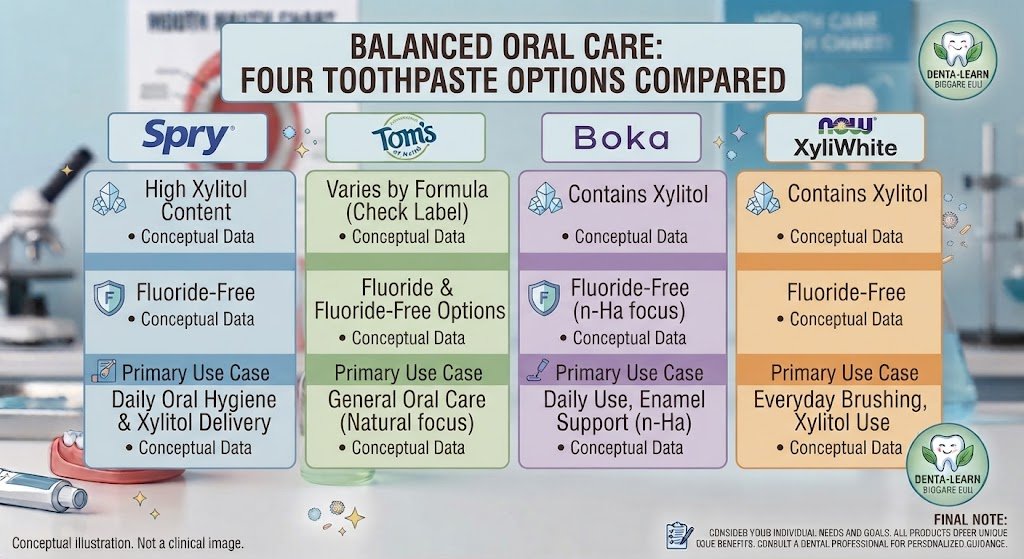
| Toothpaste | Xylitol approach | Fluoride | May suit |
| Spry Anti-Cavity Xylitol Toothpaste | Xylitol-focused formula | Yes, in the fluoride version | Shoppers wanting xylitol plus fluoride |
| Tom’s of Maine Natural Fluoride Toothpaste | Xylitol included in some formulas | Yes, in the fluoride version | Ingredient-conscious shoppers who want fluoride |
| Boka Toothpaste | Xylitol + nano-hydroxyapatite | No | Shoppers specifically seeking a fluoride-free formula |
| NOW XyliWhite | Xylitol-focused oral-care formula | Verify current product | Shoppers prioritizing xylitol |
These are products to compare rather than a universal ranking. Formulas can change, and different versions from the same brand may have different active ingredients.
Before purchasing, check the current product label and make sure the exact version matches what you need.
What Is Xylitol?
Xylitol is a sugar alcohol used as a sweetener in many sugar-free products, including some toothpastes, chewing gums, mints, and oral-care products.
It tastes similar to sugar but has different chemical and metabolic characteristics.
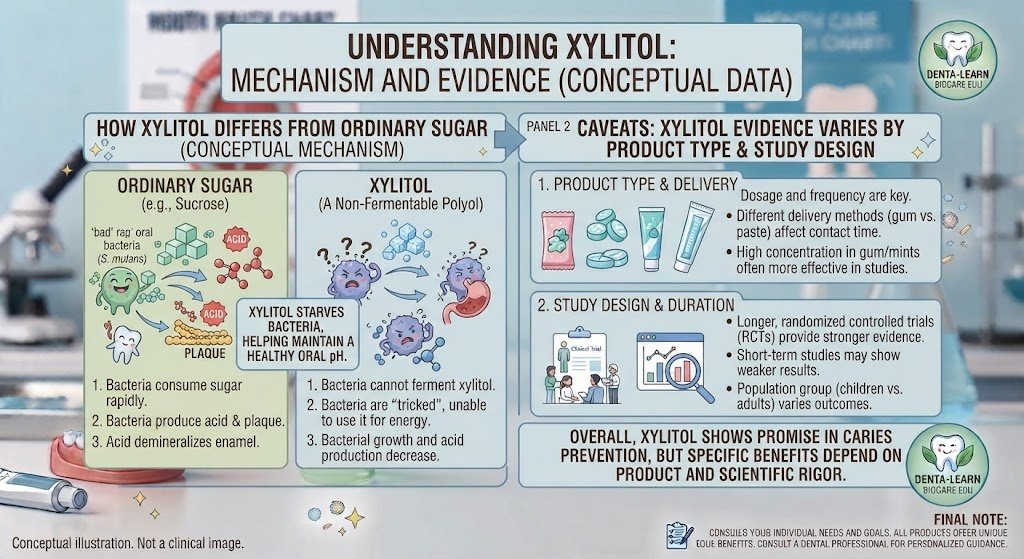
In oral care, the interest in xylitol comes partly from how oral bacteria interact with it. Unlike fermentable sugars, xylitol is not used by cavity-causing bacteria in the same way as ordinary sugars.
Researchers have therefore investigated whether regular exposure to xylitol can help create conditions that are less favorable to dental caries.
But there is an important distinction:
Xylitol-containing toothpaste is not automatically a “cavity-fighting toothpaste” simply because it contains xylitol.
The complete formula matters.
For example, a toothpaste may contain both xylitol and fluoride, while another may contain xylitol but be fluoride-free. Those products are addressing the same ingredient preference but may represent very different choices for someone primarily concerned about cavity prevention.
The American Dental Association identifies fluoride as the key anticaries active ingredient in ADA-Accepted cavity-protection toothpastes. Fluoride also supports enamel remineralization and resistance to acid attacks. (ada.org)
So when evaluating xylitol toothpaste, think of xylitol as one part of the formula, not the entire reason a toothpaste may be useful.
Why Is Xylitol Used in Toothpaste?
There are several reasons manufacturers include xylitol in toothpaste.
It Provides Sweetness Without Ordinary Sugar
Toothpaste needs to be pleasant enough to use regularly.
Xylitol can provide sweetness without being the same type of fermentable sugar that contributes to acid production by oral bacteria.
This makes it useful as a sweetening ingredient in sugar-free oral-care products.
It Has Been Studied for Oral Health
Xylitol has attracted dental research because of its potential relationship with plaque bacteria and dental caries.
Some research has suggested that xylitol-containing products may provide oral-health benefits. However, the evidence varies depending on the type of product, amount of xylitol, frequency of exposure, and study design.
A recent systematic review of clinical trials concluded that the evidence was not sufficient to confirm a clear caries-prevention effect of xylitol because studies differed substantially in factors such as dosage, exposure period, and methodology. (pmc.ncbi.nlm.nih.gov)
That is an important point for shoppers.
You may see strong statements online suggesting that xylitol “kills cavity bacteria” or “prevents cavities,” but those statements can oversimplify the available evidence.
It Can Be Part of a Sugar-Free Formula
Some people specifically prefer toothpaste without added sugar or with a particular sweetener profile.
Xylitol can fit that preference while also making toothpaste taste better.
But ingredient preference and proven dental benefit are not necessarily the same thing.
A toothpaste can have an ingredient profile you prefer without being the best match for your cavity risk or dental condition.
Does Xylitol Actually Help Your Teeth?
Potentially, but the evidence needs to be interpreted carefully.
Xylitol has been studied as an oral-health ingredient, particularly because it is not fermented by oral bacteria in the same way as regular sugars.
Some studies and earlier reviews have reported potential benefits for dental caries prevention. However, more recent evidence has highlighted important limitations in the research.
A 2024 systematic review examining xylitol and dental caries prevention found that the available clinical evidence was too heterogeneous to establish a definitive preventive effect. The researchers pointed to differences in xylitol dosage, duration, frequency, and study methods as important limitations. (pmc.ncbi.nlm.nih.gov)
That means the most accurate way to describe xylitol is:
Xylitol is a promising oral-care ingredient, but it should not be treated as a guaranteed substitute for established cavity-prevention methods.
Xylitol Research Is Not the Same as Xylitol Toothpaste Research
This is an important distinction that is often missing from product articles.
A significant amount of research on xylitol has involved products such as chewing gum, candies, or lozenges, rather than toothpaste alone.
The way xylitol is delivered can affect how often and how long the teeth are exposed to it.
Therefore, you should not automatically take a study about xylitol chewing gum and assume that every xylitol toothpaste provides the same effect.
For a toothpaste buyer, the better approach is to examine the actual product formula and its active ingredients.
Does More Xylitol Mean Better?
Not necessarily.
A larger amount of xylitol listed somewhere on a package does not automatically prove that one toothpaste will provide better dental outcomes than another.
The evidence does not support a simple rule such as:
More xylitol = better toothpaste.
Instead, consider:
- What other active ingredients are present?
- Does it contain fluoride?
- Is it intended for cavity protection?
- Does it address sensitivity?
- Does it fit your ingredient preferences?
- Is the product intended for adults or children?
- What does the current label actually say?
This prevents you from choosing a product based on one number or marketing claim.
Xylitol vs. Fluoride: Do You Need Both?
This is one of the most important questions to answer before buying xylitol toothpaste.
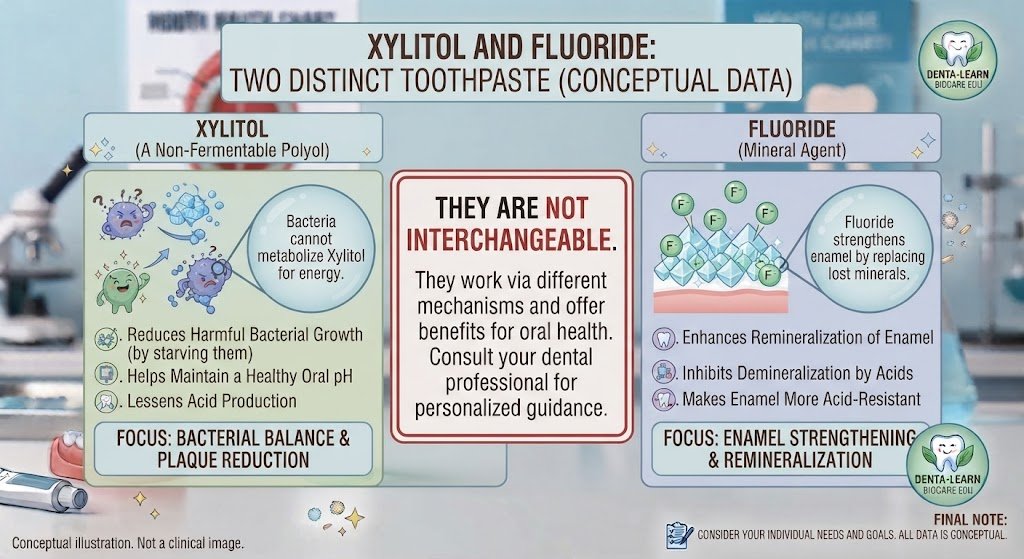
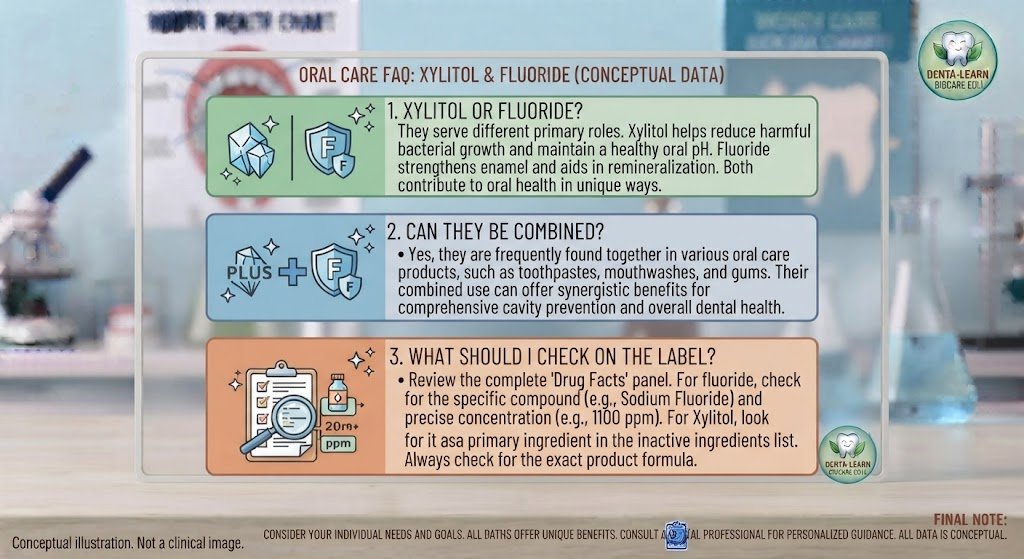
Xylitol and fluoride are not interchangeable ingredients.
They have different roles and different evidence bases.
What Fluoride Does
Fluoride has a well-established role in preventing dental caries.
The ADA explains that fluoride helps strengthen enamel, supports remineralization of early mineral loss, and makes teeth more resistant to acid attacks. Common fluoride ingredients in toothpaste include sodium fluoride, stannous fluoride, and sodium monofluorophosphate. (ada.org)
NIDCR similarly explains that fluoride can help prevent mineral loss and replace minerals during the early stages of tooth decay. (nidcr.nih.gov)
For that reason, someone shopping for xylitol toothpaste should not assume that a fluoride-free formula is automatically a better choice simply because it contains xylitol.
Why Some Shoppers Want Xylitol + Fluoride
A toothpaste containing both ingredients may appeal to someone who wants:
- Xylitol as part of the formula
- Established fluoride-based cavity protection
- A sugar-free toothpaste
- Additional ingredient preferences
There are current products that combine xylitol with fluoride. For example, the current DailyMed listing for a Tom’s of Maine Natural Fluoride toothpaste identifies 0.243% sodium fluoride as its anticaries active ingredient and lists xylitol among the inactive ingredients. (dailymed.nlm.nih.gov)
Spry also offers a fluoride-containing anti-cavity xylitol toothpaste; its current product information lists 0.243% sodium fluoride as the active anticaries ingredient. (sprysmile.com)
Why Some Shoppers Choose Fluoride-Free Xylitol Toothpaste
Other shoppers specifically want to avoid fluoride.
That may lead them toward formulas containing xylitol alongside another approach, such as hydroxyapatite.
For example, Boka states that its toothpaste contains xylitol and uses nano-hydroxyapatite while being fluoride-free. (bokabrush.zendesk.com)
This is a legitimate product-selection preference, but it should not be presented as proof that fluoride-free toothpaste provides superior cavity protection.
The decision should instead consider your cavity risk, dental history, ingredient preferences, and advice from your dentist.
A Simple Way to Compare the Two
| Feature | Xylitol | Fluoride |
| Main role in toothpaste | Sweetener and oral-care ingredient | Established anticaries active |
| Research interest | Dental caries and oral bacteria | Caries prevention, remineralization, acid resistance |
| Automatically replaces the other? | No | No |
| Commonly found together? | Yes | Yes |
| Important when choosing toothpaste? | Yes, if xylitol is a priority | Yes, especially for cavity protection |
The key takeaway is simple:
If you specifically want xylitol, look for it. But also evaluate the rest of the formula.
For someone concerned about cavities, fluoride deserves separate consideration rather than being treated as optional merely because a toothpaste contains xylitol.
The best xylitol toothpaste depends on what you want the formula to do beyond providing xylitol.
For this comparison, the main factors are xylitol, fluoride status, other active ingredients, oral-health needs, ingredient preferences, and the current product formula. Because manufacturers can change formulas, always check the current package before buying.
Spry Anti-Cavity Xylitol Toothpaste With Fluoride
Best fit: shoppers who want xylitol and fluoride in the same toothpaste
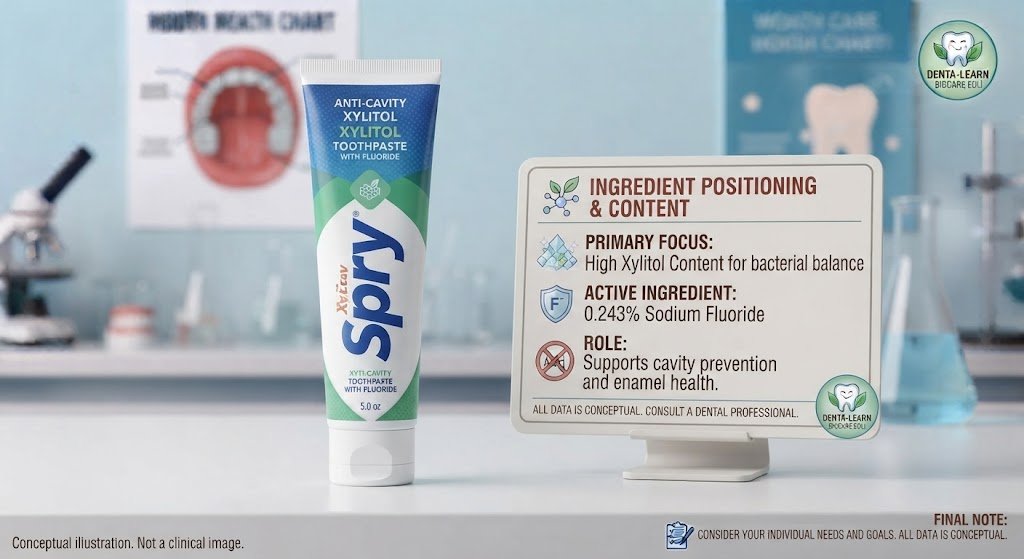
Spry is a particularly relevant option for shoppers whose main goal is finding a toothpaste built around xylitol while still using fluoride for cavity protection.
The current fluoride-containing Spry Anti-Cavity Xylitol Toothpaste lists 0.243% sodium fluoride as its active anticaries ingredient. The product is also positioned specifically around xylitol.
The combination is worth paying attention to because it avoids treating xylitol and fluoride as competing ingredients.
What stands out:
- Xylitol-focused formula
- Contains sodium fluoride
- Designed for cavity protection
- A straightforward choice for shoppers who specifically want xylitol plus fluoride
Potential drawback: If your priority is a completely fluoride-free toothpaste, this is not the formula to choose.
It is also important to distinguish the fluoride version from Spry’s fluoride-free products. The brand sells different xylitol toothpaste formulas, so check the exact product name and active ingredients before purchasing.
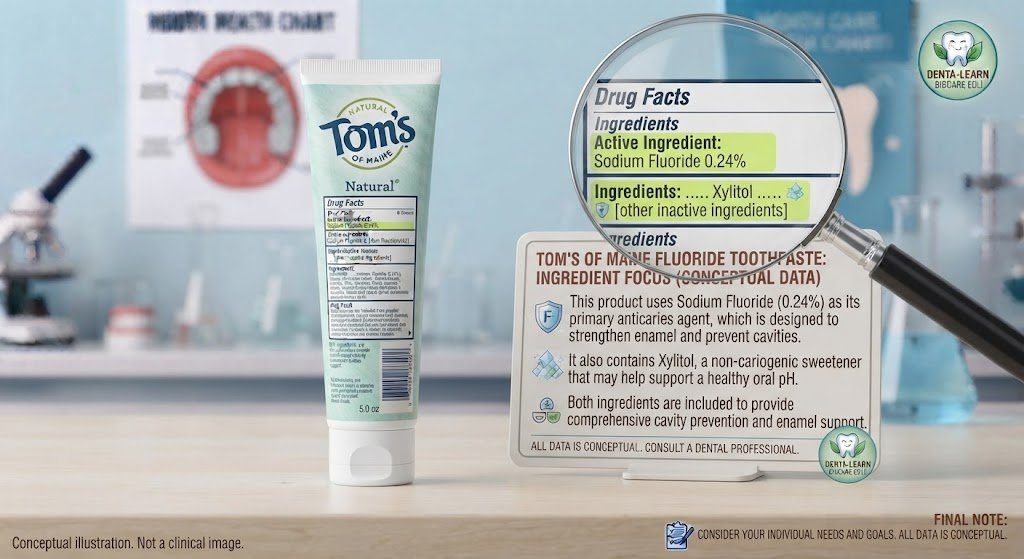
Tom’s of Maine Natural Fluoride Toothpaste
Best fit: ingredient-conscious shoppers who still want fluoride
Tom’s of Maine offers several toothpaste formulas, so the exact variant matters.
The current DailyMed listing for a Tom’s of Maine Natural Fluoride toothpaste identifies 0.243% sodium fluoride as the active anticaries ingredient and lists xylitol among the inactive ingredients.
That makes this type of formula relevant if you want xylitol included in the ingredient list but don’t want to give up fluoride.
The important point is that xylitol does not have to be the main selling point of a toothpaste for it to be present in the formula.
What stands out:
- Contains fluoride
- Current listed active ingredient is sodium fluoride
- Xylitol is included in the formulation
- Familiar natural-oriented oral-care brand
Potential drawback: Tom’s of Maine has multiple toothpaste varieties, and ingredients can differ between products. Do not assume every Tom’s toothpaste contains xylitol or has the same fluoride formulation.
For a specific product, compare the Drug Facts panel and inactive ingredient list on the current package.
Boka Toothpaste
Best fit: shoppers specifically looking for fluoride-free toothpaste with xylitol
Boka takes a different approach from the fluoride-containing options above.
According to Boka’s current product information, its toothpastes contain xylitol and nano-hydroxyapatite and are fluoride-free.
Nano-hydroxyapatite is a calcium-phosphate material that is used in some toothpaste formulas as an alternative approach to enamel care.
This makes Boka particularly relevant for someone who has already decided that they want a fluoride-free xylitol toothpaste.
However, fluoride-free should be treated as a preference or specific product choice, not as evidence that the formula is automatically better for cavity prevention.
What stands out:
- Contains xylitol
- Uses nano-hydroxyapatite
- Fluoride-free
- Relevant for shoppers interested in alternative enamel-care ingredients
Potential drawback: If your main priority is fluoride-based cavity protection, a fluoride-containing formula may better match that specific preference.
NOW XyliWhite
Best fit: shoppers specifically interested in xylitol-centered oral care
NOW XyliWhite is another name shoppers may encounter when searching specifically for xylitol toothpaste.
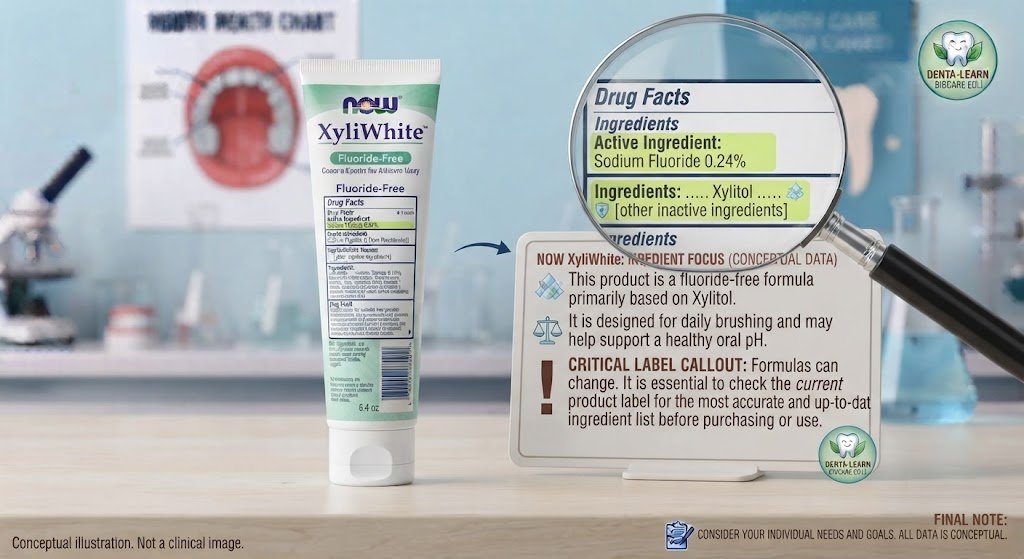
The important consideration here is to verify the exact current formulation before purchasing. Product formulas, sizes, flavors, and active-ingredient status can change, and different versions should not automatically be treated as identical.
For that reason, evaluate the current package using the same checklist applied to every other toothpaste:
- Is xylitol included?
- Is fluoride included?
- What are the active ingredients?
- Is the product intended for cavity protection?
- Does the formula match your sensitivity or enamel needs?
- Does the current ingredient list match the product description?
What stands out:
- Xylitol-centered product positioning
- Multiple versions may be available
- Useful option for shoppers specifically searching for xylitol toothpaste
Potential drawback: The exact formulation needs to be checked before making a purchase decision.
What to Look for in a Xylitol Toothpaste
Once you understand the difference between xylitol and fluoride, choosing a product becomes much easier.
Instead of asking only “Does this toothpaste contain xylitol?”, use a broader checklist.
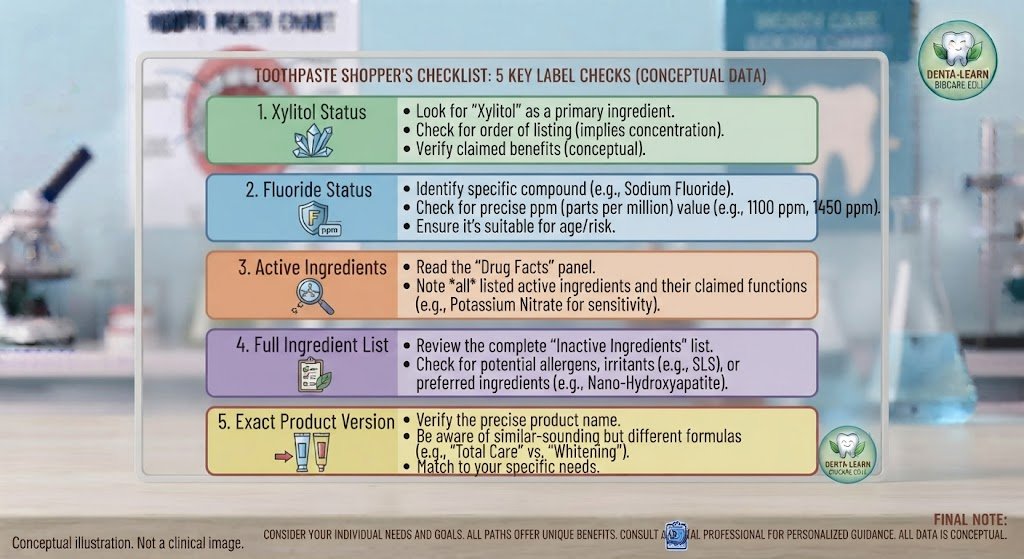
1. Xylitol
If xylitol is your main reason for shopping, confirm that it actually appears in the current ingredient list.
Do not rely only on an old product description, retailer listing, or front-of-package claim.
It is also better not to assume that the position of xylitol in the ingredient list tells you exactly how effective the toothpaste will be. Ingredient-list order can provide useful formulation information, but it does not establish a clinical outcome.
2. Fluoride
If cavity prevention is an important priority, check whether the toothpaste contains a recognized fluoride active ingredient.
Common toothpaste fluoride ingredients include:
- Sodium fluoride
- Stannous fluoride
- Sodium monofluorophosphate
The ADA notes that fluoride toothpaste plays an important role in cavity prevention and enamel protection.
For U.S. over-the-counter fluoride toothpaste, concentrations commonly fall around 1,000 to 1,500 ppm fluoride, depending on the formulation.
If you have a higher risk of cavities, your dentist may recommend a specific fluoride concentration or prescription product rather than relying on a general shopping guide.
3. Hydroxyapatite
Hydroxyapatite is another ingredient you may encounter in xylitol toothpaste.
It is especially relevant when comparing fluoride-free formulas.
Some products use nano-hydroxyapatite, while others may use different approaches to enamel support. Boka, for example, combines xylitol with nano-hydroxyapatite in its fluoride-free toothpaste formulas.
If hydroxyapatite interests you, look at it as a separate ingredient category rather than assuming that xylitol and hydroxyapatite provide the same function.
4. Sensitivity Ingredients
If you have sensitive teeth, xylitol alone should not be the deciding factor.
Look for toothpaste specifically formulated for sensitivity and check the active ingredients.
Depending on the product, sensitivity formulas may use ingredients such as potassium nitrate or stannous fluoride.
The right choice depends on why your teeth are sensitive and what your dentist recommends.
If sensitivity is persistent, severe, or associated with pain, don’t use a toothpaste comparison as a substitute for a dental examination.
5. SLS and Other Ingredient Preferences
Some shoppers specifically look for SLS-free toothpaste because they prefer to avoid sodium lauryl sulfate.
Others may prioritize:
- No artificial colors
- No added sugar
- Specific sweeteners
- Certain flavoring ingredients
- Fewer unnecessary ingredients
- Natural-oriented formulations
These preferences can help narrow your choices, but they should be separated from proven cavity-protection benefits.
For example, choosing an SLS-free toothpaste can be a reasonable personal preference without meaning that SLS-free toothpaste is automatically more effective at preventing cavities.
How to Choose the Right One for Your Needs
There is no single formula that matches every xylitol toothpaste shopper.
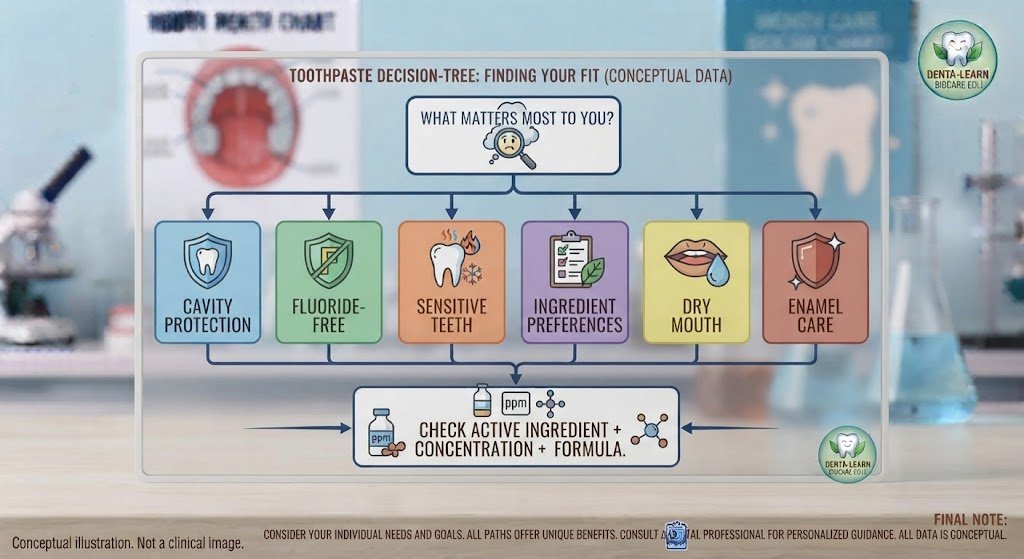
Your decision should start with your main oral-health priority.
If Cavity Protection Is Your Main Priority
Start by checking the fluoride status.
A toothpaste containing xylitol can still be a fluoride toothpaste, and the two ingredients are not mutually exclusive.
Look for a product with a recognized fluoride active ingredient and follow the brushing instructions on the label.
The NIDCR recommends brushing twice a day with fluoride toothpaste as part of cavity prevention.
For shoppers who specifically want xylitol too, a fluoride + xylitol formula is one product category to consider.
If You Want Fluoride-Free Toothpaste
Start with products that clearly identify themselves as fluoride-free.
Then look at what the formula uses instead.
For example, Boka combines xylitol with nano-hydroxyapatite in a fluoride-free formula.
If you are considering fluoride-free toothpaste because of a specific dental concern, discuss that choice with your dentist, especially if you have a history of frequent cavities.
If Ingredient Quality Is Your Main Concern
Create your own short checklist.
For example:
- Confirm xylitol is present.
- Check the active ingredients.
- Check fluoride status.
- Review the complete ingredient list.
- Check whether the formula addresses your specific need.
- Confirm the current product version.
This approach is more reliable than choosing a toothpaste simply because its packaging says “natural,” “clean,” or “non-toxic.”
If You Have Sensitive Teeth
Don’t make xylitol your primary selection criterion.
Instead, first identify whether the toothpaste contains a recognized sensitivity ingredient and whether it also provides the cavity protection you want.
For example, some formulas use potassium nitrate, while some stannous-fluoride products can address both fluoride protection and sensitivity-related needs.
Taste and texture matter too. If a toothpaste is unpleasant enough that you avoid brushing with it, its theoretical advantages do not help your daily routine.
If You Have Dry Mouth
Dry mouth changes the way you should think about toothpaste.
Saliva normally helps protect teeth by buffering acids and supplying minerals. Reduced saliva can increase the risk of dental problems, so toothpaste selection should be considered alongside your overall dry-mouth care.
A xylitol-containing toothpaste may appeal to someone who wants a sugar-free formula, but xylitol alone should not be treated as a treatment for dry mouth.
If you regularly experience dry mouth, look for a product that fits your dental-care plan and discuss persistent symptoms with a dental professional.
If Enamel Care Is Your Main Concern
Look at the toothpaste’s active ingredients and the overall formula rather than focusing only on xylitol.
Fluoride can help strengthen enamel and support remineralization of early mineral loss.
Hydroxyapatite is another ingredient category worth researching if you specifically want a fluoride-free approach.
The important distinction is that xylitol, fluoride, and hydroxyapatite are different ingredients with different roles.
Common Mistakes When Buying Xylitol Toothpaste
Choosing a toothpaste with xylitol sounds simple, but there are several easy mistakes that can lead you to the wrong product.
Mistake 1: Assuming Xylitol Replaces Fluoride
This is one of the biggest misconceptions.
Xylitol and fluoride have different roles. Xylitol is a sugar alcohol used in oral-care products and has been studied for possible effects on dental caries. Fluoride has an established role in strengthening enamel, supporting remineralization, and preventing cavities.
So if cavity protection is your main concern, don’t choose a toothpaste simply because it contains xylitol.
Instead, check the complete formula and identify whether it contains fluoride or another active ingredient intended for your specific oral-care needs.
Mistake 2: Choosing the Highest Xylitol Amount
A larger xylitol claim on the package does not automatically mean better dental results.
The clinical evidence for xylitol varies by dose, frequency, duration, and the type of product studied. The 2024 systematic review discussed earlier found substantial differences between studies, which makes it difficult to establish a simple “more is better” rule.
Instead of focusing on one number, look at the entire formula.
Mistake 3: Assuming Every Product From a Brand Has Xylitol
Brands often sell multiple toothpaste formulas.
One product may contain xylitol while another does not. One version may contain fluoride while another is fluoride-free.
Tom’s of Maine is a good example of why checking the exact product matters. The current DailyMed listing for one Natural Fluoride toothpaste identifies xylitol among its inactive ingredients, but that does not mean every toothpaste sold under the brand has the same formulation.
Always compare the exact product name and current ingredient label.
Mistake 4: Treating “Natural” or “Clean” as a Medical Claim
Words such as “natural,” “clean,” or “non-toxic” can describe a shopper’s ingredient preferences, but they don’t by themselves establish how effective a toothpaste is at preventing cavities.
For cavity prevention, look at the active ingredients and evidence rather than relying on marketing language.
The same principle applies to “chemical-free” claims. Everything in a toothpaste is made of chemicals in the scientific sense, so the more useful question is which ingredients are present, why they are used, and whether the formula fits your needs.
Mistake 5: Assuming Gum Research Automatically Applies to Toothpaste
Xylitol has been studied in different delivery forms, including chewing gum and other products.
But toothpaste is not the same as gum.
The amount used, contact time, frequency of exposure, and way the product is used can all differ.
That is why a study showing an effect from xylitol gum should not automatically be interpreted as proof that every xylitol toothpaste provides the same outcome.
Mistake 6: Ignoring Your Actual Dental Need
A person with frequent cavities may need to prioritize fluoride.
Someone with sensitivity may care more about a sensitivity-specific active ingredient.
Someone who has already decided to avoid fluoride may be looking for a fluoride-free formula with another enamel-care approach.
And someone focused primarily on ingredient preferences may have a completely different shortlist.
The “best” xylitol toothpaste therefore depends on what problem you are trying to solve.
Mistake 7: Forgetting to Check the Current Label
Online product pages can become outdated.
Retailer descriptions may also combine information from different versions or flavors.
Before buying, check:
- Active ingredients
- Fluoride status
- Xylitol presence
- Full ingredient list
- Size
- Flavor
- Product version
- Current manufacturer information
This is particularly important when comparing products for a medical or dental purpose.
Xylitol Toothpaste Safety and Important Considerations
For most people, xylitol is used as a sweetener in foods and oral-care products. However, there are a few practical considerations worth knowing.
Xylitol Is Extremely Dangerous to Dogs
This is the most important safety warning associated with xylitol.
Keep xylitol-containing toothpaste away from dogs.
Xylitol can cause a rapid release of insulin in dogs and can lead to dangerously low blood sugar. Serious poisoning can occur, so toothpaste containing xylitol should be stored somewhere pets cannot access.
If a dog has swallowed a xylitol-containing product, contact a veterinarian or animal poison-control service immediately rather than waiting for symptoms.
This warning is about pet safety, not evidence that xylitol toothpaste is unsafe for people.
Don’t Swallow Toothpaste
Toothpaste is designed for brushing, not eating.
Use the amount recommended on the product label and spit it out after brushing.
For children, use age-appropriate amounts and supervise brushing according to dental guidance.
Fluoride Requires Appropriate Use
Fluoride toothpaste is widely used for cavity prevention, but it should still be used according to the label and dental guidance.
The ADA notes that fluoride toothpaste is an important part of cavity prevention, while NIDCR recommends brushing twice daily with fluoride toothpaste.
If you have unusual cavity risk, extensive dental work, or another specific dental concern, your dentist may recommend a different fluoride concentration or a particular product.
Check for Allergies and Irritation
Xylitol may not be the only ingredient relevant to tolerability.
Flavoring agents, essential oils, detergents, preservatives, and other ingredients can bother some people.
If a toothpaste repeatedly causes burning, irritation, swelling, sores, or another unusual reaction, stop using it and discuss the symptoms with a dental or medical professional.
Xylitol Does Not Make Every Toothpaste Non-Toxic
This is another important distinction.
A toothpaste can contain xylitol and still contain many other ingredients.
If your goal is to find a toothpaste with a specific ingredient profile, evaluate the whole ingredient list rather than treating xylitol as a shortcut for “non-toxic.”
FAQs About Xylitol Toothpaste
Is xylitol good for your teeth?
Xylitol is a sugar alcohol that has been studied for possible oral-health benefits, including its potential relationship with dental caries. However, clinical evidence is not strong enough to treat xylitol as a guaranteed cavity-prevention ingredient. A 2024 systematic review found that differences between studies made the overall evidence difficult to interpret with certainty.
Is xylitol better than fluoride?
They should not be treated as direct alternatives.
Xylitol and fluoride have different roles. Fluoride has an established role in cavity prevention and enamel remineralization, while xylitol is primarily used as a sugar alcohol sweetener and has been investigated for potential oral-health effects.
If cavity protection is your priority, evaluate fluoride separately rather than assuming xylitol provides the same benefit.
Can I use xylitol toothpaste with fluoride?
Yes. Some toothpaste formulas contain both xylitol and fluoride.
For example, current information for Spry Anti-Cavity Xylitol Toothpaste and a Tom’s of Maine Natural Fluoride toothpaste lists sodium fluoride as the active anticaries ingredient while also including xylitol in the formula.
Is fluoride-free xylitol toothpaste effective?
That depends on the specific formula and what you mean by “effective.”
A fluoride-free toothpaste may contain other ingredients, such as hydroxyapatite, and may suit people who specifically prefer a fluoride-free option.
However, fluoride-free should not automatically be interpreted as providing better cavity protection. If you are at increased risk of cavities, discuss fluoride-free toothpaste with your dentist.
Does xylitol prevent cavities?
The evidence does not support a simple guarantee that xylitol toothpaste prevents cavities.
Research has found potential benefits from xylitol-containing products, but studies differ in dosage, frequency, duration, and delivery method. The 2024 systematic review found insufficient certainty to establish a definitive caries-prevention effect.
Is xylitol safe in toothpaste?
Xylitol is commonly used as a sweetener in oral-care products. The major practical safety issue is keeping xylitol products away from dogs, because xylitol can be highly toxic to them.
As with any toothpaste, follow the product’s directions and avoid swallowing it.
Is xylitol toothpaste good for sensitive teeth?
It can be, but xylitol itself is not the main ingredient you should use to judge a sensitivity toothpaste.
If sensitivity is your priority, check whether the formula contains an ingredient specifically intended for sensitivity and whether the toothpaste also meets your cavity-protection preferences.
Can children use xylitol toothpaste?
Children should use toothpaste appropriate for their age and follow guidance from their dentist or pediatric dental professional.
The important question is not simply whether a toothpaste contains xylitol. Parents should also consider fluoride, the child’s age, the amount of toothpaste used, and whether the child can spit it out properly.
Does xylitol toothpaste whiten teeth?
Xylitol itself should not be treated as a whitening ingredient.
If whitening is your goal, look for a toothpaste specifically formulated for stain removal or whitening and evaluate its active and polishing ingredients separately.
How often should I use xylitol toothpaste?
Follow the directions on the specific product.
For fluoride toothpaste, NIDCR recommends brushing twice a day with fluoride toothpaste as part of cavity prevention.
If your dentist has given you a different brushing routine because of your dental needs, follow that individualized advice.
Conclusion
The best toothpaste with xylitol is not simply the one with the biggest xylitol claim.
The more useful approach is to start with your oral-health goal, then evaluate the complete formula.
If you want xylitol plus established fluoride-based cavity protection, products such as Spry Anti-Cavity Xylitol Toothpaste With Fluoride and certain Tom’s of Maine Natural Fluoride formulas are relevant options to compare.
If you specifically want a fluoride-free formula, Boka offers a xylitol and nano-hydroxyapatite approach.
If you are primarily interested in xylitol-centered oral care, NOW XyliWhite is another product to investigate, while checking the current formulation before purchasing.
The key takeaway is that xylitol and fluoride are not interchangeable. Xylitol has been studied for potential oral-health benefits, but the clinical evidence is not strong enough to treat it as a guaranteed replacement for established cavity-prevention methods.
Before buying, check the current label for:
- Xylitol
- Fluoride and its active ingredient
- Hydroxyapatite, if relevant
- Sensitivity ingredients
- SLS and other personal ingredient preferences
- Exact product version
- Manufacturer information
That approach helps you choose a toothpaste based on what the formula actually contains rather than relying on a single marketing claim.
