If you are looking for the best toothpaste with fluoride, start with your dental needs—not just the brand name on the tube.
For most people, fluoride toothpaste is an important part of everyday cavity prevention. The American Dental Association (ADA) says over-the-counter fluoride toothpastes in the U.S. generally contain 1,000 to 1,500 ppm fluoride, and the active fluoride ingredient may be sodium fluoride, sodium monofluorophosphate, or stannous fluoride.
But different formulas are designed for different priorities. A person mainly concerned about cavities may want a straightforward fluoride formula, while someone with sensitive teeth, gum concerns, or a preference for whitening may want additional features.
In this guide, we’ll compare several fluoride toothpaste options, explain the main fluoride types, and show you what to look for before buying.
Affiliate disclosure: This article may contain affiliate links. If you purchase through an affiliate link, we may earn a commission at no additional cost to you.
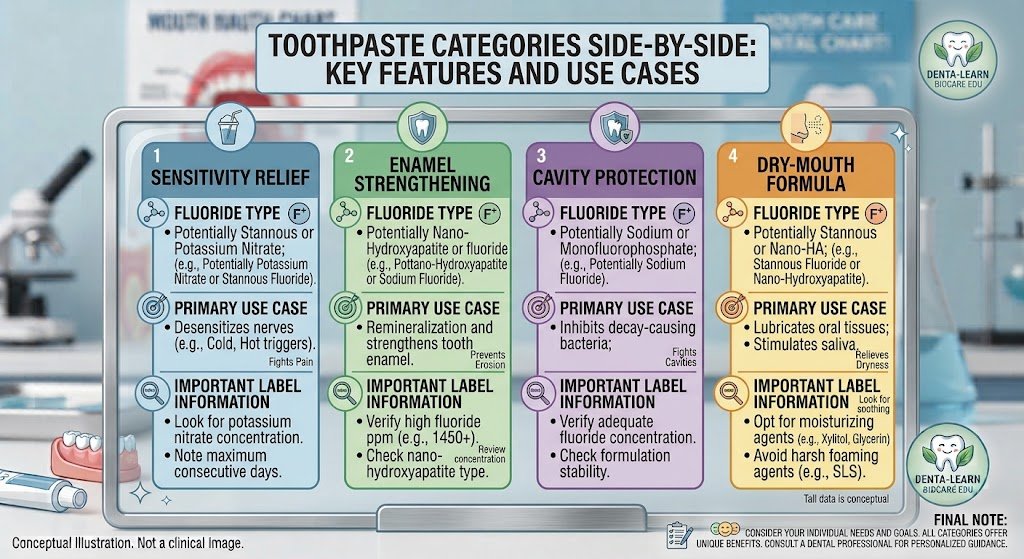
Best Fluoride Toothpaste Options at a Glance
Before choosing a product, compare the active fluoride, intended benefits, and your own dental needs. Product formulas can vary within the same brand, so check the current package and Drug Facts label before purchasing.
| Toothpaste | Fluoride approach | Best suited for | What to check |
| Crest Pro-Health | Stannous fluoride formulas | Broad everyday oral-care needs | Exact Pro-Health formula |
| Colgate Total | Stannous fluoride formulas | People wanting multiple oral-care benefits | Current product formulation |
| Sensodyne | Fluoride formulas vary | Sensitive teeth | Active ingredients and sensitivity claims |
| Tom’s of Maine | Fluoride formulas vary | Ingredient-conscious shoppers | Confirm the specific product contains fluoride |
1. Crest Pro-Health
Crest Pro-Health is worth considering if you want a fluoride toothpaste that goes beyond basic cavity protection and is designed around several oral-care concerns.
Some Crest Pro-Health formulas use stannous fluoride. Stannous fluoride is one of the fluoride compounds recognized for use in anticaries toothpaste in the U.S.
The important point is that Crest Pro-Health is a product family, not one identical formula. Different versions can be designed for different needs, so the specific product should be evaluated before purchase.
Why consider Crest Pro-Health?
A multi-benefit toothpaste can make sense if you want your daily fluoride toothpaste to address more than one concern.
Depending on the specific formula, shoppers may be looking for benefits related to:
- Cavity protection
- Plaque
- Gum health
- Sensitivity
- Tartar
- Fresh breath
The exact claims should be checked on the current product packaging and manufacturer’s information rather than assumed across the entire Pro-Health range.
Who may want to consider it?
Crest Pro-Health may be worth comparing if:
- You want a mainstream fluoride toothpaste.
- You are interested in a stannous fluoride formula.
- You want more than cavity protection from your everyday toothpaste.
- You want to compare several oral-care benefits in one formula.
What should you check before buying?
Look at the specific Pro-Health product, not just the Crest brand name. Check its active ingredient, intended uses, and any additional ingredients relevant to your dental needs.
Amazon opportunity:
[ Add Amazon affiliate link — Anchor Text: “Check Crest Pro-Health toothpaste on Amazon” ]
2. Colgate Total
Colgate Total is another option for shoppers who want a fluoride toothpaste designed around multiple oral-care needs.
The Colgate Total range includes formulas using stannous fluoride, but the exact formulation can vary between products. That makes it important to compare the specific product rather than treating every Colgate Total toothpaste as identical.
Why consider Colgate Total?
Some shoppers prefer a multi-benefit toothpaste instead of choosing separate products for every oral-care concern.
Depending on the specific formula, the product may be positioned around concerns such as:
- Cavities
- Plaque
- Gum health
- Tartar
- Sensitivity
- Enamel
- Bad breath
These benefits should be treated as product-specific, so check the current label before making a decision.
Who may want to consider it?
Colgate Total may be useful to compare if you:
- Want a daily fluoride toothpaste.
- Prefer a multi-benefit formula.
- Are interested in stannous fluoride.
- Want to address more than one everyday oral-care concern.
What should you check before buying?
Do not choose it simply because it says “Total.” Look at the exact product name and current Drug Facts panel.
Pay particular attention to the active ingredient and the specific benefits listed for that version.
Amazon opportunity:
[ Add Amazon affiliate link — Anchor Text: “Check Colgate Total toothpaste on Amazon” ]
3. Sensodyne
If tooth sensitivity is your main concern, Sensodyne is a category worth comparing.
Sensodyne offers multiple toothpaste formulas, and the active ingredients can vary by product. That means the right approach is to identify the particular sensitivity formula rather than assuming every Sensodyne toothpaste works in exactly the same way.
The ADA’s toothpaste guidance discusses desensitizing ingredients used in toothpaste, including stannous and potassium-based approaches.
Why consider Sensodyne?
Sensitivity can change what you want from a toothpaste.
Someone who experiences discomfort from cold drinks, hot foods, sweet foods, or brushing may want a toothpaste specifically formulated for sensitivity while still maintaining fluoride-based cavity protection.
This is where product selection becomes more useful than simply asking which toothpaste is “best.”
Who may want to consider it?
Sensodyne may be worth comparing if:
- Tooth sensitivity is your primary concern.
- Temperature changes trigger discomfort.
- You want a fluoride toothpaste designed around sensitivity.
- You want to compare sensitivity-focused formulas.
One important limitation
Toothpaste can help manage sensitivity, but persistent or severe sensitivity can have an underlying cause.
Sensitivity may be associated with issues such as enamel wear, gum recession, decay, or other dental problems. If the problem continues or becomes worse, getting a dental evaluation is more useful than repeatedly switching toothpaste.
Amazon opportunity:
[ Add Amazon affiliate link — Anchor Text: “Check Sensodyne fluoride toothpaste on Amazon” ]
4. Tom’s of Maine Fluoride Toothpaste
Tom’s of Maine can be relevant for shoppers who care about ingredient preferences but still want a fluoride toothpaste.
One important detail is that Tom’s of Maine sells both fluoride and fluoride-free toothpaste products. Therefore, the brand name alone does not tell you whether a particular tube contains fluoride.
Why consider it?
Ingredient-conscious shoppers sometimes focus heavily on whether a product is marketed as natural or uses certain ingredients.
For a fluoride toothpaste, however, you should first verify the actual active ingredient.
The ADA identifies sodium fluoride, sodium monofluorophosphate, and stannous fluoride as fluoride compounds used as anticaries agents in toothpaste.
That gives you a practical way to compare products without relying only on marketing language.
Who may want to consider it?
Tom’s of Maine fluoride formulas may be worth comparing if you:
- Prefer the brand’s ingredient positioning.
- Want to compare ingredient-conscious options.
- Still want fluoride in your toothpaste.
- Are comfortable checking the specific product label before buying.
What should you check?
Make sure the exact product you are considering is a fluoride toothpaste.
Do not assume that every Tom’s of Maine toothpaste contains fluoride.
Amazon opportunity:
[ Add Amazon affiliate link — Anchor Text: “Check Tom’s of Maine fluoride toothpaste on Amazon” ]
What Is Fluoride in Toothpaste Actually Doing?
Fluoride is not simply an ingredient added to make toothpaste more effective at cleaning your teeth.
Its main oral-health role is related to cavity prevention.
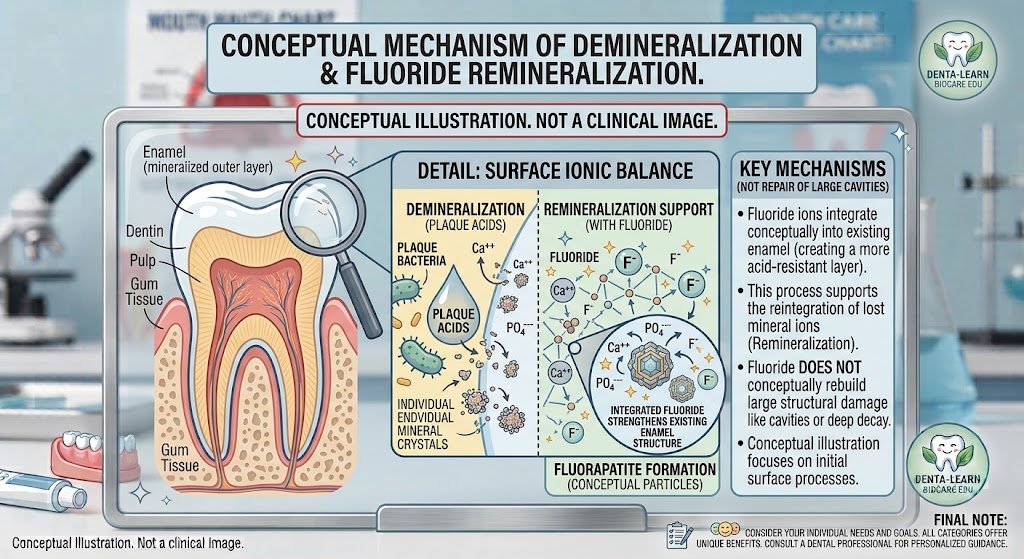
The ADA explains that fluoride in toothpaste is taken up by dental plaque and demineralized enamel and increases fluoride levels in saliva. Fluoride helps strengthen teeth and supports remineralization during the early stages of tooth decay.
This is why fluoride is particularly important when comparing toothpaste for everyday cavity protection.
A toothpaste can have a long ingredient list, a premium package, or a strong flavor, but those features do not automatically make it a better choice for preventing cavities.
The fluoride active ingredient is one of the first things worth checking.
How Much Fluoride Should Toothpaste Have?
For U.S. over-the-counter toothpaste, the ADA states that fluoride concentrations are generally 1,000 to 1,500 ppm.
The FDA’s OTC anticaries monograph also specifies permitted fluoride active ingredients and formulation requirements for covered anticaries products.
For everyday shoppers, this means you do not need to choose toothpaste based simply on whichever package advertises the largest-sounding number.
Instead, check:
- Which fluoride compound is used?
- What fluoride concentration does the product provide?
- What is the toothpaste designed to help with?
- Does that match your dental needs?
There is also a separate category of prescription-strength fluoride toothpaste, including products containing 5,000 ppm fluoride. These are not simply a stronger version that everyone needs; they are generally used under dental or medical guidance for people with particular needs.
Sodium Fluoride vs. Stannous Fluoride vs. Sodium Monofluorophosphate
When you look at a fluoride toothpaste label, you may notice that the word fluoride is not always preceded by the same word.
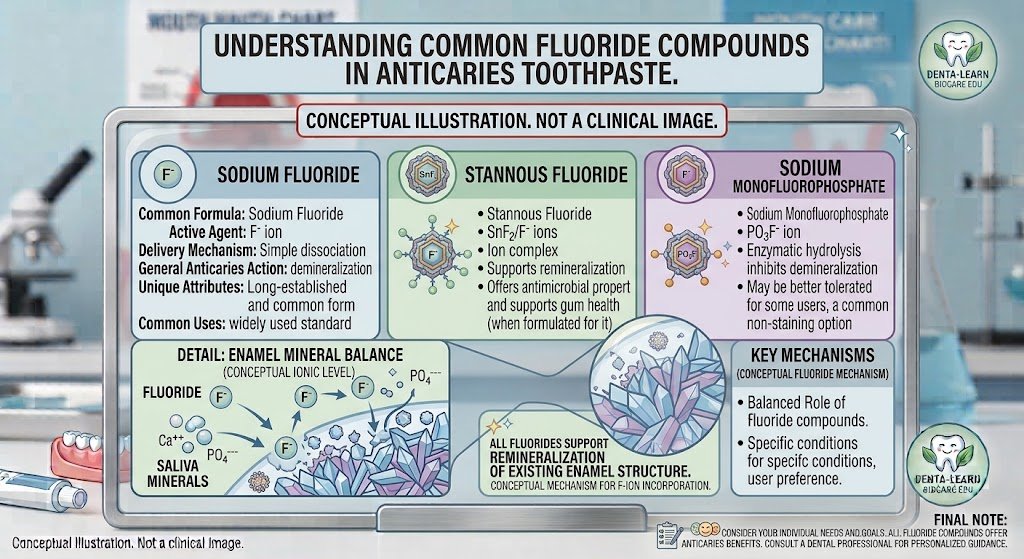
The three fluoride compounds recognized for anticaries toothpaste in U.S. guidance are:
- Sodium fluoride
- Stannous fluoride
- Sodium monofluorophosphate
The ADA lists all three as fluoride-containing anticaries agents used in toothpaste.
That distinction matters because the fluoride compound is part of the product’s overall formulation.
Sodium Fluoride
Sodium fluoride is a common fluoride active used in toothpaste for cavity prevention.
For a shopper whose primary goal is simply finding an everyday fluoride toothpaste, seeing sodium fluoride on the label can be a straightforward starting point.
It does not mean the product is automatically better than a toothpaste containing another fluoride compound. You still need to consider the complete formula and your individual needs.
Stannous Fluoride
Stannous fluoride is another recognized fluoride active.
It is particularly common in multi-benefit formulas that are designed to combine cavity protection with additional oral-care benefits.
The ADA’s toothpaste guidance notes that toothpaste can contain ingredients intended to address concerns such as sensitivity, gingivitis, tartar buildup, enamel erosion, whitening, or bad breath in addition to fluoride’s anticaries role.
This makes stannous fluoride formulas worth comparing when you want your toothpaste to address more than one concern.
Sodium Monofluorophosphate
Sodium monofluorophosphate is another fluoride compound used in toothpaste.
The practical takeaway is simple: do not choose toothpaste solely because one fluoride name sounds more advanced.
Instead, look at the active ingredient, product purpose, complete formula, and your own oral-care needs.
How to Choose the Best Fluoride Toothpaste for You
There is no single fluoride toothpaste that fits every person in exactly the same way.
The better approach is to start with your main dental need, then check whether the toothpaste provides fluoride and whether its additional features match that need.
If Cavity Protection Is Your Main Goal
If preventing cavities is your primary concern, fluoride should be one of the first things you check.
For most U.S. adults, an over-the-counter fluoride toothpaste in the typical 1,000–1,500 ppm range is the starting point for everyday cavity prevention.
When comparing products, look for:
- A fluoride active ingredient
- The fluoride concentration listed on the package
- Clear cavity-protection claims
- A formulation you can comfortably use twice daily
- An ADA Seal of Acceptance when available
The most expensive toothpaste is not automatically the best choice for cavity protection. The important question is whether its active ingredients and intended use fit your needs.
If You Have Sensitive Teeth
Sensitivity changes the selection process.
A toothpaste may contain fluoride for cavity protection while also including ingredients intended to help reduce sensitivity.
Look for a product that clearly identifies sensitivity as one of its intended benefits. Sensodyne is one example of a brand with sensitivity-focused fluoride formulas, but the exact active ingredients vary by product.
If you regularly experience sharp pain from cold drinks, hot foods, sweets, or brushing, do not assume the problem is simply that you need a different toothpaste.
Persistent sensitivity can have different causes, so a dental examination may be appropriate.
If Gum Health Is a Concern
Some fluoride toothpastes are designed with additional ingredients and claims related to plaque or gingival health.
If gum health is your priority, check the specific product’s intended uses rather than assuming that every fluoride toothpaste provides the same gum-related benefits.
Also remember that toothpaste is only one part of gum care. Brushing technique, cleaning between teeth, regular dental care, and other habits can matter as well.
If You Want Whitening
Whitening is another area where toothpaste formulas can differ.
A whitening fluoride toothpaste may help remove certain surface stains, but that is different from professionally bleaching the natural color of the tooth.
If whitening is important to you, compare:
- Fluoride active ingredient
- Whitening claim
- Abrasive ingredients
- Sensitivity considerations
- How frequently the product is intended to be used
Someone with sensitive teeth may not want to select a toothpaste based on whitening alone.
If You Prefer Natural or Ingredient-Conscious Products
Some shoppers want fluoride while also limiting certain ingredients or preferring products marketed around natural or clean-label principles.
That is a valid product-selection preference, but it should be kept separate from the question of cavity protection.
“Natural” does not automatically mean better cavity protection, and “synthetic” does not automatically mean unsafe.
For a fluoride toothpaste, first confirm that it actually contains a recognized fluoride active. Then evaluate the rest of the ingredient list according to your own preferences and dental needs.
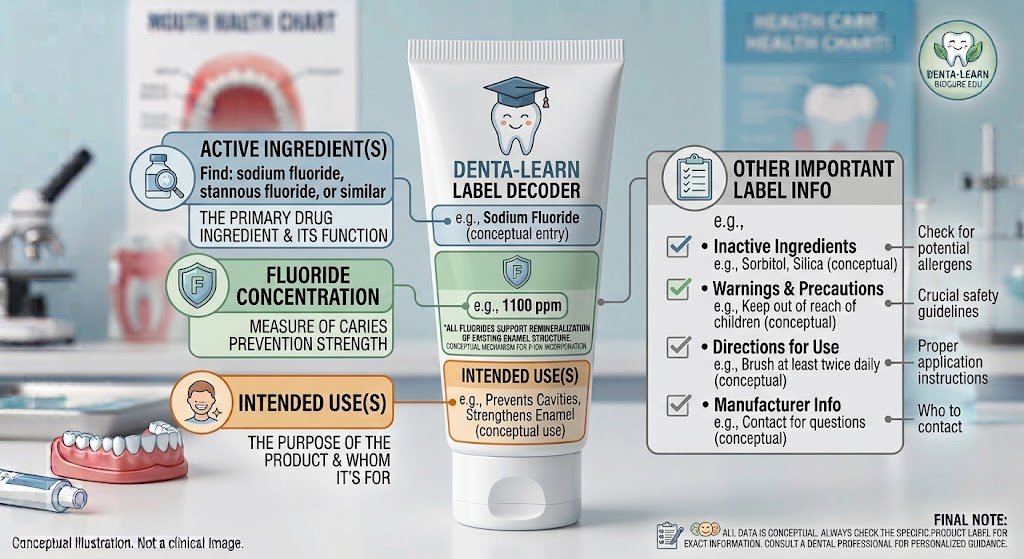
What to Check on the Toothpaste Label
You do not need to understand every ingredient on a toothpaste package to make a useful comparison.
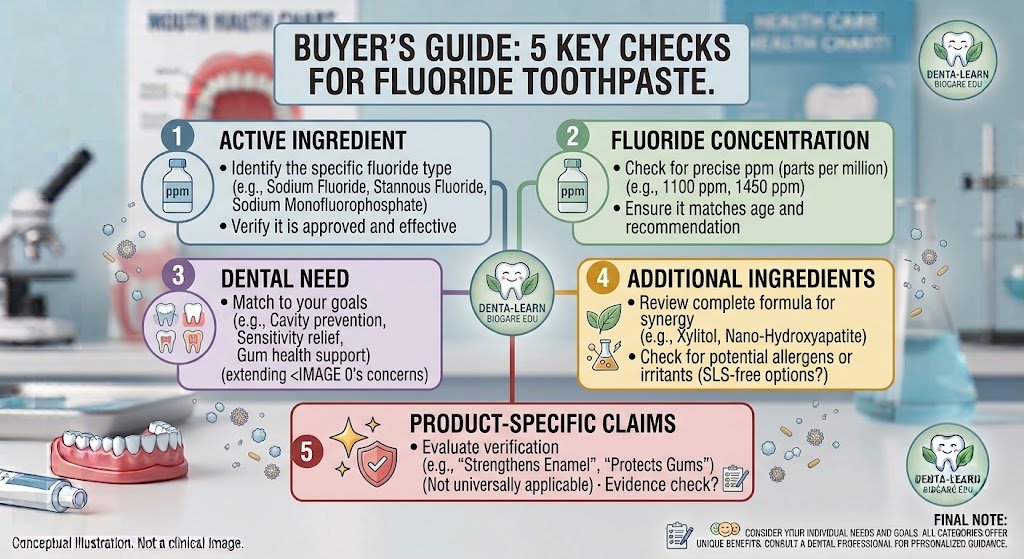
Start with these five checks.
1. Check the Active Ingredient
Look for the active ingredient in the Drug Facts section.
Common fluoride actives include:
- Sodium fluoride
- Stannous fluoride
- Sodium monofluorophosphate
The exact formulation matters more than the brand name.
2. Check the Fluoride Concentration
For typical U.S. over-the-counter fluoride toothpaste, the ADA says concentrations are generally 1,000–1,500 ppm.
If you see a product with a much higher fluoride concentration, check whether it is a prescription product rather than assuming it is intended for routine over-the-counter use.
3. Check the Intended Use
Read what the product is actually designed to address.
For example, a toothpaste may focus on:
- Cavity prevention
- Sensitivity
- Plaque
- Gingivitis
- Tartar
- Whitening
- Enamel protection
- Bad breath
Choose benefits that match your actual needs rather than paying for features you do not care about.
4. Check the Full Ingredient List
The active fluoride is important, but it is not the only ingredient in toothpaste.
Other ingredients can affect:
- Flavor
- Texture
- Foaming
- Abrasiveness
- Sensitivity
- Product stability
- Additional oral-care benefits
If you have a known ingredient sensitivity or strong ingredient preferences, review the complete list before buying.
5. Check the ADA Seal When Relevant
The ADA Seal of Acceptance can provide an additional way to identify products that have met the ADA’s evaluation requirements for particular claims.
It should not replace reading the product label, but it can be a useful signal when comparing fluoride toothpastes.
Common Mistakes When Buying Fluoride Toothpaste
Choosing toothpaste can become confusing because packages often highlight many different benefits.
Here are some common mistakes to avoid.
Mistake 1: Choosing Only by Brand
A brand can sell several toothpaste formulas with different active ingredients.
For example, one product may contain fluoride while another product from the same brand may be fluoride-free.
Always evaluate the specific product, not just the brand.
Mistake 2: Assuming More Benefits Means Better
A toothpaste that claims cavity protection, whitening, sensitivity relief, tartar control, gum care, and fresh breath is not automatically the right choice for you.
Extra features only matter if they address a need you actually have.
Mistake 3: Ignoring the Fluoride Type
Seeing the word “fluoride” is useful, but checking the specific active ingredient gives you more information.
Sodium fluoride, stannous fluoride, and sodium monofluorophosphate are not simply different marketing names. They are different fluoride compounds used in anticaries toothpaste.
Mistake 4: Confusing Fluoride-Free With Better
Some people actively prefer fluoride-free toothpaste.
However, if your goal is cavity prevention, you should understand what you are giving up by choosing a fluoride-free product.
The ADA identifies fluoride toothpaste as an important part of cavity prevention.
Mistake 5: Assuming Prescription Fluoride Is for Everyone
Prescription-strength fluoride toothpaste is a different category.
Some prescription products contain 5,000 ppm fluoride, compared with the typical 1,000–1,500 ppm range for U.S. over-the-counter fluoride toothpaste.
A higher concentration does not mean every person should use it. These products are generally used when a dental professional determines that the additional fluoride is appropriate.
Mistake 6: Ignoring Your Own Dental Situation
A toothpaste that works well for one person may not solve another person’s problem.
If you have frequent cavities, ongoing sensitivity, gum problems, dry mouth, braces, or another specific dental concern, your selection may need to be more targeted.
Fluoride vs. Fluoride-Free Toothpaste
The difference is straightforward: fluoride toothpaste contains a fluoride active ingredient; fluoride-free toothpaste does not.
The reason this matters is fluoride’s role in cavity prevention.
Fluoride supports the tooth’s ability to resist acid-related mineral loss and supports remineralization of early demineralized areas.
That does not mean fluoride-free toothpaste has no purpose. Some people choose it because of personal preferences or because they are interested in alternative ingredients.
But if your main objective is cavity prevention, fluoride should be a major consideration.
The decision should therefore not be framed as:
“Which toothpaste has the cleanest ingredients?”
Instead, ask:
“Does this toothpaste provide the cavity protection I need, and does the rest of the formula fit my preferences?”
That question gives you a more useful way to compare products.
Fluoride vs. Hydroxyapatite Toothpaste
Hydroxyapatite has become increasingly popular among shoppers looking for an alternative toothpaste ingredient.
However, it should not simply be treated as another name for fluoride.
They are different active ingredients with different evidence and regulatory considerations.
For people specifically shopping for cavity protection in the U.S., fluoride toothpaste remains an important reference point because fluoride is an established anticaries active in U.S. toothpaste guidance.
If you are comparing hydroxyapatite and fluoride, look at:
- Evidence for cavity prevention
- The active ingredient
- Product formulation
- Your personal dental risk
- Your dentist’s recommendations
- Whether the product is intended for everyday cavity protection
The key takeaway is that you should not assume that replacing fluoride with another ingredient provides exactly the same level of protection for every person.
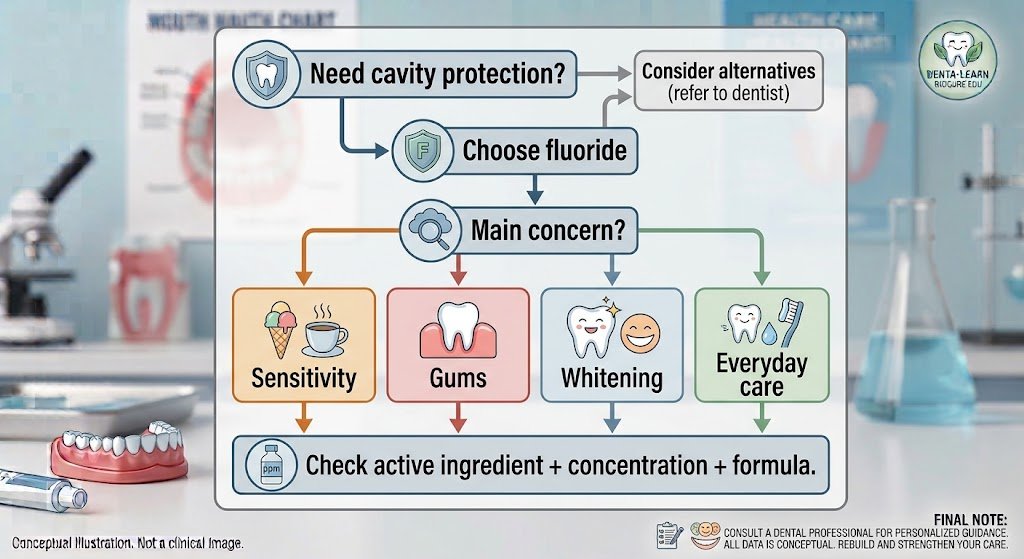
A Simple Decision Framework
If you are standing in a store or comparing products online, use this quick process.
Step 1: Start with fluoride.
If cavity prevention is important to you, confirm that the toothpaste contains a fluoride active.
Step 2: Identify your main concern.
Is it cavities, sensitivity, gum health, whitening, bad breath, or another specific issue?
Step 3: Compare the active ingredient.
Check whether the formula uses sodium fluoride, stannous fluoride, or sodium monofluorophosphate.
Step 4: Check the concentration.
For typical U.S. OTC toothpaste, look for the expected fluoride range and understand that prescription-strength products are a separate category.
Step 5: Review the additional ingredients.
Make sure the flavor, texture, abrasivity, and other ingredients work for you.
Step 6: Look at the product-specific claims.
Do not assume that every version within a brand has identical benefits.
Step 7: Compare price per ounce.
A larger tube or multipack can sometimes have a lower cost per ounce, but compare the actual product rather than the brand alone.
Step 8: Buy based on your needs.
The goal is not to find the toothpaste with the longest list of features. It is to find a fluoride toothpaste whose formula matches your oral-care priorities.
Frequently Asked Questions
What is the best toothpaste with fluoride?
There is not one fluoride toothpaste that is universally best for every person.
The useful comparison is based on your main need. Crest Pro-Health and Colgate Total may appeal to shoppers looking for multi-benefit formulas, Sensodyne offers sensitivity-focused options, and Tom’s of Maine has fluoride formulas for shoppers who also care about ingredient preferences.
Always check the exact current product formula before buying.
Is fluoride toothpaste better for preventing cavities?
Fluoride toothpaste is an established part of cavity prevention. The ADA recommends fluoride toothpaste for most people, and U.S. OTC fluoride toothpaste generally contains 1,000–1,500 ppm fluoride.
Your individual dental needs can affect what concentration or product is appropriate.
Which fluoride is most common in toothpaste?
Common fluoride actives in U.S. toothpaste include sodium fluoride, stannous fluoride, and sodium monofluorophosphate.
The presence of one of these ingredients does not, by itself, determine which product is right for you.
Is stannous fluoride better than sodium fluoride?
They are different fluoride compounds used in anticaries toothpaste.
Stannous fluoride is often used in multi-benefit formulas, while sodium fluoride is also widely used for cavity protection. The more useful comparison depends on the complete product formula and your specific oral-care needs.
How much fluoride should adult toothpaste have?
For U.S. over-the-counter toothpaste, the ADA says fluoride concentration is generally 1,000–1,500 ppm. Prescription-strength toothpaste can contain 5,000 ppm and is used for specific situations under professional guidance.
Can I use fluoride toothpaste every day?
For most people, fluoride toothpaste is intended for regular oral hygiene. The ADA recommends brushing twice daily with fluoride toothpaste for most people.
Follow the directions on the specific product and any advice provided by your dental professional.
Is natural fluoride toothpaste effective?
A toothpaste being marketed as natural does not by itself tell you how effective it is for cavity prevention.
Check whether the specific product contains a recognized fluoride active and review its intended use.
Is fluoride-free toothpaste better for sensitive teeth?
Not necessarily.
Sensitivity-focused toothpaste can contain fluoride along with ingredients intended to help with sensitivity. If sensitivity continues despite using an appropriate toothpaste, the underlying cause should be evaluated rather than assuming fluoride is the problem.
Should I use 5,000 ppm fluoride toothpaste?
Do not choose 5,000 ppm toothpaste simply because the number is higher.
Prescription-strength fluoride toothpaste is a separate category generally used for people with particular dental needs. A dental professional can determine whether it is appropriate for you.
Final Takeaway
The best way to choose a fluoride toothpaste is to stop looking for one universal winner and instead match the formula to your dental needs.
Start by confirming the toothpaste contains fluoride. Then check the active fluoride ingredient, concentration, intended benefits, and full formula.
For everyday cavity prevention, U.S. over-the-counter fluoride toothpaste generally falls in the 1,000–1,500 ppm range.
From there, your choice can become more specific:
- Everyday multi-benefit care: compare formulas such as Crest Pro-Health or Colgate Total.
- Sensitivity: look at sensitivity-focused fluoride formulas such as those from Sensodyne.
- Ingredient preferences: compare fluoride formulas from brands such as Tom’s of Maine while checking the exact product label.
- Higher-risk dental situations: ask your dentist whether a specialized or prescription-strength fluoride product is appropriate.
The most important thing is not the marketing claim on the front of the tube. Check what is actually inside, what the product is intended to do, and whether those features match your own oral-care needs.